
Results
-
 £39.95
When Thunder Calls - Paul Lovatt-Cooper
When Thunder Calls has been composed and designed to make it a very effective way of starting a concert or a second half of a concert and when performed with all the choreography, this piece makes for an exciting addition to any concert repertoire. Circa 3'58".
Estimated dispatch 10-14 days
-
 £29.95
Sounds of Christmas
Sounds of Christmas Band Parts in spiral book form.All the arrangements included in within this book work for a basic five-part layout as indicated below:-PART I 1st Cornet Bb and Part I in CPART II 2nd Cornet Bb, 1st Horn Eb and Part II in FPART III 2nd Horn Eb, Baritone or Trombone Bb, Part III in F and Part III in CPART IV Euphonium Bb and Part IV in CPART V Bass Eb, Bass Bb and Part V in CThe following additional parts are also available:-Optional Soprano EbPercussion I (Timpani, Glockenspiel etc.)Percussion II (Drum Kit etc.)
Estimated dispatch 7-14 working days
-
 £44.50
Chicago (Highlights from) - Fred Ebb - Iain McKnight
The music from the 1975 musical by Fred Ebb, with lyrics by John Kander, is ranked up there with the best musicals of all time. Whilst the original Broadway production only ran for a couple of years, Chicago was revived in 1996. Following this new lease of life, the show continues to run to this day and has enjoyed over 7,000 performances on Broadway. In the first arrangement of its kind for brass band, this new 'Highlights from Chicago' has been made especially for the Leyland Band to feature on their new upcoming CD. Expertly arranged by Iain McKnight, the work features, 'The Overture', 'And All That Jazz', 'Nowadays' and 'Hot Honey Rag'. Sure to be a hit with all who play it, the music appeals to audiences of all ages and is a great concert item that will suit both outdoor and indoor concert events. Not to be missed.
In Stock: Estimated dispatch 1-3 working days
-
£29.50
Pachelbango - Pachelbel - Ed Keeley
Pachelbel's most famous work as you've never heard it before. This arrangements features all sections of the band and gives them a chance to shine making the piece perfect for both concert or contest venues. Pachelbel's Canon in D is one of the most famous pieces of classical music of all time. Simply written for 3 violins and a cello, the music is basically 8 bars repeated 28 times. Mostly unforgotten until the 1970s it has become one of the most recorded pieces and used at more than 90% of all weddings as an introit. This arrangement has reset the Canon into a Latin-American tango style, pushing it into a new accessible groove and will bring a smile to your audiences & players. A must have for your upcoming concerts.
In Stock: Estimated dispatch 1-3 working days
-
 £29.50
A Partridge In A Pear Tree - Gavin Somerset
The perfect Christmas concert finale!!! The Twelve Days of Christmas is known for being one of the most tedious pieces for any band to play - now the band get their own back! As the M.D starts to conduct the "Twelve Days Of Christmas", the band has other ideas. Throughout the piece, well-known carols are blasted out from all corners of the stage. This item is ideally suited for each band to add their own choreography. As the M.D fights to keep the front row playing all twelve days, the trombones stand to blast out Jingle Bells, the horns decide to join in and the back row then show their retaliation by giving a round of "Once In Royal David's City" - and the fun goes on. Eventually the M.D & front row finally loose their battle and give in at the end to a rousing line of "We Wish you a Merry Christmas". Fanfares, Jazz Waltz's and Christmas bedlam leave your audience in stitches and wanting more!!
In Stock: Estimated dispatch 1-3 working days
-
 £29.50
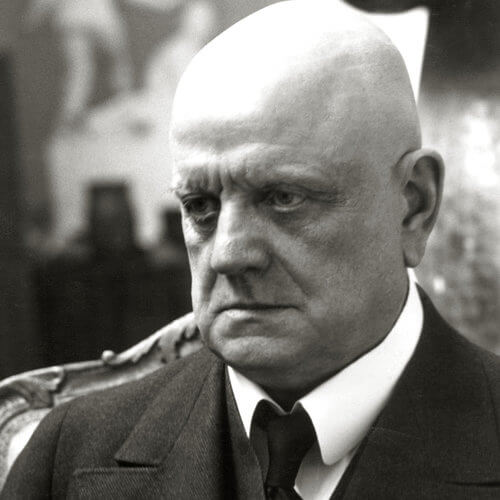
Sibelius Fantasy - Gavin Somerset
Composed in 2003 for a composition competition, this work uses elements of three major work by the Finnish composer Jean Sibelius (1865-1957). The three being... Symphony No.5, Finlandia, Karelia Suite (March) The piece starts with an atmospheric opening before setting of in bar 10 with a tempo that will remain for most of the piece. The main original theme is brought in at A before the famous sequence from Sibelius' Symphony No.5 enters at B and then very distinctly at C. The music then rollercoasts through keeping all sections of the band busy, until we reach J when the solo Euphonium can shine, helped along by Flugel and Repiano. The Molto Vivo before K sets off with dazzling trills from the cornet section, and bringing with it the theme from Finlandia in bar 165, followed shortly by the March from the Karelia Suite. From N to the end, all three pieces are brought to a final climax together. A rousing piece and makes an interesting change to a direct transcription.
In Stock: Estimated dispatch 1-3 working days
-
 £29.50
What Sweeter Music - John Rutter - Stephen Tighe
John Rutter, born in 1945, has become a favourite amongst all sacred music lovers. His anthems and Christmas pieces all have a rich melodic base, and this piece is no exception. Arranged by Stephen Tighe, this beautiful work, with its typical sweet John Rutter style melody, has become a favourite across the globe during the festive season. For Christmas 2020, we have made backing tracks of this title for you to download. These can be used either for personal playback use, or to create a virtual performance of the piece with your full band. To download the backing track, please RIGHT CLICK HERE & Save As .
In Stock: Estimated dispatch 1-3 working days
-
£29.50
Masquerade - Carl Nielson - Bill Willis
The opera, Masqurade, plot revolves around Leander and Leonora, two young persons who meet fortuitously at a masquerade ball, swear their undying love for each other and exchange rings. The following day, Leander tells a servant of his newfound love. He soon becomes distraught when informed by the servant that his parents have betrothed him in marriage to a neighbour's daughter. Things get complicated when Leonard, the neighbour whose daughter is the other part of the previously unknown arrangement, comes complaining to Leander's father that his daughter is in love with someone she met at the masquerade last night. In the third act, all is resolved when the various parties slip off to the night's masquerade, where all is revealed to everyone's mutual satisfaction. The overture is a stunning work, very entertaining for audiences and players alike.
In Stock: Estimated dispatch 1-3 working days
-
 £29.50
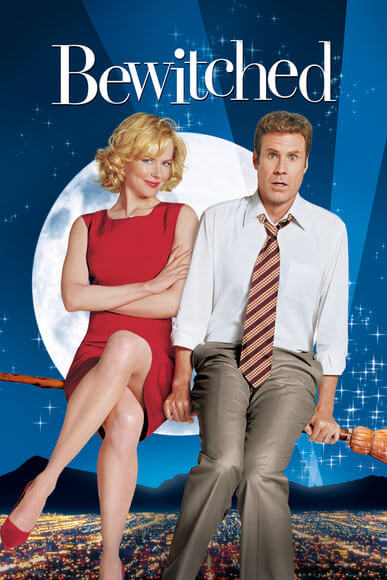
Bewitched - Howard Greenfield - Gavin Somerset
In 1964, the pilot to the new American sitcom 'Bewitched' was completed. The original screening used Frank Sinatra's 'Witchcraft' as the music for the opening titles, however, the production company did not want to pay the large fee to use this track and so, Greenfield & Keller were asked to compose an alternative. The foot-tapping swing piece they produced was reduced to an instrumental version with a light orchestra for the opening credits. However, the song has now been recorded several times. The most famous recording by Steve Lawrence was also featured in the film 'Bewitched' released in 2005. Since then, it has also appeared on the X-Factor a number of times. This fantastic swing item now comes arranged for brass band with the option of playing it at the Steve Lawrence song tempo, or the fast, big band instrumental tempo used in the TV Series. An optional, lower pitched part is also included between letters E-F for the cornet section & flugel to make the item more accessible to lower section bands. This item is a great swing number that audiences of all ages will recognize, a great piece for your new program & a must for every band looking to inject some life into their concerts.
In Stock: Estimated dispatch 1-3 working days
-
 £150.00
Brass Quintet Collection - Various - Lawrence Killian
20 Titles for Brass Quintet with Optional AugmentationFeaturing stylish arrangements using a flexible format for a minimum of five brass players, this set of music for small ensemble covers a wide range of composers and styles. The collection includes music by Purcell, Bach, Verdi, Gounod, Sousa, Joplin, Botsford, Elgar, Gershwin, and others.Using a unique approach to the scoring, the basic setup is for five players: two cornets/ trumpets, one horn, one trombone, and one bass tuba. Two optional "augment" players can be added using the "flugelhorn", and/ or the "Euphonium" parts. Further expansion of the ensemble is possible by adding multiple players to each part.Twelve parts are provided in total: 1st Bb Cornet, 2nd Bb Cornet, Eb Tenor Horn, French Horn in F, Bb Trombone or Baritone in treble clef, C Trombone in bass clef, EEb Bass, BBb Bass, C Tuba in bass clef, Bb Flugelhorn or Cornet (augment part 1), Bb Euphonium or Baritone (augment part 2), C Euphonium or Trombone in bass clef (augment part 2).A Full score is available seperately at a cost of �35.00. Please contact [email protected] to order. NOTE: Individual books are priced at �20.00 each. Please email [email protected] to order individual books. Videos of these works being performed are available below:- Asturias (Leyenda) from Suite Espanola No.1, Isaac AlbenizBerceuse from "Jocelyn", Benjamin Godard TITLES INCLUDED:- 1. Asturias (Leyenda) from Suite Espanola No.1, Isaac Albeniz 2. Bist du bei mir (Be Thou with Me), J. S. Bach3. Chatterbox Rag, George Botsford4. Grizzly Bear Rag, George Botsford5. Jubilee Fantasy on God Save the King, Bernhard Brahmig 6. Chanson de Matin, Sir Edward Elgar 7. Pomp and Circumstance March No. 4, Sir Edward Elgar 8. But Not For Me, George Gershwin 9. By Strauss, George Gershwin10. They All Laughed, George Gershwin11. Berceuse from "Jocelyn", Benjamin Godard12. JUDEX - from "Mors et Vita", Charles Gounod 13. The Entertainer (Rag), Scott Joplin14. Intermezzo No.2, Vasily Sergeyevich Kalinnikov 15. Berliner Luft, Paul Lincke 16. Sound the Trumpet, from "Come Ye Sons of Art", Henry Purcell 17. Gymnopedie No.1, Erik Satie 18. The Liberty Bell March, John Philip Sousa 19. Tritsch-Tratsch Polka, Johann Strauss II 20. Grand March from the opera Aida, Giuseppe Verdi
In Stock: Estimated dispatch 1-3 working days
 View Music
 Listen to MP3