
Results
-
£39.00
Bryllupsdag pa Troldhaugen - Edvard Grieg - Elisabeth Vannebo
Originally called "Gratulanterne kommer" (The well-wishers are coming),It was written in 1896 for the 50th year celebration of Nancy Giertsen held at the Fossli Hotel near the Voringsfossen waterfall in June 1896. During the occasion a guest book was ready to take contributions from all the guests. On the first pages of this guest book, Grieg wrote the whole piece with it's original title.Grieg gave the work its final title in 1897 when he compiled Book VIII, Op. 65, of his Lyric Pieces. The work's festive first section describes congratulations and best wishes that are given by the guests to the newlyweds; the second section is reflective and subdued.
Estimated dispatch 7-14 working days
-
 £39.95
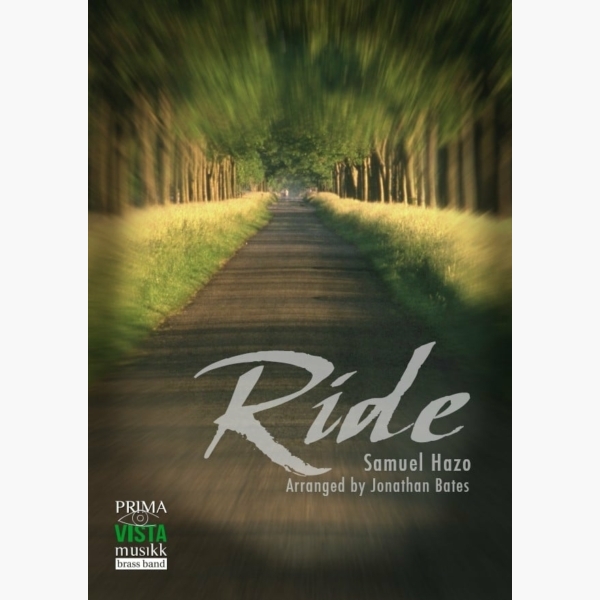
Ride - Samuel Hazo - Jonathan Bates
Ride was written by Samuel R. Hazo as a gesture of appreciation for all of the kind things Jack Stamp had done for him; ranging from his unwavering friendship to his heartfelt advice on composition and subjects beyond. Ride takes...
Estimated dispatch 5-7 working days
-
£29.95
ROSEHILL (Brass Band Set) - Albert Jakeway
The Salvation Army Assurance Society Band was the first Salvation Army band to take part in the Lord Mayor's Show, in 1928. The Society relocated from London to Reading at the beginning of World War Two and the title of this march is derived from the name of the Reading property. Rosehill is a fine march containing all the drama and pyrotechnics that make it suitable for a Whit Friday type march contest.
Estimated dispatch 7-14 working days
-
£44.95
CRISTO REDENTOR (Brass Band Set) - Steven Ponsford
Cristo Redentor' (Christ the Redeemer) is the Portuguese name of the unmistakable statue that overlooks every part of the vibrant Brazilian city of Rio de Janeiro. The composer was inspired to bring these images to music, creating various atmospheres to portray the diverse scenery. The melodies used, 'Lord I lift your name on high', 'Ochills' and 'There is a redeemer' are used to express the overall power of the love displayed for all in the outstretched arms of Christ the Redeemer.
Estimated dispatch 7-14 working days
-
 £49.95
Concert Gallop
Here is a charming, easy-going solo for all B-flat or E-flat brass instruments from the prolific Philip Wilby. This brass band version also comes with alternative solo parts for euphonium duet or trio and euphonium quartet (two baritones and two euphoniums).
Estimated dispatch 7-9 working days
-
 £39.95
Harlequin (Score and Parts) - Bruce Broughton
Harlequin is the most popular of the comic servant characters from the Italian commedia dell'arte who, although a slow thinker, was acrobatic and nimble - he would never perform a simple action when the addition of a cartwheel or backflip would spice up the movement! These characteristics are aptly portrayed musically in Bruce Broughton's mini concert overture. Originally published for brass band in 1984, this popular work coveys all the hustle, bustle, and agility of the character in a finely crafted musical structure. Ideal as a concert opener or encore it is sure to delight audiences and provide players with an exciting new addition to their repertory. Duration: 2:30
Estimated dispatch 7-9 working days
-
 £55.00
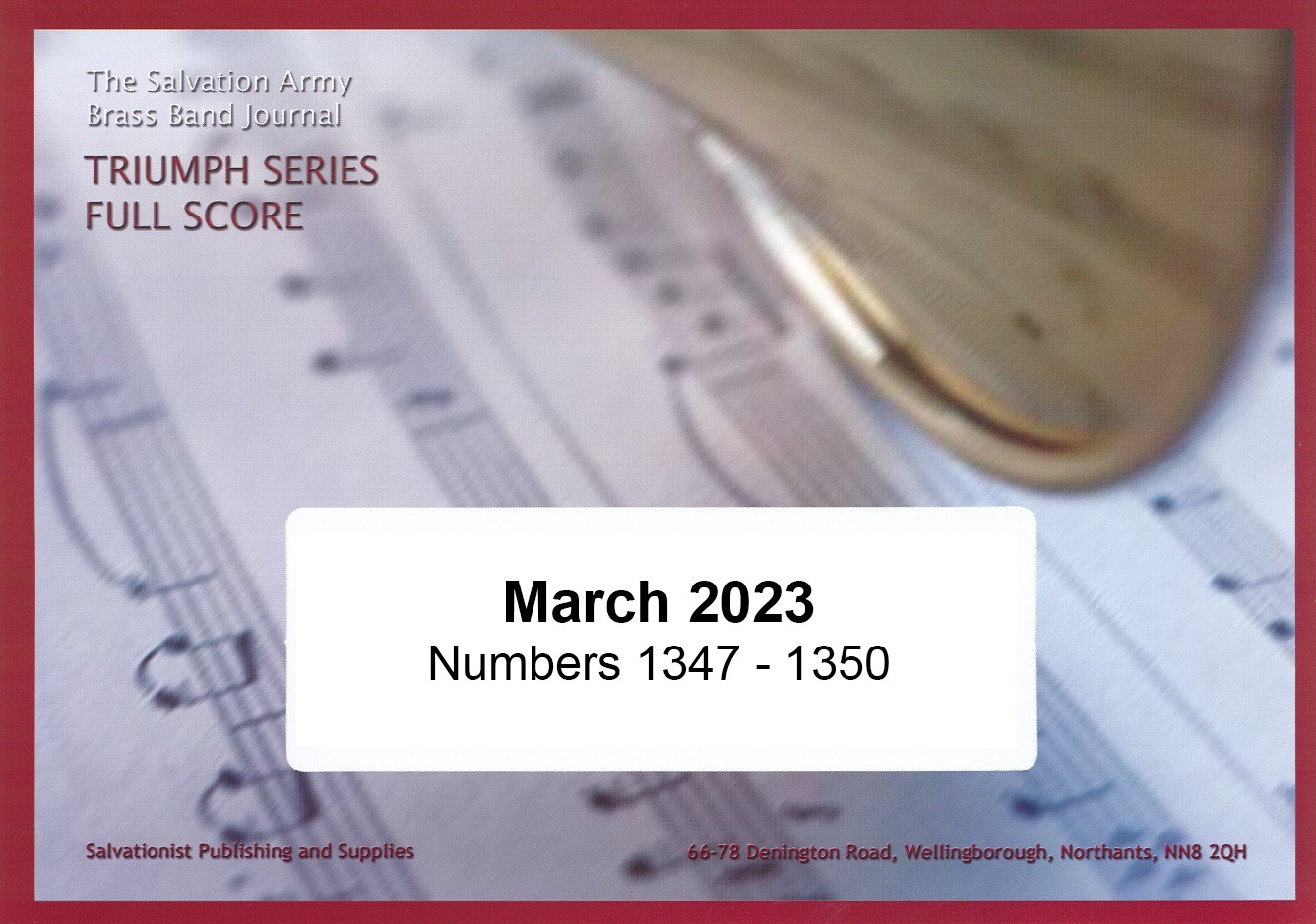
Triumph Series Brass Band Journal, Numbers 1347 - 1350, March 2023
1347: Intrada on 'St Magnus' (Ruben Schmidt)This is an energetic intrada based on the tune St. Magnus with the composer keeping the words The head that once was crowned with thorns (S.A.S.B. 22) in mind.1348: March - In every corner sing (Alan Williams)This is a bright march requiring plenty of vigour and imagination. Featuring and taking its title from Let all the world in every corner sing: My God and King! (S.A.S.B. 41), this bright melody is contrasted with the tune Lydia associating the words There is a name I love to hear, I love to sing its worth (S.A.S.B. 94).1349: I need thee (Craig Woodland)An expressive arrangement of the traditional hymn I need thee every hour (S.A.S.B. 707)1350: March - The great commission (Paul Sharman)This march was written for the Norwegian Christian brass band, Egersund Missionary Band, and is derived from the tune Onward, Christian soldiers (T.B. 188) as well as a brief fragment of the Norwegian National Anthem and the melody Die Sach is dein (The work is thine).
Estimated dispatch 7-14 working days
-
 £59.99
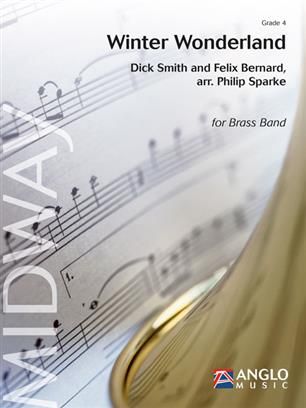
Winter Wonderland (Brass Band - Score and Parts)
This endearingly popular seasonal song has long been a Christmas favourite, even though the lyrics don't mention 'Christmas' at all. The words were by Dick Smith (1901-1935) and the music by Felix Bernard (1897-1944). The inspiration was reportedly a visit by Smith to Honesdale's (his hometown) Central Park when it was covered in snow.The first recording was made by Richard Himber's Ritz-Carlton Orchestra in 1934. The same year Guy Lombardo and his band, The Royal Canadians, took the song to number 2 in the US Billboard Chart, where it stayed for 9 weeks. It has since been recorded by over 150 artists, the most successful versions being by Perry Como and the Andrews Sisters, both released in 1946.
Estimated dispatch 7-14 working days
-
 £44.95
Judd: Cristo Redentor
'Cristo Redentor' (Christ the Redeemer) is the Portuguese name of the unmistakable statue that overlooks every part of the vibrant Brazilian city of Rio de Janeiro. The composer was inspired to bring these images to music, creating various atmospheres to portray the diverse scenery. The melodies used, 'Lord I lift your name on high', 'Ochills' and 'There is a redeemer' are used to express the overall power of the love displayed for all in the outstretched arms of Christ the Redeemer.
Estimated dispatch 7-14 working days
-
 £29.95
Judd: Rosehill
The Salvation Army Assurance Society Band was the first Salvation Army band to take part in the Lord Mayors Show, in 1928. The Society relocated from London to Reading at the beginning of World War Two and the title of this march is derived from the name of the Reading property. Rosehill is a fine march containing all the drama and pyrotechnics that make it suitable for a Whit Friday type march contest.
Estimated dispatch 7-14 working days