
Results
-
 £34.95
I Wish I Knew How It Would Feel To Be Free - Jonathan Bates
DIFFICULTY: 1st+. DURATION: 3 minutes. This spiritual is one of the most popular anthems to come out of the civil rights movement in the US, and became an almost unofficial anthem for the movement when Nina Simone took on the song in the 1960's. This arrangement plays on the more positive and hopeful nature of achieving true freedom and peace. This piece was composed for Jaren Hornmusikkforening as part of their programme for the 2018 SIDDIS Championships held in Stavanger, Norway. .
In Stock: Estimated dispatch 1-3 working days
-
 £59.70
I Wish I Knew How It Would Feel To Be Free - Traditional - Alan Fernie
Estimated dispatch 7-14 working days
-
 £54.20
I WISH I KNEW HOW IT WOULD FEEL TO BE FREE (Brass Band) - Fernie, Alan
Medium
Estimated dispatch 7-14 working days
-
 £44.50
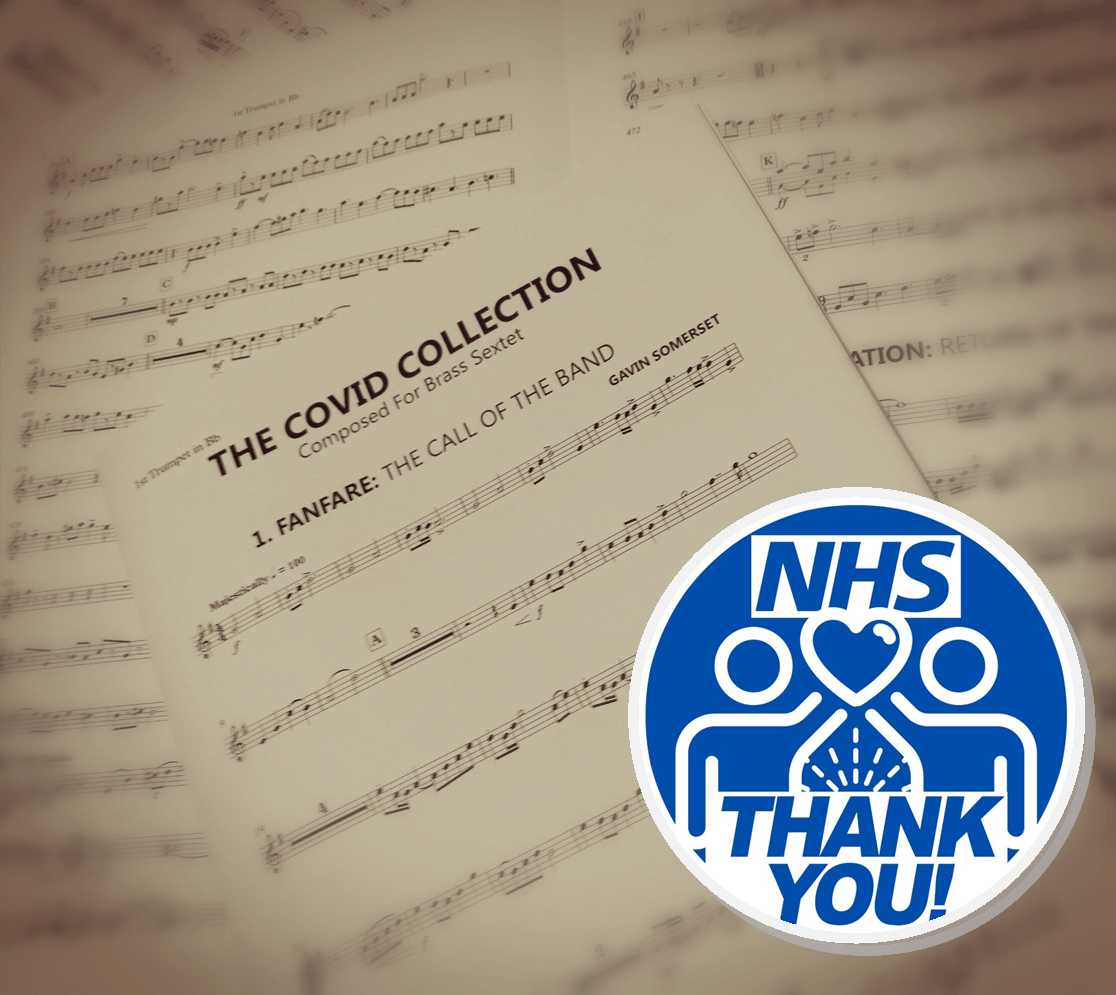
The Covid Collection - Gavin Somerset
This exciting new 22-minute concert suite for Brass Sextet has been composed during the months of lockdown charting the feelings of a nation, with seven movements playable by 6 (or more) players. The music was composed with the intention for players to perform either together live in a small group, in isolation by way of a virtual performance (downloadable backing tracks are available to play along to) and ultimately, to give players something to enjoy as we all miss our brass band families. This concert suite is the perfect addition to all bands' libraries at a time when rehearsals are limited. Several of the movements are already in preparation for a full band edition to be released at a later date: (also available as a digital download worldwide - purchase now & print to play). Bands purchasing this sextet edition will be eligible for a discount on the upcoming full brass band edition of the concert suite. ------------------------------------------------------------------------------------- Movement 1: FANFARE: The Call of the Band - CLICK HERE TO DOWNLOAD PLAYBACK TRACK This opening fanfare gives way to a full of life and energy. With catchy melodies and harmonies, it is an effective opening to any concert programme and the perfect way to begin the Suite. Movement 2: March of the Antibodies - CLICK HERE TO DOWNLOAD PLAYBACK TRACK A cheeky little number that keeps on fighting though. Whilst not a March in the traditional brass band sense, players should aim to give a 'happy' performance of this movement ensuring smiles all around for both performers and the audience.Movement 3: Solidarity - CLICK HERE TO DOWNLOAD PLAYBACK TRACK The first slow movement of the concert suite aims to reflect on the isolation many of us felt during the time of lockdown. However, during these times, walks out with loved ones allowed many to connect and enjoy downtime, not often afforded to many. Movement 4: Lazy Days - CLICK HERE TO DOWNLOAD PLAYBACK TRACK A movement whose title really does say it all. A laid back swing number that should be played in an as relaxed manner, as possible!Movement 5: Hymn for Carers (Dedicated to the NHS & Care Workers) - CLICK HERE TO DOWNLOAD PLAYBACK TRACK Dedicated to the NHS & Care Workers, this hymn tune is filled with emotional highs and lows, felt by many of the hospital and care staff who worked tirelessly to keep our people safe, with a timely nod at the end to Vera Lynn & our missed VE day commemorations. Movement 6: Army of the Keyworkers - CLICK HERE TO DOWNLOAD PLAYBACK TRACK A stirring work in 12/8 which rightfully, depicts our heroes who kept the country moving through the most difficult of times. An heroic number for players to enjoy.Movement 7: CELEBRATION: Return of the Band - CLICK HERE TO DOWNLOAD PLAYBACK TRACK Little needs to be said about this movement, as at this time of release, we cannot yet celebrate the return of all players to the band rooms across the country. However, when that time comes, this movement is to be played with the joy of normality we shall all feel. CLICK HERE TO DOWNLOAD THE FULL SUITE BACKING TRACK ------------------------------------------------------------------------------------- Each movement can be performed as a standalone item, or form part of the full 22-minute concert suite. Sextet scored for: x1 Cornet I in Bbx1 Cornet 2 in Bb1x Flugelhorn1x Tenor Horn in Eb1x Euphonium/Baritone in Bb1x Eb Bass*extra parts included are, Cornet parts in Eb & C, Horn in F, Euphonium/Baritone in BC, Trombone (TC and BC), BBb Bass in TC & Tuba in BC.
In Stock: Estimated dispatch 1-3 working days
-
£24.50
Fade Away - Andy Wareham
From the pen of Andy Wareham comes a beautifully crafted cornet solo. Composed for his best friend, Lauren Chinn, the work has a Moderato feel throughout and is lightly scored throughout the solo sections. Little intricate parts will keep the rest of the band entertained as they play their part in supporting the soft melody of this work of which, no loud playing is to be heard.
In Stock: Estimated dispatch 1-3 working days
-
 £80.00
St. Magnus - Kenneth Downie
Dedicated to Alastair Massey, an inspirational music teacher. Commissioned by the Scottish Brass Band Association for the 2004 European Brass Band Championships in Glasgow. This music is a set of variations on the tune known as St Magnus, which is attributed to Jeremiah Clarke. Most people will associate it with Thomas Kelly's hymn which begins: "The Head that once was crowned with thorns is crowned with glory now". The tune is very simple, consisting of just two, four-bar phrases. Neither is there much in the way of rhythmic variety, every note being a crotchet with the exception of two quavers, and the last note in each phrase. Within such a simple structure, however, lies considerable strength. THEME The listener is given the opportunity of hearing it twice, in full, at the beginning, starting with one player but soon taken up by the full ensemble. It returns in the middle of the music and is stated again near the end. This has been done quite deliberately in the hope that there will be an appreciation of what material is being developed, by the listener as well as by those with access to the score, who are able to see the visual connections. VARIATION 1 This takes the rhythm of the last part of the theme and also uses the shape of the opening as a recurring figure. The mood is whimsical and skittish, with short, teasing rhythmic figures tossed around the band, and quick interplay with percussion, at a fast tempo. An energetic flourish finishes this variation before the Andante espress. VARIATION 2 This commences with chords related to the opening of Variation 1. The cantabile on solo comets establishes a new, lyrical mood and there is scope for expressive playing in a series of short solo passages. The theme works its way unobtrusively into the texture before a reprise of the solo cornet melody and some more lyrical interchanges between Eb bass, euphonium, flugel horn and comets. The variation ends serenely with clear references to the last phrase of the theme. VARIATION 3 The first idea to dominate is clearly linked to the shape of the theme's first phrase. There is a frenetic feel to much of this variation, with considerable energy and instability created by extensive use of cross-rhythms. A thinning-out of the score marks a clear change to development of the start of the second phrase of the theme. This proves to be short-lived however, and the opening material returns leading to a restatement of the theme, "Maestoso," after which a euphonium cadenza links to Variation 4. VARIATION 4 Here we have some solos for euphonium, cornet, trombone and Eb bass set against a background of horns and baritones presenting a pensive statement of the theme's opening. VARIATION 5 This commences Allegro, with lively work for cornet and euphonium spreading to the whole band before attention focuses on the beginning of the second phrase of the theme which is initially presented in diminution, then in regular rhythm, then in inversion. An increase in tempo coupled with a decrease in volume, requires dexterity and control, with several metrical challenges thrown in for good measure. The same fragment of phrase becomes an ostinato which generates a frenzied climax, punctuated by short, dramatic silence, before the opening figure returns and the music gradually winds down. The tubular bells herald the final return of the theme, in augmentation, marking the start of the Finale. FINALE This features the running semiquavers of the previous variation sounding in counterpoint. A fast, furious coda speeds the work to a conclusion while references to the opening of the theme are still trying to break into the texture of the music. Kenneth Downie
Estimated dispatch 5-14 working days
-
 £111.70
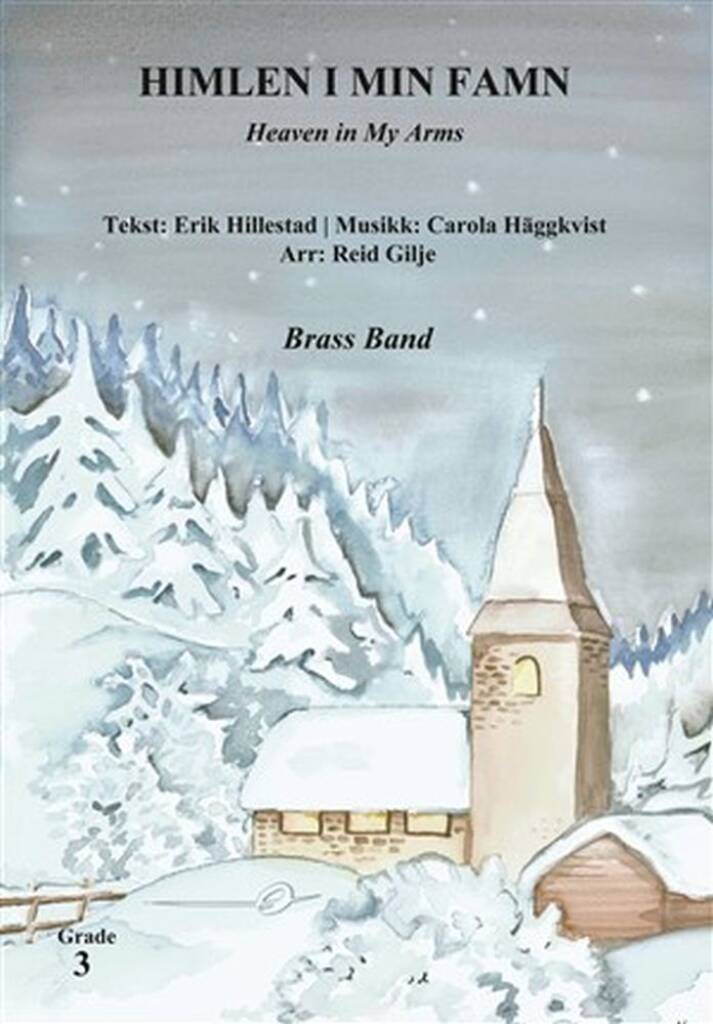
Himlen i min famn - Carola Häggkvist - Reid Gilje
"Heaven in My Arms" is a beautiful melody by Carola Haggkvist with lyrics by Erik Hillestad.This version is without vocal soloist so the melody is spread into many parts throughout the arrangement.To the conductor:Strive for good flow and phrasing. Feel free to be a bit creative with the phrasing. It invites for two-bar phrases in the melody, but perhaps 2/2/4 could also work nicely.Balance is very important. Often there is both melody and obligato/countermelody in addition to harmonic elements. Let each of them have their own layer in the balance.Staccato effects in cornets and marimba are intended as pizzicato effects and must be phrased. Not too static.The tutti section at 72 can be energetic with intense lines. Maybe a little piu mosso as well. Think big and orchestral with good resonance and timbre.- Reid Gilje -
Estimated dispatch 5-14 working days
-
£59.99
Surround Sound - Søren Hyldgaard
This unusual new work really lives up to its title with sound hitting the audience from all sides. The composer intended that this work not only be heard but experienced. The audience will feel how the drums and cornet figures fly around the auditorium as if a ball being kicked between players. This innovative piece is sure to be a hit with all who hear and play it.
Estimated dispatch 5-14 working days
-
 £64.40
The Master Plan! - Dean Jones
We all have a purpose...whether those are found in daily routines or much larger parts of our lives. Having a plan or a goal is a great way we can measure our success. Here's a small piece of music that explores 3 such elements:Covert Mission - a militaristic theme where the music conveys action and drama.Finding Someone - at some point, we share our lives with people who are special to us. The music has a more lyrical feel to help illustrate affection.Life Goals! - the strong rhythmic pattern to this section is the undertone for portraying a a sense of focus. We need to match desire with action when attempting something new - the sense of excitement and hope will need to be drawn from the music to convey this message.The music tells a compelling story of purpose, hope and passion....in the words of Col. Hannibal Smith from the A-Team, "I love it when a plan comes together!"
Estimated dispatch 5-14 working days
-
 £105.20
What a Difference a Day Made - Stanley Adams - Bjorn Morten Kjaernes
The Mexican songwriter Maria Grever, wrote the melody in 1934 ("Cuando vuelva a tu lado") and it became a big hit for jazz-singer Diana Washington. Since that, it has been recognized as a jazz-standard and also featured in several movies. This arrangement was originally written for young, Norwegian singer Angelina Jordan. In this version, the level of difficulty and instrumentation are customized to fit our Young Band-series. Included in the set is parts for both string bass and vocals, but they are not compulsory to perform the piece. In this style, the accompaniment will have a slight swinging feel, while some of the contrasting elements has to be performed without swing(Even).
Estimated dispatch 5-14 working days
 View Music