Results
-
£24.50
Auld Lang Syne - Traditional - Max Stannard
The ionic words of Robert Burns were set to the tune of a traditional folk song and ever since, its popularity in English speaking countries has grown continuously. Traditionally sung to welcome in the New Year, this arrangement by Max Stannard suits all festive occasions and can be used as a moving encore to your Christmas concert programme this year.
In Stock: Estimated dispatch 1-3 working days
-
£29.50Eine Kleine Nachtmusik - W.A. Mozart - Alan Beaumont
Possibly the most well-known Mozart work of all time is now available as a fun Eb Bass Solo. With tongue-in-cheek accompaniment, this new tuba solo gives the soloist plenty to do in this fast paced concert showcase. Composed in 1787, this is the first movement from the popular Serenade, more often referred to in English as, A Little Night Music. This is a perfect solo item which wouldn't be out of place on either the bandstand or concert hall. To download the playback audio to play along to, please RIGHT CLICK HERE & Save As .
In Stock: Estimated dispatch 1-3 working days
-
£29.50
Show Me The Way To Go Home - Hal Swain and Irvin King - Adrian Horn
This band feature begins as only a drinking song could do, with a trombone trio taking the lead! The song was composed by the English song writing team, James Campbell and Reginald Connelly under their pseudonyms, Hal Swain and Irvin King during a train journey, prior to which, they had enjoyed a few drinks! Arranged by Adrian Horn originally for the Poynton Band, this is a great showcase arrangement of a modern classic featuring all sections of the band and giving the soloists a chance to shine. Great entertainment value.
In Stock: Estimated dispatch 1-3 working days
-
£24.50
The Cheshire Waltz - Traditional - A. Cook
A gentle setting of the traditional Cheshire folk melody, featuring solo and ensemble contributions from around the stand, this arrangement is playable by most levels of band and ideal for a lighter moment in your concert programme as an alternative to a slow melody.Starting as softly as a summer breeze, slowly gaining enthusiasm, before waltzing brightly to its peaceful conclusion, it's music as light as a victoria sponge and as English as a game of cricket on the village green.
In Stock: Estimated dispatch 1-3 working days
-
£24.50
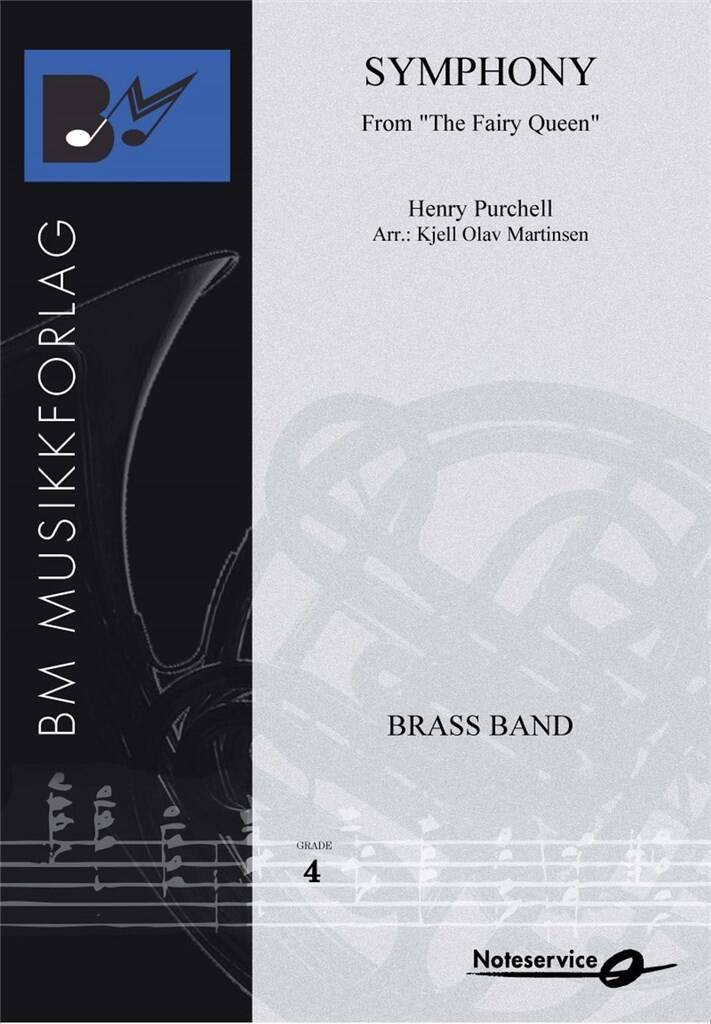
RONDO from "ABDELAZAR" - Henry Purcell - Wilfried Weiland
Used as the opening theme from Britten's 'Young Person's Guide to the Orchestra', The RONDO is part of the ABELAZAR-Suite which the English composer Henry Purcell wrote for the drama of the same name by Aphra Behn in 1695. This is a 6-piece arrangement for 2 cornets/trumpets, horn/flugel , baritone/trombone, euphonium and bass with timpani and drumset accompaniment.
In Stock: Estimated dispatch 1-3 working days
-
£74.95
Second Suite in F (Score and Parts)
During Holst's earlier years as a composer, he took interest, as did many other English composers at the time, in writing pieces based on folk music. His contemporary Ralph Vaughan Williams had written his English Folk Song Suite, all based on English folk tunes. Holst followed suit and composed the Second Suite as a result. Six tunes are compressed into the four movements of the suite, each with their own character.The Second Suite consists of movements based on specific English folk songs
Estimated dispatch 7-14 working days
-
£32.95
Second Suite in F (Score Only)
During Holst's earlier years as a composer, he took interest, as did many other English composers at the time, in writing pieces based on folk music. His contemporary Ralph Vaughan Williams had written his English Folk Song Suite, all based on English folk tunes. Holst followed suit and composed the Second Suite as a result. Six tunes are compressed into the four movements of the suite, each with their own character.The Second Suite consists of movements based on specific English folk songs
Estimated dispatch 7-14 working days
-
£59.95Bonnie Northumbria - Brass Band - LM786
COMPOSER: Laurie JohnstonProgramme NotesNorthumberland, or Northumbria as it is also known, is the most northern county in England and has magnificent and stunning landscapes just waiting to be explored. Filled with mystical castles, atmospheric ruins and historical sites and edged by spectacular coastal scenery, there is something wonderful to see at every turn. The Devils Causeway passes through Northumbria and reaches Berwick upon Tweed at the coast. Walkers and cyclists can also take the Coast and Castles Cycle Route or the North Sea Trail which journey through some of the most beautiful scenery along the way.The Blaydon Races is aGeordiefolk songwritten in the 19th century byGeordie Ridley, in a style deriving frommusic hall. It is regarded by many as the unofficialanthemofTynesideand is frequentlysungby supporters ofNewcastle United Football ClubandNewcastle Falconsrugby club.Blaydonis a small town inGateshead, situated about 4 miles (6.4km) fromNewcastle upon Tyne, inNorth East England. The race used to take place on the Stella Haugh 1 mile (1.6km) west of Blaydon.Stella South Power Station(demolished in 1995) was built on the site of the track in the early 1950s, after the races had stopped taking place in 1916.Water of Tyne (sometimes rendered as The Waters of Tyne) is a folk song (Roud number1364) from the north-east of England. The song is sung by a girl or woman lamenting the fact that her paramour is on the opposite bank of theRiver Tyne. Sleeve notes to Michael Hunt's recording of Tyneside songs states that "the ferry is believed to be that atHaughton Castleon theNorth Tyne". Alternatively the "rough river" in the last line may indicate a point further downstream, possiblyTynemouth.The song was collected byJohn Bellin 1810 and published two years later inRhymes of Northern Bards.The Keel Row is a traditional Tyneside folk song evoking the life and work of thekeelmenofNewcastle upon Tyne. A closely related song was first published in aScottishcollection of the 1770s, but may be considerably older, and it is unclear whether the tune is Scottish or English in origin.The opening lines of the song set it inSandgate, that part of the quayside overlooking the River Tyne to the east of the city centre where the keelmen lived and which is still overlooked by theKeelmen's Hospital.Versions of the song appear in both England and Scotland, with Scottish versions referring tothe Canongaterather than Sandgate. The earliest printing was in the 1770s inEdinburghin A Collection of Favourite Scots Tunes, edited by Charles Maclean, though the tune was also found in several late eighteenth-century English manuscript collections. As the term "keel" was used both sides of the border, it has not been determined which version was the original, althoughFrank Kidsonsurmised that like many other songs collected by Maclean it may originally have been aJacobiteair from the time of the1745 rebellion. Some versions of the song make reference to a "blue bonnet[...] with a snowy rose upon it", a clear attempt to evoke Jacobite symbolism, whether dating from 1745 or not.Kidson, however, also noted that he had found the tune of The Keel Row associated with an early dance called "The Yorkshire Lad" as early as 1748.By the 19th century the tune was well associated with the River Tyne; a few years before the 1850s the keelmen had met yearly to celebrate the founding of the Keelmen's Hospital, perambulating the town to the accompaniment of bands playing The Keel Row.Dance To Thy Daddyis a traditional Englishfolksong, originating inNorth East England. An early source for the lyrics, Joseph Robson's "Songs of the bards of the Tyne", published 1849, can be found on the Farne archive. In Farne's notes to the song, it is stated that these lyrics were written by William Watson around 1826.
In Stock: Estimated dispatch 3-5 working days
-
£65.00Second Suite in F - Brass Band Sheet Music Full Score & Parts - LM602 - Gustav Holst
COMPOSER: Gustav HolstTRANSCRIBED : Daniel S. AugustineA brand transcription from Holst's manuscript score for brass band.A very authentic version from the original for Military Band.Can be used as a testpiece in your next own choice contestSuitable for Section 3 bands upwardsSecond Suite in FOp. 28, No. 2 (1922)1. MarchThe "March" of the Second Suite begins with a simple five note motif between the low and high instruments of the band. The first folk tune is heard in the form of a traditional British brass band march using the morris-dance tune "Glorishears". After a brief climax, the second strain begins with a euphonium solo playing the second folk tune in the suite "Swansea Town". The theme is repeated by the full band before the trio. For the trio, Holst modulates to the unconventional subdominant minor of Bb minor and changes the time signature to 6/8, thereby changing the meter. Usually one would modulate to subdominant major in traditional march form. While Sousa, reputably the "king of marches", would sometimes change time signatures for the trio (most notably in "El Capitan"), it was not commonplace. The third theme, called "Claudy Banks",[2] is heard in a low woodwind soli, as is standard march orchestration. Then the first two tunes are repeated da capo.2. Song without Words "I'll Love My Love"Holst places the fourth folk song, "I'll Love My Love" in stark contrast to the first movement. The movement begins with a chord and moves into a solo over a flowing accompaniment. The solo is then repeated, forming an arc of intensity. The climax of the piece is a fermata, followed by a cornet pick-up into the final measures of the piece.3. Song of the BlacksmithAgain, Holst contrasts the slow second movement to the rather upbeat third movement which features the folk song "A Blacksmith Courted Me". There are many time signature changes (4/4 to 3/4) making the movement increasingly difficult because the accompaniment has a pick up on the up-beats of each measure. The band joins in on the melody around the body of the piece and are accompanied with the sound of a blacksmith forging metal with an anvil called for in the score. The final major chord has a glorious, heavenly sound, which opens way to the final movement.This chord works so effectively perhaps because it is unexpected.4. Fantasia on the "Dargason"This movement is not based on any folk songs, but rather has two tunes from Playford's Dancing Master of 1651. The finale of the suite opens with a solo based on the folk tune "Dargason", a 16th-century English dance tune included in the first edition of The Dancing Master. The fantasia continues through several variations encompassing the full capabilities of the band. The final folk tune, "Greensleeves", is cleverly woven into the fantasia by the use of hemiolas, with Dargason being in 6/8 and Greensleeves being in 3/4. At the climax of the movement, the two competing themes are placed in competing sections.As the movement dies down, a duet forms a call back to the beginning of the suite with the competition of low and high registers.The name 'dargason' may perhaps come from an Irish legend that tells of a monster resembling a large bear (although much of the description of the creature has been lost over time), the Dargason tormented the Irish countryside. During the Irish uprising of the late 18th century, the dargason is supposed to have attacked a British camp killing many soldiers. This tale aside, 'dargason' is more likely derived from an Old English word for dwarf or fairy, and the tune has been considered English (or Welsh) since at least the 16th century. It is also known as 'Sedony' (or Sedany) or 'Welsh Sedony'.
In Stock: Estimated dispatch 3-5 working days
-
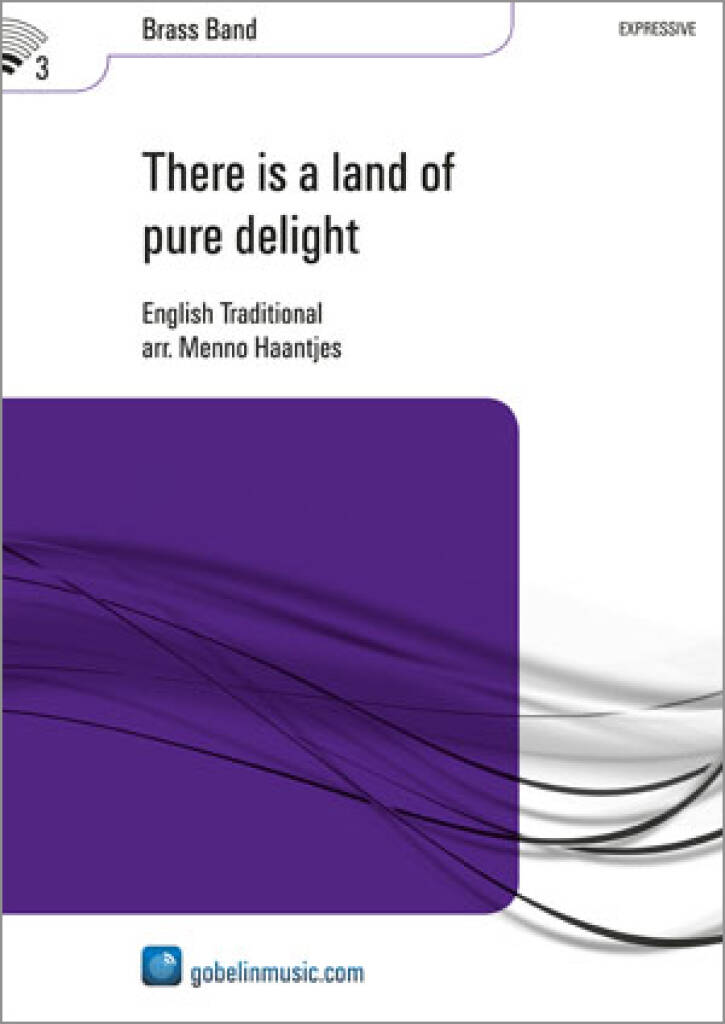
£60.99There is a land of pure delight - Menno Haantjes
Isaac Watts (1674-1748) wrote the lyrics of "There is a land of pure delight" and is known as the "Father of English Hymnody". Watts was for the English hymn as Ambrose was for the medieval Latin hymn and what Martin Luther was for the German chorale. He wrote about 750 songs, and some of them survide the ravahes of time. (Joy To The World, When I survey the wondrous cross, I sing the Mighty Power of God) "There is a Land of Pure Delight" is usually in English-speaking areas sung on Luther Orlando Emerson's melody ('Ascription'). Here is used a traditional English melody ('Mendip'). There is a land of pure delight Wheresaints immortal Reign. Infinite day excludes the night, And pleasures banish pain.
Estimated dispatch 5-14 working days