
Results
-
 £24.50
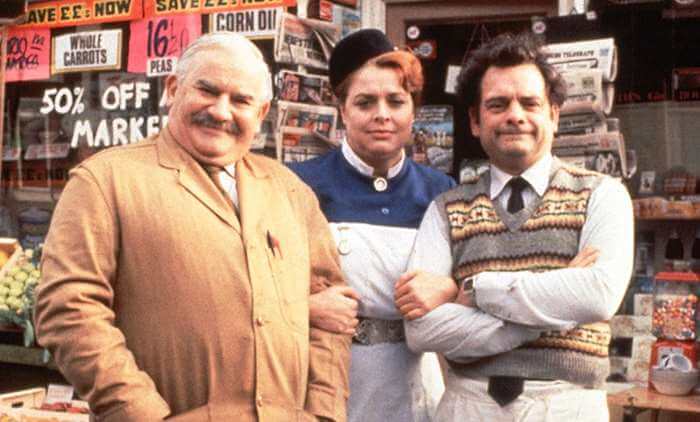
Open All Hours - Wellington Guernsey & Joseph Ascher - John Lee
The theme tune from one of Britain's iconic comedy shows is in fact, an old tune entitled 'Alice, Where Art Thou' composed by Joseph Ascher, a Dutch composer and pianist. The opening title sequence of the show heard brass arranger, Max Harris performing his own version of the tune, who also composed the incidental music for the show. This light-hearted release coincides with the release of the new Open All Hours series starring David Jason who now runs the corner shop years later. A great easy going summer concert item and one that audience members will truly enjoy.(also playable by training bands)
In Stock: Estimated dispatch 1-3 working days
-
 £119.99
The Lonesome Knight - Saskia Apon
The composition the Lonesome Knight was based on a fairytale. The piece was written by Saskia Apon for the National Brass Band Championships 2001. Once upon a time there was a knight who went to fight and defeat the dragon that had beenkilling the people of his town. There is a short but intense battle between the two and the knight is triumphant. However whilst persuing the dragon the knight has travelled far away from his home and now is lost. He roames around trying to findhis way home, but exhausted and weary he falls to the ground. He awakens startled by a Giant and a group of Goblins who are celebrating the death of the dragon. The knight joins in the festivities but after a long evening is once more leftalone. The sun rises the following morning and he sees a castle on the horizon. He enthousiastcally ventures towards the castle in the hope of meeting other people. However he becomes greatly disillusioned when there is none to be found. Inhis desperation the knight climbs the tower ready to jump off. Suddenly he hears a heavenly voice. Right before him is the most beautiful princess he has ever seen. She graciously thanks him for killing the dragon, a spark ingnites between themand they build a life together and.... live happily ever after! Saskia Apon studied harp at Rotterdam School of music. With this instrument she rounded of her studies by passing with credit, however it was her love of composition thatremained her focus. Self-taught, she began composing at the age of nine. Since then she has written pieces for The Dutch Brass Quintet, The Dutch Brass Ensemble, The Rotterdam Trombone Quartet and the brass band quintet Brass Ability. Atpresent she is the in-house arranger for The Rotterdam Philarmonic Brass Ensemble. Besides the customary attention for the real splashworks she endeavours to add value to the melodic function of the brass wind instruments in her music. Hercompositions and arrangements can be found on many diverse Cds.The composition the Lonesome Knight was based on a fairytale. The piece was written by Saskia Apon for the National Brass Band Championships 2001. Once upon a time there was aknight who went to fight and defeat the dragon that had been killing the people of his town. There is a short but intense battle between the two and the knight is triumphant. However whilst persuing the dragon the knight has travelled far awayfrom his home and now is lost. He roames around trying to find his way home, but exhausted and weary he falls to the ground. He awakens startled by a Giant and a group of Goblins who are celebrating the death of the dragon. The knight joins inthe festivities but after a long evening is once more left alone. The sun rises the following morning and he sees a castle on the horizon. He enthousiastcally ventures towards the castle in the hope of meeting other people. However he becomesgreatly disillusioned when there is none to be found. In his desperation the knight climbs the tower ready to jump off. Suddenly he hears a heavenly voice. Right before him is the most beautiful princess he has ever seen. She graciously thankshim for killing the dragon, a spark ingnites between them and they build a life together and.... live happily ever after! Saskia Apon studied harp at Rotterdam School of music. With this instrument she rounded of her studies by passing withcredit, however it was her love of composition that remained her focus. Self-taught, she began composing at the age of nine. Since then she has written pieces for The Dutch Brass Quintet, The Dutch Brass Ensemble, The Rotterdam Trombone Quartetand the brass band quintet Brass Ability. At present she is the in-house arranger for The Rotterdam Philarmonic Brass Ensemble. Besides the customary attention for the real splashworks she endeavours to add value to the melodic functionof the brass wind instruments in her music. Her compositions and arrangements can be found on many diverse Cds.
Estimated dispatch 5-14 working days
-
 £119.99
The Patriots - Jan de Haan
The Dutch patriottentijd (literally 'Time of the Patriots') was a period of political instability in the 1780s. The country was led by regents who were occupied with their own personal interests rather than dedicating themselves to the needs of the people. In this revolutionary period, the devoted republican Patriots were in conflict with the Orangists. A civil war followed, in which the Patriots were beaten and driven away by a Prussian army. This composition is an abstract piece inspired by the Patriots. The thematic material is based on the Dutch war song 'Merck toch hoe sterck'. Its powerful minor melody, which has its origins in the Eighty Years' War, is recognizablethroughout the work, presented in variations of constantly shifting character.
Estimated dispatch 5-14 working days
-
 £54.99
Heb je even voor mij - Klaas van der Woude
Since his first successes in the 1990s the amiable popular singer Frans Bauer has grown into a megastar in the Netherlands. In Germany, too, he has a great number of fans. Although he is derided by many because of his schmalzy style, Frans Bauer sells CDs galore, attracts full houses everywhere and can be viewed in his own reality soap on television. In 2004 he was even awarded a Gouden Harp (Gold Harp), which is the most important prize within Dutch music. It is presented to artists and composers who have promoted Dutch light music in their own unique way during their career. The cheery singalong Heb je even voor mij (Got a Minute for Me) is a great top hit: a winner in everypub and at parties. This arrangement by Klaas van der Woude willput the musicians as well as the audience in a happy mood.
Estimated dispatch 5-14 working days
-
 £69.99
Rogier van Otterloo Medley - Rogier van Otterloo - Thijs van Otterloo
Before his untimely death in 1988, Dutch composer Rogier van Otterloo became well-known for the film music he wrote to various successful Dutch movies. In this medley, made by his youngest son, Thijs van Otterloo, the themes of Help, de dokter verzuipt! (Help, the Doctor Is Drowning!, 1974) and Soldaat van Oranje (Soldier of Orange, 1977) have been used, as well as Esther (from Soldier of Orange). A fantastic trip into the field of world cinema music.
Estimated dispatch 5-14 working days
-
 £54.99
A Spanish Christmas Carol - Patrick Millstone
Rondeau of the Shepherds," so ran the official title of the famous Dutch Christmas carol 'Midden in de winternacht'. In 1948 wrote Dutch poet and writer Harry Prenen this text. The melody is known by the 17th/18th- century organ composers of suites Daquin, Balbastre and Dandrieu. "Rondeau of the Shepherds" was subtitled "Catalan Christmas Carol". The song itself is because its origins in a Spanish (Catalan probably) Christmas song from the late Middle Ages, "El Desembre congelat. The motives of this song (shepherds, flutes, drums) demonstrate knowledge of the Bible and give a picture of the late medieval Christmas experience. . Perfect as an uptempo intermezzoin a church service.
Estimated dispatch 5-14 working days
-
 £104.99
Kefas - Rob Goorhuis
The composition Kefas was written for the brass band 'Apollo' from Grou (The Netherlands), by order of the Unisono Foundation, the organisation for wind music in The Netherlands.The assignment was given on account of earning the Champions Title during the Dutch Brass Band Championships in the year 2001 (4th division). The theme of the composition links the tradition of the village Grou, not to celebrate Sint Nicolaas but Sint Pieter.By this typical Dutch festivity (in December) the holy Nicolaas gives presents to the children. It is a popular custom where young and old participate. Grou is the only place where this is not done by Sint Nicolaas but by Sint Pieter.Apart from that, on the 22th of Februari, a lot of festivities that take place,resemble those of the Sinterklaas celebration. In the composition two Sint Pieter songs are processed, set through bible scenes, wherein in among others the visit of Christ to the house of Peter's Mother-in-law and the calling of Peter are depicted. The title refers to the pronouncement of Christ, where he named Peter the rock on which he shall build his church. The Hebrew word for rock is Kephas. Kefas was premiered in 2003.
Estimated dispatch 5-14 working days
-
 £61.00
Pastorale - Ramses Shaffy - Gerhart Drijvers
This famous Dutch love romance by Ramses Shaffy expresses both the passion and the melancholy of a love relation that had never been expressed as beautifully before in any Dutch song.
Estimated dispatch 5-14 working days
-
£60.99
Conzensus - Jan Van der Roost
This stately concert opener was originally written by Jan Van der Roost for a special event in which six respected wind orchestras (two Belgian and four Dutch) of different composition (two symphonic bands, two fanfare bands and two brass bands) were featured during six concerts. Each evening brought forth a performance by a symphonic band, a fanfare, and brass band, so that the audience could experience all three types of ensembles. This was indeed an original concept.The name, ConZEnSus, comes from a combination of the words, 'Concert Cyclus' (concert series) and 'zes' (Dutch for 'six'). This leads to a new word, which refers to 'consensus'. The general tenor of the cycle isthus immediately indicated. The richness of color of the various ensembles is revealed through an open and friendly atmosphere. During all six concerts (over a span of three years), ConZEnSus functioned as a permanent opening number for each orchestra. Thus the same musical story was portrayed in three different packages.
Estimated dispatch 5-14 working days
-
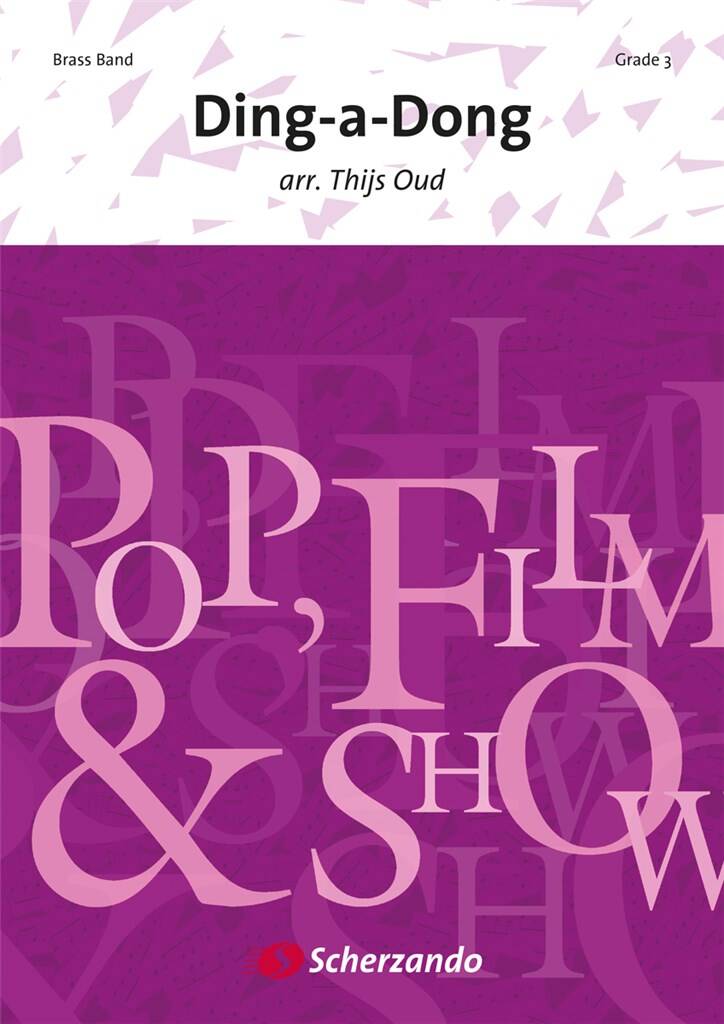 £54.99
Ding-a-Dong - Thijs Oud
The group Teach-In, from the Netherlands, won the Eurovision Song Contest in 1975 with the song Ding-a-Dong. It was the fourth time that a Dutch entry had won the prestigious festival but since then no Dutch artist has even come near first place again. The original Ding-a-Dong was performed, in keeping with tradition, with the accompaniment of a large orchestra. This sparkling arrangement of the catchy song provides a cheerful note in every concert. The melody will certainly stay in the audience's memory long after the performance.
Estimated dispatch 5-14 working days
 View Music