
Results
-
 £30.00
Fanfare (from La Peri) (Brass Band - Score and Parts) - Dukas, Paul - Littlemore, Phillip
La Peri is a 1912 ballet in one act by French composer Paul Dukas, about a man's search for immortality and encounter with a mythological Peri (a winged, fairy-like creature). The original music to La Peri was written in 1911 as a Poeme Danse En Un Tableau (Dance Poem in One Scene), and was his last published work. The ballet itself is preceded by this brilliant fanfare which is often performed separately. This arrangement is for full brass band, and would make a good opener for any concert or event. It can also be performed with or without percussion. Duration: 1:40
Estimated dispatch 7-14 working days
-
 £69.99
Fanfares and Love Songs (Brass Band - Score and Parts) - Higgins, Gavin
Fanfares and Love Songs was commissioned by the National Children's Brass Band of Great Britain for performance on 25th July 2009. Its three movements contrast the extrovert and lyrical qualities of the traditional brass band. The fanfare with which the work opens involves the whole cornet section. The second movement is reflective in mood, beginning somewhat pensively on muted brass, and building to an emotional climax before subsiding back to a distant pianissimo chord. The finale is a fast dance, which with a final recapitulation of the opening fanfare drives on to a breathless close.Suitable for Advanced Youth/3rd Section Bands and aboveDuration: 12.00
Estimated dispatch 7-14 working days
-
£14.99
Fanfares and Love Songs (Brass Band - Score only) - Higgins, Gavin
Fanfares and Love Songs was commissioned by the National Children's Brass Band of Great Britain for performance on 25th July 2009. Its three movements contrast the extrovert and lyrical qualities of the traditional brass band. The fanfare with which the work opens involves the whole cornet section. The second movement is reflective in mood, beginning somewhat pensively on muted brass, and building to an emotional climax before subsiding back to a distant pianissimo chord. The finale is a fast dance, which with a final recapitulation of the opening fanfare drives on to a breathless close.Suitable for Advanced Youth/3rd Section Bands and aboveDuration: 12.00
Estimated dispatch 7-14 working days
-
 £79.99
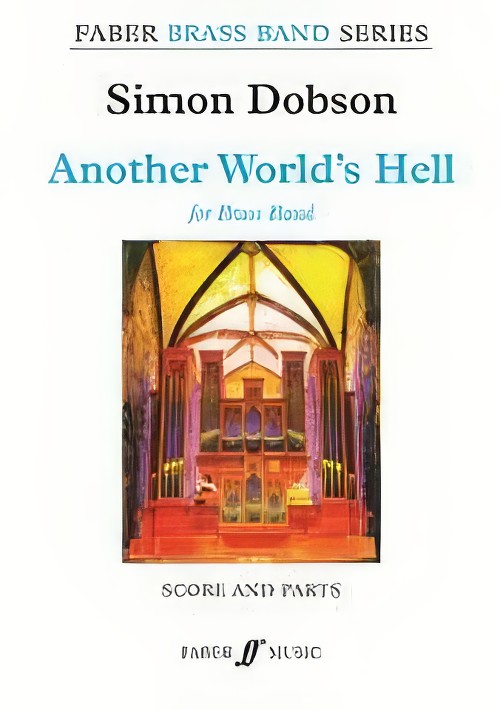
Another World's Hell (Brass Band - Score and Parts)
Another World's Hell was commissioned in versions for brass, wind and fanfare bands by the Soci?t? Cantonale des Musiques Vaudoises and the Association Cantonale des Musiques Neuch?teloises for the 2013 Swiss Cantonales festivals. It is inspired by a passage in Aldous Huxley's classic 1932 science-fiction novel Brave New World, which describes in unusually close detail the music that is being played at a dance. This is Dobson's interpretation of the imagined 'future music' that Huxley dreamed of. Suitable for 1st Section Bands and above. Duration: 13.00
Estimated dispatch 7-14 working days
-
 £94.95
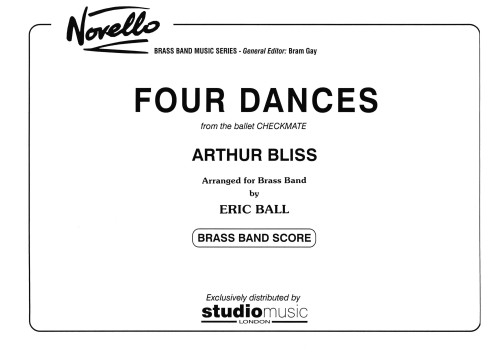
Four Dances from Checkmate (Brass Band - Score and Parts) - Bliss, Arthur - Ball, Eric
Selected as the Section 1 test piece for the National Brass Band Championships of Great Britain 2025Section 1 finalists will perform three of the four dances at the competition: 'Dance of the Four Knights', 'Ceremony of the Red Bishops', and 'Checkmate'. Selected for 2013 NABBA 1st Section.
Estimated dispatch 7-14 working days
-
 £44.95
Four Dances from Checkmate (Brass Band - Score only) - Bliss, Arthur - Ball, Eric
Selected as the Section 1 test piece for the National Brass Band Championships of Great Britain 2025Section 1 finalists will perform three of the four dances at the competition: 'Dance of the Four Knights', 'Ceremony of the Red Bishops', and 'Checkmate'. Selected for 2013 NABBA 1st Section.
Estimated dispatch 7-14 working days
-
 £95.00
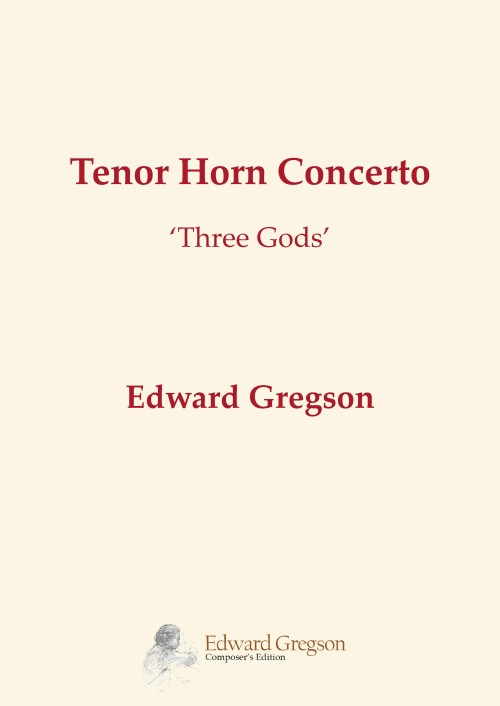
Tenor Horn Concerto 'Three Gods' (Tenor Horn Solo with Brass Band - Score and Parts) - Gregson, Edward
Edward Gregson's Tenor Horn Concerto (Three Gods) was commissioned by the Belgian tenor horn soloist Tim de Maeseneer for a recording of commissioned works he made in 2024 with his own band, Brass Band Willebroek.The subtitle of 'Three Gods' refers to three mythological Greek Gods: Zeus, Hermes and Apollo. The idea for this came from Gregson's Viola Concerto, which he composed in 2023 and which was similarly subtitled 'Three Goddesses'. Indeed, the first movement of the horn concerto shares some common material with the viola concerto, although the other movements are newly composed.The concerto exploits the noble character of the horn, but the writing is also virtuosic in character as well as lyrical and melodic, demanding an extended playing range of nearly four octaves with a variety of colouration in its sonorities. The unifying motif of the whole concerto is the interval of a rising 5th, heard at the outset. The opening also has some other surprises (both seen and heard).The musical ideas, cast in three separate movements, take their starting point from the characters of the Three Gods in the title:Zeus, ruled as King of the Gods on Mount Olympus, and was the God of Thunder and Lightning and of War. His music is often threatening and violent, but also has a more tender side as portrayed in the lyrical second subject. However, the dominant mood is one of foreboding.Hermes was the great messenger to the Gods who could travel between realms on his winged sandals. Thus, his music is fast, fleet of foot, and mercurial - a dashing scherzo, but with lyrical and expressive moments.Apollo, the God of Music and Dance (and the Sun), symbolises virtue and beauty. This final movement, 'Hymn to Apollo', is mainly slow and hymn-like and cast in a continuous stream of melody passed between soloist and band. Brief fanfares herald a triumphant march, before the music returns to its quiet opening, gradually rising to a triumphant climax with glittering melodic percussion leading the way. The music ends in a blaze of glory!Duration: 17.00
Estimated dispatch 7-14 working days
-
£40.00
Tenor Horn Concerto 'Three Gods' (Tenor Horn Solo with Brass Band - Score only) - Gregson, Edward
Edward Gregson's Tenor Horn Concerto (Three Gods) was commissioned by the Belgian tenor horn soloist Tim de Maeseneer for a recording of commissioned works he made in 2024 with his own band, Brass Band Willebroek.The subtitle of 'Three Gods' refers to three mythological Greek Gods: Zeus, Hermes and Apollo. The idea for this came from Gregson's Viola Concerto, which he composed in 2023 and which was similarly subtitled 'Three Goddesses'. Indeed, the first movement of the horn concerto shares some common material with the viola concerto, although the other movements are newly composed.The concerto exploits the noble character of the horn, but the writing is also virtuosic in character as well as lyrical and melodic, demanding an extended playing range of nearly four octaves with a variety of colouration in its sonorities. The unifying motif of the whole concerto is the interval of a rising 5th, heard at the outset. The opening also has some other surprises (both seen and heard).The musical ideas, cast in three separate movements, take their starting point from the characters of the Three Gods in the title:Zeus, ruled as King of the Gods on Mount Olympus, and was the God of Thunder and Lightning and of War. His music is often threatening and violent, but also has a more tender side as portrayed in the lyrical second subject. However, the dominant mood is one of foreboding.Hermes was the great messenger to the Gods who could travel between realms on his winged sandals. Thus, his music is fast, fleet of foot, and mercurial - a dashing scherzo, but with lyrical and expressive moments.Apollo, the God of Music and Dance (and the Sun), symbolises virtue and beauty. This final movement, 'Hymn to Apollo', is mainly slow and hymn-like and cast in a continuous stream of melody passed between soloist and band. Brief fanfares herald a triumphant march, before the music returns to its quiet opening, gradually rising to a triumphant climax with glittering melodic percussion leading the way. The music ends in a blaze of glory!Duration: 17.00
Estimated dispatch 7-14 working days
-
 £64.95
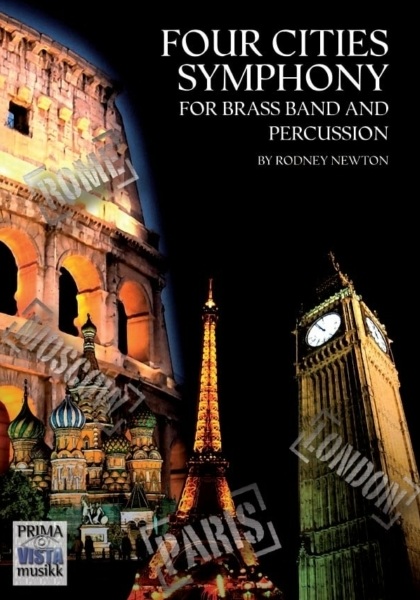
Four Cities Symphony (Brass Band - Score and Parts) - Newton, Rodney
This piece was commissioned by the National Contesting Council as the 4th section test piece for the 2008 Regional Brass Band Championships of Great Britain.This symphony (the composer's 12th) has four movements played without a break. The first centres on two aspects of the city of London: its history and pageantry and its role as a busy modern metropolis.The second movement depicts Paris, its street cafes and boulevards and riverside walks, in the form of a romantic waltz.The third movement is constructed around the Gregorian chants of the Lord's Prayer (Pater noster, qui es in caelis) and the Creed (Credo in unum Deum) in an evocation of the city of Rome. After a powerful climax, mysterious tramping footsteps are heard as the ghosts or a Roman legion march through the city by night. The vision fades and the pater noster is heard once again before the movement is brought to a close with the ancient Ambrosian chant, Christus Vincit, Christus Regnet, Christus Imperat.The final movement is an evocation of the city of Moscow, with its great historic buildings, its turbulent history and its fiery traditional music. At the outset a rather dour folk-like melody is heard which is transformed into a lively Cossack dance.This work is dedicated to Howard Wilson, former principal euphonium of City of Coventry Band who, in 1972, introduced the composer to top section brass band contesting.Duration: 11.00
Estimated dispatch 7-14 working days
-
 £290.99
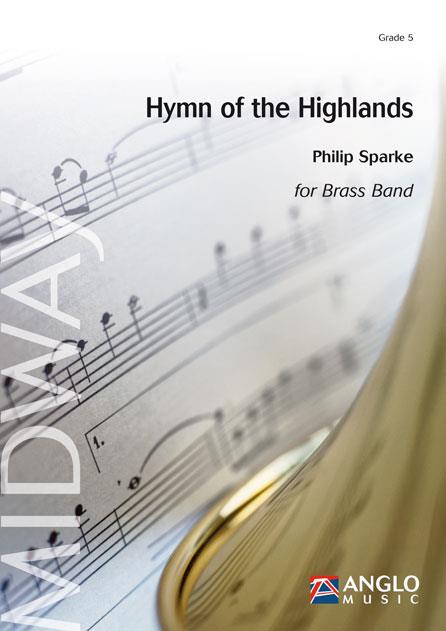
Hymn of the Highlands (Complete Edition) (Brass Band - Score and Parts) - Sparke, Philip
Hymn of the Highlands was commissioned by David King and the Yorkshire Building Society Band for first performance at the 2002 European Brass Band Championships Gala Concert in Brussels. The complete suite lasts approximately 35 minutes however it is possible that pieces of different lengths can be constructed to feature particular soloists or fit different programming constraints.Includes:Ardross Castle, Duration: 7:00Summer Isles (Euphonium solo), Duration: 4:00Flowerdale (Soprano Cornet solo), Duration: 4:30Strathcarron (Sword Dance), Duration: 5:30Lairg Muir (Cornet solo), Duration: 4:30Alladale (Flugel Horn, Horn and Baritone trio), Duration: 4:15Dundonnell (Finale), Duration: 5:45Duration: 35:00
Estimated dispatch 7-14 working days
 View Music