
Results
-
 £76.99
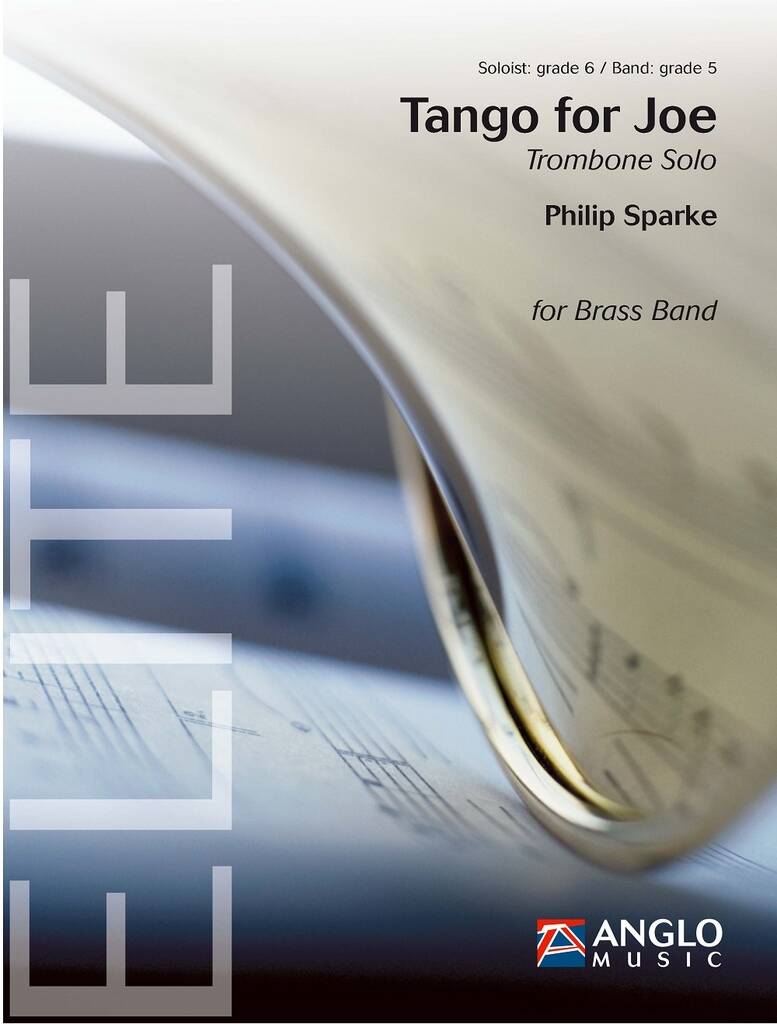
Tango for Joe - Philip Sparke
Gemini Concerto was commissioned by and written for Ryukoku University (Japan), Andre Henry and Shoichiro Hokazono. Set in three movements, the concerto aims to explore the close relationship, as solo instruments, between the cornet and euphonium, exploiting the many common factors between the two as well as the subtly different characteristics they possess in terms of both lyrical and rhythmic playing. The first movement is a bustling toccata and the second movement is lyrical and improvisatory in nature. A fantastic piece and a great addition to the repertoire!
Estimated dispatch 5-14 working days
-
 £72.99
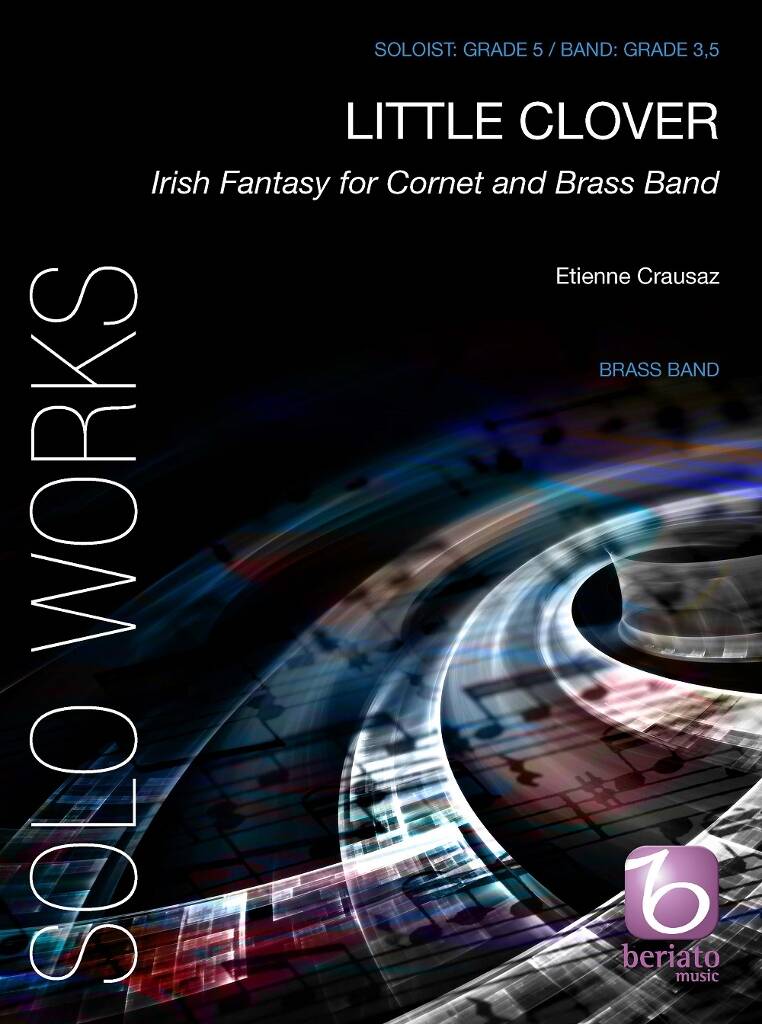
Little Clover - Etienne Crausaz
Cornet solo commissioned by Carole Rudaz, a Swiss cornetist, on the occasion of her 40th birthday. Due to its rarity, the four-leaf clover is considered lucky in western culture. But the common three-leaf shamrock, also known as Little Clover, is one of the symbols of Ireland, whose traditional music greatly influenced the general aesthetics of this piece. The work is in three parts: the first, in 6/8, is very lively and virtuosic. After a short cadenza, the second part introduces a theme tinged with melancholy, while the last part is a dance in 2/2 that reprises the theme of the second part to conclude the piece.
Estimated dispatch 5-14 working days
-
 £134.99
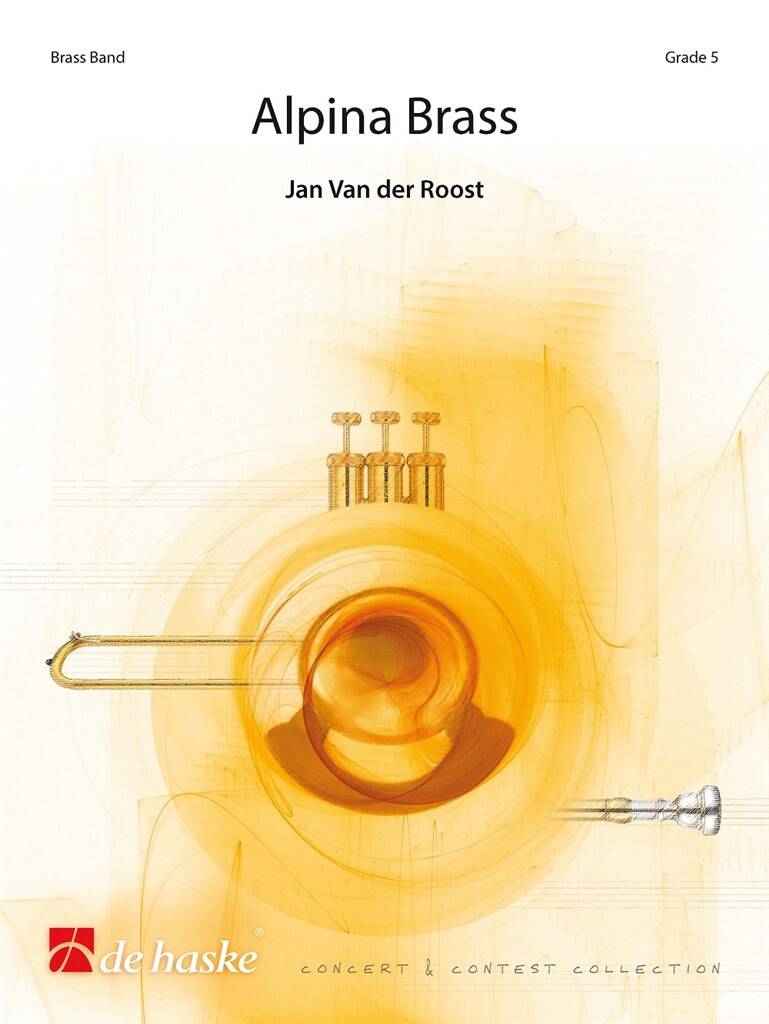
Alpina Brass - Jan Van der Roost
Alpina Brass was the test piece for the first division of the Fetes Cantonales on 8 and 9 June 2019 in Naters, Switzerland. It consists of three movements, and features a variety of aspects, as is common for a competitionwork. However, as a whole, it has been written in such a way that it can perfectly serve as a concert work as well. It is a challenging piece for every section and offers colourful and melodic as well as spectacular rhythmicsequences and a most impressive ending!
Estimated dispatch 5-14 working days
-
 £115.60
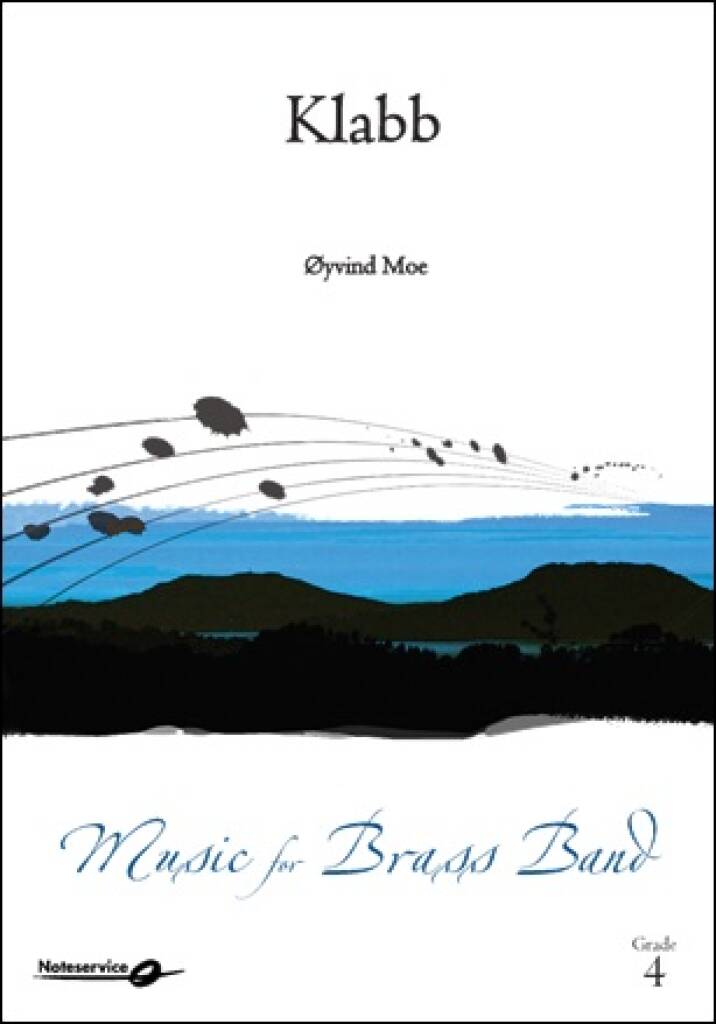
Klabb - Øyvind Moe
Klabb was written in 2010 for the brass band at Manger Folkehogskule and conductor Bjorn Sagstad. The piece consists of a series of short related episodes based on the whole-tone scale, but intermittently tending towards traditional "major" tonality. "Klabb" can refer to punching someone - and the piece is certainly meant to pack a punch - but the common meaning of the word comes from snow clumping to the undersides of skis, or more generally, something that makes for laborious progress. The whole-tone scale is directionless in that it has no implicit pull towards a tonal center, complicating the creation of meaningful and believable harmonic development. In thisrespect, the title can be seen as the composer's expression of frustration with his own choice of basic material (it seemed like a good idea at the time ...). For the performers, the unusual fingering combinations are what constitute the "klabb". Good luck, and don't forget to wax!
Estimated dispatch 5-14 working days
-
 £54.99
Falafel - Peter Martin
Nowadays, vegetarian dishes are quite common on the menu. Music for vegetarians is also becoming more popular. Let yourself be carried away with the whimsical and stirring music from Israel.
Estimated dispatch 5-14 working days
-
 £228.70
Echoes From..... - Kjetil Djønne
The essence of what a school band is, has inspired me in this composition. A hub between musicians of all ages and a place where young people can feel belonging. Several of the values in a school band have a positive impact on how musicians grow and mature. They learn about culture and discipline, as well as experiencing unity and mastery. A school band always has a goal, and achieving goals together, without reserves, is priceless. High ambitions and a common will to improve are recognizable in many school bands. In my opinion Skodvin Skulemusikk got these values: unity, affiliation, effort and ambition.The piece portrays the echo that rings in the hall before the applause after a concert. The echo in the hallways during breaks, or in the rehearsal room during rehearsal. The echo, or consequence, of all the work that is done by both musicians and parents. The echo of a unity and belonging that can last a lifetime.
Estimated dispatch 5-14 working days
-
 £72.99
Prelude and Chorale - Stijn Roels
Prelude and Chorale is a scintillating, dynamic opening piece based on the brilliant finale from the earlier concert work Aureus. The latter work is built around a magnificent hymn--which also forms the common thread running through this overture.As the title suggests, the work begins with a modern 'prelude': a prologue to the actual hymn. The beginning of the hymn, especially, serves as the source of the thematic material. The hymn melody itself is immediately embellished by a counter-melody and supported by a rhythm section of bass and drums. This all leads to an energetic passage in which the proverbial stops are pulled out once more.
Estimated dispatch 5-14 working days
-
£34.95
COVENANTERS, The (Brass Band Set) - Kenneth Downie
In 1638, many members of the Presbyterian Church of Scotland signed a document called the National Covenant. By doing so, they were declaring that they acknowledged only Jesus Christ as the spiritual head of their church, and not any king or queen. This had become necessary because the Stuart kings believed in the Divine Right of Monarchs and saw themselves as head of the church. In the previous year, Charles I had forcibly introduced the Book of Common Prayer, invoking the wrath of the common people who faced the threat of torture, transportation or execution if they did not use the new liturgy and worship at their local church. The net result of this was that many met illegally in the countryside or in barns and large houses. These meetings became known as 'conventides' and many took place in the south-west of the country. Anyone caught attending was at risk of execution by the muskets of the dragoons who were employed in the area for that specific purpose. This music was written to honour the bravery and loyalty of these Christians to their faith, in the face of extreme danger, in the hope that it will inspire us also to be faithful. There are overtones of military threat, secrecy and solidarity. An old pentatonic tune is used, which the composer heard as a boy being sung to the words The Lord's My Shepherd.
Estimated dispatch 7-14 working days
-
 £34.95
Judd: The Covenanters
In 1638, many members of the Presbyterian Church of Scotland signed a document called the National Covenant. By doing so, they were declaring that they acknowledged only Jesus Christ as the spiritual head of their church, and not any king or queen. This had become necessary because the Stuart kings believed in the Divine Right of Monarchs and saw themselves as head of the church. In the previous year, Charles I had forcibly introduced the Book of Common Prayer, invoking the wrath of the common people who faced the threat of torture, transportation or execution if they did not use the new liturgy and worship at their local church. The net result of this was that many met illegally in the countryside or in barns and large houses. These meetings became known as 'conventides' and many took place in the south-west of the country. Anyone caught attending was at risk of execution by the muskets of the dragoons who were employed in the area for that specific purpose. This music was written to honour the bravery and loyalty of these Christians to their faith, in the face of extreme danger, in the hope that it will inspire us also to be faithful. There are overtones of military threat, secrecy and solidarity. An old pentatonic tune is used, which the composer heard as a boy being sung to the words The Lord's My Shepherd.
Estimated dispatch 7-14 working days
-
 £37.35
Nicaea - Band Warm-up (Brass Band) John Bacchus Dykes arr. Steve Kellner
This warm-up is designed to help players and conductors hear and improve section, group, and full band intonation, rhythmic precision, and balance in an efficient and musically satisfying way. The tune Nicaea was selected because of its easy-to-hear triads and intervals, and the harmonisation used throughout is purposely simple and consistent, so that the players can become very familiar with potential intonation trouble spots. Likewise, discrepancies in precision and balance will easily be heard. Keys have been carefully selected to expose specific intonation problems within the sections and groups, like the overlap between Eb and Bb instruments in the horns/baritones and later in euphoniums/basses, and 5th position tuning in the trombones. The format in sections 2 through 5 is consistent, beginning with a single section of the band playing in unison, then expanding into two-part and four-part harmony. After eight bars that section is joined by another section or sections to form a common multi-section group used in brass band scoring, such as the 'mellow choir', 'low brass', 'tuba-euphonium choir', and 'bright choir'. Section 6 features the two largest groupings, the 'all but cornets' and 'high brass'. Section 7 brings the whole band together for a majestic and powerful finish. To view a rolling score video please visit https://www.youtube.com/watch?v=RR3zQhsNTuc Duration: Approx. 5.10 minutes Difficulty Level: 4th Section + Sheet music available from www.brassband.co.uk Instrumentation: Soprano Cornet Eb Solo Cornet Bb Repiano Cornet Bb 2nd Cornet Bb 3rd Cornet Bb Flugel Horn Bb Solo Horn Eb 1st Horn Eb 2nd Horn Eb 1st Baritone Bb 2nd Baritone Bb 1st Trombone Bb 2nd Trombone Bb Bass Trombone Euphonium Bb Bass Eb Bass Bb Percussion 1-2
In Stock: Estimated dispatch 1-3 working days
 View Music