
Results
-
 £154.99
A Road Less Travelled By - Philip Sparke
A Road Less Travelled By(Philip Sparke)Anglo Music | 16 minutesA Road Less Travelled Bywas commissioned byPalangos Orkestrasfor the Championship Section of the 2020 European Brass Band Championships held in Palanga, Lithuania.The composer writes:The title alludes to a poem by American author, Robert Frost, which appeared in his 1916 collection,Mountain Intervals. In common with most of my larger works, the piece is not programmatic, but purely abstract; there is no extra-musical story. The choice of title chimes with my view of how composers can often develop. There can be no 'destination' in a composer's career, but rather a continuing journey to an unknown place. From piece to piece a composer needs to decide his or her next steps, never really knowing where they might lead. As Frost so eloquently describes, these sorts of instinctive decisions guide all our lives.
In Stock: Estimated dispatch 3-5 working days
-
 £34.95
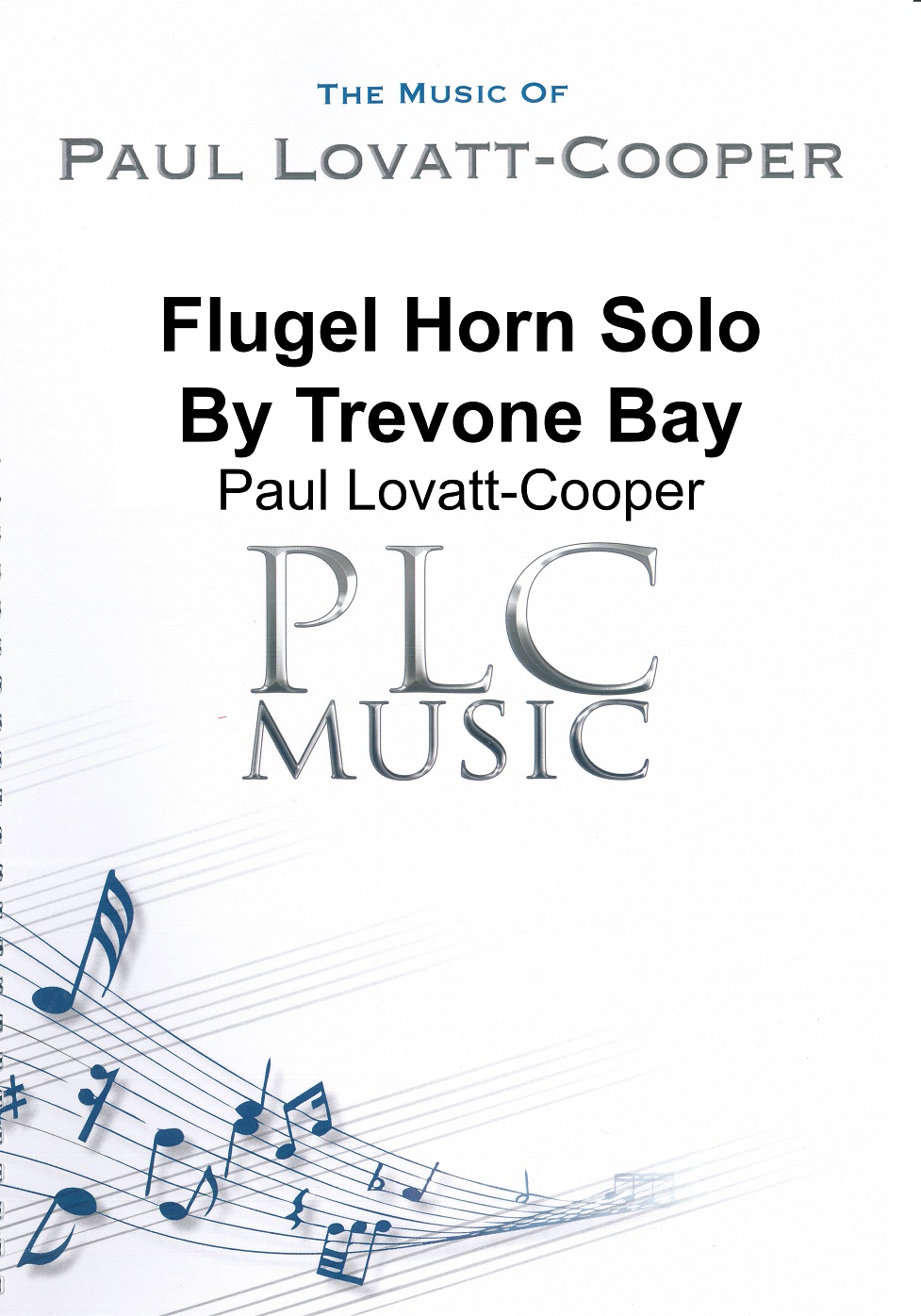
By Trevone Bay (Flugel Horn Solo with Brass Band - Score and Parts))
By Trevone Bay was composed for Flugel Soloist Zoe Hancock and the Black Dyke Band to celebrate both their Double Champion Victory at the British Open and National Championships 2014 and Zoe's unique achievement in winning the Best Soloist Award in both contests - an accomplishment never done before. The world premier was performed by Zoe and the band at Birmingham's Symphony Hall on February 8th 2015.By Trevone Bay is a lovely lyrical slow melody that utilises the full range and colour of the flugel horn. Starting with an atmospheric opening the soloist performs the main theme, which repeats with more colour in the accompanying parts and solo line. After introducing a second theme from the ensemble, the solo cornets perform the main melody with the soloist enjoying a lyrical counter melody. The piece develops with a tranquil middle section from the soloist that builds for the second theme to return, performed by the ensemble while the soloist soars over the top. Ending as it starts, the piece dies away to leave the soloist performing the opening melodic phrase to a tranquil close.As for the title: Trevone Bay is a beautiful tiny bay in Cornwall, close to Zoe's home town of Roche. Its tranquil waters lead out to the Celtic Sea and provide a picturesque landscape. The views there can be enjoyed all year round but they are particularly beautiful at sunset.
Estimated dispatch 7-14 working days
-
 £37.35
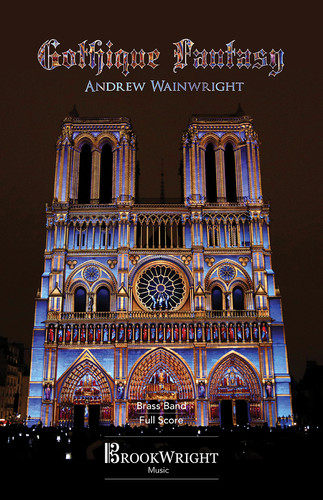
Gothique Fantasy - On a theme by Boellmann (Brass Band Score) Andrew Wainwright
This magnificent work was commissioned by The Illinois Brass Band for the 2024 North American Brass Band Championships. It is also the title track of the 2026 CD by Black Dyke Band, featuring the music of Andrew Wainwright. Please note this PDF download is for the full score. The full set can be purchased here. Based on Leon Boellmann's epic organ work Suite Gothique, the 3rd movement of which is entitled Priere a Notre-Dame (A Prayer for Notre Dame), it pays tribute to the nearly 700-year-old Notre-Dame de Paris after the fire which did so much damage to this iconic building. Notre-Dame stands out for its three pipe organs (one historic) and its immense church bells, which are referenced at various times in Gothique Fantasy. Two of the other movements from Boellmann's work also provide inspiration for the piece, firstly the Introduction - Choral, and the famous Toccata, snippets of which appear at various times in the piece. Gothique Fantasy opens with the Choral, a solo offstage cornet sounding the opening statement. A quintet, stood to the side of the stage, takes up the Choral, while the rest of the band enters on held muted notes, creating a sustained effect evoking the harmonies spreading across the vast cathedral. Colossal organ-like sounds announce themselves as the full band takes on the theme. A lively Animato follows. Here there are continued references to the Choral, while the famous Toccata motif starts to appear. A Misterioso section ensues, which leads into a poignant Prayer for Notre Dame featuring a euphonium duet, where the music reflects upon the devasting fire and centuries of history and artefacts that were lost. A lone euphonium the sounds, representing the remaining remnants of the cathedral. A chaotic and rhythmic Presto, based on the Toccata, then follows and tests the technique of the band from top to bottom, whilst moving through various time signatures, the pulse lacking any sense of stability. A return to the Choral theme leads into a further reflective section, this time featuring the secondary theme from the Toccata with a flugel and solo horn duet. Next the music arrives at an aleatory section (Senza Misura), which depicts the remnants of the fire, followed by the grand cathedral emerging out of the ashes. Various motifs from earlier in the piece are heard across the band. At this point, various parts enter at different times on the conductor's signal, before building towards a 6/8 Presto. Here the music gathers momentum as it leads to a Grandioso finale featuring the Choral in all its glory. However, to conclude the work, the final strains of the Toccata sound, bringing the work to a glorious conclusion as Notre-Dame rises again! To view a video of The Illinois Brass Band performing the work please visit www.youtube.com/watch?v=xG3JB6Ye5aU Duration: 15.00 minutes approx. Difficulty Level: Championship Section Sheet music available from www.brassband.co.uk Instrumentation: Soprano Cornet Eb Solo Cornet Bb Repiano Cornet Bb 2nd Cornet Bb 3rd Cornet Bb Flugel Horn Bb Solo Horn Eb 1st Horn Eb 2nd Horn Eb 1st Baritone Bb 2nd Baritone Bb 1st Trombone Bb 2nd Trombone Bb Bass Trombone Euphonium Bb Bass Eb Bass Bb Percussion 1-4
In Stock: Estimated dispatch 1-3 working days
-
 £74.72
Gothique Fantasy - On a theme by Boellmann (Brass Band) Andrew Wainwright
This magnificent work was commissioned by The Illinois Brass Band for the 2024 North American Brass Band Championships. It is also the title track of the 2026 CD by Black Dyke Band, featuring the music of Andrew Wainwright. Based on Leon Boellmann's epic organ work Suite Gothique, the 3rd movement of which is entitled Priere a Notre-Dame (A Prayer for Notre Dame), it pays tribute to the nearly 700-year-old Notre-Dame de Paris after the fire which did so much damage to this iconic building. Notre-Dame stands out for its three pipe organs (one historic) and its immense church bells, which are referenced at various times in Gothique Fantasy. Two of the other movements from Boellmann's work also provide inspiration for the piece, firstly the Introduction - Choral, and the famous Toccata, snippets of which appear at various times in the piece. Gothique Fantasy opens with the Choral, a solo offstage cornet sounding the opening statement. A quintet, stood to the side of the stage, takes up the Choral, while the rest of the band enters on held muted notes, creating a sustained effect evoking the harmonies spreading across the vast cathedral. Colossal organ-like sounds announce themselves as the full band takes on the theme. A lively Animato follows. Here there are continued references to the Choral, while the famous Toccata motif starts to appear. A Misterioso section ensues, which leads into a poignant Prayer for Notre Dame featuring a euphonium duet, where the music reflects upon the devasting fire and centuries of history and artefacts that were lost. A lone euphonium the sounds, representing the remaining remnants of the cathedral. A chaotic and rhythmic Presto, based on the Toccata, then follows and tests the technique of the band from top to bottom, whilst moving through various time signatures, the pulse lacking any sense of stability. A return to the Choral theme leads into a further reflective section, this time featuring the secondary theme from the Toccata with a flugel and solo horn duet. Next the music arrives at an aleatory section (Senza Misura), which depicts the remnants of the fire, followed by the grand cathedral emerging out of the ashes. Various motifs from earlier in the piece are heard across the band. At this point, various parts enter at different times on the conductor's signal, before building towards a 6/8 Presto. Here the music gathers momentum as it leads to a Grandioso finale featuring the Choral in all its glory. However, to conclude the work, the final strains of the Toccata sound, bringing the work to a glorious conclusion as Notre-Dame rises again! To view a video of The Illinois Brass Band performing the work please visit www.youtube.com/watch?v=xG3JB6Ye5aU Duration: 15.00 minutes approx. Difficulty Level: Championship Section This PDF download includes parts and score. Sheet music available from www.brassband.co.uk Instrumentation: Soprano Cornet Eb Solo Cornet Bb Repiano Cornet Bb 2nd Cornet Bb 3rd Cornet Bb Flugel Horn Bb Solo Horn Eb 1st Horn Eb 2nd Horn Eb 1st Baritone Bb 2nd Baritone Bb 1st Trombone Bb 2nd Trombone Bb Bass Trombone Euphonium Bb Bass Eb Bass Bb Percussion 1-4
In Stock: Estimated dispatch 1-3 working days
-
 £42.00
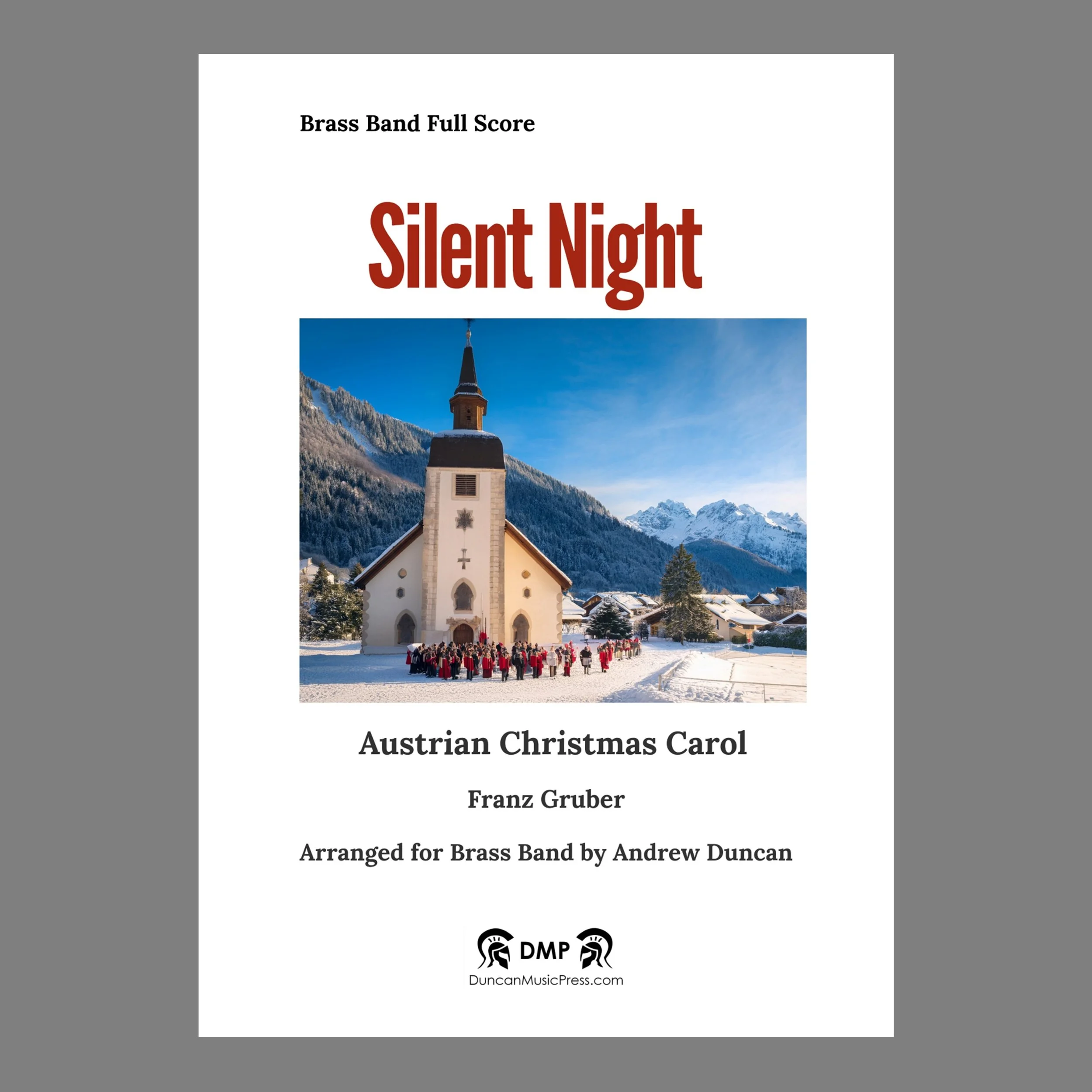
Silent Night. Franz Gruber arranged for brass band by Andrew Duncan
Silent Night is an Austrian Christmas Carol written by Franz Gruber, (1787-1863). Franz Gruber was an primary school teacher, organist and composer who lived in the village of Arndorf in Austria. Silent Night (Stille Nacht) has become one of the best loved Christmas Carols ever written. This arrangement for brass band imagines Christmas morning in a small Austrian village, such as Arndorf, with the sound of the local church bells ringing out along with the sound of a choir singing Silent Night accompanied by the local band.. The arrangement features the tubular bells playing a simple descending scale, which is also played by muted cornets (2nd and 3rd cornets). After 2 verses of the hymn the coda features a short trombone trio with a jazzy feel which leads into a final scale from the tubular bells and cornets bringing the piece to a peaceful close. To hear a sound file of Silent Night scroll down.
-
 £34.00
(I've Had) The Time Of My Life - (Arr. by David Beal) - Brass Band Music Full Score & Parts - LMAM096
COMPOSER: Donald Markowitz, Franke Previte, John DenicolaARRANGER: David Beal"(I've Had) The Time of My Life" is a song composed by Franke Previte, John DeNicola, and Donald Markowitz. It was recorded by American singers Bill Medley and Jennifer Warnes and used as the theme song for the 1987 film Dirty Dancing. The song has won a number of awards, including the Academy Award for Best Original Song, the Golden Globe Award for Best Original Song, and the Grammy Award for Best Pop Performance by a Duo or Group with Vocals.
In Stock: Estimated dispatch 3-5 working days
-
 £34.00
99 Red Balloons (Nena arr. by David Beal) - Brass Band Music Full Score & Parts - LMAM118 DOWNLOAD ONLY
COMPOSER: Carlo Karges, Kevin Mcalea, Joern Uwe Fahrenkrog-PetersonARRANGER: David Beal"99 Luftballons" (German: Neunundneunzig Luftballons, "99 balloons") is a song by the West German band Nena from their 1983 self-titled album. An English-language version titled "99 Red Balloons" (German: Neunundneunzig Rote Luftballons), with lyrics by Kevin McAlea, was also released by Nena on the album 99 Luftballons in 1984 after widespread success of the original in Europe and Japan. The English version is not a direct translation of the German original and contains lyrics with a somewhat different meaning. In the US, the English-language version did not chart, while the German-language recording became Nena's only US hit on the Billboard Hot 100.
In Stock: Estimated dispatch 3-5 working days
-
 £51.00
A Christmas Trifle by Andrew Duncan
A Christmas Trifle is a fantasy for brass band based on the famous English Carol, God Rest Ye Merry Gentlemen. The piece begins very lively before changing to a more jazzy style with a walking bass. This is followed by a jazz-waltz in 5/4 with solos for flugal, euphonium and soprano cornet which leads into a slow chorale section, gradually building from p to fff . This is followed by the final section which begins with a simple sleigh bell pulse over which the Tchaikovsky Christmas favourite, Trepak from the Nutcracker Suite is merged with the God Rest Ye Merry Gentlemen theme bringing A Christmas Trifle to a rousing close. To listen to a sound file of A Christmas Trifle scroll down on this page.
-
 £35.73
All By Myself (Eb Soprano Cornet) - Kevin Ackford
Score & Parts The huge 1975 hit for Eric Carmen which has been covered by artists such as Celine Dion, Frank Sinatra and Only Men Aloud. Originally commissioned by Amanda Gardner from the Lanner & District Silver Band this arrangement has been a huge hit with audiences.
Estimated dispatch 5-7 working days
-
 £30.00
Ave Verum Corpus (WA Mozart arr. by Alex McGee) - Brass Band Sheet Music Full Score & Parts - LM579 - W. A. Mozart - Alex McGee
COMPOSER: W. A. MozartARRANGER: Alex McGeeThe wonderful Ave Verum Corpus arranged for brass band by Alex McGeeAve verum corpus("Hail, True Body"), (K.618), is amotetinD majorcomposed byWolfgang Amadeus Mozartin 1791. It is a setting of theLatinhymnof the same name. Mozart wrote it for Anton Stoll, a friend who was the church musician ofSt. StephaninBaden bei Wien. The motet was composed for the feast ofCorpus Christi; theautographis dated 17 June 1791. It is scored forSATBchoir,string instrumentsandorgan.LM579 - ISMN : 9790570005796
In Stock: Estimated dispatch 3-5 working days


