
Results
-
 £104.99
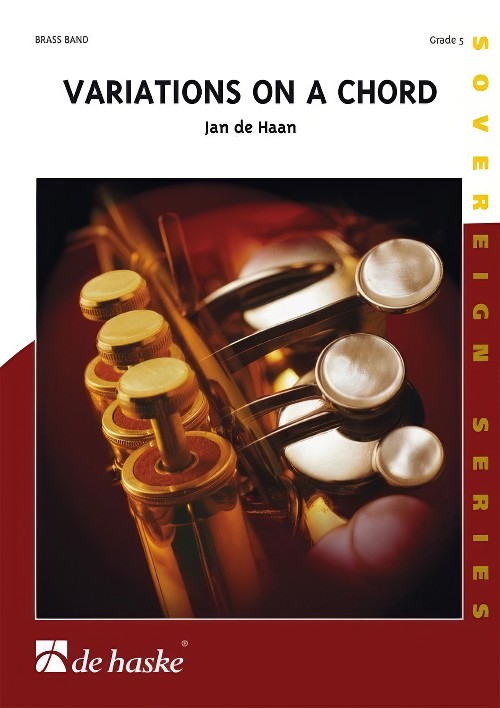
Variations on a Chord (Brass Band - Score and Parts) - De Haan, Jan
Variations on a Chord was composed on the occasion of the second lustrum of the Dutch Brass Band Championships celebrated in 1990. The piece is the immediate sequel to Contrasten a piece which was composed in 1986, and which is performed all over the world. Not only was the final chord of this previous work used as a starting point for the new composition, but Variations on a Chord is also the first concert piece for brass band composed by Jan de Haan since then. The several variations are based on a solemn theme. The so-called minor-major seventh chord is easily detectable. The structure of the piece is such that the lyrical theme is preceded by a majestic introduction, and is followed by eight variations each strongly contrasting in character. The piece finishes in a short but extremely spectacular coda.Duration: 11:45
Estimated dispatch 7-14 working days
-
 £45.00
Mars, The Bringer of War (from The Planets) (Brass Band - Score and Parts) - Holst, Gustav - Littlemore, Phillip
Holst's suite The Planets was written between 1914 and 1916 and with the exception of Mercury, which was written last, Holst wrote the music in the sequence we hear them. So, in 1914, came the insistent rhythmic tread of Mars, The Bringer of War. It is widely known that the sketches were completed prior to the outbreak of the First World War, so the music is less a reaction to the declaration of war itself, but more an impending sense of inevitability of a war to unfold. An ideal concert opener, especially in this current year as it is not only the 100th anniversary of the piece itself, but of The Great War. Duration: 7:20
Estimated dispatch 7-14 working days
-
 £35.00
Pavane (Brass Band - Score and Parts) - Faure, Gabriel - Littlemore, Phillip
It is believed that Gabriel Faure wrote his Pavane as a piano piece in 1887, describing it as 'elegant, but not otherwise important'. He began work on the orchestral version a few months later, and scored it for modest forces, with the intention of performing it at a series of light Summer concerts that same year. At the behest of his benefactor, Elisabeth Greffulhe, he added a four-part choir, but it is rarely heard with the chorus these days. From the outset, the Pavane enjoyed great popularity. The music flows delicately and gracefully. A pulse beats gently and constantly beneath the arching melody lines, with elegant harmonic shifts and turns before the briefest of dramatic episodes. Calm is restored and the work draws to a tranquil conclusion. Duration: 6:00
Estimated dispatch 7-14 working days
-
 £45.00
Symphony No.1, Finale from (Brass Band - Score and Parts) - Rachmaninoff, Sergei - Littlemore, Phillip
Rachmaninov composed his First Symphony in 1895, at the age of just 22 years. It received its first performance on March 27, 1897, at a Russian Symphony Society concert in St. Petersburg with Alexander Glazunov conducting. The premiere was not well-received, and Rachmaninov himself blamed Glazunov for a lacklustre approach for beating time rather than finding the music. Some contemporary reports even suggested that Glazunov was inebriated when he took to the stage! Despite the disappointment of the premiere performance, Rachmaninov never destroyed the score but left it behind when he left Russia to settle in the West, eventually it was given up for lost. After the composer's death, a two-piano transcription of the symphony surfaced in Moscow, followed by a set of orchestral parts at the conservatory in Saint Petersburg. In March 1945, the symphony was performed in Moscow for the first time since its 1897 premiere. It was a grand success, and this led to a new and more enthusiastic evaluation of the symphony. In March 1948 it received a similarly successful American premiere and the work proceeded to establish itself in the general repertory. The final movement (Allegro con fuoco) is colourful and grand but not without its darkly contrasting, menacing episodes that intensifies its malevolence. It is a work overflowing with ideas demonstrating a strong, highly individual, and self-assured young talent. Duration: 5:40
Estimated dispatch 7-14 working days
-
 £124.95
Diary of a Madman (Twenty-Fourth February) (Brass Band - Score and Parts) - Clarke, Nigel
From the beginning of history, warlords, emperors and dictators have risen up, some benign but many of them a scourge on humanity. Names that resonate to this day include Julius Caesar, Caligula, Genghis Khan, Ivan IV (The Terrible), Attila the Hun, Vlad IV (The Impaler), Hitler, Stalin, Mao Zedong, Pol Pot, all of whom were responsible for wanton destruction and the torture and death of millions of victims, either citizens of invaded countries and territories and or indeed, their own peoples.Diary of a Madman starts with a light-hearted march that gives the impression of toy tin soldiers parading in a brightly-coloured ceremonial pageant from a fairy tale, conveying peace and innocence. This spectacle is abruptly interrupted by a 'shock and awe' fanfare-like march, symbolising aggression and war. This theme grinds slowly to a halt, and an atmosphere of introspection, sadness and despair takes over. Rising above the smoky theatre of war, we then hear a distant cornet give a rendition of the Ukrainian Nation Anthem (The glory and freedom of Ukraine has not yet perished. Luck will still smile on us brother-Ukrainians). The solo cornet soon enters a fragile duet with a second cornet accompanied by dark undertones. One by one, we hear short shards of aggressive fanfare-like figures from various instruments in the band. The mood breaks - we hear strident fortissimo whole-tone scales representing pealing church bells, warning of danger. In contrast, we also hear pianissimo whole-tone scales announcing that the enemy's troops are falling back. A counter-offensive soon takes centre stage, and battles and skirmishes are heard, with short quotations from Mussorgsky's `Great Gates of Kyiv' symbolising the defenders' heroic struggle.All sides are victims of the Dictator's ambition! The slow central section offer us moments of melancholic beauty and utilises Henry Purcell's `When I am laid in earth' (`Dido's Lament' from Dido and Aeneas 1688). This music represents the loss of homes, dignity and loved ones. There are occasional hints at better times as the theme of the parading toy tin soldiers is heard from afar, like a distant memory.To announce the final push, we hear a church bell strike and an air raid siren signalling a ferocious musical counter-attack. After one final rendition of the Purcell theme, Diary of a Madman closes with a mood of triumph over tyranny.- Nigel Clarke
Estimated dispatch 7-14 working days
-
£57.95
Diary of a Madman (Twenty-Fourth February) (Brass Band - Score only) - Clarke, Nigel
From the beginning of history, warlords, emperors and dictators have risen up, some benign but many of them a scourge on humanity. Names that resonate to this day include Julius Caesar, Caligula, Genghis Khan, Ivan IV (The Terrible), Attila the Hun, Vlad IV (The Impaler), Hitler, Stalin, Mao Zedong, Pol Pot, all of whom were responsible for wanton destruction and the torture and death of millions of victims, either citizens of invaded countries and territories and or indeed, their own peoples.Diary of a Madman starts with a light-hearted march that gives the impression of toy tin soldiers parading in a brightly-coloured ceremonial pageant from a fairy tale, conveying peace and innocence. This spectacle is abruptly interrupted by a 'shock and awe' fanfare-like march, symbolising aggression and war. This theme grinds slowly to a halt, and an atmosphere of introspection, sadness and despair takes over. Rising above the smoky theatre of war, we then hear a distant cornet give a rendition of the Ukrainian Nation Anthem (The glory and freedom of Ukraine has not yet perished. Luck will still smile on us brother-Ukrainians). The solo cornet soon enters a fragile duet with a second cornet accompanied by dark undertones. One by one, we hear short shards of aggressive fanfare-like figures from various instruments in the band. The mood breaks - we hear strident fortissimo whole-tone scales representing pealing church bells, warning of danger. In contrast, we also hear pianissimo whole-tone scales announcing that the enemy's troops are falling back. A counter-offensive soon takes centre stage, and battles and skirmishes are heard, with short quotations from Mussorgsky's `Great Gates of Kyiv' symbolising the defenders' heroic struggle.All sides are victims of the Dictator's ambition! The slow central section offer us moments of melancholic beauty and utilises Henry Purcell's `When I am laid in earth' (`Dido's Lament' from Dido and Aeneas 1688). This music represents the loss of homes, dignity and loved ones. There are occasional hints at better times as the theme of the parading toy tin soldiers is heard from afar, like a distant memory.To announce the final push, we hear a church bell strike and an air raid siren signalling a ferocious musical counter-attack. After one final rendition of the Purcell theme, Diary of a Madman closes with a mood of triumph over tyranny.- Nigel Clarke
Estimated dispatch 7-14 working days
-
 £99.99
Lucerne Dances (Brass Band - Score and Parts) - Sparke, Philip
Lucerne Dances consists of three movements, which play without a break and offer variety in abundance, with athletic figures, full chords, suave melodies, and alternating robust and mysterious themes. Several soloists are brought into the limelight, but each section, as well as the band as a whole, will have the opportunity to shine. In short: a captivating work with a festive touch that both the band and the audience will enjoy.Duration: 11.00
Estimated dispatch 7-14 working days
-
 £15.00
Symphony in Two Movements (Brass Band - Study Score) - Gregson, Edward
Selected as the Championship Section test piece for the National Brass Band Championships of Great Britain 2025This work was jointly commissioned by the National Youth Brass Band of Great Britain (NYBBGB) and the National Youth Brass Band of Wales (NYBBW), the latter with funding from T Cerdd (Music Centre Wales), to celebrate their 60th and 30th anniversaries respectively. The first performances were given at Cadogan Hall, London, in April 2012, by the NYBBGB, conducted by Bramwell Tovey; and at the Great Hall, Aberystwyth University, in July 2012, by the NYBBW, conducted by Nicholas Childs.When I was approached about a joint commission to write a new work to celebrate the anniversaries of these two outstanding youth bands I was delighted to accept, and decided to respond by writing a work apposite for the magnitude of these special occasions, namely a 'symphony for brass'.Through a long journey of writing music for brass band, which commenced with Connotations (1977), and continued with Dances and Arias (1984), Of Men and Mountains (1991), The Trumpets of the Angels (2000) and Rococo Variations (2008), I arrived at what I regard as the most important work of the cycle to date, combining as it does serious musical intent with considerable technical demands. It is perhaps my most abstract work for brass band, avoiding any programmatic content.The symphony lasts for some 19 minutes and is structured in two linked movements. The form is based on that used by Beethoven in his final piano sonata (Op.111), which is in two movements only: a compact sonata-form allegro, followed by a more expansive theme and four variations. Prokofiev also adopted this model in his 2nd Symphony of 1925.The opening Toccata of this Symphony is highly dramatic but compact, whilst still retaining the 'traditional' structural elements of exposition, development and recapitulation; indeed, it also has the 'traditional' element of a contrasting second subject - a gentle, lyrical modal melody first heard on solo cornets.In contrast, the longer and more substantial second movement Variations is built around a theme and four variations. The slowly unfolding chorale-like theme accumulates both added note harmony and increasing instrumentation, whilst the four variations which follow are by turn mercurial (fast, starting with all the instruments muted), march-like (menacing, with short rhythmic articulations underpinning an extended atonal melody), serene (a series of 'romances' for solo instruments alongside echoes of the chorale) with an emerging theme eventually bursting into a climax of passionate intent; whilst the final variation is a dynamic scherzo (concertante-like in its series of rapid-fire solos, duets, trios and quartets) with the music gradually incorporating elements of the main ideas from the first movement, thus acting as a recapitulation for the whole work. It reaches its peroration with a return to the very opening of the symphony, now in the 'home' tonality of F, and thus creating a truly symphonic dimension to the music.Most of the melodic material of the symphony is derived from the opening eleven-note 'row', which contains various intervallic sets, and although the work is not serially conceived it does use some typical quasi-serial procedures, such as canons, inversions, and retrogrades. The symphony uses somewhat limited percussion, in line with a 'classical' approach to the sound world of the brass band, alongside a use of multi-divisi instrumentation, whereby each player has an individual part rather than the traditional doubling within certain sections of the band.- Edward GregsonDuration: 19.00
Estimated dispatch 7-14 working days
-
 £49.99
Chorale for Peace (Brass Band - Score and Parts) - Deleruyelle, Thierry
Chorale for Peace is a song of hope and peace for humanity. In commissioning this work, the wind band of Le Portel (France) wanted to pay tribute to the victims of 8 September 1943, when around 100 Allied planes dropped more than 5,000 bombs on the town of Boulogne and the surrounding area. In fact, this operation was nothing more than a diversion to make the enemy believe that a landing was imminent in the north of France. This music is slow, an adagio commemorating the human sacrifice of this operation. But more broadly, the composer also wanted to express his support for the peoples who, even today, suffer oppression.This set includes an optional choir part that offers the possibility of making an even deeper impression on the listener.Duration: 6.00
Estimated dispatch 7-14 working days
-
 £31.95
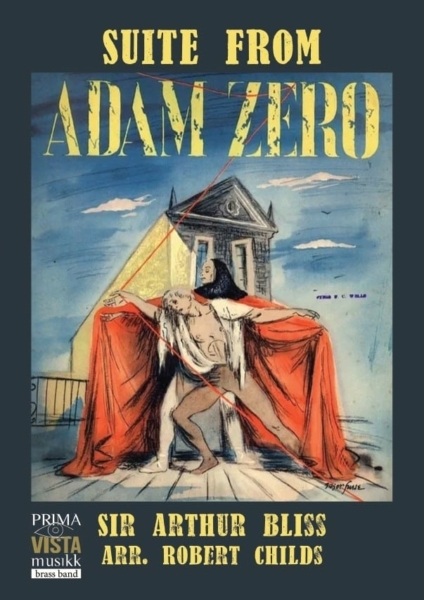
Adam Zero, Suite from (Brass Band - Score only) - Bliss, Arthur - Childs, Robert
Selected as the Section 2 test piece for the National Brass Band Championships of Great Britain 2025Following his ballet Checkmate, Bliss composed another score for the, by then, Sadler's Wells Ballet, Miracle in the Gorbals, which was choreographed by Robert Helpmann, to a scenario by Michael Benthall. Premired in 1944, the ballet made a considerable impact and was a box-office success. It was followed in turn by a further collaboration with Helpmann and Benthall, Adam Zero. This would serve Helpmann, in the eponymous role, as a vehicle in two respects: demonstrating his gifts as a dancer-actor and as a choreographer. First performed at the Royal Opera House, Covent Garden, on 8 April 1946, Adam Zero was conducted by Constant Lambert, the work's dedicatee. Bliss considered it 'his most varied and exciting ballet score'. Benthall provided a synopsis for the programme:There is a philosophy that life moves in an endless series of timeless cycles. As Nature passes through Spring, Summer, Autumn and Winter, so man is born, makes a success in his own particular sphere, loses his position to a younger generation, sees his world crumble before his eyes and only finds peace in death. This age-old story is told in terms of a Company creating a ballet and calling on the resources of the theatre to do so. Lighting, stage mechanism, dance conventions, musical forms and costumes and scenery of all periods are used to symbolize the world of 'Adam Zero'.Apart from Adam, as the Principal Dancer, other main roles included the Stage Director (representing Omnipotence), and Adam's Fates (Designer, Wardrobe Mistress, and Dresser). 'The Woman in this allegory', wrote Bliss, 'under the symbol of the Choreographer, was both the creator and destroyer of Adam: his first love, his wife, his mistress, and finally the figure of beneficent Death.' When the curtain rose, the 'audience saw the Covent Garden stage right back to the wall, completely empty except for the protagonists, 'the Company poised, still and expectant, as they await the birth of... Adam Zero.'Unfortunately, soon after the premire, Helpmann injured himself and had to withdraw from the remaining performances. Despite generally positive reviews, the ballet did not capture the imagination of audiences and, to Bliss's considerable disappointment, was not revived. Seventy years would elapse before its first major return to the stage, in 2016, performed by the ballet company of Stadttheater Bremerhaven with choreography by Sergei Vanaev.Bliss extracted a concert suite from the ballet, conducting its first performance with the City of Birmingham Symphony Orchestra on 28 October 1948. For his own suite, arranged for brass band in 2023, Dr Robert Childs chose three dances linked to the seasons, book-ending them with the ebullient 'Fanfare Overture' and 'Fanfare Coda'. After Adam has grown to manhood, his Fates clothe him in a costume synonymous with confident youth, appropriate for the virile, ardent 'Dance of Spring'. In the 'Approach of Autumn', Adam, now wearing a sombre costume, has grown older: his Fates have streaked grey in his hair and put lines on his face. But they had earlier raised Adam to the zenith of his power, and the 'Dance of Summer' depicts him in the prime of life, in music of sweeping grandeur. The 'Fanfare Coda' signals that the next cycle of life is about to begin.Duration: 10.30
Estimated dispatch 7-14 working days
 View Music