
Results
-
£32.00
Ravenswood - Rimmer, W
William Rimmer, undoubtedly the BritishMarch King as far as brass bands are concerned,penned many famous marcheswhilst he was Music Editor with Wright andRound. Ravenswood was one of his personalfavourites. Freshly engraved andprinted and now with a full conductor'sscore. Probably the most heard march onWhit Friday!3rd section +
In Stock: Estimated dispatch 1-3 working days
-
 £45.00
Wellerman - Sea Shanty Medley
ABOUT THIS PIECE: We don't sell sugar, tea, or rum - nor do we condone the taking of whales in tow! We do sell some pretty exciting music though, and this latest arrangement from Adam D J Taylor is sure to be a right 'knees up' for ensemble, audience and parrots alike. Scored for brass band with optional choir, this is a fun and challenging arrangement of a few famous sea shanties with 'film music' undertones throughout. ENSEMBLE: Standard British Brass Band with optional SATB Choir* *SATB parts additional cost (minimum 4-copy order at �4.99 per copy, then �1 per copy thereafter). To order this piece with SATB parts, please contact us here. WHEN YOU BUY THIS PRODUCT, YOU GET: High-quality printed score and parts LEVEL: 2 LISTEN: Click here to hear a recording with choir (Black Dyke Mills Band & Huddersfield Choral Society) Click below to hear the piece played at the famous Changing of the Guard at Buckingham Palace: DURATION: 4-minutes 30-seconds EXAMPLE SCORE: Click here LEVEL GUIDE: Level 1- Accessible to all Level 2 - c. UK third section and higher Level 3 - c. UK second section and higher Level 4 - c. UK first section and higher Level 5 - c. UK championship section level
Estimated dispatch 5-7 working days
-
£34.95
SOUTHERN CROSS, The (Brass Band Set) - Brian Bowen
The Southern Cross is one of several excellent marches by Brian Bowen in which he carried on the more sophisticated pattern of British marches by Wilfred Heaton, Leslie Condon and Ray Steadman-Allen. It was written for the Box Hill (Australia) Corps jubilee celebrations in 1970 and formed part of the band's repertoire when it toured Great Britain in the same year. The first half of the march features part of the song, 'March on!' by Klaus Ostby, an early pioneer of Salvation Army music in Scandinavia. The contrapuntal layering of melodies in the trio, especially in the finale where 'March on!' sounds one more triumphant time, is notable, as is the shift to a slower, more stately tempo. The harmonic and rhythmic style also represents the more modern sounds of Salvation Army brass band music in the late 1960s and early 1970s. Right from the opening gestures, listeners at early performances knew that a page had turned in the evolution of the Salvation Army march.
Estimated dispatch 7-14 working days
-
£59.95
ROMANS 8 Brass Celebration (Brass Band Set) - Ray Steadman-Allen
Based on the eighth chapter of Romans, this music was composed as a companion to a series of bible studies at the 1985 British National School of Music. The tunes of four songs are presented, each supporting the ideas of the chapter; 'This joyful Eastertide' 'We are born of the Spirit' 'Lord of all hopefulness' and 'In the Cross of Christ I glory'.
Estimated dispatch 7-14 working days
-
 £30.00
A Redbridge Raga - Chris Wilcox
Put simply, a 'Raga' is a scale used in Indian music, but aside from being a series of ascending and descending notes, ragas are also associated with different moods and with particular times of the day or year. A Redbridge Raga is influenced by the use of the 'Raga Bhairav' (a morning raga) which is clearly outlined in the mysterious opening of the piece. The following section is much more lively, incorporating elements of Bhangra (a musical style emanating from the fusion of Indian folk music with British pop culture). The title reflects the location of the first performance that took place at Redbridge Town Hall, East London.
-
 £88.00
Bass Trombone Concerto - Christopher Brubeck
Grammy-nominated composer Chris Brubeck continues to distinguish himself as an innovative performer and composer who is clearly tuned into the pulse of contemporary music. Respected music critic for The Chicago Tribune, John von Rhein called Chris: "a composer with a real flair for lyrical melody--a 21st Century Lenny Bernstein." In addition to creating an impressive body of work, including several band pieces, chamber pieces, 3 concertos for trombone, a trombone quartet, and several concertos for stringed instruments, Chris maintains a demanding touring and recording schedule playing bass and trombone with his two groups: the Brubeck Brothers Quartet, with brother Dan on drums, Chuck Lamb on piano and Mike DeMicco on guitar (www.brubeckbrothers.com); and Triple Play, an acoustic jazz-funk-blues-Americana trio with Joel Brown on guitar and Peter Madcat Ruth on harmonica and Chris on bass, trombone and piano (www.chrisbrubeckstripleplay.com.) Additionally, Chris performs as a soloist playing his trombone concertos with orchestras and has served as Artist in Residence with orchestras and colleges in America, coaching, lecturing, and performing with students and faculty. Once a year he tours England with the group "Brubecks play Brubeck" along with brothers Darius (on piano) and Dan as well as British saxophonist Dave O'Higgins. Chris had been a long-standing member of the Dave Brubeck Quartet, writing arrangements and touring and recording with his father's group for over 20 years.
-
 £30.00
KirkFeld - Grant Kirkhope
Grant Kirkhope is a BAFTA nominated British composer who has created the soundtrack for video games that have sold in excess of 30 million copies. From "GoldenEye" to "Banjo-Kazooie", "Viva Pinata" to "Donkey Kong", "Kingdoms of Amalur: Reckoning" to "Civilization: Beyond Earth" and "Perfect Dark" to "Castle of Illusion starring Mickey Mouse". He has also recently scored the feature film "The King's Daughter" starring Pierce Brosnan and William Hurt and is currently working on "Yooka Laylee" and "Dropzone". Grant's score for "Viva Pinata" was nominated by BAFTA in the Original Score category in its 2007 awards. Grant is represented by the prestigious Gorfaine/Schwartz Agency by Cheryl Tiano and Kevin Korn. Grant has a degree in music from the Royal Northern College of Music, Manchester, where he majored in classical trumpet, is a green card holder and now lives in Agoura Hills, LA with his wife and two children.
-
 £102.99
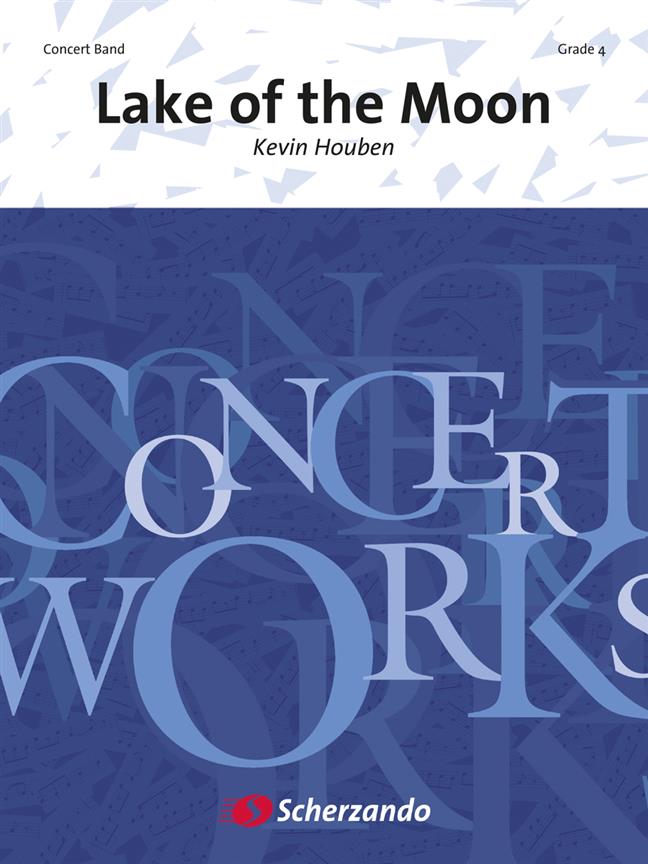
Lake of the Moon (Brass Band - Score and Parts)
3rd Section Test Piece 2016 National Finals of the British Brass Band Championship.The travels of the Aztec people as they headed south through North America looking for a new home, acted as the inspiration for Lake of the Moon. The composition contains small fragments of Oriental music and South American rhythms and occasionally, Russian Cossacks seem to raise their heads. The journey from North to South is not without danger, which is represented by threatening sounds within the music. In the Adagio divoto the composer takes us along to the Texcoco Lake, which the Aztecs called the lake of the moon. Bring a little bit of South American history to your concert with Lake of the Moon.Duration: 11:15
Estimated dispatch 7-14 working days
-
 £34.95
The Southern Cross (Brass Band - Score and Parts)
The Southern Cross is one of several excellent marches by Brian Bowen in which he carried on the more sophisticated pattern of British marches by Wilfred Heaton, Leslie Condon and Ray Steadman-Allen. It was written for the Box Hill (Australia) Corps jubilee celebrations in 1970 and formed part of the band's repertoire when it toured Great Britain in the same year. The first half of the march features part of the song, 'March on!' by Klaus Ostby, an early pioneer of Salvation Army music in Scandinavia. The contrapuntal layering of melodies in the trio, especially in the finale where 'March on!' sounds one more triumphant time, is notable, as is the shift to a slower, more stately tempo. The harmonic and rhythmic style also represents the more modern sounds of Salvation Army brass band music in the late 1960s and early 1970s. Right from the opening gestures, listeners at early performances knew that a page had turned in the evolution of the Salvation Army march.
Estimated dispatch 7-14 working days
-
 £50.00
Judd: Romans 8
Based on the eighth chapter of Romans, this music was composed as a companion to a series of bible studies at the 1985 British National School of Music. The tunes of four songs are presented, each supporting the ideas of the chapter; 'This joyful Eastertide' 'We are born of the Spirit' 'Lord of all hopefulness' and 'In the Cross of Christ I glory'
Estimated dispatch 7-14 working days
 View Music