
Results
-
 £94.99
October - Eric Whitacre - Philip Sparke
The continuing popularity of Eric Whitacre's dramatic and evocative music is evident in concert programming everywhere, with his symphonic, choral and operatic works. October is arguably his most notable symphonic work, now adapted in this stunning version for brass band.
Estimated dispatch 5-14 working days
-
 £60.00
Lock Horns/Rage On - Simon Dobson
Simon Dobson's dynamic and unusual concert march Lock Horns/Rage On was commissioned by the Leyland Band and their conductor Jason Katsikaris, and formed part of their programme for the Brass in ConcertChampionships, held at The Sage, Gateshead on 15th November 2009. Brass Band Grade 4/5: Premier Youth and 2nd Section Duration: 4 minutes
Estimated dispatch 5-14 working days
-
 £19.95
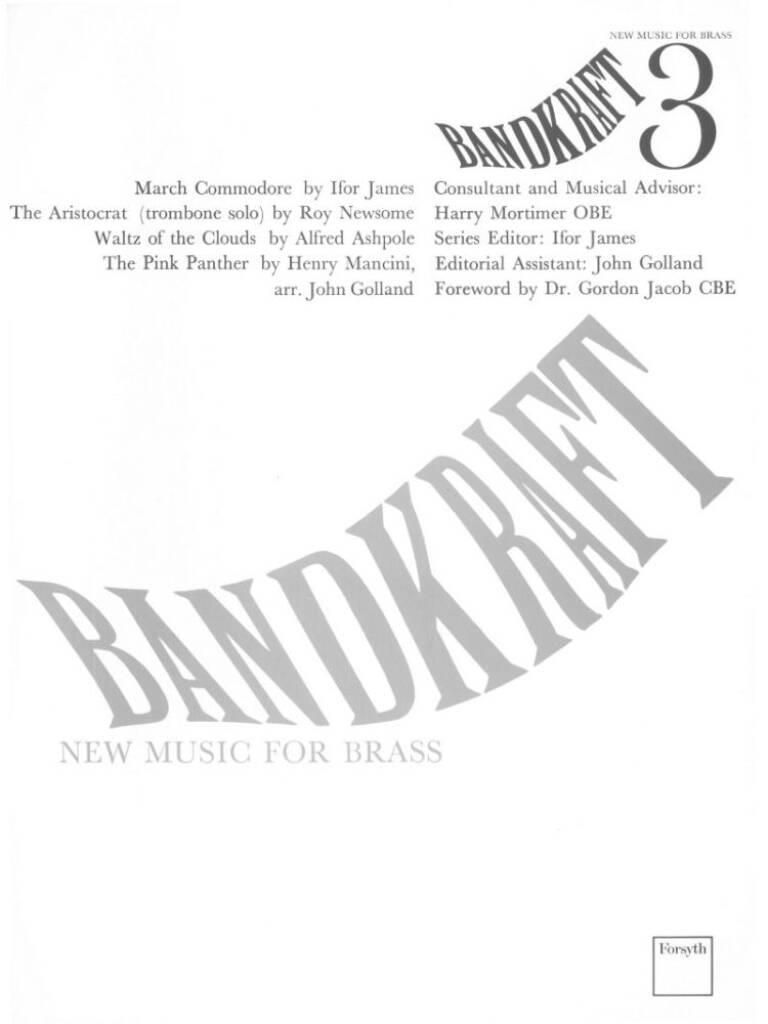
Bandkraft 3
The third of three superb sets of new music and arrangements for brass ensembles.March Commodore - Ifor James: A striking piece well suited for performance in concert or on the march.The Aristocrat - Roy Newsome: A not too difficult trombone solo, providing animated, musical fun for band and audience alike, and which gives the trombonist ample opportunity to play the fool.Waltz of the Clouds - Alfred Ashpole: A Viennese style waltz by a composer with unparalleled experience of writing for bands.Pink Panther - Mancini, arr. John Golland: The original Mancini Pink Panther translated for brass band. Watch out for his sneaky rhythms, which need proper dance band treatment.
Estimated dispatch 5-14 working days
-
 £89.95
Songs of Ascent - Jonathan Bates
DURATION: 14 minutes. DIFFICULTY: Championship. 'Songs of Ascent' was composed for the Royal Northern College of Music Brass Band, as part of their programme for the 2019 RNCM Festival of Brass. In my view, the festival itself is the leading showcase for original contemporary music for the medium (in a concert setting) in the world and therefore an ideal place to explore new ideas and sounds, which was a notion fundamental to the construction of this work. The piece is subtitled 'Out of the Depths, I cry to you, O Lord'; the opening line of Psalm 130 (which forms part of a set of 15 psalsm, 120-134 known as the Songs of Ascent") which forms the main inspiration for much of the musical material. Following an extended opening for four individual tuba lines, there are a number of solos for members of the band off stage, with bleak and deep accompaniment lines, reflecting the words of Psalm 130. Amongst these 'songs of ascents', the most common and strong themes are repentance and redemption; with the central core of this work emerging 'from the depths' to reveal one of very few calming and reflective passages of the work utilising the tune of 'Guide Me O Thy Great Redeemer' in a new setting, featuring the Solo Horn and Bass Trombone, before returning to the ethereal and dark timbres that form much of the music up to this point. In terms of compositional technique, this work is solely based on a set of 4 9-note scales in their various unique transpositions (below). Each of these scales provide a set of 2 whole tone scales, 6 minor triads, 6 major triads and is built on 9 augmented triads. Whilst most of the music in this work is based melodically on the set of notes (heard right at the outset in the motif in the tuba line), the central section delves into the harmonic capabilities of these 'modes', using a number of the 7 'keys' which can be derived from the minor & major chords derived in each scale. All 4 scales are used independantly to each other, with whole sections of the work focussing on each mode. 'Songs of Ascent' was selected as the set work for the Championship Section at the Butlin's Mineworker's Championships in 2020.
In Stock: Estimated dispatch 1-3 working days
-
£45.00
Salsation - Shire, D - Harper, P
This song was composed for the 1977 John Travolta film Saturday Night Fever, and the 70s disco vibe is never far from the surface of the music. In combination with the scat style of Latin singer Tania Maria, this arrangement features virtuosic solos for tenor horn, trombone and soprano cornet, with all the B cornets kept thoroughly busy throughout!This piece is on the CD Cory in Concert Volume V.Championship SectionDuration 4 minsListen to Cory BandCourtesy of World of Brass
In Stock: Estimated dispatch 1-3 working days
-
£45.00
Finale to Act I of Tosca - Puccini, G - Harper, P
The spectacular Te Deum from the Finale to Act I of Tosca, it begins quietly with the tolling bell as worshippers gather for Mass. The euphonium plays the part of the villainous Scarpia as the music gathers strength. Finally the doors of the church are thrown open and the glorious Te Deum fills the hallowed space.Featured on the CD Cory in Concert Volume V.1st SectionDuration 5 minsListen to Cory BandCourtesy of World of Brass
In Stock: Estimated dispatch 1-3 working days
-
 £44.50
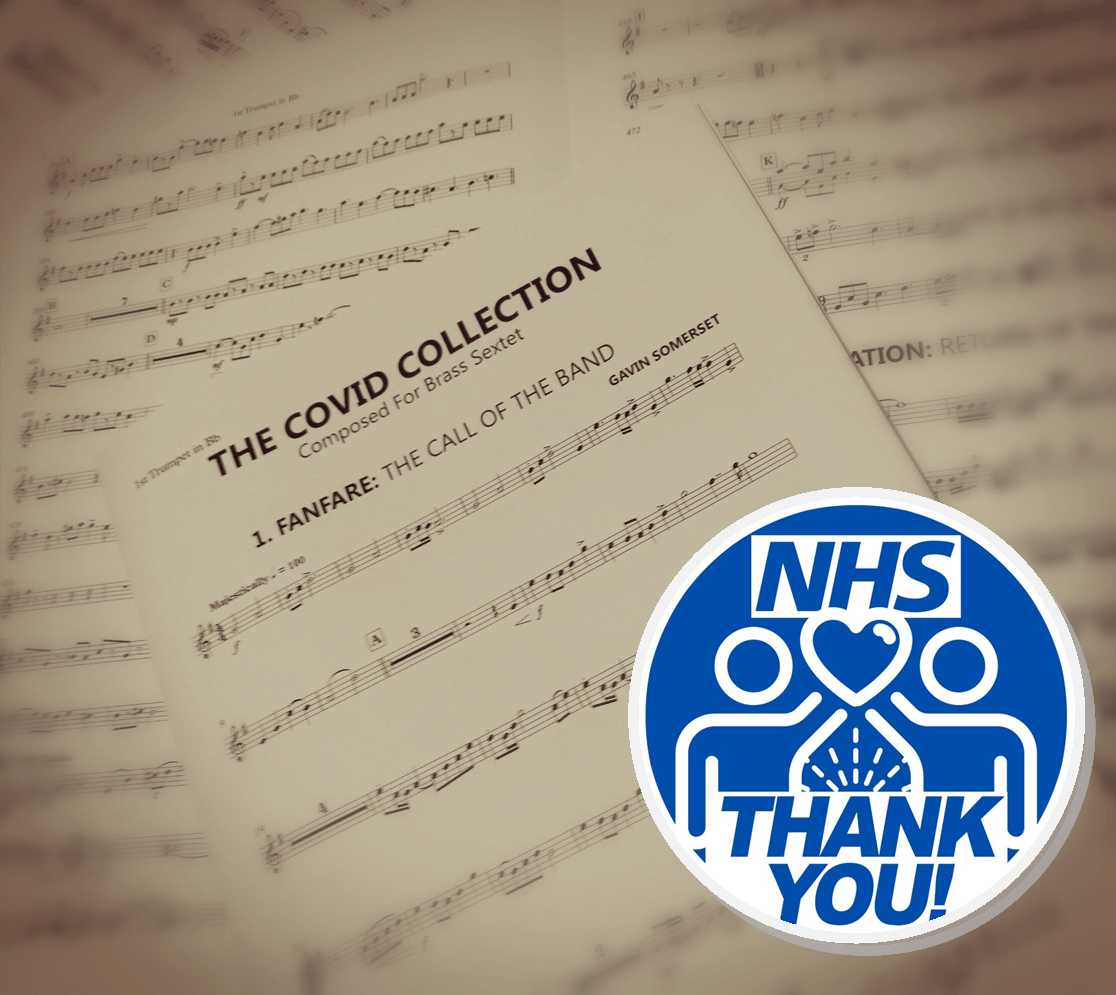
The Covid Collection - Gavin Somerset
This exciting new 22-minute concert suite for Brass Sextet has been composed during the months of lockdown charting the feelings of a nation, with seven movements playable by 6 (or more) players. The music was composed with the intention for players to perform either together live in a small group, in isolation by way of a virtual performance (downloadable backing tracks are available to play along to) and ultimately, to give players something to enjoy as we all miss our brass band families. This concert suite is the perfect addition to all bands' libraries at a time when rehearsals are limited. Several of the movements are already in preparation for a full band edition to be released at a later date: (also available as a digital download worldwide - purchase now & print to play). Bands purchasing this sextet edition will be eligible for a discount on the upcoming full brass band edition of the concert suite. ------------------------------------------------------------------------------------- Movement 1: FANFARE: The Call of the Band - CLICK HERE TO DOWNLOAD PLAYBACK TRACK This opening fanfare gives way to a full of life and energy. With catchy melodies and harmonies, it is an effective opening to any concert programme and the perfect way to begin the Suite. Movement 2: March of the Antibodies - CLICK HERE TO DOWNLOAD PLAYBACK TRACK A cheeky little number that keeps on fighting though. Whilst not a March in the traditional brass band sense, players should aim to give a 'happy' performance of this movement ensuring smiles all around for both performers and the audience.Movement 3: Solidarity - CLICK HERE TO DOWNLOAD PLAYBACK TRACK The first slow movement of the concert suite aims to reflect on the isolation many of us felt during the time of lockdown. However, during these times, walks out with loved ones allowed many to connect and enjoy downtime, not often afforded to many. Movement 4: Lazy Days - CLICK HERE TO DOWNLOAD PLAYBACK TRACK A movement whose title really does say it all. A laid back swing number that should be played in an as relaxed manner, as possible!Movement 5: Hymn for Carers (Dedicated to the NHS & Care Workers) - CLICK HERE TO DOWNLOAD PLAYBACK TRACK Dedicated to the NHS & Care Workers, this hymn tune is filled with emotional highs and lows, felt by many of the hospital and care staff who worked tirelessly to keep our people safe, with a timely nod at the end to Vera Lynn & our missed VE day commemorations. Movement 6: Army of the Keyworkers - CLICK HERE TO DOWNLOAD PLAYBACK TRACK A stirring work in 12/8 which rightfully, depicts our heroes who kept the country moving through the most difficult of times. An heroic number for players to enjoy.Movement 7: CELEBRATION: Return of the Band - CLICK HERE TO DOWNLOAD PLAYBACK TRACK Little needs to be said about this movement, as at this time of release, we cannot yet celebrate the return of all players to the band rooms across the country. However, when that time comes, this movement is to be played with the joy of normality we shall all feel. CLICK HERE TO DOWNLOAD THE FULL SUITE BACKING TRACK ------------------------------------------------------------------------------------- Each movement can be performed as a standalone item, or form part of the full 22-minute concert suite. Sextet scored for: x1 Cornet I in Bbx1 Cornet 2 in Bb1x Flugelhorn1x Tenor Horn in Eb1x Euphonium/Baritone in Bb1x Eb Bass*extra parts included are, Cornet parts in Eb & C, Horn in F, Euphonium/Baritone in BC, Trombone (TC and BC), BBb Bass in TC & Tuba in BC.
In Stock: Estimated dispatch 1-3 working days
-
£29.50
Huntingtower - Ottorino Respighi - Alastair Wheeler
Whilst best known in the Brass Band world for The Pines of Rome, Respighi wrote Huntingtower in 1932 for Concert (wind) Band for a special concert in memory of John Philip Sousa, who had passed away on March 6 of that year. The work was premiered by the US Army Band. With only around 6 weeks to compose the work, his inspiration for the piece came from a visit to Huntingtower Castle in Scotland. A standard in the wind & military band repetoire, the work is available for Brass Band and is a great alternative to some of the traditional Overtures.
In Stock: Estimated dispatch 1-3 working days
-
 £24.50
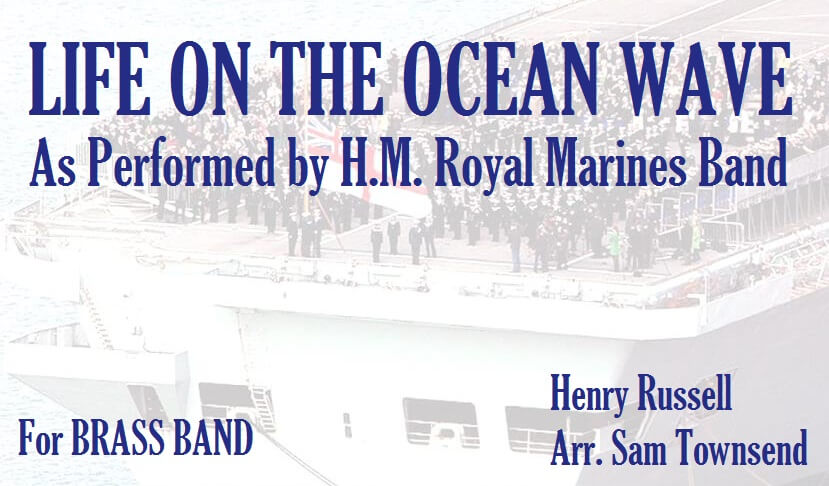
Life On The Ocean Wave - Henry Russell - Sam Townsend
This British March has been made famous around the world due to its use by H.M. Royal Marines Band. In 1882, the Deputy Adjutant General Royal Marines requested that the Bandmaster of each Royal Marine Division (Portsmouth, Plymouth, Chatham) submit an arrangement for a new regimental March for the corps. The Bandmaster of the Chatham Division, submitted an arrangement of A Life on the Ocean Wave which was authorised for use as the regimental quick March of the Corps of Royal Marines in 1882. Now for the first time, this March has been made available for Brass Band and is a perfect concert item to use in any concert.
In Stock: Estimated dispatch 1-3 working days
-
£24.50
Sailor's Hymn - Amber Hooton
Sailor's Hymn depicts a scene of sailors preparing to depart from the port of Liverpool, looking out over the docks as the Blue Peter flag flies,beckoning the sailors aboard to begin their long journey. It is a piece about saying goodbye to what was once familiar, moving on and pushing towards new horizons.This piece was written for a cultural exchange between brass and wind bands from St Helens (Valley Brass Band) and Normandy (Harmonie Courselles Sur Mer), culminating in a massed bands concert in Normandy during April 2024. The piece was one of several arrangements and original compositions written especially for the exchange, supported by grants from the Victoria Wood Foundation and Johnson Foundation. The concert celebrated the local cultures of Merseyside and Normandy, as well as the wider national cultures of the United Kingdom and France.
In Stock: Estimated dispatch 1-3 working days
 View Music
 Listen to MP3