
Results
-
 £45.00
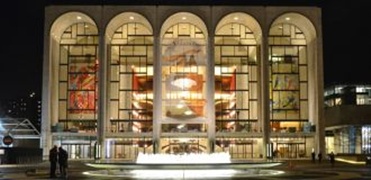
TOSCA (Finale to Act 1) (Brass Band) - Puccini, Giacomo - Harper, Philip
The spectacular Te Deum from the Finale to Act I of Tosca, it begins quietly with the tolling bell as worshippers gather for Mass. The euphonium plays the part of the villainous Scarpia as the music gathers strength. Finally the doors of the church are thrown open and the glorious Te Deum fills the hallowed space. Feature on the CD Cory in Concert Volume V. Grade: 1st Section. Duration: 5:00
Estimated dispatch 7-14 working days
-
£24.50
Aberystwyth - Joseph Parry - Ben thomas
A beautiful arrangement of the hymn tune Aberystwyth (Jesus, Lover of My Soul), expertly arranged for brass band. The ever popular hymn, Aberystwyth, is number 1 in the 120 hymn tunes for brass band book, and is therefore commonly played by bands as a warm up at the start of rehearsals. The gorgeous harmonies make it perfect to not just be played in the bandroom, but to be heard in all various types of performances, from private concerts, to the contest stage, making it a perfect addition to your band's library!This arrangement was first performed in concert by Northop Community Band in March 2025
In Stock: Estimated dispatch 1-3 working days
-
 £33.33
Classical Concert! (Brass Band) Various arr. Alex Scaife McGee
Classical Concert! by Alex Scaife McGee is a high-energy concert medley that celebrates the enduring appeal of the classical canon while paying tribute to the legendary Harold Walters, whose Instant Concert and Hootenanny set the standard for this exciting style of programming. Drawing on some of the most recognisable themes in classical music, this arrangement weaves familiar melodies into a fast-paced, audience-pleasing showcase. The journey begins with the unmistakable excitement of Rossini's William Tell Overture, flowing seamlessly into Bizet's Carmen Overture. The intensity builds with Grieg's In the Hall of the Mountain King before lifting into the brightness of Vivaldi's Spring. Momentum continues through a thrilling sequence featuring Beethoven's Ode to Joy from Symphony No. 9, the dramatic fate theme from Tchaikovsky's Symphony No. 5, and the majestic power of Saint-Saens's Organ Symphony. A triumphant statement from Handel's Hallelujah Chorus sets the stage for rapid-fire appearances by Mozart's Horn Concerto No. 3 and Tchaikovsky's Swan Lake. The medley concludes with two crowd-favorite finales: Rossini's The Barber of Seville and the rousing, cannon-ready excitement of Tchaikovsky's 1812 Overture. Ideal for concerts, entertainment contests, and audience outreach, Classical Concert! delivers non-stop excitement, instant recognition, and a joyful celebration of classical music at its most entertaining. To view a rolling score video please visit www.youtube.com/watch?v=gIqvoA1Rh40 Duration: Approx. 4.00 minutes Difficulty Level: 2nd Section + This PDF download includes the full score and parts. Sheet music available at www.brassband.co.uk (UK) or www.cimarronmusic.com (USA) Instrumentation: Soprano Cornet Eb Solo Cornet Bb Repiano Cornet Bb 2nd Cornet Bb 3rd Cornet Bb Flugel Horn Bb Solo Horn Eb 1st Horn Eb 2nd Horn Eb 1st Baritone Bb 2nd Baritone Bb 1st Trombone Bb 2nd Trombone Bb Bass Trombone Euphonium Bb Bass Eb Bass Bb Timpani Drum Kit Percussion
In Stock: Estimated dispatch 1-3 working days
-
£33.00
The King of Swing
Benny Goodman was an American jazz clarinettist and bandleader known as The King of Swing . Composed for Foden's Brass in Concert performance in 2018, that year marked the 80th anniversary of Benny Goodman's legendary debut at New York's Carnegie Hall. In the country's most hallowed classical concert hall, this concert was so much more than Benny Goodman; it was, in many ways a 'debut' of swing
In Stock: Estimated dispatch 1-3 working days
-
 £27.00
Edward Gregson: Birthday Prelude for Brass Band
DescriptionThis short work for brass band was written in 1982 for a concert to celebrate the 80th birthday of Harry Mortimer, one of the great figures in the world of brass bands. Not surprisingly, it references the well-known song Happy Birthday, in a breezy, up-tempo, short concert prelude.The premiere was given at the Free Trade Hall in Manchester by the Fodens Band, conducted by Howard Snell.In 2014 the composer revised it for a trip to the North American Brass Band Championships, where it was performed, also as an 80th birthday tribute, this time to the composer's brother Bram; it was subsequently dedicated to both Harry Mortimer and Bram Gregson.For more information on Edward Gregson's music please visit the composer's website: www.edwardgregson.com
Estimated dispatch 7-14 working days
-
 £89.95
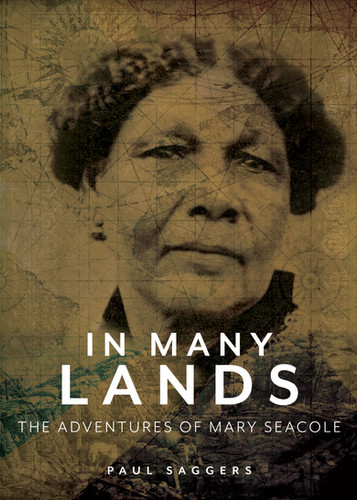
In Many Lands - The Adventures of Mary Seacole - Paul Saggers
In Many Lands - The Adventures of Mary Seacole was commissioned by The Royal Marines Band Service for The National Youth Brass Band of Great Britain. The first performance of the piece was on 16 April 2022 in Huddersfield Town Hall to celebrate the 70th anniversary of the NYBBGB. It was next performed in Birmingham Town Hall (on 28 April 2022) at a joint charity concert of the NYBBGB and The Band of Her Majestyas Royal Marines, Collingwood, for the European Brass Band Association Prelude Concert. The work is a musical account of the life of Mary Seacole who was a British-Jamaican nurse and businesswoman who set up the "British Hotel" behind the lines during the Crimean War. The work takes inspiration from Seacoleas biography Wonderful Adventures of Mrs. Seacole in Many Lands. The work is divided into three movements:
-
 £35.00
Ariel
DescriptionAll hail, great master! Grave sir, hail! I come To answer thy best pleasure, be 't to fly, To swim, to dive into the fire, to ride On the curled cloud. To thy strong bidding, task Ariel and all his quality. - William Shakespeare: The Tempest, Act 1, Scene 2Ariel was written for the Hammonds Band to open their programme at the 2019 Brass in Concert Championships at The Sage Concert Hall in Gateshead, where it received its premiere. The title is taken from the character in Shakespeare's play 'The Tempest'. Ariel is an immensely powerful "air spirit" or demon bound to serve Prospero, the exiled Duke of Milan, after being released by Prospero from imprisonment in a tree. In the play Ariel's magical abilities are used to help Prospero revenge himself on his enemies and reclaim his dukedom, whereupon Ariel finally regains his freedom.You can hear an audio preview and follow the score below: Performance notes:The cornets and horns are split into two "choirs" to be placed left and right of the band. It may be possible for the choirs to play their opening flourish offstage, and the optional repeated sections in the opening are to accommodate stage movement if required. Trombones form a third "choir" which should ideally stand centrally between basses and percussion, and the euphoniums and baritones should sit in front of the basses. The work requires four percussionists, although if four are not available the 2nd part may be omitted.Percussion 1: Kit - bass drum, snare, 3 x toms, hi-hat, suspended cymbal - and 3 x temple blocksPercussion 2: Tam tam and orchestral bass drum.Percussion 3: Glockenspiel and timpaniPercussion 4: Tubular bellsSoprano, solo cornets and 3rd cornets require cup mutes. Solo trombone requires a cup mute, second trombone requires a metal straight mute.
Estimated dispatch 7-14 working days
-
 £40.00
Legends of Cyfarthfa - Matthew Hall
Legends of CyfarthfaCombining the music of Joseph Parry and the legendary Cyfarthfa Band, Legends of Cyfarthfa is a technically challenging but musically rewarding concert work. Robert Crawshay owned the Cyfarthfa Ironworks in South Wales creating a business empire second to none.Cyfarthfa Castle was built by Crawshay as the family home from the income made via the ironworks. He wanted his own private band to play under the name of the ironworks with the best players in the world, playing on the highest quality instruments at the time. Employing the band members under the guise of iron workers, the Cyfarthfa Band was made up of virtuoso players, performing for the pleasure of the Crawshay dynasty.This virtuosity can be heard in some of the more technically challenging sections of Legends of Cyfarthfa. Joseph Parry was born in Cyfarthfa.He composed the first piece of music specifically written for brass band called Tydfil Overture for the Cyfarthfa Band, alongside many other memorable works for other instrumentation.Legends of Cyfarthfa incorporates many of Parry's works including his opera Blodwen, hymn tune Aberystwyth, folk melody Myfanwy and the Tydfil Overture, alongside many other melodies from Wales. Sospanfach, Men of Harlech, Lisa Lan and Calon Lan are just a number of the melodies that are used in this composition.The premiere performance was given by Tredegar Town Band under the direction of Ian Porthouse at the 2010 Brass in Concert Championships where it was awarded the Cyril Beere Memorial Trophy for Best New Composition or Arrangement.https://matthew-hall.co.uk/wp-content/uploads/2014/08/05-Legends-Of-Cyfarthfa.mp3Legends of Cyfarthfa
Estimated dispatch 5-7 working days
-
 £37.06
A Fugal Overture (Brass Band) Gustav Holst arr. Rob Bushnell
A Fugal Overture was written in 1922 by Gustav Holst. It was first performed at the Royal Opera House, Covent Garden on 14 May 1923 and was used as an opening work to Holst's one-act opera The Perfect Fool. It received its concert premiere on 11 October 1923 at one of Henry Wood's Queen's Hall Promenade Concerts. It is an early example of neoclassicism and was influenced by the counterpoint of J. S. Bach, despite its unconventional use of the fugal process. Holst began writing the piece in the summer of 1922, having hoped to develop it into a ballet. It is divided into three sections, the fugal subject with its distinct 3+3+2 pattern, a slower section with solos at the end, and a third section where the subject returns. Although reviews of the piece were mixed at the time of its premiere, the likes of Adrian Boult have said it was "an invigorating work that could effectively start any [...] concert". In more recent years, it has been compared to John Adam's A Short Ride in a Fast Machine. This arrangement is for the British-style brass band, with alternative parts for horns in F and bass-clef lower brass. A recording of the original composition can be found here: www.youtube.com/watch?v=a8xfwJyFq2E. Duration: Approx. 5.40 minutes Difficulty Level: 1st Section + PDF download includes parts and score. Sheet music available from www.brassband.co.uk Instrumentation: Soprano Cornet Eb Solo Cornet Bb Repiano Cornet Bb 2nd Cornet Bb 3rd Cornet Bb Flugel Horn Bb Solo Horn Eb 1st Horn Eb 2nd Horn Eb 1st Baritone Bb 2nd Baritone Bb 1st Trombone Bb 2nd Trombone Bb Bass Trombone Euphonium Bb Bass Eb Bass BbTimpani Percussion 1-2
In Stock: Estimated dispatch 1-3 working days
-
 £29.95
Tireless Flame, The - Jonathan Bates
DIFFICULTY: 1st+. DURATION: 6'00". Commissioned by the Reg Vardy Brass Band for their 2019 appearance at the Brass in Concert Championships, held at The Sage in. Gateshead, 'The Tireless Flame' is an energetic and driven concert finisher inspired by the idea of a fire burning at different velocities. but never truly going out. The outer 2 sections are the work are in a minimalist style using effects typical of the style such as phasing. and development throughout, whilst the central section is almost hymn like in nature, showcasing the band's ability to control the . extremes of dynamics. .
In Stock: Estimated dispatch 1-3 working days
 View Music
 Listen to MP3