
Results
-
 £15.99
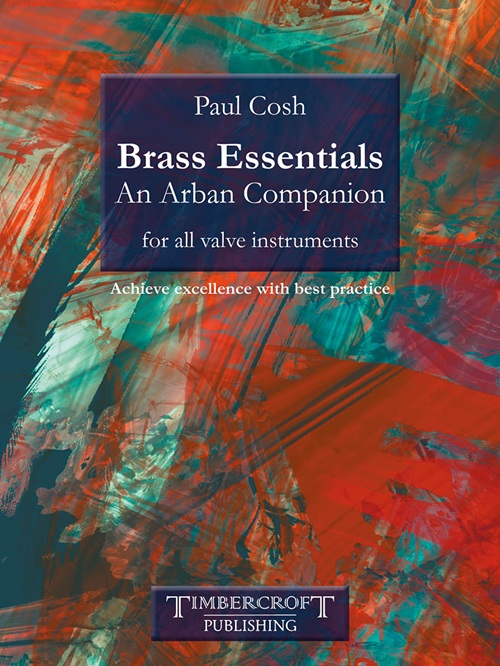
Brass Essentials - An Arban Companion (for all valve instruments)
Brass Essentials: An Arban Companion works through the Arban Cornet Method in the sequence that the excerpts appear in the original publication. It is not a method in itself, but a way to address the building blocks of a solid technique - good sound, good intonation, developing technical skills and applying rhythmic accuracy. It is suitable for all valve instruments.Simply choose which of the sections applies to the issues you are facing in your playing at any given time. Advice is given at the head of each section on how to deal with the technical processes involved for that particular area of practice as well as suggestions on rehearsal and performance tempi.A regular approach to the most basic aspects of playing a brass instrument will help maintain a strong technique whilst addressing any problems that may occur during your playing life, as they do from time to time. It can also provide a regular practice diet that will encourage real attention to detail.Brass Essentials: An Arban Companion can be used as a resource for teachers helping players starting out on their musical journey, but also performers at any point in their musical life as a back-to-basics approach is often the way forward when dealing with playing issues. The overriding principle is that every note counts!Section Headings : Set-Up, Articulation and Sound; Light Articulations; Syncopation, Spacing and Rhythm; Single Tonguing; Controlled Slurring Technique; Running Scales and Chromatics; Breathing, Shaping and Phrasing; Arpeggios, Dominant Sevenths and Diminished Sevenths; Triple Tonguing; Double Tonguing; The Studies
Estimated dispatch 7-14 working days
-
 £29.95
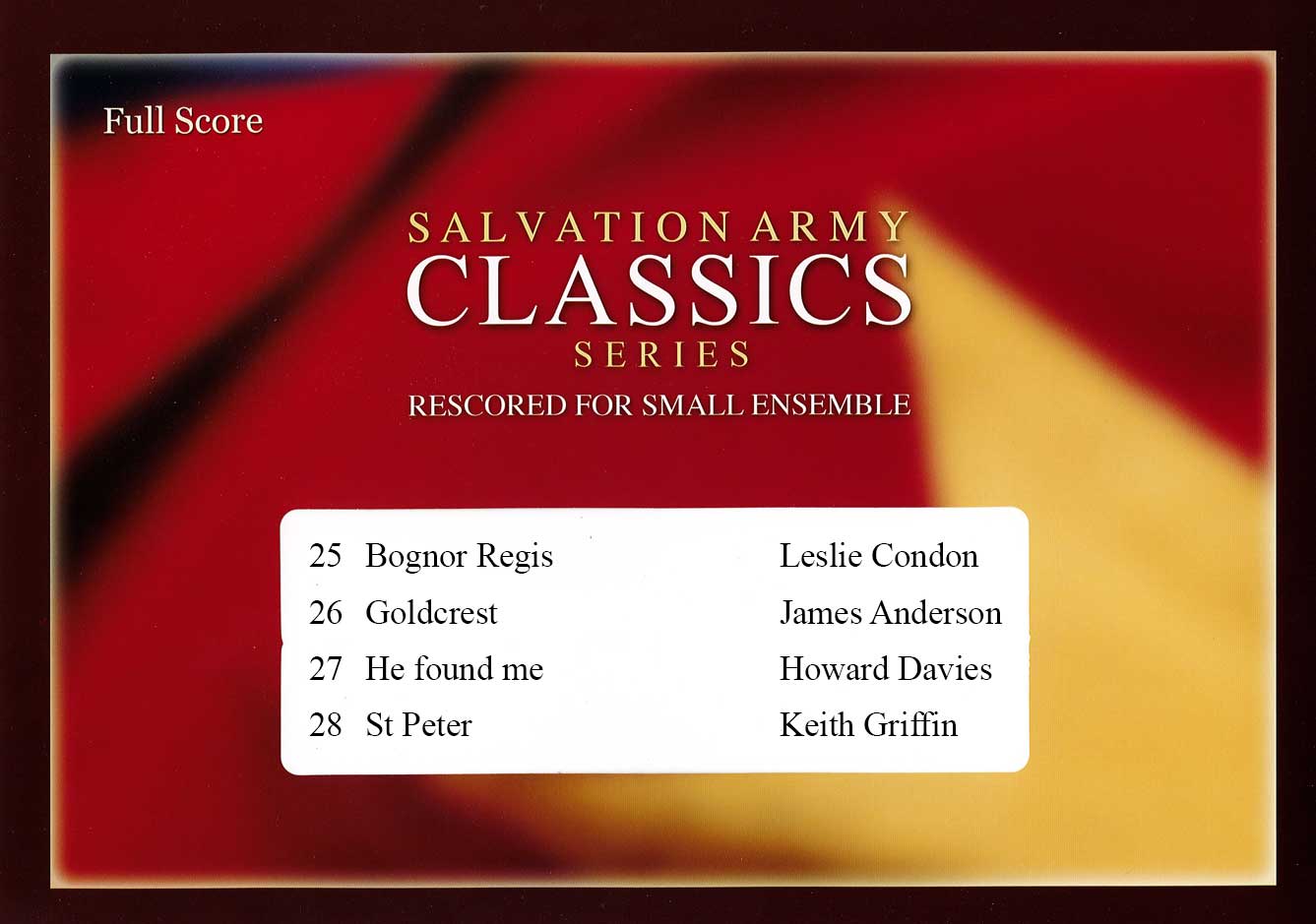
Salvation Army Classics 25-28 for Small Ensemble
Salvation Army Classics arranged for Flexible Brass Band Numbers 25-28Bognor Regis - Leslie CondonGoldcrest - James AndersonHe found me - Howard DaviesSt Peter - Keith Griffin This series features pieces that have been rescored for Unity Series (five-part) scoring.PART I 1st Cornet BbPART II 2nd Cornet Bb and 1st Horn EbPART III 2nd Horn Eb and Baritone or Trombone BbPART IV Euphonium BbPART V Bass Eb and Bass BbThese transcriptions have been carried out in such a way to facilitate the addition of any original parts that may be available.Where relevant, suggestions are made for a variation in tone colour (i.e. 2nd Cornet, Flugel, Baritone, Trombone) as well asthe occasional opportunity for rest.
Estimated dispatch 7-14 working days
-
 £15.00
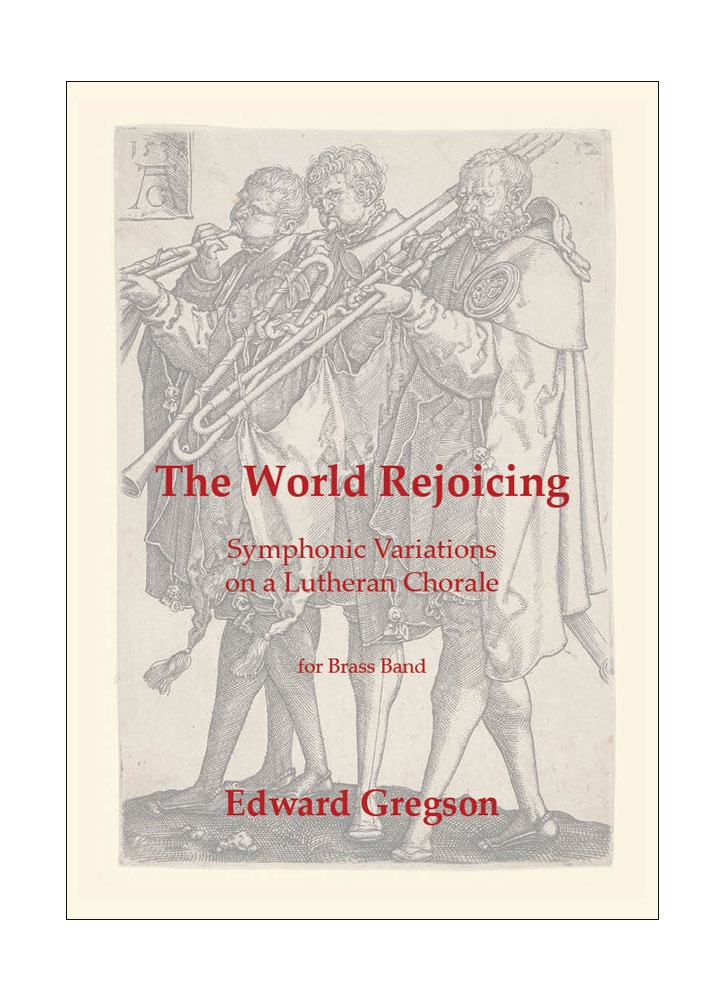
The World Rejoicing (Brass Band - Study Score)
In searching for a common link between the brass band traditions of the various European countries that commissioned this work, I considered the fact that hymns have always played an important role in the relationship that brass bands have with their particular communities; and thus I turned to a well-known Lutheran chorale, Nun danket alle Gott (Now thank we all our God), written around 1636 by Martin Rinkart, with the melody attributed to Johann Crger. A number of composers have incorporated this chorale into their music, most famously J.S.Bach in his Cantatas no. 79 and 192, and Mendelssohn in the Lobsegang movement of his 2nd Symphony (the harmonization of which is usually used when this hymn is sung).It seemed fitting therefore for me to return to a compositional form I have used many times before (Variations) and to write a work based on this hymn. I have used it in a similar way to that which I employed in my Variations on Laudate Dominum of 1976 - that is, rather than writing a set of variations using elaborations of the complete tune, I have taken various phrases from the chorale and used them within the context of other musical material, applying an overall symphonic process of continuous variation and development. The structure, or sub-divisions of the work, which is through composed and plays without a break, is as follows: Prelude, Capriccio, La Danza 1, Processional, La Danza 2, Arias and Duets, Fuga Burlesca, Chorale, and Postlude.The work is also partly autobiographical - in the manner say of Strauss's Ein Heldenleben - in that I have incorporated into the score brief quotations from many of my other major works for brass band. In that respect, The World Rejoicing sums up a particular facet of my life as a composer, and reflects the admiration I have always had for what is surely one of the great amateur music-making traditions in the world.The World Rejoicing is dedicated 'in loving memory of my brother', Bramwell Logan Gregson, who sadly passed away in the Autumn of 2018.Edward Gregson
Estimated dispatch 7-14 working days
-
 £49.99
Occasional Overture (Brass Band - Score and Parts)
Benjamin Britten composed his Occasional Overture Op.38, for the opening of the BBC Third Programme on 29th September 1946, when it was performed by the BBC Symphony Orchestra under Sir Adrian Boult. It was not heard again until 1982, when the composers Executors decided that it should be revived. Given the dominance of brass and woodwind in this concise but exciting work, versions for brass band and wind band have been prepared for Brittens centenary year. Suitable for Championship Section Bands. Duration: 8.00
Estimated dispatch 7-14 working days
-
 £39.95
When Thunder Calls (Brass Band - Score and Parts)
When Thunder Calls was commissioned by Dr Nicholas Childs and the Black Dyke Band for their performance at the Gala Concert of the Swiss Open Championships in September 2011. When composing this piece, I decided to focus on both the music and the stage presentation. The way the piece has been composed and designed makes it a very effective way of starting a concert or a second half of a concert.At the start of the piece, the percussion enter the stage and take their positions in their usual place behind the band. They begin playing the piece without a conductor. They keep repeating the opening section while the Basses, Horns, Baritones and Euphoniums march onto the stage.This group of musicians take their seats with the Horns, Baritones and Euphoniums sitting where they usually sit in the band but the Basses sit where the solo cornets usually sit, forming an inner semi-circle of lower brass. When seated and when the music gets to the end of bar 4 the piece continues onto section A. All performers keep repeating this next 4-bar phrase until the trombones march onto stage and stand at the front of the stage with the Bass Trombone standing in between the other two trombones.All performers then play from figure B to C with the trombones taking the lead at the front. When the performers get to rehearsal figure C they repeat this section (the same as section A) while the trombones move from the front of the stage and take their positions where the Basses would normally sit (between the horns and the percussion) and remain standing. Meanwhile, the flugel enters the stage and stands at the front of the stage (standing where the trombones did). When in position the flugel soloist picks up into rehearsal figure D.When the flugel soloist finishes playing, just before rehearsal figure F they then move to their normal seat in the band. At figure F the cornets march onto the stage from either side, they turn and stand side by side each other facing outward towards the audience forming two 'fanfare' lines either side of the lower brass. The conductor follows the cornets on stage and on cue they lift their instruments at the same time and perform when the piece gets to figure G.There is no more moving around from this point on other than the solo cornet to move forward with the solo euphonium and perform their duet at letter H. Also the horns are required to stand and play at letter I and then sit just before J.When performed with all the choreography, this piece makes for an exciting addition to any concert repertoire both for the performer and the audience.Suitable for 3rd Section Bands and Above
Estimated dispatch 7-14 working days
-
 £74.95
Aspects of Adiemus (Brass Band - Score and Parts)
Aspects of Adiemus is a collection from one of the world's most popular composers, Karl Jenkins. Adiemus, literally translated, means 'we will draw near' and represents a musical language which can be heard on five award winning albums from the composer.Since Adiemus has risen in popularity around the world, it has become a growing entity meaning many different things to many different people. Vocally, the spread of influence grows wider all the time, taking in Arabic and African sounds as well as "Celtic" and ecclesiastical ones. The percussion too has expanded using Indian, Middle Eastern, Japanese, Chinese and even Australian instrumentation.The evolving nature of Adiemus has meant that it has been difficult to categorise. New age, classical crossover, world music, even pop. Karl sees this as a good sign: "To me, Adiemus transcends labels. The fact that it reaches people of different backgrounds, faiths and cultures gives it a universal appeal which is special. The compositions can be spiritual, religious, meditative - it's open to 'move' people in any away they choose to experience."Ironically, the Adiemus project 'got off the ground' initially due to a television commercial for an airline. Karl Jenkins explains, "I'd been toying with a new idea, completely separate to my work in advertising, but at this time, Jenkins Ratledge were commissioned to come up with the music for an airline commercial. We presented the client with a demonstration tape of one of my completed compositions and they loved it."That composition became known as Adiemus. The music for the airline commercial was aired and immediately drew interest from the public. Karl: "It's ironic that a piece of music not originally intended for a TV commercial should end up on a TV commercial, and that this music became the springboard for the success of the Adiemus project."Expertly arranged by Peter Graham, Aspects of Adiemus features the eponymous 'Adiemus', an uplifting and instantly recognisable opener. 'Chorale - Za Ma Ba' and 'Chorale - Vocalise' are songs of sanctuary, the latter featuring a chamber group from within the band. The vibrant 'Song of the Spirit' is a cornet feature, and the finale, 'Song of the Plains' combines intense rhythmic energy with tribal harmonies. Duration is variable depending on movement selection and optional cuts.Duration: 20.00
Estimated dispatch 7-14 working days
-
 £85.00
Three Haworth Impressions (Brass Band - Score and Parts)
A wonderful three movement suite which conjures up fabulous musical imagery of the lands of northern England. Well worth including as a concert item in your next programme, but this great original composition should really should be set again as a test-piece soon - rewarding musically for audience and bandsmen alike.Includes:TOP WITHENS - A GENERAL EVOCATION OF THE ATMOSPHERE OF WUTHERING HEIGHTS The sinister opening motif symbolises the influence of the evil Heathcliffe, Soon this motif experiences several changes of character in order to portray emotions other than those of hatred and jealousy. The overall mood is, however, one of gloom and foreboding.THE THREE BELLS This is a reference to the pseudonyms adopted by Ann, Charlotte and Emily Bronte. The music begins with three "bell"-notes; Ab for Acton Bell, Cb for Currer Bell and Eb for Ellis Bell, and these three notes form the basis of a wistful waltz tune. Again the mood is rather sombre -- save for a brighter middle section -- and the opening motif from "Top Withens" is to be heard, again symbolising the frustrations and ill-fortune by which their lives were plagued.THE WORTH VALLEY RAILWAY The Brontes were not the only people in Haworth and not all is desperation and gloom. The third impression is a celebration of the victory of the people of Haworth in their fight to retain their railway. The nine-eight rhythm of a slow train is prominent, and our once-sombre motif is transformed into a triumphant fanfare.Duration: 12.00Please note that there are only 3 solo cornet parts included in this set
Estimated dispatch 7-14 working days
-
 £77.00
General Series Brass Band Journal, Numbers 2269 - 2272, August 2026
2269: Intrada - Christians Awake (Stephen Gibson)This intrada heralds the happy morning when Christians celebrate the birth of Jesus. Fanfares surround the traditional Christmas Day hymn, Christians Awake (C.C. 20), where we are encouraged to 'awake, salute the happy morn'. Written in a processional style, this music was composed as a concert opener to be performed in a large church setting.2270: Jesus loves me (Stanley Kelley)Jesus loves me! (S.A.S.B. 807) is a song many church-goers learn as children. While written for children, its message is for everyone. John 15:9 says, 'As the Father has loved me, so have I loved you.'2271: Prelude on 'Deep Harmony' (Geoffrey Nobes)This piece was written for the Blendworth Band of Hampshire. The hymn tune, by Handel Parker, is one of the most beautiful and iconic melodies ever written, with lovely harmony supporting the rise and fall of a simple but perfect melodic line.2272: To the hills (Paul Sharman)The inspiration for this arrangement came during a walking holiday in the Lake District. Looking towards the hills brought to mind the words of Psalm 121 and Ernest Rance's setting of that passage, I Lift Up My Eyes (S.A.S.B. 208), with its lovely tune Ochills. This arrangement was written shortly after the composer's return home.
Estimated dispatch 7-14 working days
-
 £55.00
Triumph Series Brass Band Journal, Numbers 1379 - 1382, November 2025
1379: March - True to the colours (Noel Jones)This march is a reminder of the symbolism of The Salvation Army flag - blue representing God's purity, red for the blood of Christ and yellow for the fire of the Holy Spirit. I love the dear old Army flag, I'll be true and Yellow star and red and blue are three songs featured where writers have been equally inspired and have made declaration of their allegiance to God by service in The Salvation Army.1380: In all its fullness (Alan Williams)This music was written for the East of England Youth Summer School in 2024, where the delegates explored the theme 'Living life in full colour with Jesus' and as such this work is a joyous and fun-filled celebration of all the good things God has provided.1381: Eternal Spring (Nick Simmons-Smith) This simple hymn tune arrangement is based on the tune Martyrdom which is associated with the words 'As pants the heart for cooling streams'. It is a Scottish tune written around 1800 by Hugh Wilson.1382: March Medley - Emblems of service (Stephen Bulla)This march celebrates the occasion of the Coorparoo Corps' reunion (now Carindale Corps, Australia) in 2022. The music itself features a spirited medley: Joy! joy! joy! there is joy in The Salvation Army, What a friend we have in Jesus and Steadily forward march!
Estimated dispatch 7-14 working days
-
 £77.00
General Series Brass Band Journal, Numbers 2250 - 2253, December 2024
2250: Prelude on 'Rhosymedre' (Ralph Vaughan Williams trs. Douglas Engle)The English composer Ralph Vaughan Williams' work Three Preludes (founded on Welsh Hymn Tunes) was published for the organ in 1920. This is a transcription of the second movement of that work. The words associated with the hymn tune are by Samuel Crossman, My song is love unknown (S.A.S.B. 149), and vividly depict the events of Holy Week. The music is gentle and solemn and would be appropriate for a Good Friday service or as a moment of repose in a concert. 2251: Hosanna Shuffle (Sam Creamer)The half-time shuffle groove is a popular feel developed by alternative rock/pop bands of the 1980s. It marries elements of rock and swing styles together to form a new and infectious feel - Hosannah Shuffle being written as a tribute to this fusion of musical styles. Contrary to a swing style, shuffle brings the pulse back onto the beat while maintaining the swung quaver rhythms to create a rock-type rhythmic drive. 2252: Everlasting Love (Keith Manners)This piece was written for the London North East Music School in 2004. The theme of the week was 'Making a stand for Christ', reminding the school that it only takes one person to make such a stand before others follow. The music starts with a lone Solo Cornet playing the melody of Graham Kendrick's song Such Love (S.A.S.B. 199). One by one, other parts join in with the theme.2253: Festival March (Michael Cooper)This piece represents the first published brass composition of Bandmaster Michael Cooper, who is the Bandmaster at Brisbane City Temple Corps. This imposing festival march features the tunes I want to be a soldier (T.B. 683), Lift up the banner (T.B. 90) and My Jesus, I love thee (T.B. 506). These tunes depict the idea that spiritual warfare is an essential component of one's faith, success of which is articulated in the final verse of My Jesus, I love thee (S.A.S.B. 878).
Estimated dispatch 7-14 working days