
Results
-
 £94.95
An Age of Kings (Mezzo-Soprano Solo with Brass Band and optional choir - Score and Parts) - Gregson, Edward
The origins of this work date back to 1988, when I was commissioned by the Royal Shakespeare Company to write the music for The Plantagenets trilogy, directed by Adrian Noble in Stratford-upon-Avon. These plays take us from the death of Henry V to the death of Richard III. Later, in 1991, I wrote the music for Henry IV parts 1 and 2, again in Stratford. All of these plays are concerned with the struggle for the throne, and they portray one of the most turbulent periods in the history of the British monarchy.Much of the music used in these productions was adapted into two large symphonic suites for wind band - The Sword and the Crown (1991) and The Kings Go Forth (1996). An Age of Kings is a new version for brass band incorporating music from both the symphonic suites for wind band. It was specially composed for a recording made by the Black Dyke Band, conducted by Nicholas Childs, in 2004.An Age of Kings is music on a large-scale canvas, scored for augmented brass band, with the addition of harp, piano, mezzo-soprano solo, male chorus, as well as two off-stage trumpets. The music is also organized on a large-scale structure, in three movements, which play without a break - "Church and State", "At the Welsh Court", and "Battle Music and Hymn of Thanksgiving".The first movement, "Church and State", opens with a brief fanfare for two antiphonal trumpets (off-stage), but this only acts as a preface to a Requiem aeternam (the death of Henry V) before changing mood to the English army on the march to France; this subsides into a French victory march, but with the English army music returning in counterpoint. A brief reminder of the Requiem music leads to the triumphal music for Richard Plantagenet, Duke of York, father of Edward IV and Richard III (the opening fanfare transformed). However, the mood changes dramatically once again, with the horrors of war being portrayed in the darkly-drawn Dies Irae and Dance of Death, leading to the final section of the first movement, a funeral march for Henry VI.The second movement, "At the Welsh Court", takes music from the Welsh Court in Henry IV part 1 with a simple Welsh folk tune sung by mezzo-soprano to the inevitable accompaniment of a harp. This love song is interrupted by distant fanfares, forewarning of battles to come. However, the folk song returns with variation in the musical fabric. The movement ends as it began with off-stage horn and gentle percussion.The final movement, "Battle Music and Hymn of Thanksgiving", starts with two sets of antiphonally placed timpani, drums and tam-tam, portraying the 'war machine' and savagery of battle. Trumpet fanfares and horn calls herald an heroic battle theme which, by the end of the movement, transforms itself into a triumphant hymn for Henry IV's defeat of the rebellious forces.- Edward GregsonDuration - 22'00"Optional TTBB available separately.
Estimated dispatch 7-14 working days
-
 £45.00
Crown Imperial, March (Brass Band - Score and Parts) - Walton, William - Littlemore, Phillip
William Walton composed his Crown Imperial for performance at the coronation of King Edward VIII, which was scheduled for the 12th May 1937. However, due to the dramatic abdication of Edward, it was in fact performed at the Coronation of the new monarch, King George VI, which took place on the same scheduled date. The march became popular immediately, and arrangements for piano solo, organ, small orchestra and military band were all published within a year. It has been used at all Royal events since, most notably the Coronation of Queen Elizabeth II in 1953. This new brass band transcription?is in keeping with the shorter, 6-minute concert version that Walton created immediately following the Coronation of George VI. However, the scoring is more in keeping with contemporary brass band voicings, and provides an exciting version for brass band.?Duration: 7:00
Estimated dispatch 7-14 working days
-
 £107.95
Cornet Concerto (Brass Band - Score and Parts) - Gregson, Edward
The Cornet Concerto was commissioned by Black Dyke Band for their principal cornet, Richard Marshall, and was premiered at the European Brass Band Festival's Gala Concert in Lille, France, on 30 April 2016 by the same performers, conducted by Nicholas Childs.It is challenging work, both musically and technically, and one that exploits the wide range of the instrument's capabilities. Lasting for some 17 minutes, it is in the usual three movements: Sonata, Intermezzo (subtitled 'Of More Distant Memories') and Rondo.The first movement presents four main ideas:Cadenzas (which recur throughout the movement, and indeed appear at the end of the work); a fast and rhythmically energetic motive; Bugle calls (echoing the ancestor of the cornet), and a lyrical and expressive melody, full of yearning. These four ideas are juxtaposed within the broad shape of a Sonata form structure, although here the word 'Sonata' is used in its original meaning of 'sounding together'.The second movement is music in search of a theme, which eventually comes at the end of the movement. In the middle section there are brief quotations, albeit mostly hidden, from three cornet solos written by the Swedish/American composer Erik Leidzen for the Salvation Army in the 1940s and 50s; these are solos I loved as a teenager, and my use of them is by way of tribute, not imitation - a sort of memory bank, just as the main theme of the movement, when it eventually comes, is reminiscent of the tune from my earlier work for brass band, 'Of Distant Memories'.The final Rondo, the shortest of the three movements, is a lively and 'fleet-of foot' Scherzo, its main theme full of cascading arpeggios, but with a contrasting lyrical second theme intertwined in the structure. There is much interplay between soloist and band in the development of the music, but eventually a brief reprise of the opening cadenzas leads to an exciting and climactic coda.Click here for the piano reduction
Estimated dispatch 7-14 working days
-
 £34.95
Gymnopedie No.1 (Brass Band - Score and Parts) - Satie, Erik - Bowen, Brian
This is a transcription for brass band of the first, and most well-known, of Erik Satie's three Gymnopedies for piano which were composed in 1888. All three are similar melodically and pianistically. However, the first and last are more well-known, partly due to the later orchestrations by Debussy.Some mystery surrounds the Greek-rooted title, yet explicitness is immaterial to an appreciation of the music. This brass version should not mask the naivete of the original score, though that may be easier said than done.Tenor Horn and Eb Bass mutes are requested by the arranger and will enhance the transcription if available.
Estimated dispatch 7-14 working days
-
£17.50
Gymnopedie No.1 (Brass Band - Score only) - Satie, Erik - Bowen, Brian
This is a transcription for brass band of the first, and most well-known, of Erik Satie's three Gymnopedies for piano which were composed in 1888. All three are similar melodically and pianistically. However, the first and last are more well-known, partly due to the later orchestrations by Debussy.Some mystery surrounds the Greek-rooted title, yet explicitness is immaterial to an appreciation of the music. This brass version should not mask the naivete of the original score, though that may be easier said than done.Tenor Horn and Eb Bass mutes are requested by the arranger and will enhance the transcription if available.
Estimated dispatch 7-14 working days
-
 £69.99
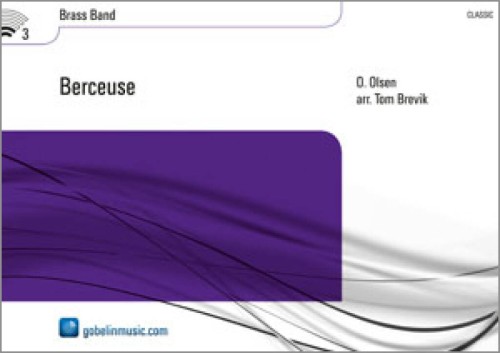
Berceuse (Brass Quartet with Brass Band - Score and Parts) - Olsen, Ole - Brevik, Tom
Ole Olsen (4 July 1850 - 4 November 1927) was a Norwegian organist, composer, conductor and military musician. Originally written for piano, this lovely, tender lullaby has been arranged by Tom Brevik for brass band and four solo instruments: Cornet, Flugel, Tenor Horn and Euphonium.Duration: 3.30
Estimated dispatch 7-14 working days
-
 £42.95
The Blue Bell of Scotland (Euphonium Solo with Brass Band - Score and Parts) - Pryor, Arthur - Sparke, Philip
Euphonium & Brass Band. This well loved solo is now available with Brass Band accompaniment.Please note that the Euphonium Solo with Piano Accompaniment arranged by Philip Sparke is in a different key and therefore not compatible with this arrangement.
Estimated dispatch 7-14 working days
-
 £89.95
TUBA CONCERTO (Gregson) (Tuba Solo with Brass Band - Score and Parts) - Gregson, Edward
This work was commissioned by the Besses o' th' Barn Band with funds provided by the Arts Council of Great Britain. It was written for, and is dedicated to, John Fletcher, who gave the first performance in Middleton Civic Hall, near Manchester, on 24 April, 1976, with Besses o' th' Barn Band conducted by the composer. Another interesting feature about the premire was that it was recorded by BBC Television for an Omnibus programme with Andr Previn as presenter. The concerto exists in four versions: with brass band (1976), orchestra (1978), wind band (1984) and piano reduction.The concerto is in three movements, following the usual, quick-slow-quick pattern: Allegro deciso,Lento e mesto, Allegro giocoso. The first movement has a sonata form shell with two contrasting themes, the first one being rhythmic in character, the second lyrical. There is a reference made in passing to the Vaughan Williams Tuba Concerto, but this merges into the other material in the development section.The second movement begins with a chorale, but after the entry of the tuba it leads to a cantabile theme, softly unfolded by the soloist. The opening chorale passage returns, this time briefly on muted brass, and leads to a middle section which is more chromatic in style and soon builds to a powerful climax, where the opening cantabile theme triumphantly returns. The music subsides, returning to the opening chorale and ending peacefully.The finale is light and breezy in style, and is cast in rondo form. After a brief introduction the tuba announces the main rondo theme, which is dance-like and a little jaunty. There are two episodes: the first a broad sweeping tune, the second a slowish waltz and a little jazz-like. After a virtuoso cadenza reference is made to the very opening of the concerto before the work ends with a triumphal flourish.The Tuba Concerto has established itself as one of the main works in the solo tuba repertoire. It has been performed and broadcast in over 40 countries all over the world. There are currently six commercial recordings of the concerto in its various versions.resolution in C major, pointed by a simple but expansive melody towards which the piece has been heading, and ending in a blaze of joyful colour.Duration: 18 mins
Estimated dispatch 7-14 working days
-
 £94.90
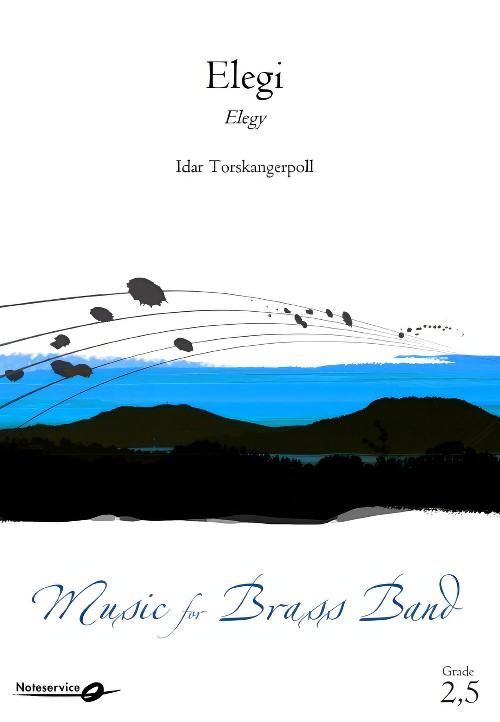
Elegi (Elegy) (Brass Band - Score and Parts) - Torskangerpoll, Idar
This piece originates as a piano piece written by the composer as he was convalescing after an illness and operation. In the music there is an outlet for emotions of uncertainty and doubt, but also of hope for the future. The piece was later arranged for wind and brass band, and premiered at a music summer camp in 2021.This piece has a melancholy character and suits bands looking for a piece to work on sound, phrasing, dynamics and expression.Duration: 3.45
Estimated dispatch 7-14 working days
-
 £37.95
Song of India (Euphonium Solo with Brass Band - Score and Parts) - Rimsky-Korsakov, Nikolai - Wilson, Eric
Song of India (or more accurately the 'Song of the Hindu'), from Rimsky-Korsakov's opera-bilina Sadko, provides a technical challenge as well as a musical one, requiring a great degree of control and accurate intonation as the subtly varied chromatic phrases weave their way over a gently undulating, almost hypnotic accompaniment. The Piano Accompaniment verion has been set for Trinity College music exams for 2019-22 (Grade 5), so this brass band version is the ideal opportunity to give young soloists experience with their band.
Estimated dispatch 7-14 working days
 View Music