
Results
-
 £54.99
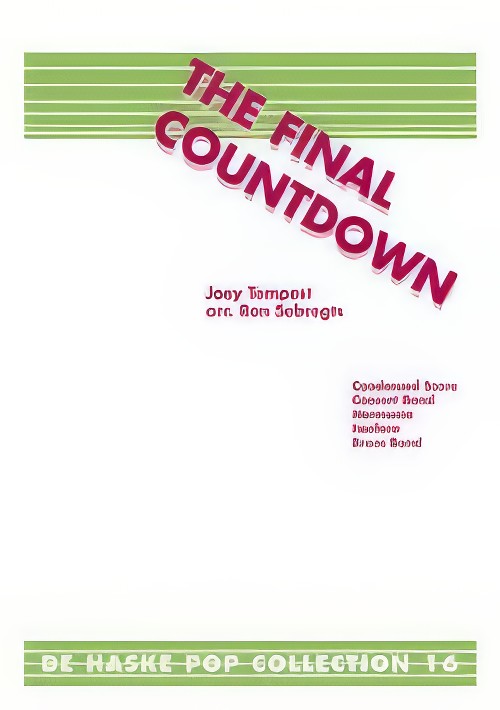
The Final Countdown (Brass Band - Score and Parts) - Tempest, Joey - Sebregts, Ron
This number 1 hit for the Scandenavian band Europe has been expertly arranged for Brass Band by Ron Sebregts. Let the Countdown begin!Duration: 3:40.
Estimated dispatch 7-14 working days
-
 £40.00
De-Lovely: Cole Porter Medley (Brass Band - Score and Parts) - Porter, Cole - Harper, Philip
The musical De-Lovely, celebrated the songs of Cole Porter and these songs have now been skilfully crafted into this show-stopping medley for brass band by Philip Harper. With melodies that include the delightful Let's Do It (Let's Fall In Love) and the suave Begin the Beguine, this concert piece is full of swing, swagger, and the heart-warming nostalgia of these evergreen favourites.Suitable for Advanced Youth/3rd Section Bands and aboveDuration: 8.00
Estimated dispatch 7-14 working days
-
 £29.88
Fanfare for the Olympians (Brass Band) Aaron Stanley
VIEW SCORE PDF This uplifting and rhythmic fanfare by American composer J. Aaron Stanley will be an ideal alternative to the traditional fare that is written in celebration of the Olympic Games. The composer writes: 'Most of my works start with a concept and working title in mind before I even begin composing. But Fanfare for the Olympians, on the other hand, was titled afterward, allowing the music to suggest its own title. The festive, anticipatory nature of the work seems to build excitement and tension for something celebratory and grandiose, like the Olympic Games. Written in 2000, at the time, I was obsessed with quartal harmonies and asymmetrical meters. But the driving eighth-note pulse of alternating 2+2+3 / 3+2+2 is what drives the fanfare forward to its epic climax.' Sheet music available from: UK - www.brassband.co.uk USA - www.solidbrassmusic.com Difficulty Level: 2nd Section + Instrumentation: Soprano Cornet Eb Solo Cornet Bb Repiano Cornet Bb 2nd Cornet Bb 3rd Cornet Bb Flugel Horn Bb Solo Horn Eb 1st Horn Eb 2nd Horn Eb 1st Baritone Bb 2nd Baritone Bb 1st Trombone Bb 2nd Trombone Bb Bass Trombone Euphonium Bb Bass Eb Bass Bb Timpani Percussion 1-2
In Stock: Estimated dispatch 1-3 working days
-
 £124.95
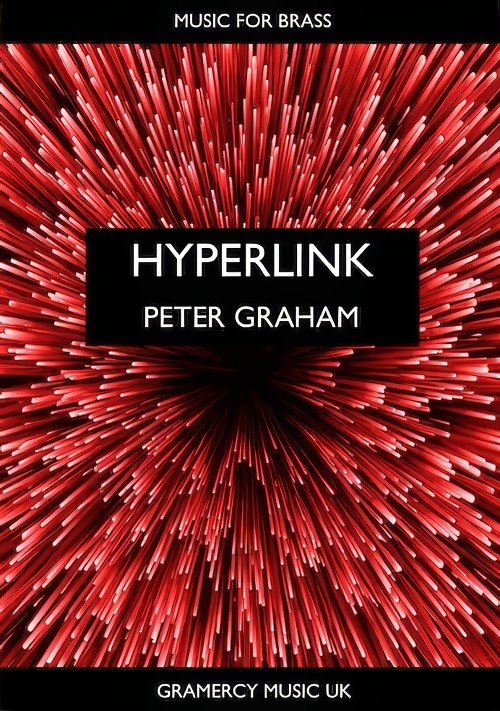
Hyperlink (Brass Band - Score and Parts) - Graham, Peter
Hyperlink was commissioned by the National Youth Brass Band of Great Britain (funded by Arts Council England and the Department for Education) for its 70th Anniversary Year. Since the anniversary coincided with other significant celebrations in 2022 (including the Royal Albert Hall/Ralph Vaughan Williams 150th and the Platinum Jubilee of Elizabeth II) it was requested that these also be recognised in some way.Where better to begin this challenging brief but with a computer search for the NYBBGB founder Dr Denis Wright (coincidently born in Kensington, home of the RAH). The subsequent rabbit warren of hyperlinks led me to structure the work through a series of associations:Movement I - The Voice of Jupiter. Alongside the discovery that Denis Wright had been a church organist was the realisation that while the RAH has hosted thousands of musical events the fabric of the building actually incorporates a musical instrument, the famous Henry Wills organ (aka The Voice of Jupiter). Organ and J S Bach are synonymous (e.g. Toccata in D min) and so both become fundamental to the content of the movement. An opening 7 note quote from the Toccata leads to a mammoth sound cluster, as if every note on the huge RAH organ is sustained. The material which follows is based upon the notes BACH (in German notation). The notes are manipulated in various ways in a 12 tone matrix; reversed, inverted and so on. Other techniques employed in the movement are ones of which Bach was master, including ground bass and fugue.Movement II - Remember Me. The lives of Salvationist composer Ray Steadman-Allen (born 1922) and Ralph Vaughan Williams are remembered here, with RSA in musical notation and fragments of RVWs famous Tuba Concerto providing the source material. While writing the movement my father passed away and to close his funeral service the family chose the uplifting Robert Lowry hymn They'll sing a welcome home. It seemed fitting to conclude the movement with a reflective setting of the chorus, the repeated phrase 'Welcome, welcome home' eventually disappearing into the ether.Movement III - Vivat. The finale takes the form of a short fantasy upon Hubert Parry's marvellous coronation anthem I Was Glad, truly a celebratory note with which to conclude. The first performance of Hyperlink was given by the NYBBGB conducted by Martyn Brabbins at the Royal College of Music, London on August 6th 2022.- Peter Graham
Estimated dispatch 7-14 working days
-
£44.95
Hyperlink (Brass Band - Score only) - Graham, Peter
Hyperlink was commissioned by the National Youth Brass Band of Great Britain (funded by Arts Council England and the Department for Education) for its 70th Anniversary Year. Since the anniversary coincided with other significant celebrations in 2022 (including the Royal Albert Hall/Ralph Vaughan Williams 150th and the Platinum Jubilee of Elizabeth II) it was requested that these also be recognised in some way.Where better to begin this challenging brief but with a computer search for the NYBBGB founder Dr Denis Wright (coincidently born in Kensington, home of the RAH). The subsequent rabbit warren of hyperlinks led me to structure the work through a series of associations:Movement I - The Voice of Jupiter. Alongside the discovery that Denis Wright had been a church organist was the realisation that while the RAH has hosted thousands of musical events the fabric of the building actually incorporates a musical instrument, the famous Henry Wills organ (aka The Voice of Jupiter). Organ and J S Bach are synonymous (e.g. Toccata in D min) and so both become fundamental to the content of the movement. An opening 7 note quote from the Toccata leads to a mammoth sound cluster, as if every note on the huge RAH organ is sustained. The material which follows is based upon the notes BACH (in German notation). The notes are manipulated in various ways in a 12 tone matrix; reversed, inverted and so on. Other techniques employed in the movement are ones of which Bach was master, including ground bass and fugue.Movement II - Remember Me. The lives of Salvationist composer Ray Steadman-Allen (born 1922) and Ralph Vaughan Williams are remembered here, with RSA in musical notation and fragments of RVWs famous Tuba Concerto providing the source material. While writing the movement my father passed away and to close his funeral service the family chose the uplifting Robert Lowry hymn They'll sing a welcome home. It seemed fitting to conclude the movement with a reflective setting of the chorus, the repeated phrase 'Welcome, welcome home' eventually disappearing into the ether.Movement III - Vivat. The finale takes the form of a short fantasy upon Hubert Parry's marvellous coronation anthem I Was Glad, truly a celebratory note with which to conclude. The first performance of Hyperlink was given by the NYBBGB conducted by Martyn Brabbins at the Royal College of Music, London on August 6th 2022.- Peter Graham
Estimated dispatch 7-14 working days
-
 £54.99
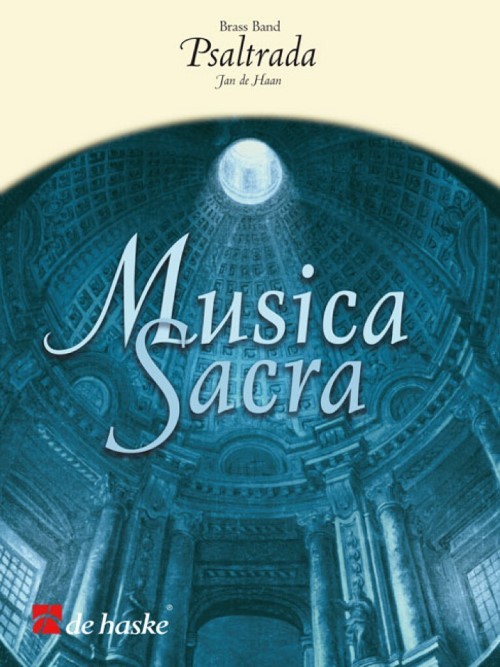
Psaltrada (Brass Band - Score and Parts) - De Haan, Jan
The title of this piece gives a clue as to how it came about: Jan de Haan took the setting of psalm 149 from the Geneva Psalter of 1562 and created from this simple, beautiful melody a glorious, lively opening work for concert band. So it was that from a psalm and an intrada (prelude) a Psaltrada was born - for you to begin your next concert in splendid fashion.Duration: 1:45
Estimated dispatch 7-14 working days
-
 £60.99
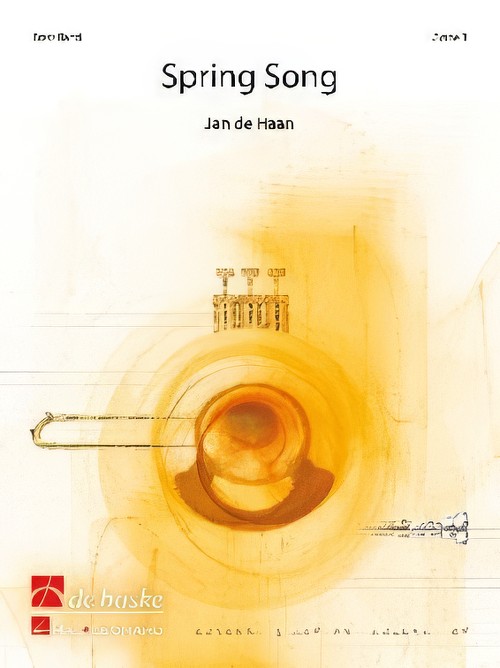
Spring Song (Brass Band - Score and Parts) - De Haan, Jan
Spring has finally arrived. The days grow longer, birds prepare to nest, trees turn green and plants begin to bloom as nature wakes up from her winter sleep. This, and the fact that the composer's third grandson was born in the spring, were the inspiration for Spring Song.Duration: 3:45
Estimated dispatch 7-14 working days
-
 £67.50
Rhythm Builders for Developing Bands (Brass Band - Score and Parts) - Curnow, James
Your program will definitely improve with this set of 14 studies designed to aid in the teaching and development of good rhythmic reading abilities! These carefully crafted musical mini-compositions begin with simple time signatures and rhythms and work to more complex rhythms and meters. Musically rewarding, these pieces are meant to be studied on a daily basis, and will help your students develop basic rhythmic skills.
Estimated dispatch 7-14 working days
-
 £67.50
Rhythm Studies for Band (Brass Band - Score and Parts) - Curnow, James
Eight carefully crafted mini-compositions that begin with simple time signatures and rhythms and work up to mixed meters and complex rhythms. The exercises are musically rewarding and fun to play, and will give your students the practice they need to develop rhythmic accuracy.
Estimated dispatch 7-14 working days
-
 £54.99
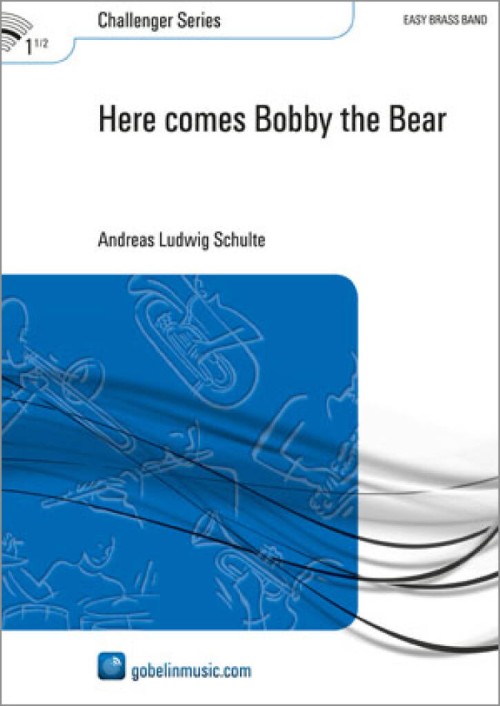
Here Comes Bobby the Bear (Brass Band - Score and Parts) - Schulte, Andreas Ludwig
Rock music is always a success. And when it is supported verbally as it is done in this composition, the party can begin. Bobby is a friendly circus animal that has seen a lot of the world. There is nothing left to wish for and his freedom from worries radiates from this rock march by Andreas Ludwig Schulte.Duration: 1.45
Estimated dispatch 7-14 working days
 View Music
 Watch video