
Results
-
 £109.99
Columbus - Rob Goorhuis
Christopher Columbus was born in Genoa in 1451. His father was a wool merchant. Originally he seemed destined to follow in his father's footsteps, and thus sailed the oceans to countries as far apart as Iceland and Guinea. In 1476 his ship was sunk during a battle off the coast of Portugal. Columbus saved his own life by swimming to shore. In 1484 he conceived the idea of sailing to the Indies via a westward sea route, but it was only in 1492 that he was able to realize this plan. On this first voyage he was in command of three ships: the flag-ship, called the Santa Maria, the Pinta, and the Ni?a. From Spain Columbus sailed via the Canary Islands to the Bahamas, whichhe sighted on October 12th 1492. Without being aware of it Columbus discovered the 'New World' he thought he had landed in the eastern part of Asia. The motif from Dvooak's 9th Symphony 'Aus der neuen Welt' forms a little counterfeit history at this point in the composition. After this first voyage Columbus was to undertake another three long voyages to America. These voyages were certainly not entirely devoid of misfortune. More than once he was faced with shipwreck, mutiny and the destruction of settlements he had founded. After Columbus had left for Spain from Rio Belen in 1503, he beached his ships on the coast of Jamaica. The crew were marooned there and it was only after a year that Columbus succeeded in saving his men and sailing back to Spain with them. In the music the misunderstanding about which continent Columbus discovered in his lifetime resounds, for does this part in the composition not contain Asiatic motifs? Poor Columbus! In 1506 the famous explorer died in Valladolid.
Estimated dispatch 5-14 working days
-
 £64.30
Zourfaroka - Marc Jeanbourquin
One morning everything went wrong in Zourfaroka. In this forest where thousands of magical beings live, everything sparkles and shines and is full of life. But not this morning, because the terrible troll Potugor has returned. This is the opening text for the musical fairy tale written by Lise Jeanbourquin and set to music by her husband Marc Jeanbourquin. The first part is a warlike setting, showing the preparations of Kirielo and the inhabitants of Zourfaroka for the battle with Potugor. On the way they meet the fairy Xeriole, and this meeting is put to music in the second part. The soloist's role in the first few bars is left to the choice of the conductor. And as in many fairy tales, with fairies, gnomes, and amazing magical creatures, the piece ends in the third part with everyone coming together in song and dance.
Estimated dispatch 5-14 working days
-
 £146.80
How to Train Your Dragon - John James Powell - Fredrick Schjelderup
"How to train your dragon" is an American animation film about a little viking village which gets attacked by dragons.In the movie, the young character Birk must convince his father and the rest of the village that he will be a viking warrior and fight the dragons.During the process of becoming a real warrior, Birk wants to become friends with the dragons, rather than fight them.The film music is originally written by John James Powell and describes the drama, tension og romance.In this arrangement you'll find the themes "This is Birk" and "Dragon Battle".
Estimated dispatch 5-14 working days
-
 £127.30
Power of Love - Lewis - Idar Torskangerpoll
The song appears early in the movie "Back to the Futur"e as Marty McFly (Michael J. Fox) skateboards to school. Later in the film, McFly and his band play a hard rock version of the song for a Battle of the Bands audition. This is one from1985 is one of Huey Lewis and the News biggest hits.
Estimated dispatch 5-14 working days
-
 £19.95
Over Ambion Hill - Jonathan Bates
'Over Ambion Hill' is a cornet solo with piano accompaniment composed for the Principal Cornet of the Raty Band, Keir-Luc Evans-Brown. Ratby - as a village -is situated within the Bosworth & Hinckley district of Leicestershire, the former of which notorious for it's setting of the 'Battle of Bosworth Field'in 1485 - the final significant battle of the War of the Roses between the houses of Lancaster and York. The battlefield itself was for many years ajudged to be on the site of Ambion Hill where the current Battle of Bosworth visitor centre is situated, but this was later reassessed as being situated a couple of miles South West of Ambion Hill. The battle is synonymous with the death of Richard III, who's cortege passed Ambion Hill on it's way to Leicester Cathedral upon the rediscovery of his remains in 2015.
In Stock: Estimated dispatch 1-3 working days
-
£70.00
Macbeth - Peter Meechan
Commissioned by the Scottish Brass Band Association for the 2007 Scottish Open Championship, Macbeth takes itsa inspiration from the Shakespeare play of the same name. Character portraits (Of the three witches as well as Macbeth himself), abstractions (The lament), and scenes (Macbethas final battle with Macduff) make up the nine sections of the piece.i: WitchesThe prophecies of the three witches are an integral part of the play, and in this opening section, these mysterious characters are represented by three different sections of music that introduces the listener to the musical material of the piece.ii: DaggerMacbethas aIs this a dagger I see before theea speech, where an imaginary dagger leads him to contemplate the pending murder, builds in intensity before the bell tolls at itsa conclusion - a sign from Lady Macbeth that Duncan is now alone.iii: General MacbethA character portrait of Macbeth - a fearless General who has led his armies to defeat foes from all over Europe. His ambition and flair that make him such a great General are also the characteristics that lead to his eventual downfall.iv: Contemplations of Lady MacbethAlone and mad, Lady Macbeth ponders all that has gone, before taking her own life.v: LamentAlthough the play tells of Macbeth not feeling the pain of his wifeas death, this lament ponders not only her death, but the tale as a whole.vi: Tomorrow and tomorrow and tomorrowIt is in this final soliloquy that we see the ultimate tragedy of Macbeth - the realisation that his life is ultimately worthless.vii: A spell still castThis acts as an prologue to section eight, restating the original awitchesa music, before heading into Macbethas final battle.viii: Final BattleMacbethas final battle, where he locks swords with Macduff.ix: Not of woman bornMacbethas realisation that the witches have misled him comes all too late, as Macduff beheads Macbeth, fulfilling the last prophecy.
Estimated dispatch 12-14 working days
-
 £79.95
Corineus - Christopher Bond
Corineus, in medieval British legend, was a prodigious warrior, a fighter of giants, and the eponymous founder of Cornwall. The first of the legendary rulers of Cornwall, he is described as a character of strength and power. It is on the medieval ruler that this new work, Corineus, is based, presented in three contrasting sections. The work opens with heraldic fanfares and a sense of jubilance before presenting musical material which changes and develops organically, portraying the journey taken by Corineus, Brutus, and the Trojans from modern-day mainland Europe to Britain. The central section of the work is slower, creating a feeling of longing. Brutus' son, Locrinus, had agreed to marry Corineus' daughter, Gwendolen, but instead fell in love with a German princess. In writing this part of the work, the composer portrays the longing of Gwendolen for her husband, knowing he is in love with somebody else. After Corineus died, Locrinus divorced Gwendolen, who responded by raising an army in Cornwall and making war against her ex-husband. Locrinus was killed in battle, and legend suggests that Gwendolen threw Locrinus' lover into the River Severn. This dramatic battle provides the inspiration for the final part of the work. In writing this work, the composer hopes to flare the imagination of young brass players around the country, in an engaging new take on a firm fixture in British folklore.
Estimated dispatch 10-14 working days
-
£105.00
King Arthur - Benjamin Britten
King Arthur (Scenes from a radio drama) was the first of 28 scores Benjamin Britten (1913-1976) composed for radio between 1937 and 1947. It was an ambitious dramatisation of King Arthur's life and times - part pageant, part play, part cantata - written by D.G. Bridson.This colourful suite incorporates the Introduction, a dramatic Wild Dance, some of the music underscoring the scenes for Galahad and The Holy Grail, and two vivid battle scenes, ending with The Final Battle and Apotheosis.
In Stock: Estimated dispatch 1-3 working days
-
 £234.00
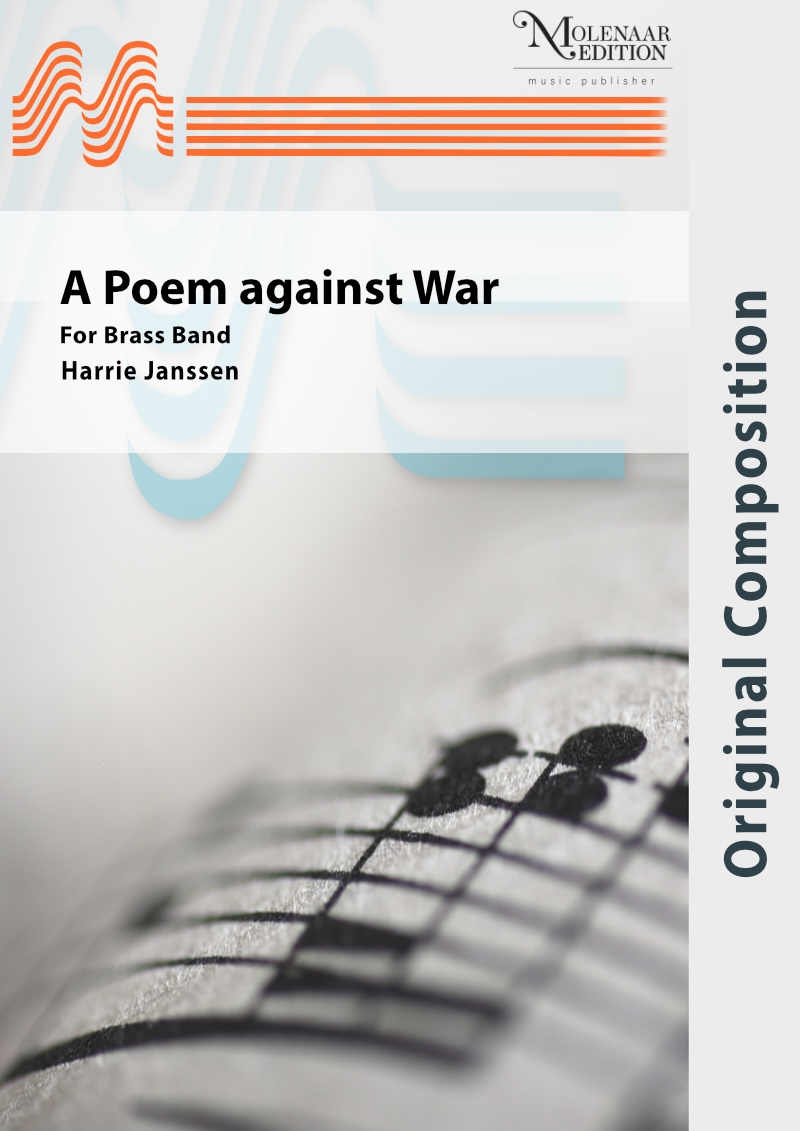
A Poem Against War - Harrie Janssen
A Poem against War A Poem against War was commissioned by Psalm 150, Dinxperlo for the project Leven in Vrijheid!.Starting point of the composition of this piece was the poem A Poem against War from the American poet Karen Kapowich. The poem tells of young lives that are broken in their start because of war.A monument - founded in memory of the soldiers who gave their lives - is hardly noticed and even ignored. Children find the tree-sheltered memorial place rather scary and even the narrator speeds up his stride when passing. Underlying theme is the otiosity of war.The musical piece is composed of two parts that are being played without interruption. The first part explains the drama of the battle. The second part is based on the poem of Karen Karpowich in which we look back on the sacrifices that have been made. The text is sung by a Mezzo Soprano and emphasizes the bloodshed that comes along with every war. The opening theme returns at the end of the piece but in a complete metamorphosis, wherein optimism and vigor take place for resignation knowing that history repeats itself time and time again. A Poem against War had its premiere on 25th November 2012 in de DRU Cultuurfabriek in Ulft by Fanfare-orchestra Psalm 150, Dinxperlo led by Tijmen Botma. The Mezzo Soprano was Elske ter Lindert.commissioned by Psalm 150, Dinxperlo for the project Leven in Vrijheid!.Starting point of the composition of this piece was the poem A Poem against War from the American poet Karen Kapowich. The poem tells of young lives that are broken in their start because of war.A monument - founded in memory of the soldiers who gave their lives - is hardly noticed and even ignored. Children find the tree-sheltered memorial place rather scary and even the narrator speeds up his stride when passing. Underlying theme is the otiosity of war.The musical piece is composed of two parts that are being played without interruption. The first part explains the drama of the battle. The second part is based on the poem of Karen Karpowich in which we look back on the sacrifices that have been made. The text is sung by a Mezzo Soprano and emphasizes the bloodshed that comes along with every war. The opening theme returns at the end of the piece but in a complete metamorphosis, wherein optimism and vigor take place for resignation knowing that history repeats itself time and time again. A Poem against War had its premiere on 25th November 2012 in de DRU Cultuurfabriek in Ulft by Fanfare-orchestra Psalm 150, Dinxperlo led by Tijmen Botma. The Mezzo Soprano was Elske ter Lindert.
Estimated dispatch 10-14 working days
-
 £10.00
The Once and Future King
DescriptionThe Once and Future King is a suite of three movements; each movement was inspired by an Arthurian legend. The first movement, 'Tintagel', concerns the famous Cornish promontory said to be the birthplace of King Arthur. In Arthur's time, Tintagel was part of the court of King Mark of Cornwall and the music imagines a visit by the King of the Britons to his Cornish neighbour and the place of his birth, reflecting the ceremony and drama of such an occasion; the music is strongly antiphonal, contrasting the more strident fanfares of the cornets and trombones with the warmth of the saxhorns and tubas.The second movement, 'Lyonesse', takes its inspiration from the mythical land which once joined Cornwall to the Isles of Scilly. One legend claims that after the disastrous battle of Camlan where Arthur and Mordred were both killed, the remnants of Arthur's army were pursued across Lyonesse to Scilly, whereupon Merlin cast a spell to sink Lyonesse behind them and drown the pursuers. Some say the bells of the 140 churches inundated that day can still be heard ringing. All the material in this movement derives from two short motifs heard in counterpoint at the very beginning, which are intentionally dissonant and bitonal in character.The final movement, 'Badon Hill', takes its title from the legendary site of Arthur's last battle with the Saxons and is a lively toccata based on the medieval secular song L'Homme Armee ('The Armed Man'). The music uses a number of medieval devices including "hocketing" (passing melody from one voice to another). The actual site of Badon Hill is unknown but it has been associated with Badbury Rings in Dorset and a lot of evidence now points towards the town of Bath. Arthur's victory at Badon Hill was the last great victory for Celtic Britain over the Saxon invaders, but in the end only set the conquest back by a few decades. Arthur himself was dead by then, betrayed and defeated by his nephew Mordred, but it is said that Arthur only sleeps and will return in a time of dire need - hence the legend that Arthur's dying words were: Bury me in Britain, for I am the Once and Future King.Performance NotesWhere space and practicality permits the opening movement should be played with cornets and trombones standing behind the band facing the audience; they should retake their seats for the second and third movements.PercussionConcert Bass Drum (ideally NOT Kit/Pedal Bass Drum), Suspended Cymbal, pair of Clash Cymbals, Glockenspiel, Snare Drum, Tambourine, 2 x Timpani (Eb-G, Bb-D), 2 x Tom-toms, Triangle, Tam-Tam* (only if available), Tubular Bells *(only if available).MutesBaritones, all cornets and trombones will require metal straight mutes; all trombones and cornets will require cup mutes.*The Once and Future King was set as the test-piece for the 3rd section of the Swiss National Championships in 2007. The score was then slightly revised in July 2008, the main alteration being the exclusion of the tubular bells part for the Regional Championships of Great Britain in 2009. Some parts which were optional (or cued on other instruments) at the request of the Swiss Brass Band Association were restored to their original octaves and instruments. In 2015 the tubular bells part was restored in the optional Percussion 3 part; all parts in Percussion 3 are optional, although some are cued in the percussion 1 & 2 parts (and the cues should be played if only two players are available).Listen to a preview and follow along with the score below!
Estimated dispatch 7-14 working days
 View Music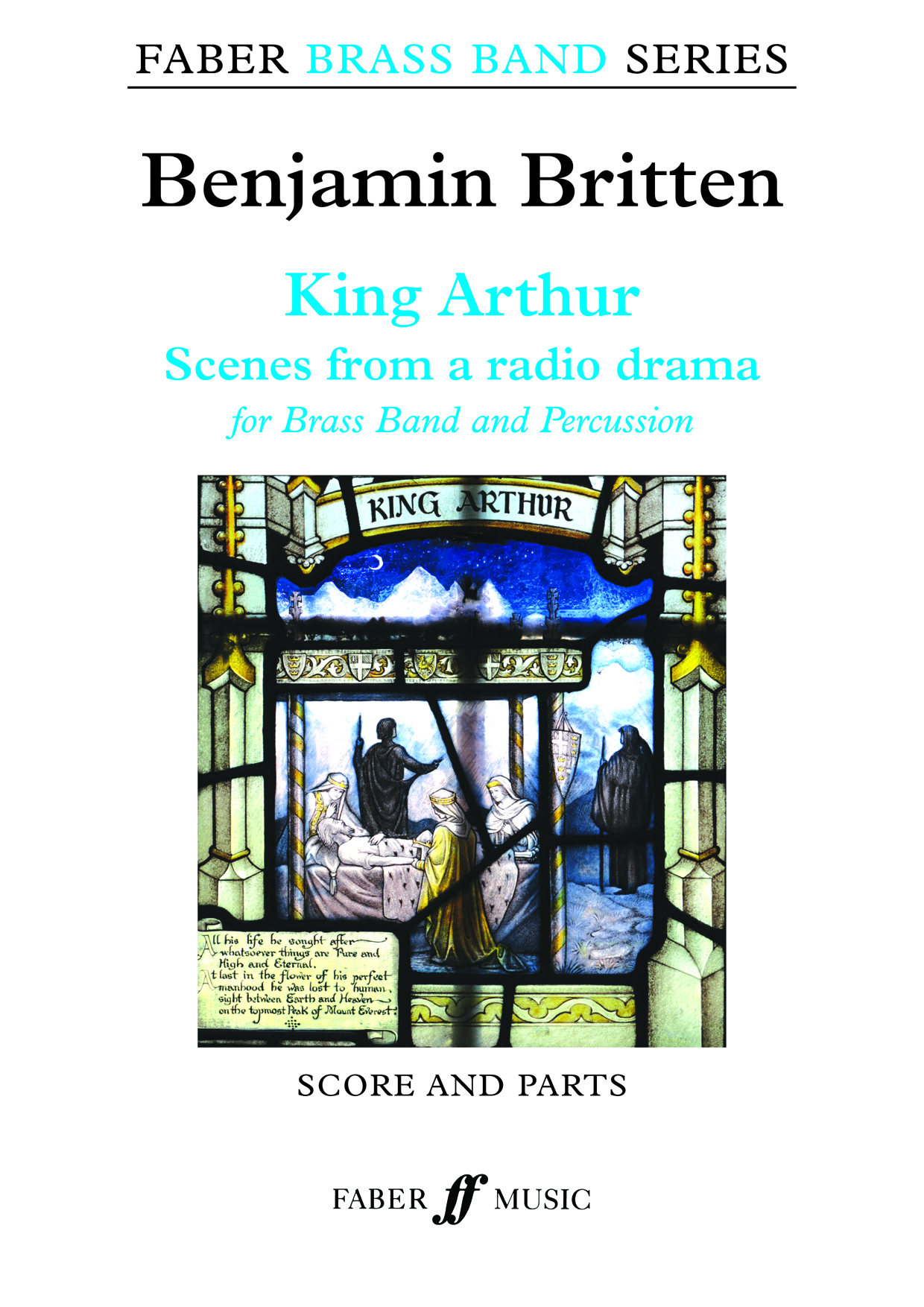
 Listen to MP3