
Results
-
 £24.95
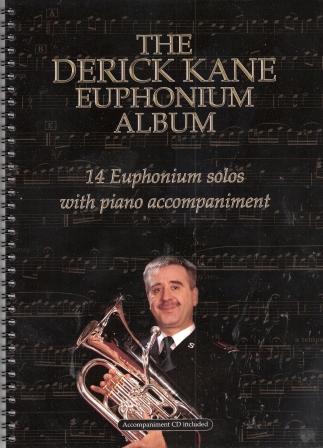
Derick Kane Euphonium Solo Album
Among the solos contained in this album are some of the 'heart songs' of The Salvation Army, some traditional melodies as well as four larger works. There are solos to challenge the younger player as well as some to test the most advanced soloist.These solos, many of which were only available with brass and accompaniment, have now been arranged with pianoforte accompaniment and come complete with an 'accompaniment CD'. Richard Phillips is the pianist. There is music suitable for all occasions, ranging from the Sunday morning worship meeting to the concert platform. Most importantly, the album contains solos that will appeal to the listener as well as the performer. A separate 'performance CD', featuring Derick Kane playing six of the solos with The International Staff Band and the remaining eight solos with Richard Phillips at the pianoforte, is also available (Go to our recordings section to view this product).The Better World Norman Bearcroft (trs. David Mortlock)Spirit of Life David Catherwood (trs. Susan Avison)My love is like a red, red rose Trad (arr. Kenneth Downie)Travelling Along Chris Mallett (trs. Derick Kane)Lyric Variations Ray Steadman-AllenThere will be God Joy Webb (arr. Richard Phillips)To live right Ivor BosankoWelsh Fantasy Ralph PearceJesus, I come to thee Norman BearcroftOchills Ernest Rance (arr. Derick Kane)Compelled by love Andrew BlythA new direction Derick KaneMenuet Bizet (trs. Kevin Norbury)Timepiece Norman Bearcroft
Estimated dispatch 7-14 working days
-
 £93.50
The Seventh Night of July (Brass Band - Score and Parts)
In Japan, July the 7th is a holiday known as Tanabata, for which large celebrations are held throughout the country. The holiday is based on a legend about a young man and a young woman who are separated by the Milky Way and can only see each other once a year on this night. The Seventh Night of July is Itaru Sakai's musical interpretation of this romantic legend. The flugel horn and euphonium solos during the middle movement represent the two main themes from the legend.
Estimated dispatch 7-14 working days
-
 £37.95
Benvenuto Cellini (Brass Band - Score only)
Berliozs opera Benvenuto Cellini was first produced in Paris in 1838 but was withdrawn as a failure, and it was not until the production in Dresden in 1888 that it was finally acclaimed by the Germans as a triumph. Adapted from certain episodes recorded in the memoirs of Benvenuto Cellini, Tuscan sculptor and goldsmith, the story, laid in Rome during the mid-sixteenth century, is not strictly historical. The short opening Allegro, marked deciso con impeto, is conceived in the most brilliant Berlioz manner, utilising full instrumentation. In the Larghetto we meet at once the first of the opera themes " the Cardinals aria (from the last act) introduced in the bass, quasi pizzicato. A second melody leads to a resumption of the Allegro, the contrasting second subject in the tenor horns being an adaptation of Teresas aria (Act I). Towards the end the Cardinal theme is re-introduced by trombones, fortissimo against an energetic cornet and euphonium passage (senza stringendo " without hurry, says the score). After a unison passage storming skywards, there is a sudden, dramatic three-bar silent pause broken by Eb basses alone, again stating the Cardinal theme. A simple molto crescendo on the dominant, begun piano, leads to the long, resounding chord.
Estimated dispatch 7-14 working days
-
 £82.95
Benvenuto Cellini (Brass Band - Score and Parts)
Berliozs opera Benvenuto Cellini was first produced in Paris in 1838 but was withdrawn as a failure, and it was not until the production in Dresden in 1888 that it was finally acclaimed by the Germans as a triumph. Adapted from certain episodes recorded in the memoirs of Benvenuto Cellini, Tuscan sculptor and goldsmith, the story, laid in Rome during the mid-sixteenth century, is not strictly historical. The short opening Allegro, marked deciso con impeto, is conceived in the most brilliant Berlioz manner, utilising full instrumentation. In the Larghetto we meet at once the first of the opera themes " the Cardinals aria (from the last act) introduced in the bass, quasi pizzicato. A second melody leads to a resumption of the Allegro, the contrasting second subject in the tenor horns being an adaptation of Teresas aria (Act I). Towards the end the Cardinal theme is re-introduced by trombones, fortissimo against an energetic cornet and euphonium passage (senza stringendo " without hurry, says the score). After a unison passage storming skywards, there is a sudden, dramatic three-bar silent pause broken by Eb basses alone, again stating the Cardinal theme. A simple molto crescendo on the dominant, begun piano, leads to the long, resounding chord.
Estimated dispatch 7-14 working days
-
£42.00
Candlelight Carol (Euphonium Solo) - Rutter, J - Griffiths, D
John Rutter (b. 1945) has established a reputation as one of the most successful composers of modern-day carols, and the Candlelight Carol is one of the most popular. Written in 1984, this is a Nativity carol, and has been recorded by Glyn Williams on Cory Band's new Christmas CD release A Festival of Fanfares and Carols4th section +Duration 5 mins
In Stock: Estimated dispatch 1-3 working days
-
 £91.99
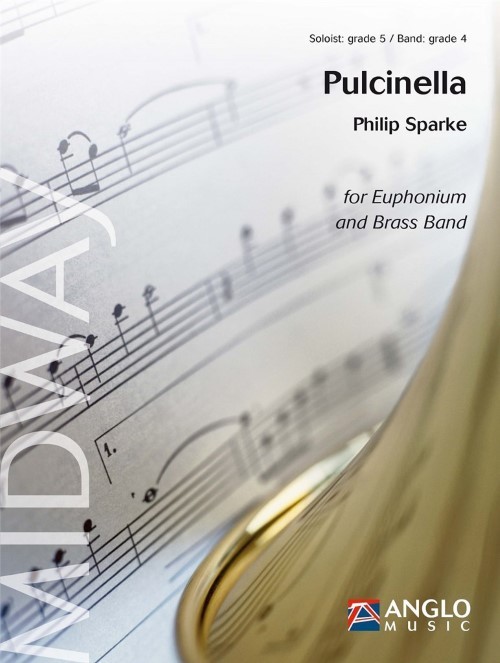
Pulcinella (Euphonium Solo with Brass Band - Score and Parts) - Sparke, Philip
Pulcinella was commissioned by the Taiwanese euphonium player Tzu-Hsiang Lin. Lin is a renowned soloist and teacher and a Besson Euphonium Artist. He teaches euphonium at Taipei National University of the Arts, National Taiwan University of Arts, Shih Chien University and National Kaohsiung Normal University. Lin gave the premiere of Pulcinella in both its concert band and brass band versions in January 2021. Pulcinella continues Sparke's series of euphonium solos named after characters of the Italian commedia dell'arte and opens with a long and expressive minor melody for the soloist over a brooding accompaniment. This is taken up briefly by the full band and is extended by the soloist after a change of key. A cadenza, accompanied by fragments of the main melody leads to a complete change of mood, tempo and tonality, introducing a Vivo section starting with a perky syncopated tune for the soloist. The band then uses elements of this new tune to introduce a change of key, where the soloist introduces a more lyrical second subject over a pulsing accompaniment. The band then takes this up and changes key to reintroduce the original Vivo melody, which leads to a short and acrobatic coda to bring the work to a spectacular close. Duration: 6.45
Estimated dispatch 7-14 working days
-
 £154.99
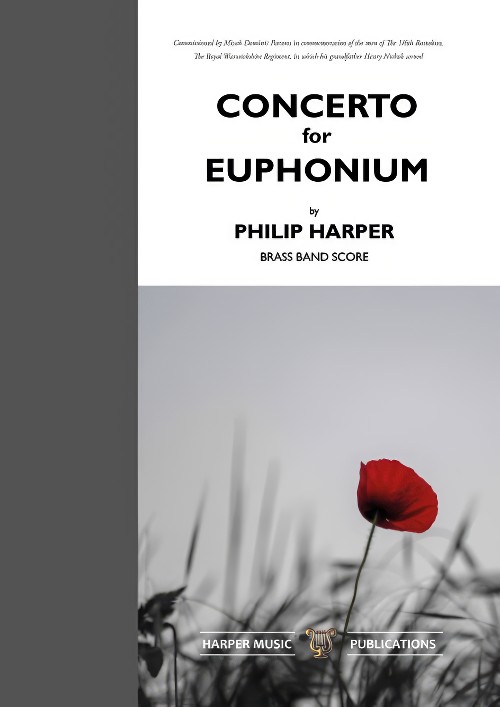
Concerto for Euphonium (Euphonium Solo with Brass Band - Score and Parts) - Harper, Philip
This Concerto for Euphonium casts the euphonium soloist as one of the young soldiers in a World War I battalion for an intensely intimate and visceral experience of events. However the music also portrays a more general human journey, and will appeal on a number of levels.There are three movements which have the following subtitles:Summer 1916 - Days of YouthWinter 1916 - The Weight of Maturity4th February 1917 - ReleaseAlthough challenging, the solo part is designed to be achievable by all ambitious euphonium soloists.Duration: 19.00
Estimated dispatch 7-14 working days
-
 £76.99
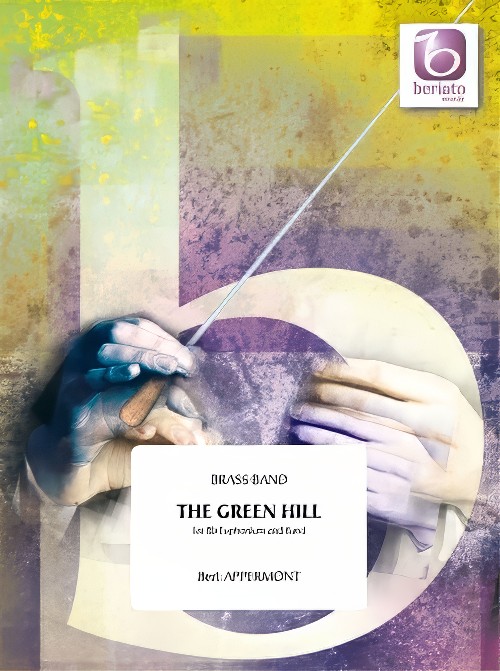
The Green Hill (Euphonium Solo with Brass Band - Score and Parts) - Appermont, Bert
This piece was commissioned by Swiss euphonium virtuoso Eich Schmidli. Bert Appermont dug deep into Celtic music for inspiration and created a fantasy that shows off the incredible, but often overlooked, versatility of the euphonium. Charming lyrical melodies, virtuosic runs and exciting, colourful tuttis create plenty of contrast in this exciting work. The difficulty level for the soloist and band means that almost any band can perform this piece and showcase their euphonium player.Duration: 7:15
Estimated dispatch 7-14 working days
-
 £64.00
Fantasie Originale (Euphonium Solo with Brass Band - Score and Parts) - Mantia & Picchi - Wilkinson, Keith M.
Simone Mantia (1873 - 1951) was born in Italy and moved with his family to USA in 1881. He developed an early interest in playing the euphonium and from 1898 to 1904 was the euphonium soloist of the Sousa Band. This solo was written by him to demonstrate both the operatic qualities of his instrument as well as its outstanding technical possibilities. The solo is based on themes by the Italian composer Ermano Picchi (1811 - 1856), Mantia weaving his virtuosic variations around the thematic material provided by Picchi.This arrangement was prepared at the request of Aaron VanderWeele, euphonium soloist of the New York Staff Band, for his UK tour in 2008.
Estimated dispatch 7-14 working days
-
 £12.50
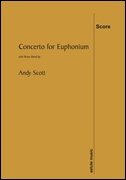
CONCERTO FOR EUPHONIUM (Euphonium Solo part only) - Scott, Andy
Solo part only, Brass Band parts and score available separately. The 'Concerto for Euphonium' with Brass Band is scored in three movements: The Lure of the Red Jacket; Far Beyond the Stars; The Dragon's Den. The Lure of the Red Jacket responds musically to these ideas and attitudes; a non-relenting riff that signifies the hard slog of practice, scorings which find members of the band supporting the soloist, all the time the soloist putting together new riffs and ideas. Stylistically all this happens within a frame of minimalism and funk. Far Beyond the Stars is a simple folk-like melody that is stated by the soloist, which develops with different harmonic backdrops being introduced. The poignant words form the focus of the emotional intensity of this piece. The Dragon's Den is a fierce and fiery fusion of energy, virtuosic playing and intricate ensemble work, the finale of the Concerto for Euphonium draws upon the composers experience of big band and small group performance and writing. Dur: 15:00
Estimated dispatch 7-14 working days
 View Music