
Results
-
 £115.60
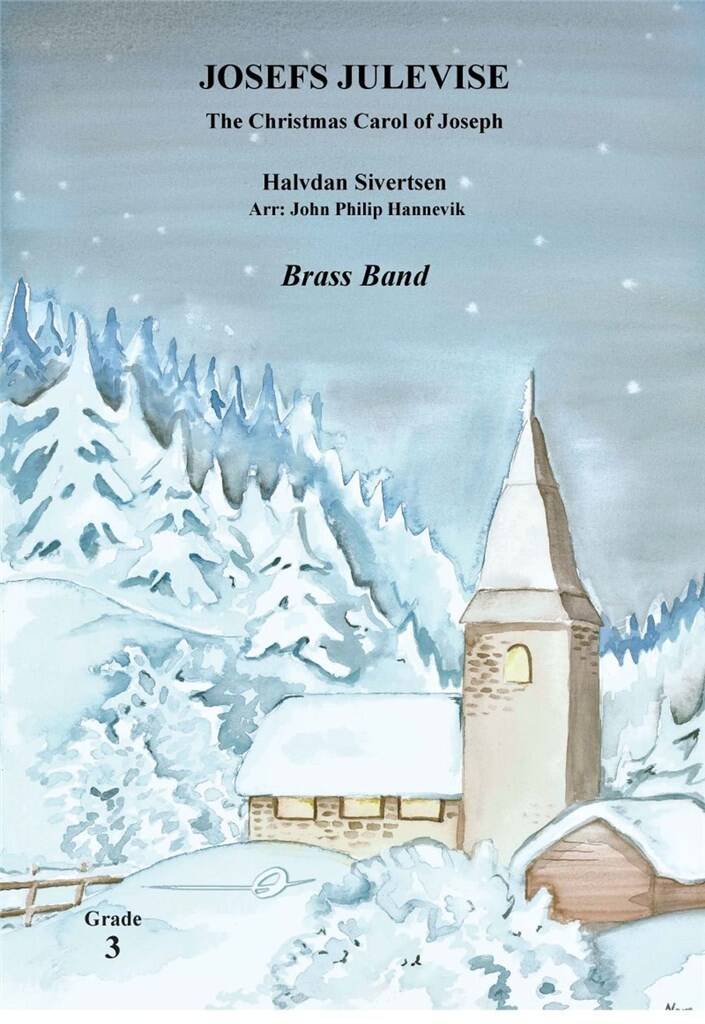
Josefs Julevise - Halvdan Sivertsen - John Philip Hannevik
Halvdan Sivertsen (born 1950) is one of the most popular singer/ songwriters in Norway. He is well know as a first-class storyteller, and he has a strong melodic line in all his music. This Christmas song was first recorded in 1991 and it has become a Norwegian classic. The lyrics tell the story of a couple travelling through time to find a city with bright lights, where they hear people sing about the couple who are about to have their first baby. But still this couple can not find anybody willing to help them, and they are forced to go back 2000 years, to find the stable where they find some shelter. Maybe they should have travelled further ahead in time in the firstplace, to find people willing to open their door to the poor and needing?
Estimated dispatch 5-14 working days
-
 £127.30
Batbygger Jo - Ragnhild Furebotten - Idar Torskangerpoll
This song from the band Hekla Stalstrenga is about Joe the boatbuilder. Joe builds the most fabulous boats, but has a deal with the devil that every seventh boat is going to him.Norwegian band Hekla Stalstrenga started as a duo in 2005. Since then, they have extended to a quintet and have released eight record albums. Five of these have been nominated to "Spellemannsprisen", the Norwegian equivalent to Grammy.In this arrangement watch the articulation and give the song the slow groove it needs.
Estimated dispatch 5-14 working days
-
 £94.99
Dublin Pictures - Marc Jeanbourquin
Ireland is a multi-faceted country that has developed a popular and distinctive musical culture. The first movement of Dublin Pictures reflects Irish festivals where there is dancing and traditional beer flowing.More tranquil in its feel, the second movement illustrates the landscape that can be seen from the Ha'penny Bridge, a bridge that crosses the River Liffey in Dublin. This movement highlights the wide range of the orchestra's sound colours as the musicians' voices combine with the wind and percussion to accompany the soloist. The lively and joyful rhythms of the last movement take the listener to Temple Bar, the famoustourist quarter of the city, well known for its vibrant nightlife.The music's energy and virtuosic motifs are in contrast to the previous movement and provide a spirited and festive finale.Marc Jeanbourquin wrote this piece in three movements for Azimuts Brass in 2011. He then arranged it for Concert, Fanfare or Brass Band.
Estimated dispatch 5-14 working days
-
£54.99
Gaillarde - Pierre Attaingnant - Manu Mellaerts
Galliarde by Pierre Attaignant (1494-1552) is an elegant opening item for those looking for something a little different. It can also be used as a filler or to link two works in a programme.Manu Mellaerts is an authority on the repertoire of this period and has arranged this short, stylish piece while keeping the original renaissance spirit in mind.
Estimated dispatch 5-14 working days
-
 £54.99
Majestic Prelude - Jacob de Haan
A composition of much contrast based on a well-known psalm melody. As its title announces, it starts with a majestic introduction in which parts of the psalm melody can be heard. Next we hear the complete psalm melody in the trombones, interrupted by passages full of dance in the discant. This is continued in a lively Allegro Molto, in which the psalm melody emerges in the trumpets and cornets, again interrupted by rhythmically pulsing quaver movements. The work ends with a flashing passage in a presto tempo. Majestic Prelude typically is a composition for the start of a concert.
Estimated dispatch 5-14 working days
-
 £76.99
Bliss - Jacob de Haan
Bliss: Impressions of a Village is a spectacular test piece by one of the most renowned brass band composers in Holland, Jacob de Haan. It contains three impressions of a village in the beautiful Brabant province in the Netherlands. The first movement is in a very classical style, which captures the village's history appropriately. The entire band joins in as the small river approaches an ancient castle. The third movement contains lots of interesting rhythms portraying the hustle and bustle of everyday life in the village.
Estimated dispatch 5-14 working days
-
 £89.99
Broken Sword - Kevin Houben
The Broken Sword is one of the five ceremonial swords kept in the Tower of London and is used during the coronation of a new king or queen. Legend has it that an angel broke off the tip of the sword in an effort to prevent an unjust killing. Composer Kevin Houben lets his music retell this intriguing legend. Broken Sword resembles a film score in many ways and will paint vivid images as the band plays its way through the legend. Many different moods create a contrast-rich work that makes for an exciting listening and playing experience every time!
Estimated dispatch 5-14 working days
-
 £60.99
The Last Night of Fall - Etienne Crausaz
This beautiful chorale for Brass Band illustrates the winter solstice, the longest night of the year. Describing the end of nature's cycle, it has a rather melancholic character until the final chord which symbolises the new beginning.This contemplative work is ideal for creating a moment of tranquillity during a concert, and is also suitable as a warm-up piece.
Estimated dispatch 5-14 working days
-
 £105.20
Infinity Forest - Haakon Esplo
The concert overture "Infinity Forest" draws inspiration from an ancient forest, standing majestically, enveloped in mystery and secrets. Venturing into this forest, one never knows what awaits. It lies dark and quiet, interrupted by clearings where the sunlight breaks through."Infinity Forest" serves as a magnificent opening for any concert and is equally an excellent choice for competition repertoire. The music presents challenges of both technical and musical nature for all instrument groups, offering great opportunities to focus on precision, timbres, and intonation. While the lower parts are designed for easier difficulty, the lead parts present greater challenges.
Estimated dispatch 5-14 working days
-
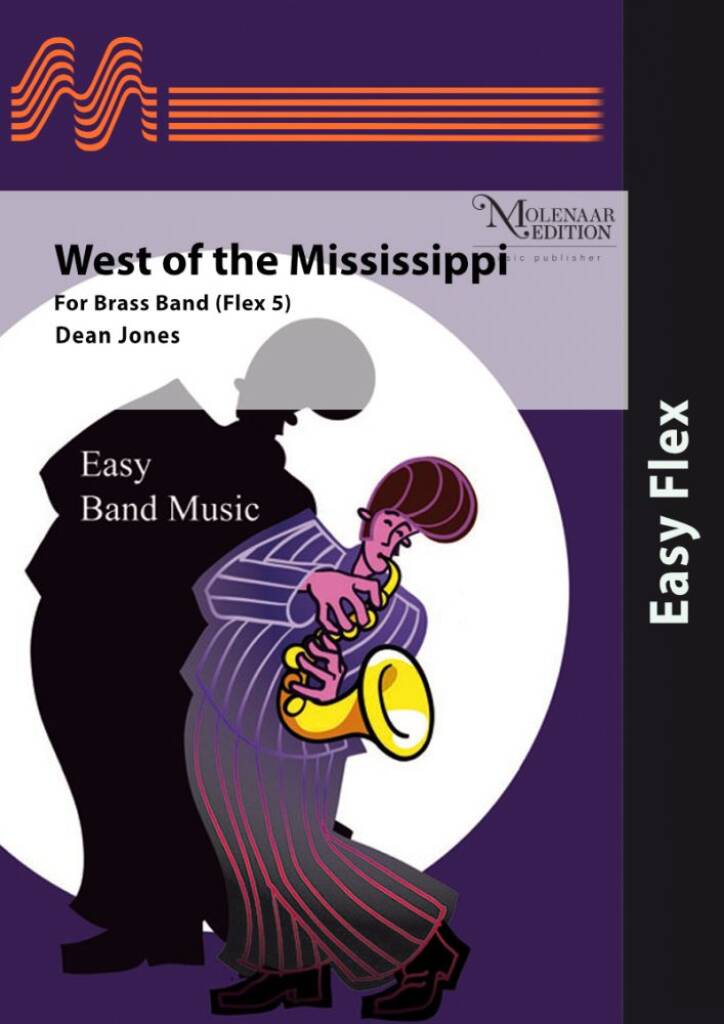 £73.60
West of the Mississippi - Dean Jones
There's always a sense of adventure about America that makes it a really exciting topic to write about. The 3 States that sprang to mind in bringing a piece of music together were: California, Hawaii and Texas.We start out our American journey on the West Coast....California has provided much in the way of film and music for over 100 years. Combining this sense of free expression with the 'Surfing' culture, this initial section of the piece has an easy-going, fun feel in a pop idiom. Maybe wearing some shades might be quite a good look for this section!We move even further West now to the island of Hawaii where the free and easy goes onto a new level! The use of chromatics is a feature of Hawaiian melodies and has a feel a 'sliding' between notes that somehow sums up this feel of living on a tropical island! Have some fun with this section and have a Hawaiian garland to wear!Back into the USA mainland, and the fabulous state of Texas! Here we have the concept of the old fashioned rodeo and the 'Wild West'. Even today, the culture of horses, cowboys and tales of adventure are celebrated in places such as Fort Worth. The music captures some of these themes and has a fun and enjoyment...some get your Cowboy hats at the ready and enjoy the finale!
Estimated dispatch 5-14 working days
 View Music