
Results
-
 £29.95
Judd: Before The Cross
Written at the request of David Daws for his solo album The Sound of David Daws, this meditation for cornet and brass band uses the composer's own song Before the cross (The Musical Salvationist, April 1965), the first lines of which are "Before the cross I stand in fear and wonder, and see that all my sins on Thee are laid". The song was written at an early stage of the composer's career, just before commencing study at The Royal Academy of Music, London. After a brief introduction the melody is heard twice, first played by the soloist, then on euphonium and flugel horn with the soloist adding ornate counterpoint before taking up the melody once again, this time leading to a quiet and reflective conclusion.
Estimated dispatch 7-14 working days
-
 £45.00
Triumph Series Band Journal November 2011 Numbers 1219-1222
No.1219 March Medley - Heavenward (William Gordon)A variety of songs are used in this up-tempo march medley which potrays the celebration of a life looking forward to an eternity in Heaven. The tunes used are 'When we all get to Heaven', 'When the roll is called up yonder' and 'We shall win'.No.1220 Garden of my heart (Terry Camsey)The publication of this music is, in a small part, a fitting tribute to Major Terry Camsey who was Promoted to Glory in June 2011. The title is taken from the refrain from a much-loved Sidney Cox song; 'Jesus, Jesus, Lily of the valley, Bloom in all thy beauty in the garden of my heart'.No.1221 My life, my all (Andrew Mackereth)This selection attempts to emphasise the personal nature of Christian commitment hence the emphasis given to the words 'my' and 'I' in the songs chosen. The tunes 'Rockingham', 'All I have I am bringing to thee' and 'At thy feet I bow adoring' are included.No.1222 Tenor Horn Solo - You love me (Brian Willetts arr. Paul Sharman)This arrangement was made at the request of David Lynch, Solo Horn player in The International Staff Band. Originally published in April 1993, the song speaks of the fact that, despite the wonder and vastness of God's creation, he still loves each one of us individually.
Estimated dispatch 7-14 working days
-
 £19.95
Mythical Tales (Brass Quintet)
Mythical Tales (2012) is a ten minute work in three movements which represents three of the most popular folk stories or indeed in the case of the first movement, true stories, in Welsh culture.I. Owain GlyndwrOwain Glyn Dwr was born around the 1350s into an Anglo-Welsh gentry family. His estates provided him with a modest power base in north-east Wales. After a number of disputes, he proclaimed himself prince of Wales in September 1400.Glyn Dwr led several battles with the English, although he was never captured. Over the next few years punitive measures were enacted to keep control of Wales, but these were matched by many acts of Welsh rebellion - among them the capture of Conwy Castle in April 1401. In June 1402, at the Battle of Pilleth on Bryn Glas Hill, Glyn Dwr led his troops to victory over an English army. By now Glyn Dwr was leading a national revolt. In 1404, he led a march towards Wocester, but failed, with the English capturing parts of Wales. He died defending his country.II. MyfanwyMyfanwy was the most beautiful woman in Powys, but she was vain and liked nothing better than to be told how beautiful she was. Many handsome men would court her, but she would not show interest because they couldn't sing and play to her, reflecting her true beauty.Luckily, a penniless bard, Hywel ap Einion was in love with Myfanwy, and one day plucked up the courage to climb up the hill to the castle with his harp, to sing and play to her. He's allowed in to play for her, and while he's playing and complimenting her on her beauty she can neither listen nor look at any other man. Because of this Hywel believes that she has fallen in love with him. But his hopes are dashed when a richer, more handsome and more eloquent lover comes along. The music of the second movement portrays the despair and upset that Hywel must have felt.III. Battle of the DragonsMany centuries ago when dragons roamed the land, a white ice dragon descended on a small village and decided to live there, not knowing that a red fire dragon was already living nearby.Six months later the red dragon awoke to find a huge white dragon wrapped around his village that he cared for. He could tell that his people were ill from the cold. The Land was bare; nothing was able to grow not even the pesky dandelions. The people were starving. The people longed for the red dragon to free them from the icy misery, so that their life and land could return to the sunny and warm climate that it was once before.The red fire dragon challenged the white ice dragon to a single combat fight at the top of the cliff the next day. The people of the village watched in terror awaiting their fate. The red dragon beat the white dragon, and the crowd cheered with joy as the red dragon roared with triumph. The mayor of the village declared that the land should always fly a flag with the symbol of a Red dragon on it. The flag's background should be half green and half white; the green to represent the lush green grass of the land and the white to represent the ice. This way no one would ever forget what happened.
Estimated dispatch 7-14 working days
-
 £27.50
To Spring
Not to be confused with the better known 'Spring', this is a dramatic 'April Showers' mini tone-poem.
Estimated dispatch 7-14 working days
-
 £89.95
Tuba Concerto (Score and Parts)
This work was commissioned by the Besses o' th' Barn Band with funds provided by the Arts Council of Great Britain. It was written for, and is dedicated to, John Fletcher, who gave the first performance in Middleton Civic Hall, near Manchester, on 24 April, 1976, with Besses o' th' Barn Band conducted by the composer. Another interesting feature about the premire was that it was recorded by BBC Television for an Omnibus programme with Andr Previn as presenter. The concerto exists in three versions: with brass band (1976), orchestra (1978) and wind band (1984).The concerto is in three movements, following the usual, quick-slow-quick pattern: Allegro deciso,Lento e mesto, Allegro giocoso. The first movement has a sonata form shell with two contrasting themes, the first one being rhythmic in character, the second lyrical. There is a reference made in passing to the Vaughan Williams Tuba Concerto, but this merges into the other material in the development section.The second movement begins with a chorale, but after the entry of the tuba it leads to a cantabile theme, softly unfolded by the soloist. The opening chorale passage returns, this time briefly on muted brass, and leads to a middle section which is more chromatic in style and soon builds to a powerful climax, where the opening cantabile theme triumphantly returns. The music subsides, returning to the opening chorale and ending peacefully.The finale is light and breezy in style, and is cast in rondo form. After a brief introduction the tuba announces the main rondo theme, which is dance-like and a little jaunty. There are two episodes: the first a broad sweeping tune, the second a slowish waltz and a little jazz-like. After a virtuoso cadenza reference is made to the very opening of the concerto before the work ends with a triumphal flourish.The Tuba Concerto has established itself as one of the main works in the solo tuba repertoire. It has been performed and broadcast in over 40 countries all over the world. There are currently six commercial recordings of the concerto in its various versions.resolution in C major, pointed by a simple but expansive melody towards which the piece has been heading, and ending in a blaze of joyful colour.
Estimated dispatch 7-14 working days
-
 £42.95
Ubi Caritas
Composed for the marriage of His Royal Highness Prince William of Wales, K.G. to Miss Catherine Middleton and first performed by the Choirs of Westminster Abbey and Her Majesty's Chapel Royal, St James's Palace, conducted by James O'Donnell, at Westminster Abbey, Friday 29 April 2011.
Estimated dispatch 7-14 working days
-
 £44.00
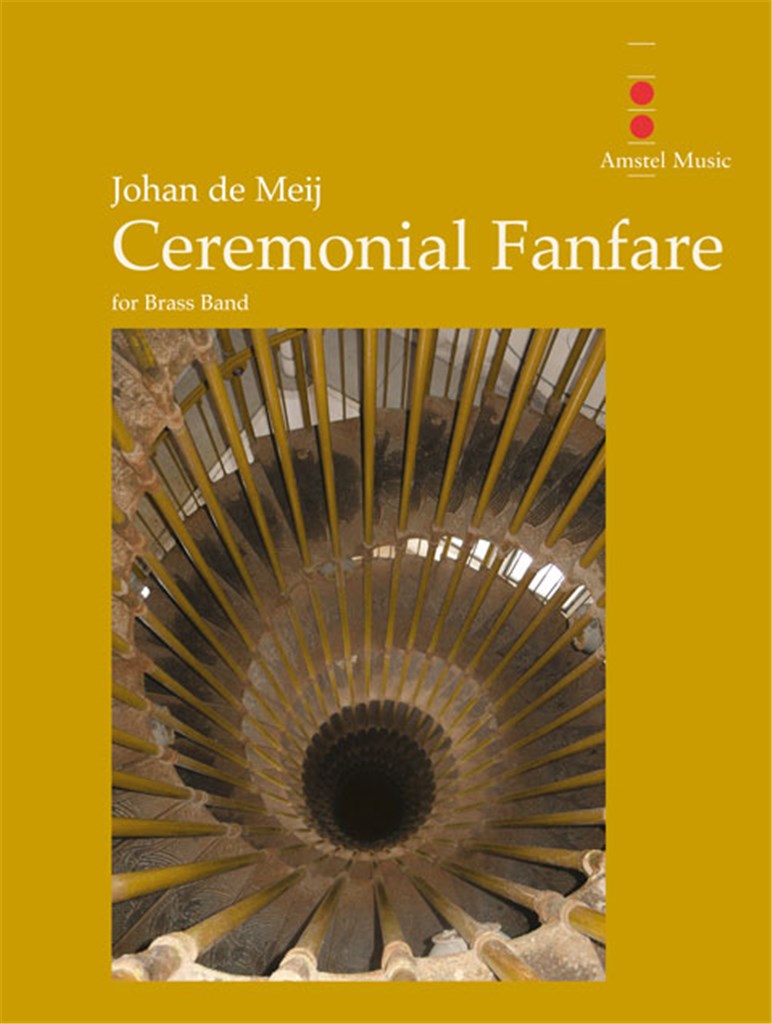
Ceremonial Fanfare (Brass Band - Score and Parts) - De Meij, Johan
The Ceremonial Fanfare was originally written for orchestral brass and percussion, commissioned by The Orchestra Osaka Symphoniker from Osaka, Japan. The world premiere performance took place on April 12, 2005 at The Symphony Hall in Osaka, conducted by maestro Heiichiro Ohyama.In April 2009, the combined brass sections of the New York Philharmonic and the Royal Concertgebouw Orchestra gave an impressive performance in New York City. The concert commemorated the Henry Hudson Quadricentennial and 400 years of friendship between The United States and The Netherlands. This version for brass band was written at the request of EBBC, the European Brass Band Contest 2012in Rotterdam, to serve as the opening fanfare of the festival.Duration: 4.30
Estimated dispatch 7-14 working days
-
 £44.95
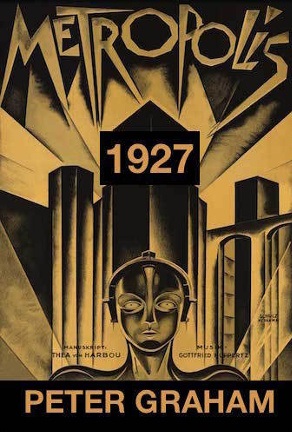
Metropolis 1927 (Brass Band - Score only) - Graham, Peter
Fritz Lang's 1927 science fiction epic Metropolis is considered to be a masterpiece of cinematic vision and a high point of German Expressionist filmmaking. Set in a future dystopian world the film introduces the viewer to two contrasting communities living in the vast city of Metropolis. Those above ground live a life of privilege and pleasure serviced by the underground-dwelling drone workers whose role is to maintain and operate the banks of machines which provide the city's power.Lang's film, which can be considered a type of 20th century morality play, draws upon a range of themes and influences from Marxist ideals and social satire to overt religious symbolism.The music does not attempt to precis the plot, such as it is, but simply reflects my musical responses to Lang's noirish visual style and set designs - the brooding machine rooms, the decadent nightclubs, the gothic cathedral and so on - paradoxically a world of terrifying beauty.Metropolis 1927 was commissioned by Bramwell Tovey and The National Youth Brass Band of Great Britain with funds provided by The Arts Council of England. The first performances took place in the Winter Gardens, Weston-super-Mare on Saturday 19th April and in the Cheltenham Town Hall on Sunday 20th April 2014.This revised version was premiered by The Black Dyke Band, conductor Nicholas Childs, at the 38th European Brass Band Championships in the Konzerthaus Freiburg, Germany, on Saturday 2 May 2015.- Peter GrahamDuration: 15.00
Estimated dispatch 7-14 working days
-
£124.95
Metropolis 1927 (Brass Band Set - Score and Parts) - Graham, Peter
Fritz Lang's 1927 science fiction epic Metropolis is considered to be a masterpiece of cinematic vision and a high point of German Expressionist filmmaking. Set in a future dystopian world the film introduces the viewer to two contrasting communities living in the vast city of Metropolis. Those above ground live a life of privilege and pleasure serviced by the underground-dwelling drone workers whose role is to maintain and operate the banks of machines which provide the city's power.Lang's film, which can be considered a type of 20th century morality play, draws upon a range of themes and influences from Marxist ideals and social satire to overt religious symbolism.The music does not attempt to precis the plot, such as it is, but simply reflects my musical responses to Lang's noirish visual style and set designs - the brooding machine rooms, the decadent nightclubs, the gothic cathedral and so on - paradoxically a world of terrifying beauty.Metropolis 1927 was commissioned by Bramwell Tovey and The National Youth Brass Band of Great Britain with funds provided by The Arts Council of England. The first performances took place in the Winter Gardens, Weston-super-Mare on Saturday 19th April and in the Cheltenham Town Hall on Sunday 20th April 2014.This revised version was premiered by The Black Dyke Band, conductor Nicholas Childs, at the 38th European Brass Band Championships in the Konzerthaus Freiburg, Germany, on Saturday 2 May 2015.- Peter GrahamDuration: 15.00
Estimated dispatch 7-14 working days
-
 £15.00
Symphony in Two Movements (Brass Band - Study Score) - Gregson, Edward
Selected as the Championship Section test piece for the National Brass Band Championships of Great Britain 2025This work was jointly commissioned by the National Youth Brass Band of Great Britain (NYBBGB) and the National Youth Brass Band of Wales (NYBBW), the latter with funding from T Cerdd (Music Centre Wales), to celebrate their 60th and 30th anniversaries respectively. The first performances were given at Cadogan Hall, London, in April 2012, by the NYBBGB, conducted by Bramwell Tovey; and at the Great Hall, Aberystwyth University, in July 2012, by the NYBBW, conducted by Nicholas Childs.When I was approached about a joint commission to write a new work to celebrate the anniversaries of these two outstanding youth bands I was delighted to accept, and decided to respond by writing a work apposite for the magnitude of these special occasions, namely a 'symphony for brass'.Through a long journey of writing music for brass band, which commenced with Connotations (1977), and continued with Dances and Arias (1984), Of Men and Mountains (1991), The Trumpets of the Angels (2000) and Rococo Variations (2008), I arrived at what I regard as the most important work of the cycle to date, combining as it does serious musical intent with considerable technical demands. It is perhaps my most abstract work for brass band, avoiding any programmatic content.The symphony lasts for some 19 minutes and is structured in two linked movements. The form is based on that used by Beethoven in his final piano sonata (Op.111), which is in two movements only: a compact sonata-form allegro, followed by a more expansive theme and four variations. Prokofiev also adopted this model in his 2nd Symphony of 1925.The opening Toccata of this Symphony is highly dramatic but compact, whilst still retaining the 'traditional' structural elements of exposition, development and recapitulation; indeed, it also has the 'traditional' element of a contrasting second subject - a gentle, lyrical modal melody first heard on solo cornets.In contrast, the longer and more substantial second movement Variations is built around a theme and four variations. The slowly unfolding chorale-like theme accumulates both added note harmony and increasing instrumentation, whilst the four variations which follow are by turn mercurial (fast, starting with all the instruments muted), march-like (menacing, with short rhythmic articulations underpinning an extended atonal melody), serene (a series of 'romances' for solo instruments alongside echoes of the chorale) with an emerging theme eventually bursting into a climax of passionate intent; whilst the final variation is a dynamic scherzo (concertante-like in its series of rapid-fire solos, duets, trios and quartets) with the music gradually incorporating elements of the main ideas from the first movement, thus acting as a recapitulation for the whole work. It reaches its peroration with a return to the very opening of the symphony, now in the 'home' tonality of F, and thus creating a truly symphonic dimension to the music.Most of the melodic material of the symphony is derived from the opening eleven-note 'row', which contains various intervallic sets, and although the work is not serially conceived it does use some typical quasi-serial procedures, such as canons, inversions, and retrogrades. The symphony uses somewhat limited percussion, in line with a 'classical' approach to the sound world of the brass band, alongside a use of multi-divisi instrumentation, whereby each player has an individual part rather than the traditional doubling within certain sections of the band.- Edward GregsonDuration: 19.00
Estimated dispatch 7-14 working days
 View Music