
Results
-
 £105.20
Julepastorale - Arild Sandvold - Kjell Olav Martinsen
Arild Sandvold (1895 - 1984) began his studies at the Music Conservatory in Kristiania (Oslo) in 1906, in piano and organ as well as music theory. After his debut as organist and pianist, he had his debut as orchestral conductor in 1924. At the same time he also had two periods of studies in Leipzig. In addition to studies in piano and organ, he received tutoring in composition. He was a teacher at the Oslo Music Conservatory and organist and a cathedral cantor in Oslo for more than 50 years. Sandvold brought both Baroque and Romantic organ works to a wider audience. He wrote a number of works for organ, in addition to music for choir and orchestra. The polyfony of the lateBaroque and the harmony of the Romantic period serve as the basis of his musical style. "A Christmas Pastorale" arranged with thoughts about the brass bands possibility for sound and colour, and should be a nice piece to do on concerts in the Christmas time.
Estimated dispatch 5-14 working days
-
 £105.20
What a Difference a Day Made - Stanley Adams - Bjorn Morten Kjaernes
The Mexican songwriter Maria Grever, wrote the melody in 1934 ("Cuando vuelva a tu lado") and it became a big hit for jazz-singer Diana Washington. Since that, it has been recognized as a jazz-standard and also featured in several movies. This arrangement was originally written for young, Norwegian singer Angelina Jordan. In this version, the level of difficulty and instrumentation are customized to fit our Young Band-series. Included in the set is parts for both string bass and vocals, but they are not compulsory to perform the piece. In this style, the accompaniment will have a slight swinging feel, while some of the contrasting elements has to be performed without swing(Even).
Estimated dispatch 5-14 working days
-
 £154.60
Prelude Festivo - John Brakstad
Prelude Festivo is intended to be performed both in concerts and in competitions and includes solo passages for most instrument groups. Duration 7,5 minutes. Form: Fast slow fast. The piece is built on two themes: Theme 1 (Allegro con spirito) is first presented as a cornet solo after a fanfare-like opening. Theme 2 is hinted at in the opening bars, but is presented fully in the slow (Andante) section (bar 141). This theme is developed and also appears as melodic and rhytmic fragments throughout the composition. In the concluding section (bar 196) both themes are played in conjunction before the piece concludes with the fanfare theme from the opening bars. Parts thatare marked piu mosso ed leggiero should be played in a cheerful light staccato style in contrast to Andante cantabile.
Estimated dispatch 5-14 working days
-
 £127.30
Fordi jeg elsker deg - Bob Dylan - Idar Torskangerpoll
This melody is the Norwegian version of "Make You Feel My Love" composed by Bob Dylan. The lyrics is translated by Bjarte Hjelmeland and the song performed by, among others, Norwegian singer Ingebjorg Bratland. The English version is also widely covered, notably by Adele. The lyrics is a tribute to love, and the song is a popular song for weddings. Watch balance all times, both regarding foreground/background and within instrument groups. The piece is in soft and middle soft dynamics. Make sure that it is not too loud, while maintaining marked dynamic variations.
Estimated dispatch 5-14 working days
-
 £104.99
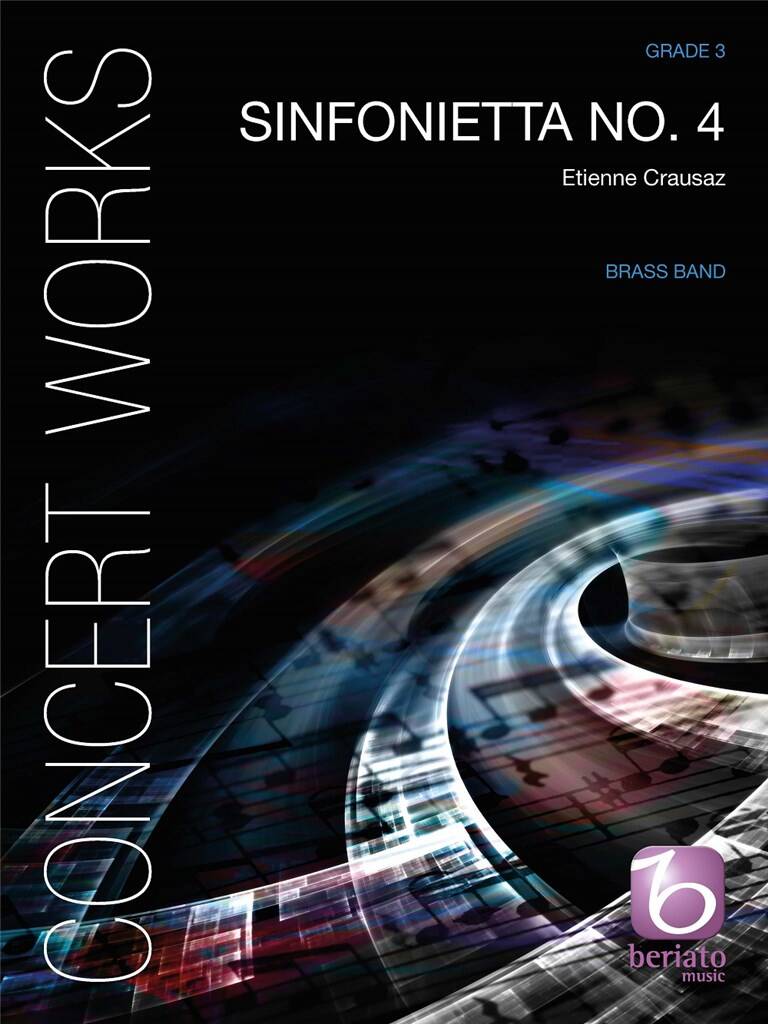
Sinfonietta No. 4 - Etienne Crausaz
This work was composed for the occasion of the 28. Fete Cantonale des Musiques Vaudoises (28th Music Festival of the Canton Vaud), taking place in the Valley of Joux in June 2018. The music begins with a very simple fanfare consisting of five ascending legato notes which constitute the fundamental framework of the piece. This contrasts with the more cantabile sounding theme we hear after. The following Allegro section uses the sequence in a contrapuntal style reminding us of the Renaissance period, but with more modern day harmonies. Two solo cadenzas played by cornet and euphonium initiate the middle section, in which a theme also based on the sequence builds uptowards the climax of the piece. The sequence in the last section is played in time but gives the feeling of a "one to the bar" beat. Shortly before the festive finale, the music heard in the middle part resumes.
Estimated dispatch 5-14 working days
-
 £105.20
Blaklokkevikua - Finn Ludt - Øystein Sjøvaag Heimdal
Blaklokkevikua is the most well-known song from the 1963 musical "Trost I taklampa". The music was written by Finn Ludt and the lyrics by Alf Proysen. This arrangement is quite simple and vary between full band and more limited instrumentation. Please be aware of the light swing-style throughout the piece and also use the indicated dynamics as close as possible.
Estimated dispatch 5-14 working days
-
 £105.20
Your Song - Elton John - John Philip Hannevik
Your Song written by the duo Elton John / Bernie Taupin, was first released in 1970 on Elton Johns second studio album. It has become one of his most popular songs, and was ranked as number 137 on Rolling Stones list of "The 500 greatest Songs of All Time". The song is also inducted into "The Grammy Hall of Fame".
Estimated dispatch 5-14 working days
-
 £115.60
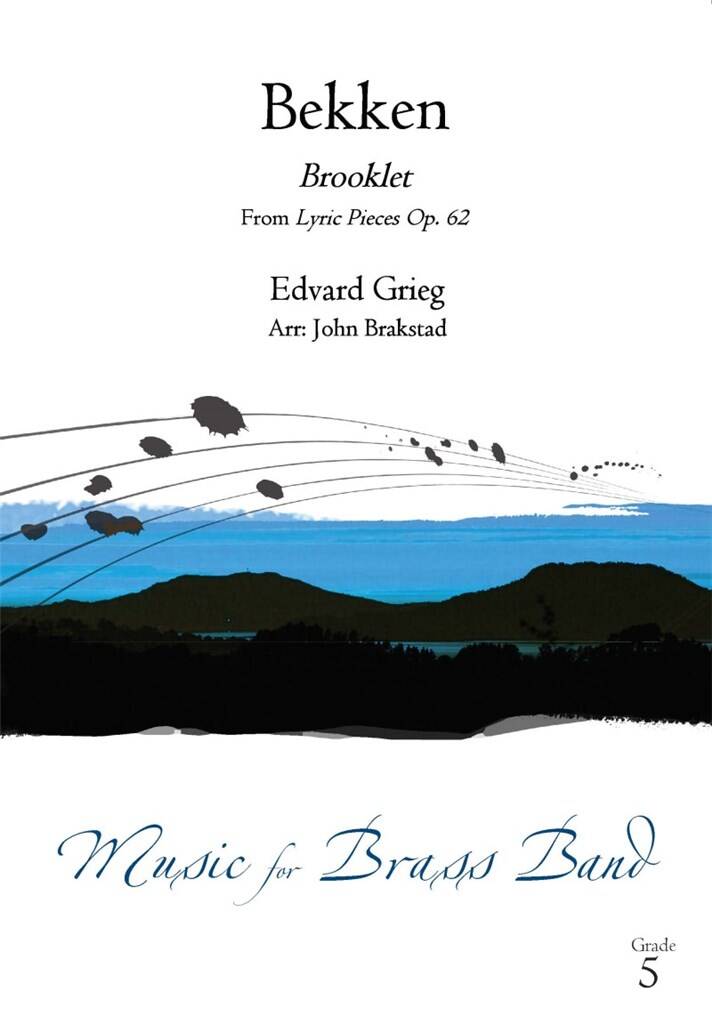
Bekken (Fra Lyriske stykker opus 62) - Edvard Grieg - John Brakstad
Brooklet is one of the movements from Grieg's Lyric Pieces for Solo Piano opus 62. Information for the conductor: Brooklet is an technically advanced work for solo piano. In this arrangement, technical passages are simplified by overlapping and doubling some of the parts. To master the technical challenges and make it sound effortless, it is important to pay close attention to balance and precision. Some of the parts also have alternative parts added which can lower the technical challenges a bit.
Estimated dispatch 5-14 working days
-
 £154.99
A Brussels Requiem - Bert Appermont
The attacks in Brussels on 22 March 2016 created a shockwave throughout Belgium and the rest of the world. Equally, the attacks in Paris and Nice led to great public indignation, fear and disbelief.What has happened to the western world? Have our cultures grown apart to such an extent that we do not understand each other anymore? Bert Appermont's intention was to voice certain emotions that these acts of terror have caused: particularly fear, grief, anger, and helplessness. He uses the French children's song Au Claire de la Lune as a connecting thread throughout the work.This piece is also about hope and faith in another world, andis meant to pay homage to all victims, resulting in a dignified remembrance. The musical development is presented in four through-composed parts, titled Innocence, In Cold Blood, In Memoriam - We Shall Rise Again and A New Day.This work was commissioned by the Brassband Obersterreich (Brass Band Upper Austria) to be played at the European Brass Band Championships 2017.
Estimated dispatch 5-14 working days
-
 £60.99
Moon River - Henry Mancini - Christopher Bond
Moon River is the title song of the famous 1961 motion picture Breakfast at Tiffany's. Over the years the song was covered by many major stars, turning it into an absolute evergreen around the world. The beauty of the melody is also suited for mellow sounding instruments like the Eb Alto Horn; a great reason for the British composer and arranger Christopher Bond to make a version for Brass Band and Alto Horn.
Estimated dispatch 5-14 working days
 View Music