
Results
-
 £33.62
Rockingham (Brass Band) Edward Miller arr. Karl Whelan
This sublime arrangement of the much loved hymn tune Rockingham ('When I survey the wondrous cross'), was arranged by Karl Whelan in memory of Frank Naylor. Frank was a faithful member of North Ashton Band based in Wigan (UK), a renowned tenor horn player and an inspiration to his many pupils over the years. In reference to Frank's slow melody piece of choice, there is also a reference in the trombones to Star of Bethlehem by Stephen Adams, leading into the final verse. Sheet music available from: UK - www.brassband.co.uk USA - www.solidbrassmusic.com Difficulty Level: 4th Section + Instrumentation: Soprano Cornet Eb Solo Cornet Bb Repiano Cornet Bb 2nd Cornet Bb 3rd Cornet Bb Flugel Horn Bb Solo Horn Eb 1st Horn Eb 2nd Horn Eb 1st Baritone Bb 2nd Baritone Bb 1st Trombone Bb 2nd Trombone Bb Bass Trombone Euphonium Bb Bass Eb Bass Bb Timpani Percussion 1-3
In Stock: Estimated dispatch 1-3 working days
-
 £74.99
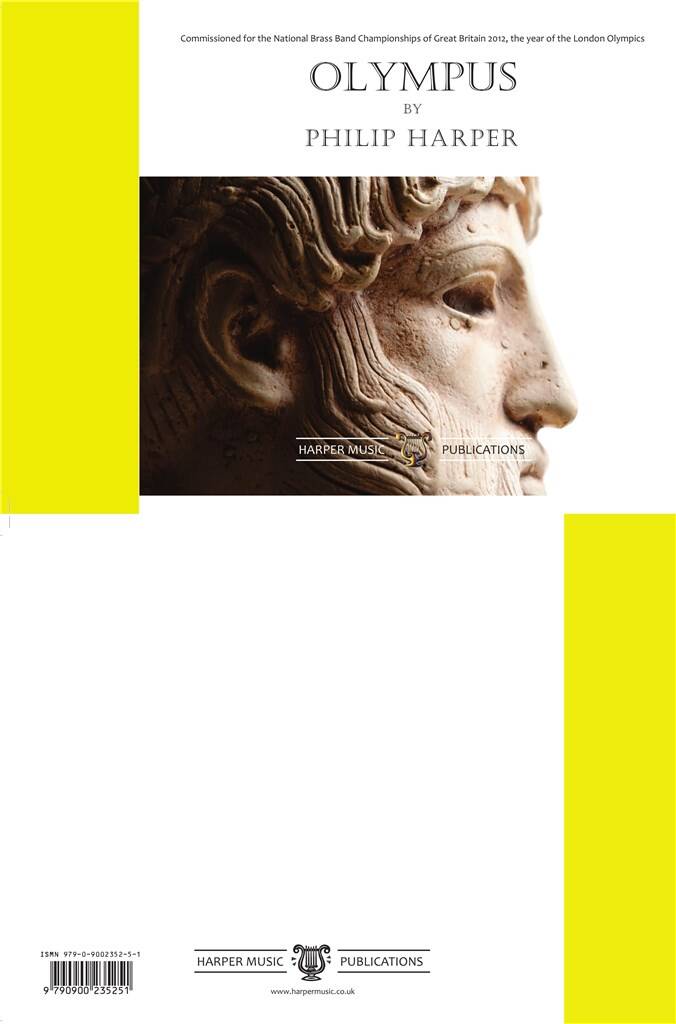
Olympus - Philip Harper
Selected as the test-piece for the 3rd Section Regional contests of the National Brass Band Championships 2012The music begins with a depiction of the exciting Opening Ceremony where noisy fanfares and sudden swells add to the cosmopolitan flag-waving clamour. Without a break the music leads to The Chariot Race, a fast compound-time gallop withthundering hooves in the basses and percussion, and a heroic melody introduced by the tenor horns. Chariot racing was the main equestrian event in the Ancient Greek Games, which were founded in memory of King Oenomaus. In the Greek legend he suffereddefeat in a chariot race to his son-in-law and Zeus' grandson, Pelops, but much of the music is bitter-sweet to symbolise the fact that Pelops had to cheat to win drawing parallels with some of the issues still facing modern-day athletics. A slow, mystical passage follows, describing The Temple of Zeus at Olympia. The statue of Zeus, who was honoured throughout the Ancient Games' history, was housed inside the temple and was one of the Seven Wonders of the Ancient World. Themusic depicts this period of the dawn of one of mankind's most ancient civilisations and there is a series of solo passages above a drone. The next section is called The Olympic Flame and a broad and lyrical anthem-like melody develops slowly in the euphoniums, which gradually ascends until the horns can take it over before passing upwards again to the cornets (Higher). The musicbursts into bright life at the lighting of the flame and the regular rhythmic pattern which has been established goes through an accelerando (Faster). The final section is called The Olympic Truce and aims to capture the cooperative spirit of the ancient practice of ending wars for the duration of the games. The anthem-like melody makes an affirmatory return (Stronger) and the work ends asit began with a blaze of colour and a real sense of optimism and global celebration. "Citius, Altius, Fortius" (Faster, Higher, Stonger)NOTES ON PERFORMANCEPercussion requirements: 1 to 3 players (3 Timpani, Snare Drum, Tenor Drum, Cymbals, Glockenspiel, Triangle)
Estimated dispatch 5-14 working days
-
 £82.19
'Odyssey' Variations (Brass Band) Kevin Norbury
'Odyssey' Variations was composed as a result of a commission in May 2020 from Five Lakes Silver Band and its musical director, Christopher Ward. This music is based on an original theme that I first used in an earlier composition, Odyssey, which was the test piece for the European Brass Band Championships, held at Munich, Germany, in April 1999. I distinctly remember getting into my hotel room and turning on the television to be greeted by news coverage of the Columbine High School shooting, so that piece has always held some significance for me, though because of a very sad coincidence. The melody was originally a cornet solo in the central slow section of Odyssey and pitched deliberately to test the soloist. I have, more recently attempted a straightforward choral setting of the melody, and the harmonies I use in the three chorale-style settings at the start of these variations are loosely based on that setting. The melody is a setting of the familiar words of Be Thou My Vision, an old Irish hymn, translated by Mary E. Byrne, and versified by Eleanor H. Hull. The form of the work is as follows: Theme - three presentations Variation 1 - Allegro Variation 2 - Moderato (featuring the horns, baritones, euphoniums and basses) Variation 3 - Maestoso (featuring the cornets, flugel horn, and trombones) Variation 4 - Adagio Variation 5 - Allegretto Variation 6 - Largo - Moderato Variation 7 - Allegro molto Theme - Maestoso e sostenuto Finale - Allegro vivace - Adagio e allargando To view a video of Five Lakes Silver Band performing the work please visit: www.youtube.com/watch?v=vfLnld3bCw8 Sheet music available from: UK - www.brassband.co.uk USA - www.solidbrassmusic.com Difficulty Level: 1st Section + Instrumentation: Soprano Cornet Eb Solo Cornet Bb Repiano Cornet Bb 2nd Cornet Bb 3rd Cornet Bb Flugel Horn Bb Solo Horn Eb 1st Horn Eb 2nd Horn Eb 1st Baritone Bb 2nd Baritone Bb 1st Trombone Bb 2nd Trombone Bb Bass Trombone Euphonium Bb Bass Eb Bass Bb Timpani Percussion 1-3
In Stock: Estimated dispatch 1-3 working days
-
 £77.00
General Series Brass Band Journal, Numbers 2265 - 2268, April 2026
2265: Holy God, we praise your name (Micael Dikantsa)This bolero introduces composer Micael Dikantsa of the Amriswil Corps, Switzerland, and is based on the hymn Holy God, We Praise Your Name (Grosser Gott, wir loben dich). Set in the traditional slow, dramatic bolero style, the work builds steadily from a distinctive percussion figure as the melody passes through different instrumental groups. With its growing intensity and rich scoring, this piece offers an engaging and atmospheric addition to concert programmes.2266: Tell the story (Barrie Gott)This work continues the Swing series that began nearly 40 years ago with Light'Walk. After a bold introduction, the melody unfolds through unison and close'harmony writing, leading to a Flugel Horn solo with scope for improvisation. The well'known hymn I Love to Tell the Story is heard in a New Orleans style before a modulation launches an energetic shout chorus and lively coda. Smooth, relaxed swing style is key throughout.2267: The old rugged cross (Erik Leidzn)This arrangement by Erik Leidzn is an early and lesser'known setting of a well'loved hymn, rediscovered during research into his work. Edited from a rare score found in the USA East Music Department archives, it demonstrates Leidzn's economical and effective style, creating a practical and expressive arrangement at a time when concise, serviceable hymn settings were greatly needed.2268: Heaven came down! (Michael Cooper)Inspired by William Booth's famous challenge to use contemporary styles for sacred purpose, this piece blends high'energy jazz'fusion big'band writing with a joyful gospel hymn. Driven by rhythm, syncopation and precision, the music proclaims its message of transformation and spiritual joy with vitality, clarity and infectious swing.
Estimated dispatch 7-14 working days
-
.NOBOX-1.jpg) £40.00
£40.00Bass Trombone Concerto - Gareth Wood
Written in 2006 for Roger Argente, Gareth Wood brings his considerable experience of writing for brass, and brass bands in particular, to an instrument not often blessed with opportunities for solo exposure. It is scored for soloist accompanied by traditional brass band line-up, including timpani and two percussion, and follows the standard three-movement pattern. In the first movement, the soloist launches straight into the musical argument with a low-lying repeated quaver figure punctuated by the band. A lyrical second subject in the high register is also entrusted to the soloist, and the movement comes to a thrilling conclusion. The slow movement opens softly with the percussion, and a mournful bass line sets the mood for a thoughtful long melody. It reaches a powerful climax, which subsides to a return of the opening mood. In the march-like finale, the soloist is pitted against a number of solo instruments from the band and a driving ostinato carries the momentum through to the blazing ending.
-
 £30.00
Scots Fantasia for Euphonium and Brass Band.
Recommended - Championship to 3rd Section Scots Fantasia is a Euphonium solo with brass band which begins with a slow Celtic folk-style melody followed by an exciting and challenging reel to get the fingers flying and the toes tapping! Scots fantasia was written in 2012 for euphonium soloist, Scott Kerr. Includes score & parts Also see: Scots Fantasia for Euphonium & Piano
-
 £29.95
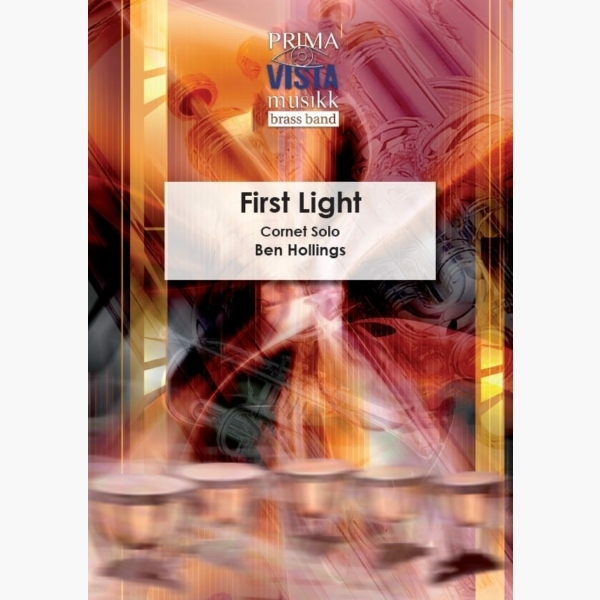
First Light - Ben Hollings
First Light was written for Kirsty Abbotts and Carlton Main Frickley Colliery Band. A slow lilting melody is presented in the cornet solo and passed between the band and the soloist to create images of the tranquil night before the...
Estimated dispatch 5-7 working days
-
 £14.95
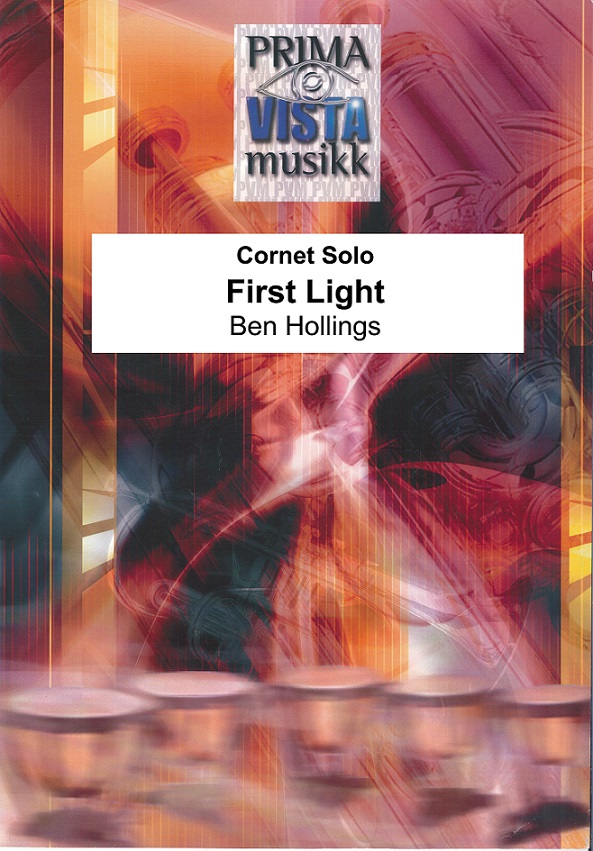
First Light (Score Only)
First Light was written for Kirsty Abbotts and Carlton Main Frickley Colliery Band. A slow lilting melody is presented in the cornet solo and passed between the band and the soloist to create images of the tranquil night before the piece reaches a climactic moment which is meant to represent the beams of light emerging as the sun rises. The theme is then presented in a tutti forte section before arriving at a tranquil finish. First Light is featured on the Kirsty Abbotts and Carlton Main Frickley Colliery Bands CD, A Search for Peace.
Estimated dispatch 7-14 working days
-
 £89.95
The Trumpets of the Angels (Brass Band - Score and Parts) - Gregson, Edward
The Trumpets of the Angels was commissioned by the Fodens (Courtois) Band for their centenary concert at The Bridgewater Hall in 2000. It is based on a work written for the BBC Philharmonic and Huddersfield Choral Society in 1998, the starting point of which was a quotation from the Book of Revelation:and I saw the seven angels which stood before God; and to them were given seven trumpetsThus the idea behind the work is dramatic and I have tried to achieve this by the spatial deployment of seven solo trumpets around the band, four on-stage, the others off-stage. Six of the solo trumpets eventually join the band, but Trumpet 7 remains off-stage and, indeed, has the most dramatic and extended cadenza representing the words of the seventh angel ...and time shall be no more.The Trumpets of the Angels is a large-scale work, scored for seven solo trumpets, brass band, organ and percussion (deploying 'dark' instruments such as tam-tams, bass drum and two sets of timpani). The work opens with a four-note motif announced by off-stage horns and baritones and answered by fanfare figures on solo trumpets. In turn, each of the first four solo trumpets play cadenzas and then all four join together, independently playing their own music. The organ enters dramatically with its own cadenza, leading to the entry of solo trumpets 5 and 6 with music that is more urgent and rhythmic, describing the horsemen of the Apocalypse.The music reaches another climax, more intense this time, with the horns and baritones (now on-stage) again sounding the transformed motif, before subsiding into what might be described as a lament for humanity, slow music which builds from low to high, from soft to loud, with a melody that is both simple and poignant. At the climax, Trumpet 7 enters playing the opening four-note motif, dramatically extended to almost three octaves. This cadenza (to the partial accompaniment of tam-tams) introduces new material and foreshadows the ensuing scherzo which is fast and aggressive. Despite the somewhat desolate mood of this music, it slowly moves towards an optimistic conclusion, transforming the 'humanity' music into an affirmative and triumphant statement.- Edward Gregson
Estimated dispatch 7-14 working days
-
 £44.95
The Trumpets of the Angels (Brass Band - Score only) - Gregson, Edward
The Trumpets of the Angels was commissioned by the Fodens (Courtois) Band for their centenary concert at The Bridgewater Hall in 2000. It is based on a work written for the BBC Philharmonic and Huddersfield Choral Society in 1998, the starting point of which was a quotation from the Book of Revelation:and I saw the seven angels which stood before God; and to them were given seven trumpetsThus the idea behind the work is dramatic and I have tried to achieve this by the spatial deployment of seven solo trumpets around the band, four on-stage, the others off-stage. Six of the solo trumpets eventually join the band, but Trumpet 7 remains off-stage and, indeed, has the most dramatic and extended cadenza representing the words of the seventh angel ...and time shall be no more.The Trumpets of the Angels is a large-scale work, scored for seven solo trumpets, brass band, organ and percussion (deploying 'dark' instruments such as tam-tams, bass drum and two sets of timpani). The work opens with a four-note motif announced by off-stage horns and baritones and answered by fanfare figures on solo trumpets. In turn, each of the first four solo trumpets play cadenzas and then all four join together, independently playing their own music. The organ enters dramatically with its own cadenza, leading to the entry of solo trumpets 5 and 6 with music that is more urgent and rhythmic, describing the horsemen of the Apocalypse.The music reaches another climax, more intense this time, with the horns and baritones (now on-stage) again sounding the transformed motif, before subsiding into what might be described as a lament for humanity, slow music which builds from low to high, from soft to loud, with a melody that is both simple and poignant. At the climax, Trumpet 7 enters playing the opening four-note motif, dramatically extended to almost three octaves. This cadenza (to the partial accompaniment of tam-tams) introduces new material and foreshadows the ensuing scherzo which is fast and aggressive. Despite the somewhat desolate mood of this music, it slowly moves towards an optimistic conclusion, transforming the 'humanity' music into an affirmative and triumphant statement.- Edward Gregson
Estimated dispatch 7-14 working days
 Watch video
 View Music