
Results
-
 £63.00
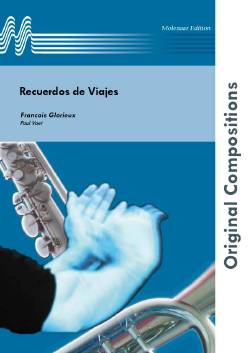
Recuerdos de Viajes - Francois Glorieux/Paul Voet
The Belgian piano virtuoso and composer Francois Glorieux (Kortrijk, 1932) has had a long international career as a concert pianist and conductor. As composer and arranger he worked, among others, with Stan Kenton and with the famous London brass ensemble 'Locke Brass Consort'. With that ensemble as well as with his own orchestra 'The Francois Glorieux Brass and Percussion Orchestra', he recorded many of his own compositions. His pupil trumpeter Paul Voet wrote an arrangement for brass band of these 'travel memories'. This is really a most fine original concert piece for brass band.
Estimated dispatch 10-14 working days
-
 £190.00
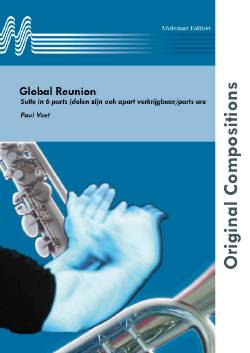
Global Reunion - Paul Voet
The Belgian trumpeter Paul Voet founded the Brass band Panta Rhei Ghent in 1995 and obtained several national and international successes. As a freelance musician he also composes music for brass band. Newt to his 'Global Reunion' suite , we now have these 'Counter dances from the Lowlands' inspired by the folk music of The Netherlands and Flanders.
Estimated dispatch 10-14 working days
-
 £54.95
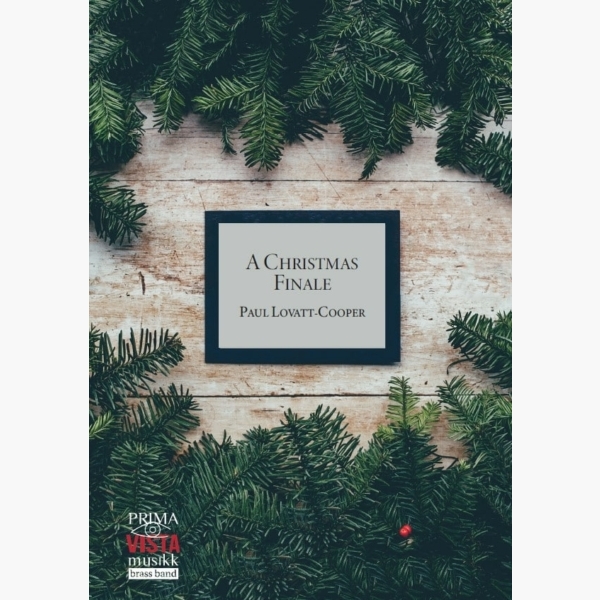
A Christmas Finale - Paul Lovatt-Cooper
As the title suggests, A Christmas Finale provides an ideal close to any Christmas concert. Paul Lovatt-Cooper has taken a collection of popular works associated with Christmas and expertly crafted this wonderful piece to provide both the listener and performer...
Estimated dispatch 5-7 working days
-
 £29.95
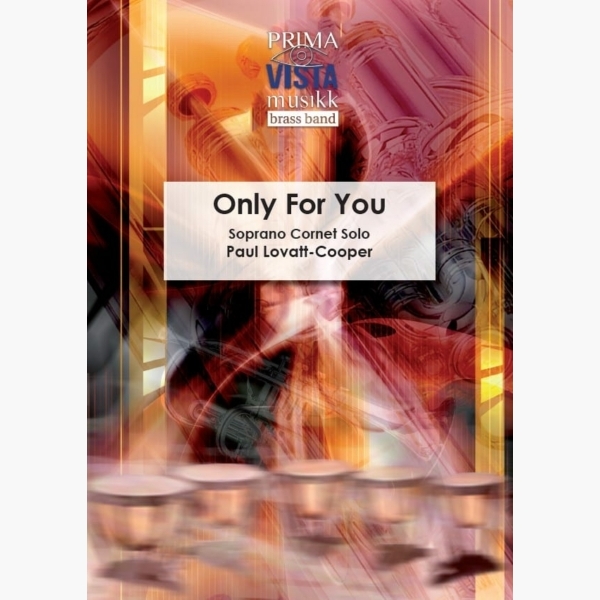
Only for You - Paul Lovatt-Cooper
Composed for star soprano soloist Paul Duffy and the Black Dyke Band, this superb soprano solo showcases both band and soloist to full effect. With the use of harmon mute the soloist begins in a relaxed jazz style, before building...
Estimated dispatch 5-7 working days
-
 £59.95
Vitae Aeternum - Paul Lovatt-Cooper
Vitae Aeternum represents the first substantial composition conceived by Paul Lovatt-Cooper in his capacity as 'Composer in Residence' to the world famous Black Dyke Band. Vitae Aeternum (meaning 'Eternal Life') takes its inspiration from songs composed by Ivor Bosanko and...
Estimated dispatch 5-7 working days
-
£26.50
Paul and Virginia - Round, H
Includes a full band set (no score)
In Stock: Estimated dispatch 1-3 working days
-
 £150.00
Brass Quintet Collection - Various - Lawrence Killian
20 Titles for Brass Quintet with Optional AugmentationFeaturing stylish arrangements using a flexible format for a minimum of five brass players, this set of music for small ensemble covers a wide range of composers and styles. The collection includes music by Purcell, Bach, Verdi, Gounod, Sousa, Joplin, Botsford, Elgar, Gershwin, and others.Using a unique approach to the scoring, the basic setup is for five players: two cornets/ trumpets, one horn, one trombone, and one bass tuba. Two optional "augment" players can be added using the "flugelhorn", and/ or the "Euphonium" parts. Further expansion of the ensemble is possible by adding multiple players to each part.Twelve parts are provided in total: 1st Bb Cornet, 2nd Bb Cornet, Eb Tenor Horn, French Horn in F, Bb Trombone or Baritone in treble clef, C Trombone in bass clef, EEb Bass, BBb Bass, C Tuba in bass clef, Bb Flugelhorn or Cornet (augment part 1), Bb Euphonium or Baritone (augment part 2), C Euphonium or Trombone in bass clef (augment part 2).A Full score is available seperately at a cost of �35.00. Please contact [email protected] to order. NOTE: Individual books are priced at �20.00 each. Please email [email protected] to order individual books. Videos of these works being performed are available below:- Asturias (Leyenda) from Suite Espanola No.1, Isaac AlbenizBerceuse from "Jocelyn", Benjamin Godard TITLES INCLUDED:- 1. Asturias (Leyenda) from Suite Espanola No.1, Isaac Albeniz 2. Bist du bei mir (Be Thou with Me), J. S. Bach3. Chatterbox Rag, George Botsford4. Grizzly Bear Rag, George Botsford5. Jubilee Fantasy on God Save the King, Bernhard Brahmig 6. Chanson de Matin, Sir Edward Elgar 7. Pomp and Circumstance March No. 4, Sir Edward Elgar 8. But Not For Me, George Gershwin 9. By Strauss, George Gershwin10. They All Laughed, George Gershwin11. Berceuse from "Jocelyn", Benjamin Godard12. JUDEX - from "Mors et Vita", Charles Gounod 13. The Entertainer (Rag), Scott Joplin14. Intermezzo No.2, Vasily Sergeyevich Kalinnikov 15. Berliner Luft, Paul Lincke 16. Sound the Trumpet, from "Come Ye Sons of Art", Henry Purcell 17. Gymnopedie No.1, Erik Satie 18. The Liberty Bell March, John Philip Sousa 19. Tritsch-Tratsch Polka, Johann Strauss II 20. Grand March from the opera Aida, Giuseppe Verdi
In Stock: Estimated dispatch 1-3 working days
-
£24.50
Let The Banner Unfurl - Paul Finn - Leigh Baker
An unfurl-rousing, patriotic, processional and waltonesque piece that would fit well into most concerts.
In Stock: Estimated dispatch 1-3 working days
-
 £29.50
A Muppet Christmas Carol - Paul Williams - David Hollings
The Muppets certainly need no introduction and their take upon the famous Charles Dickens classic novel was of course, a huge success. Released in 1992, the film was the first from the Muppets to be created following the death of their creator Jim Henson and fellow puppeteer, Richard Hunt. Now, arranged by David Hollings, the fun filled overture from the movie is now available for brass band for the first time. A welcome addition to a festive programme for bands that are looking for something different this Christmas.
In Stock: Estimated dispatch 1-3 working days
-
£24.50
The Partnership of Life - Paul Finn - Leigh Baker
A beautiful piece of music that pays tribute to the joy of relationships and the beauty in finding your soul mate-for life! Ideal for weddings and civil services as well as engagement tributes.
In Stock: Estimated dispatch 1-3 working days
 View Music