
Results
-
 £65.50
Phoenix - David Holling
Phoenix is a programmatic study depicting the life of the fascinating fictitious bird. The opening is dramatic and yet joyous, followed by the first theme that represents the bird in flight; light in style but relentless all the same. A touch of Latin imposes on a small part of the opening section before returning to the theme once again. The 'Tranquillo' section represents the calm dignity of the bird's fate before the tender slow movement conveys the Phoenix's death with a new theme. This is chance for the soloists to demonstrate musical and technical skill and should be treated interpretively, not mechanically. A fanfare then bursts forth followed by a serious but short fugal section as the Phoenix is reborn. The bird takes flight again in the closing section of music where the melodic content should always be at the forefront of the ensemble.
In Stock: Estimated dispatch 1-3 working days
-
 £24.50
Swanee River - Stephen Foster - Alan Beaumont
The song "Old Folks At Home" over the years has become better known by the lyrics of its first line (Way Down Upon The) Swanee River. The composer Stephen Foster (also known for songs such as "Oh! Suzanna" & "Jeanie With The Light Brown Hair") struggled to find the perfect river to fit his melody, until his brother suggested the "Suwannee" river in Southern Georgia/Northern Florida, although, Foster misspelled the name intentionally to fit the melody line. The song has been the official state song of Florida since 1935. This rousing arrangement by Alan Beaumont will take your audience on a foot tapping, lighthearted journey. With the melody featured in a variety of different styles, the comedy sounds of duck calls, car horns, sirens & other surprises will keep the audience (& players) on their toes. A wonderful addition to any bands library, not to be missed.
In Stock: Estimated dispatch 1-3 working days
-
£24.50
Fakenham Fair - Traditional - A. Cook
The origins of the song Fakenham Fair are somewhat obscure. It was collected by Peter Bellamy, who performed it unaccompanied on his first solo LP, "Mainly Norfolk" in 1968, giving credit to a Peter Bullen of Norwich from whom he had learned it, Bullen in turn giving credit to his grandfather. But beyond that, other than it definitely being a Norfolk folk song, the rest is a mystery.Over the years, Fakenham Fair has become a firm favourite among folk audiences, probably the most famous version being the 2008 recording by folk supergroup 'Bellowhead' which this setting for brass band pays tribute to. A bright, quirky, and bouncy 5:4/10:8 waltz, the band parts dance back and forth from simple time to compound time and back again, giving a constant flow that somehow always feels natural despite the irregular rhythm... but which will also keep your audience guessing where the beat will land next! With solos and features for principal chairs around the band, nobody is left out of the fun. Engaging to listen to and even more so to play, Fakenham Fair is a perfect light concert item for the band that likes to show off their rhythmic and lyrical sides at the same time.
In Stock: Estimated dispatch 1-3 working days
-
 £76.99
Prima Luce (Brass Band - Score and Parts)
Prima Luce (First Light) was commisioned by the Holy Angels Elementary School located in Aurora (USA). The name of the town (which means dawn), the town's great religious history and the fact that this town was one of the first in the USA to have streetlights were the inspiration for this Gregorian influenced atmospheric composition 08:43
Estimated dispatch 7-14 working days
-
 £72.70
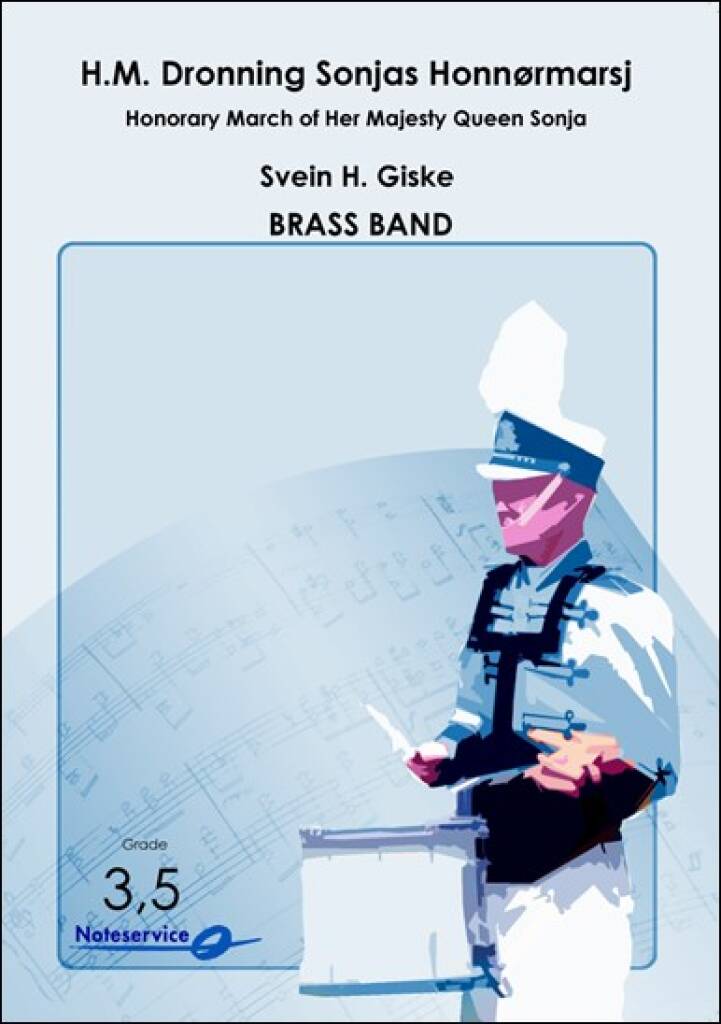
Honorary March of Her Majesty Queen Sonja - Svein H. Giske
This march was commissioned by The office of cultural affairs in Fana and Ytrebygda (a part of Bergen Municipality) for the opening of The Bergen Light Rail.The premiere was given by The Norwegian Navy Band Bergen and Smoras skolemusikkduring the light rails maiden voyage. Her Majesty Queen Sonja of Norway opened the light rail on June 22nd 2010.My idea was to give the march a strong link to Bergen. In the bass solo (letter B) I have quoted Bergens "national"anthem Nystemtn and in the Trio (letter E) I have used a bugle call from Bergens unique tradition of archerchery brigades. The first part of the march is meant to have a sort of train feel to it; somethingthats moving steadily through thestreets of the city.
Estimated dispatch 5-14 working days
-
 £72.99
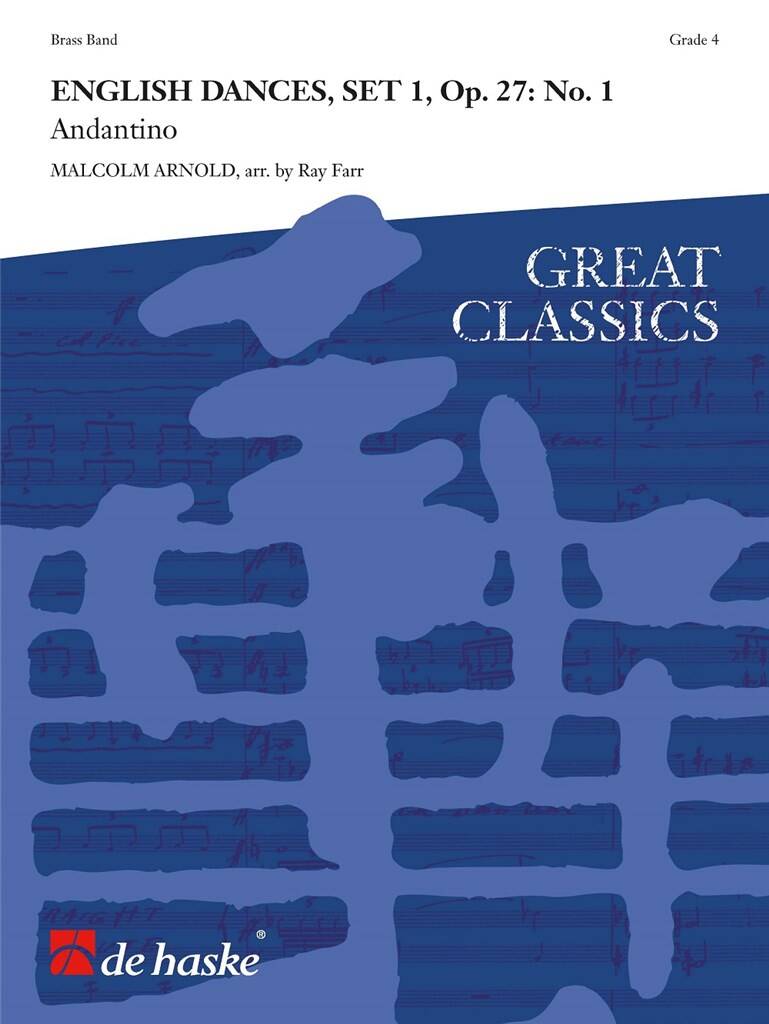
English Dances, Set 1, Op. 27: No. 1 - Sir Malcolm Arnold - Ray Farr
English Dances, Set I, opus 27, is a light classic composition that was written for orchestra by the British composer Malcolm Arnold in 1950. The set contains four dances that continue without pause: the individual movements are indicated by the tempo markings. The work came about at the request of Bernard de Nevers, at the time the head of publisher Alfred Lengnick & Co., who asked Arnold to write a suite of dances as an English counterpart to Dvo ak's Slavonic Dances and Bartok's Romanian Folk Dances. The premiere took place in the spring of 1951, played by the London Philharmonic Orchestra, conducted by Sir Adrian Boult. Following the success of the first set, DeNevers asked the composer to write a second one, which Arnold completed the next year (Op. 33). The Andantino from the first set has been skilfully arranged and orchestrated for brass band by Ray Farr.
Estimated dispatch 5-14 working days
-
 £147.10
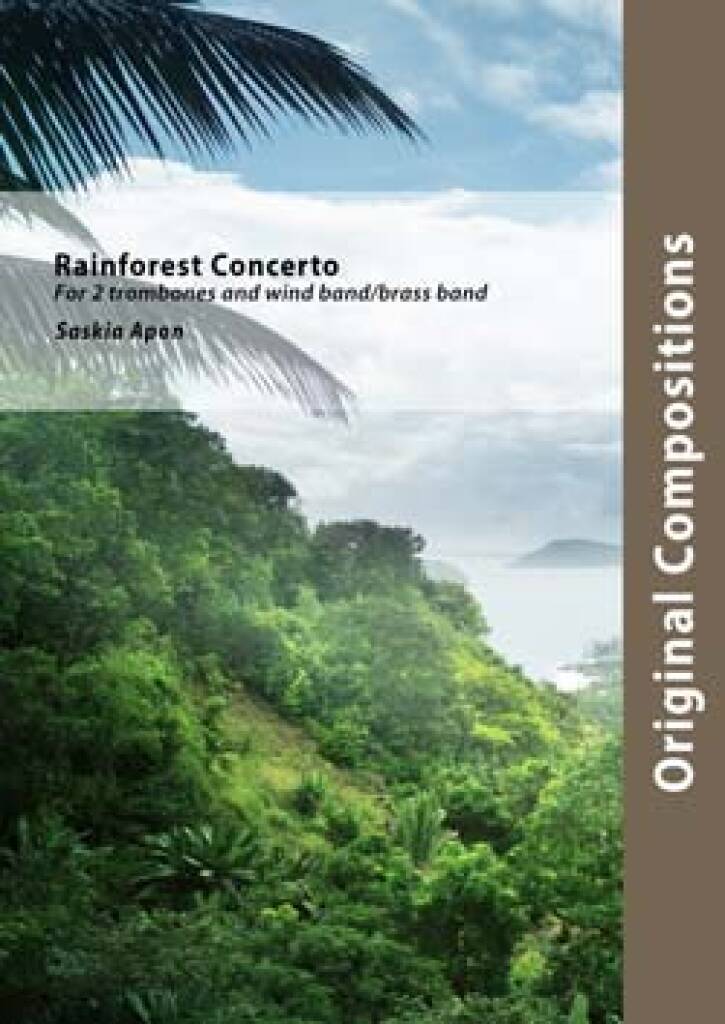
Rainforest Concerto - Saskia Apon
Rainforest Concerto has been commissioned by the Brass Band Rijnmond. This double concerto for two trombones and wind band consists of three parts with the cadenza in the slow niddle movement. Saskia Apon was inspired by the threat of the destruction of the rainforest. In the first part, Creation, we hear an accelerated reproduction of the birth of this impressive natural phenomenon. We hear the first birds, we see the growth of the mangrove trees and we witness the struggle for light and the force necessary to keep the realized equilibrium in a perpetual balance.The second part, Ode, is a tribute to the wonder and splendour of the rainforest. By means of subtle and extremely delicate sonorities we hear how nature adds an inestimable value to the rainforest. However it is also extremely fragile and this engenders a certain melancholy due to the awareness of man's impotence to respect this beautiful nature.In the last part, Contra Demolition, we hear the threatening decline, but also the revolt against this possible ruin. It is a heartfelt cry to leave nuture in peace and to work hard for the preservation of the beauty and the value of the rainforest.
Estimated dispatch 5-14 working days
-
 £105.20
Pineapple Punch - Haakon Esplo
Pineapple Punch, a lively, fun and lively piece of music with challenges for all instrumental groups. You have a great opportunity to work with both rhythm, articulation and understanding of style.Pineapple Punch is entertaining and suitable for any concert.The piece has a light Latin touch and is fun to play for the musicians. The first voices provide a challenge, while the lower voices are simpler in rhythm and range.
Estimated dispatch 5-14 working days
-
 £154.60
Prelude Festivo - John Brakstad
Prelude Festivo is intended to be performed both in concerts and in competitions and includes solo passages for most instrument groups. Duration 7,5 minutes. Form: Fast slow fast. The piece is built on two themes: Theme 1 (Allegro con spirito) is first presented as a cornet solo after a fanfare-like opening. Theme 2 is hinted at in the opening bars, but is presented fully in the slow (Andante) section (bar 141). This theme is developed and also appears as melodic and rhytmic fragments throughout the composition. In the concluding section (bar 196) both themes are played in conjunction before the piece concludes with the fanfare theme from the opening bars. Parts thatare marked piu mosso ed leggiero should be played in a cheerful light staccato style in contrast to Andante cantabile.
Estimated dispatch 5-14 working days
-
 £70.00
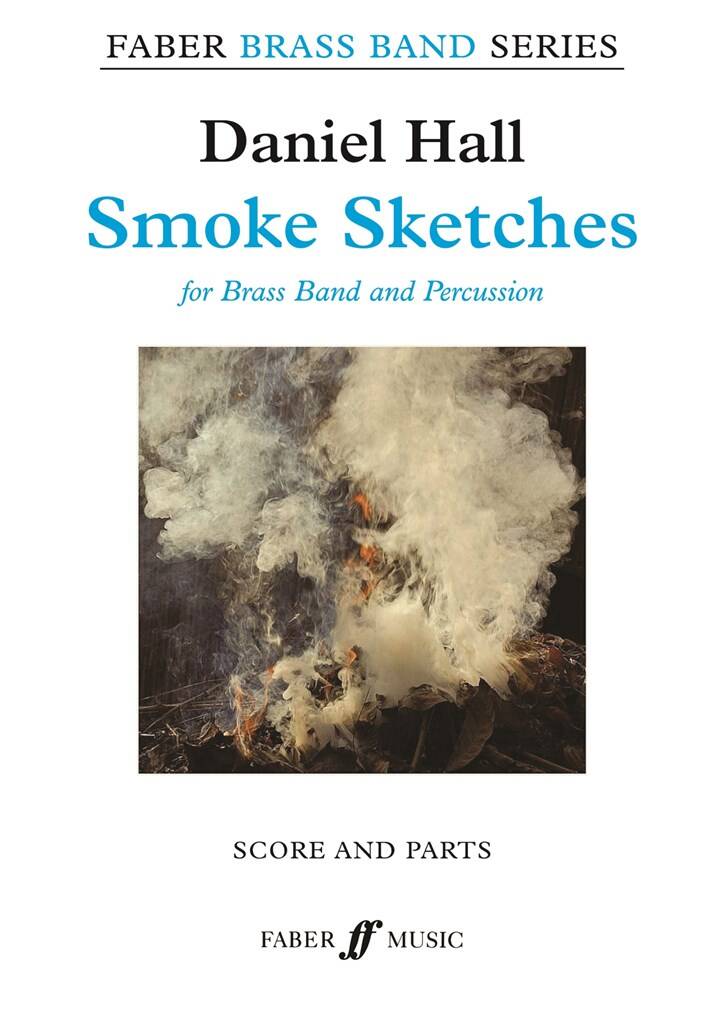
Smoke Sketches - Daniel Hall
Smoke Sketches is Daniel Hall's first original work to be published in the Faber Music Brass Band Series. Daniel is one of the most gifted of the rising generation of composers writing for brass bands. Smoke Sketches was composed at the invitation of Brass Bands England for the Intermediate Section of the 2017 National Youth Brass Band Championships of Great Britain. This colourful, jazzy suite draws inspiration from the ancient art of gazing into smoke from fire to find stories through the act of divination. Into the Blaze suggests someone briskly fire-walking, barefoot, with unexpected sparks fizzling from the ground. A Lonesome Ember capturesthe fleeting life of a small ember, beginning insignificantly and gradually evolving into a larger being before disappearing into ash, while Spark of Light bristles with life and energy. Band Grade 3/4, duration 8 minutes.
Estimated dispatch 5-14 working days
 View Music
 Listen to MP3