
Results
-
 £27.00
Clarion Alarum - Simon Dobson
Clarion Alarum: Fanfare No.1 for Brass Band is a short fanfare for brass band, contrasting the brilliance of the sound of cornets and trombones with the warmer tones of horns, euphoniums and tubas. BrassBand Grade 5: 1st Section Duration: 2.5 minutes
Estimated dispatch 5-14 working days
-
 £137.99
A Gabrieli Fantasy - Bert Appermont
In this five-movement work, Bert Appermont explores the possibilities that three choruses within a brass band have to offer. For this, he used the Canzon a 12 in echo by Giovanni Gabrieli, which he also used in 2018 for a double chorus trombone octet of the same name. There's a lot to be enjoyed in this fantasy, with its range of motifs, melodic cells and chords plus counterpoint techniques like the canon and imitations. An atmospheric piece of music that presents variation in sound and in stage arrangement as well!
Estimated dispatch 5-14 working days
-
 £54.99
Theme from Jurassic Park - John Williams - Roland Kernen
This passionate and uplifting theme comes from one of Steven Spielberg's most successful films Jurassic Park. As with many of Spielberg's films the music has been supplied by John Williams and plays an extremely important role in creating the film's atmosphere. The melody and orchestration makes this theme ideal for the sound of the brass band and this arrangement will not disapoint.
Estimated dispatch 5-14 working days
-
 £54.99
Cha Cha in the Street - John Emerson Blackstone
The heat of South America radiates from this delightful cha cha, which incorporates the exotic sound of Latin-American percussion instruments. This light and sparkling work will be the hit at your next concert!
Estimated dispatch 5-14 working days
-
 £134.99
Sinfonietta: The Town Beneath the Cliff - Philip Sparke
Sinfonietta: The Town Beneath the Cliff was commissioned by Holmestrand Ungdomskorps from Vestfold in Norway. The work is in four movements: a spectacular fanfare followed by a 'moto perpetuo'-like toccata. The third movement Hymn is a beautiful piece of music allowing the band to show its musicality and sound. The last movement Scherzo Finale opens with a short phrase from Holmestrand's own 'town song' Holmestrandsangen, which comes again in full at the end of the piece, accompanied by a florid passage based on the opening theme.
Estimated dispatch 5-14 working days
-
 £60.99
Caribbean Sketches - Dagmar Kildevann
Latin Music in three variations. Caribbean Sketches takes the band and audience from the reggae sound of Beach Party, to the siesta Lazy Afternoon and concludes with a rousing finale in Let's dance. Don't forget your sunglasses!
Estimated dispatch 5-14 working days
-
 £105.20
Elegi - Haakon Esplo
This beautiful little piece of music will be perfect to play at any concert. Elegy means lamentation and the melodic themes reflect this. You may use the piece to work with sound, dynamics and phrasing in your band.
Estimated dispatch 5-14 working days
-
 £49.60
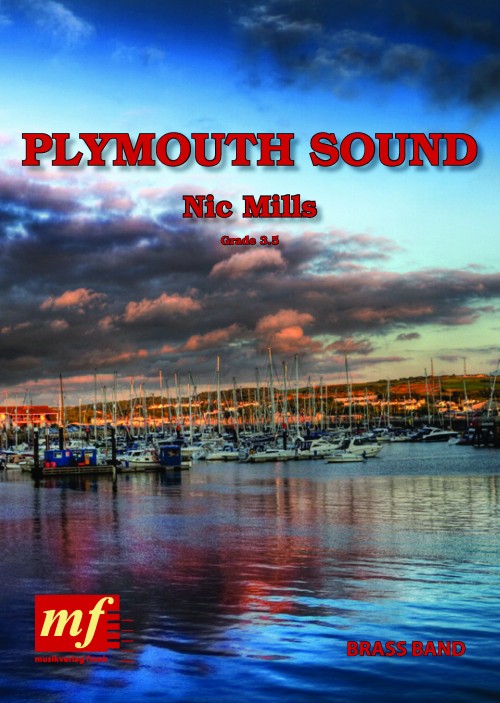
Plymouth Sound (Brass Band - Score and Parts) - Mills, Nic
The concept of the work was to capture the beauty of the natural bay protecting the harbour at Plymouth. The work is based on two themes. The first being a lyrical melody to represent the beauty of the Sound and a march-like theme showing the military heritage the city has, through the armed forces based there. The opening fanfare immediately grabs the attention of the audience, and settles into a lyrical melody with the flutes and clarinets emulating the sea and the rolling of the waves. This jubilant piece turns to emulate a storm at sea. Then it moves into the march theme, which takes the main form for the second half of the piece, moving into a fanfare-like statement (recapitulation of the opening fanfare) to complete the piece. Overall, this is a fun work to play, with all sections of the band being tested and would be a great opener or finisher piece.Duration: 5.15
Estimated dispatch 7-14 working days
-
 £60.99
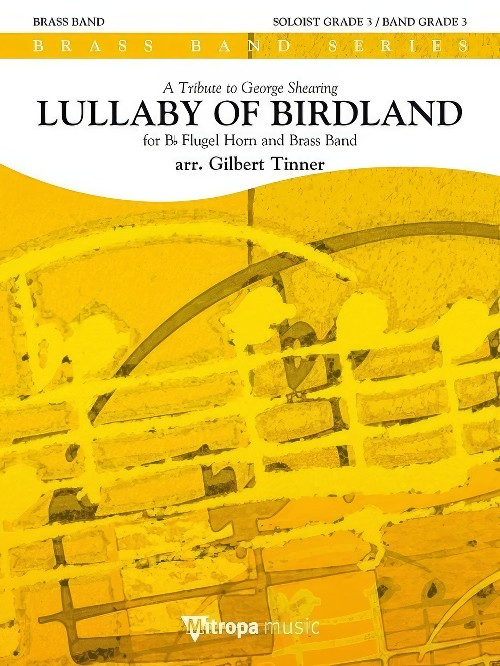
Lullaby of Birdland (Flugel Horn Solo with Brass Band - Score & Parts) - Tinner, Gilbert
"I've been arguably credited with having written some 300 songs, 299 of which enjoyed a rather bumpy ride from relative obscurity to total oblivion. Here's the other one." These are the words of the great Jazz pianist and composer George Shearing about his hit of the century Lullaby of Birdland. The list of famous artists who performed this Jazz standard runs from From Ella Fitzgerald to Amy Winehouse. Gilbert Tinner wrote this arrangement for Brass Band preserving the distinctive George Shearing Sound.Duration: 3.00
Estimated dispatch 7-14 working days
-
 £9.99
£9.99Christmas Collection - Words and music (piano)
Christmas Collection is a newly revised carol book with original, additional and rearranged carols from New Christmas Praise as well as 10 extended pieces. Parts are now also available in large print A4 size!Titles:A child this day is bornA Christmas lullabyA great and mighty wonderAll my heart this night rejoicesAngels, from the realms of Glory (Come and worship)Angels, from the realms of Glory (Iris)Angels we have heard on highA starry nightAs with gladness men of oldA virgin most pureAway in a manger (The manger scene)Away in a manger (Traditional)BethlehemBrightest and best (Spean)Brightest and best (Traditional)Calypso CarolCarol for the NativityCarol of the drumChild of MaryChristians AwakeChrist is born (Il est n)Christ was born on Christmas DayCome and join the celebrationCome, children, come quicklyCoventry CarolDing dong! merrily on highDo you hear what I hear?Gabriel's MessageGaudeteGlory in the highestGlory in the highest HeavenGod of God, the uncreatedGod rest you merry, gentlemenGood Christian men, rejoiceGood King WenceslasGo, tell it on the mountain!Hark the glad sound!Hark! the herald angels singHow far is it to Bethlehem?Huron CarolInfant HolyIn the bleak midwinter (Cranham)In the bleak midwinter (Darke)I saw three ships come sailing inIt came upon the midnight clear (Traditional)It came upon the midnight clear (Willis)I wonder as I wanderJesus, good above all otherJoy to the world!Little baby JesusLittle children, wake and listenLittle DonkeyLittle Jesus, sweetly sleepLo! he comes with clouds descendingLong, long agoLove came down at ChristmasMary's boy childMary's ChildMasters in this hallNoelO come, all ye faithfulO come, ImmanuelO Heaven-sent KingO holy night!O little town of Bethlehem (Christmas Carol)O little town of Bethlehem (Forest Green)O little town of Bethlehem (St Louis)Once in royal David's cityPast three o'clockPersonent HodiePraise ye the LordRing the bellsRise up, shepherd!Sans day carolSaviour's DaySee, amid the winter's snowSilent Night!Softly the night is sleepingStars are shiningStill, still, stillSussex CarolSweet chiming bellsSweet chiming Christmas bellsThe candle songThe cherry tree carolThe first NowellThe holly and the ivyThe infant KingThe light has comeThe shepherds' farewellThe stable doorThe star in the eastThe virgin Mary had a baby boyThey all were looking for a kingThou didst leave thy throneThree kings' marchUnto us a boy is bornWe gather round the manger-bedWe three kings of Orient areWhat child is this?Whence is that goodly fragrance flowing?When wise men came seekingWhile shepherds watched (Cranbrook)While shepherds watched (Handel)While shepherds watched (Winchester Old)Who is he?Zither Carol
Estimated dispatch 7-14 working days
 View Music