
Results
-
 £70.00
Masque. - Kenneth Hesketh
A Masque (short for Masquerade) has been defined by Historians as 'A revel in which Mummers or masked folk come with torches blazing into the festive hall and call upon the company to dance and dice'. The chaos of this dramaticdance is depicted in this 'Masque' by Hesketh. The main theme is bravura and is often present, in the background. The form of the piece is a simple scherzo-trio-scherzo. Colourful scoring (upper wind solos, trumpet and horn solosalternating with full bodied tuttis) with a dash of wildness may tease both player and listener to let their hair down a little! 'Masque' has been transcribed for wind band by Kenneth Hesketh from his 'Scherzo forOrchestra',commissioned by the National Children's Orchestra in 1987.
Estimated dispatch 5-14 working days
-
 £70.00
Tango - Gavin Higgins
Tango for Trumpet and Trombone solos with Brass Band accompaniment was written for Ian Porthouse and Brett Baker in 2008. The first performance was given by the Black Dyke Bandconducted by Nicholas Childs, at the Black Dyke Brass Arts Festival. Brass Band Grade 5: 1st Section Duration: 9 minutes
Estimated dispatch 5-14 working days
-
 £65.00
Frankly Speaking - Frank Sinatra
A suite of three songs of Sinatra arranged for Flugelhorn, Trombone and Cornet or Euphonium solos
Estimated dispatch 5-14 working days
-
 £60.99
A Sentimental Song - Marten Miedema
A simple melody, with accompaniment in blue, becomes a wonderful expressive piece. There are opportunities for improvisation, but the indicated solos have been composed. Select your favourite instrument and soloist, or will all soloists be featured? Enjoy playing and listening to A Sentimental Song!
Estimated dispatch 5-14 working days
-
 £54.99
Smile! - Timothy Travis
Undoubtedly, a smile will come to your face whenever you listen to 'Smile', for this little piece is guaranteed to bring mirth and good cheer to each and everyone. What is more, your bandsmen will almost literally lick their lips over this sure-fire favourite to be, containg swinging solos for cornet and euphonium (cued in tenorhorn).
Estimated dispatch 5-14 working days
-
 £54.99
Seafood Shuffle - Peter Martin
Energetic music which invites you to dance, because it is hard to keep still with this shuffle. And you don't have to. Feel like a fish in water in this Seafood Shuffle which includes some flashy solos. Solo parts in C, Eb and Bb are included.
Estimated dispatch 5-14 working days
-
 £80.00
St. Magnus - Kenneth Downie
Dedicated to Alastair Massey, an inspirational music teacher. Commissioned by the Scottish Brass Band Association for the 2004 European Brass Band Championships in Glasgow. This music is a set of variations on the tune known as St Magnus, which is attributed to Jeremiah Clarke. Most people will associate it with Thomas Kelly's hymn which begins: "The Head that once was crowned with thorns is crowned with glory now". The tune is very simple, consisting of just two, four-bar phrases. Neither is there much in the way of rhythmic variety, every note being a crotchet with the exception of two quavers, and the last note in each phrase. Within such a simple structure, however, lies considerable strength. THEME The listener is given the opportunity of hearing it twice, in full, at the beginning, starting with one player but soon taken up by the full ensemble. It returns in the middle of the music and is stated again near the end. This has been done quite deliberately in the hope that there will be an appreciation of what material is being developed, by the listener as well as by those with access to the score, who are able to see the visual connections. VARIATION 1 This takes the rhythm of the last part of the theme and also uses the shape of the opening as a recurring figure. The mood is whimsical and skittish, with short, teasing rhythmic figures tossed around the band, and quick interplay with percussion, at a fast tempo. An energetic flourish finishes this variation before the Andante espress. VARIATION 2 This commences with chords related to the opening of Variation 1. The cantabile on solo comets establishes a new, lyrical mood and there is scope for expressive playing in a series of short solo passages. The theme works its way unobtrusively into the texture before a reprise of the solo cornet melody and some more lyrical interchanges between Eb bass, euphonium, flugel horn and comets. The variation ends serenely with clear references to the last phrase of the theme. VARIATION 3 The first idea to dominate is clearly linked to the shape of the theme's first phrase. There is a frenetic feel to much of this variation, with considerable energy and instability created by extensive use of cross-rhythms. A thinning-out of the score marks a clear change to development of the start of the second phrase of the theme. This proves to be short-lived however, and the opening material returns leading to a restatement of the theme, "Maestoso," after which a euphonium cadenza links to Variation 4. VARIATION 4 Here we have some solos for euphonium, cornet, trombone and Eb bass set against a background of horns and baritones presenting a pensive statement of the theme's opening. VARIATION 5 This commences Allegro, with lively work for cornet and euphonium spreading to the whole band before attention focuses on the beginning of the second phrase of the theme which is initially presented in diminution, then in regular rhythm, then in inversion. An increase in tempo coupled with a decrease in volume, requires dexterity and control, with several metrical challenges thrown in for good measure. The same fragment of phrase becomes an ostinato which generates a frenzied climax, punctuated by short, dramatic silence, before the opening figure returns and the music gradually winds down. The tubular bells herald the final return of the theme, in augmentation, marking the start of the Finale. FINALE This features the running semiquavers of the previous variation sounding in counterpoint. A fast, furious coda speeds the work to a conclusion while references to the opening of the theme are still trying to break into the texture of the music. Kenneth Downie
Estimated dispatch 5-14 working days
-
 £228.70
Ascension For Brass Band and Percussion - Fredrick Schjelderup
"Ascension" was commissioned in 2014 for the Norwegian school band, Hellen Skoles Musikkorps for their 60th anniversary.The piece is based on two themes, processed through rhythms, chords and solos in various time signatures.The title, "Ascension" which means rising, is central for the main thematic material and describes the band's hard work for a coming event (concert or a contest) where the musical level is ascending/rising.
Estimated dispatch 5-14 working days
-
£188.50
Fansa da Matasa - Reid Gilje
"Fansa da Matasa" was written for Norwegian Brass Band Felleskorpset Askoy, today named Ravnanger Brass.The piece is divided into six main parts where the last one includes the hymn "Colne";Part 1 starts slowly, but rhythmically where the intensity grows towards a virtuosic Part 2.Part 2 feature a demaning solo for xylophone (bars 55 to 63). A simplified version of this solo is included in the part.Part 3 starts with some declamatory cadences and continue with several solos before it closed with a larger tutti-part.Part 4 has to be played well firmly and rhythmically. The melody is more of a cantabile style.Part 5 is a beautiful and quiet one with a touch of melancholy. (Small notes in Baritone to played if necessary).Part 6 has to be played with a rhythmic drive and intensity. The hymn "Colne" starts at bar 248 and should be played with a sostenuto-style.
Estimated dispatch 5-14 working days
-
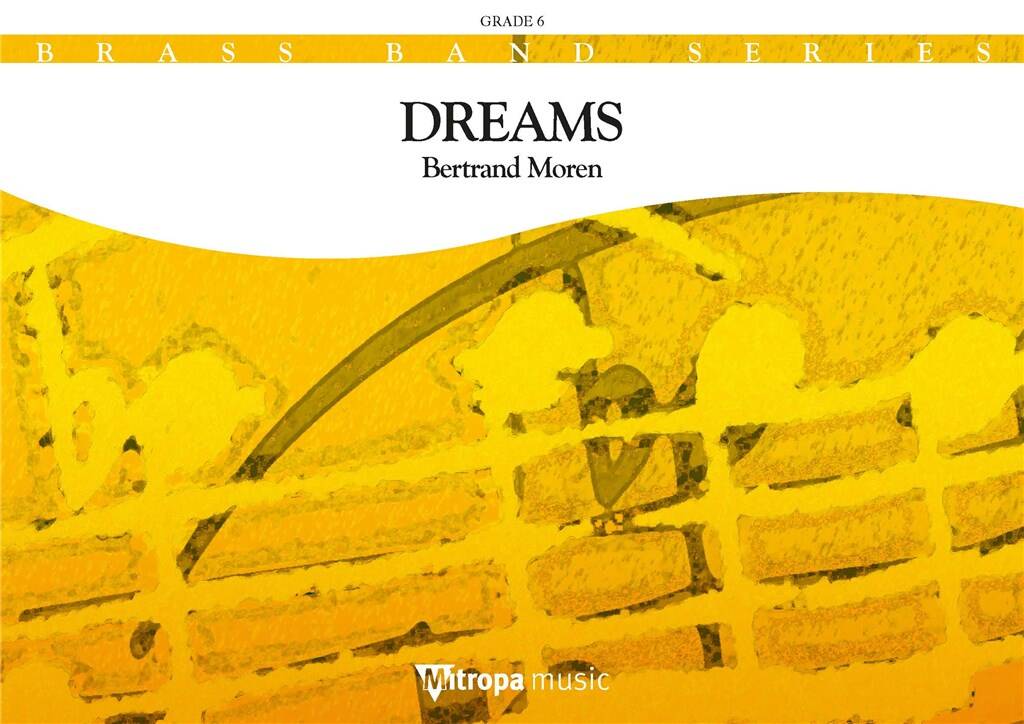 £134.99
Dreams - Bertrand Moren
This composition by Bertrand Moren presents various dreams which could have an effect on a dreamer's life. Its very high level of difficulty provides a great challenge for the conductor and musicians. You will be taken through a living Nightmare, with spine-chilling passages as dissonant chords alternate with aggressive percussion. Daydream is a patchwork of solos with all the brass band soloists playing serene and soft melodic lines with a virtuosic trombone cadenza. Finally, Visions portrays visions of insanity reflected by violent and discordant descending motifs leading to visions of joy presented in a sparkling and cheerful finale.
Estimated dispatch 5-14 working days
 View Music