Results
-
£37.50Bless 'Em All - Various - Gavin Somerset
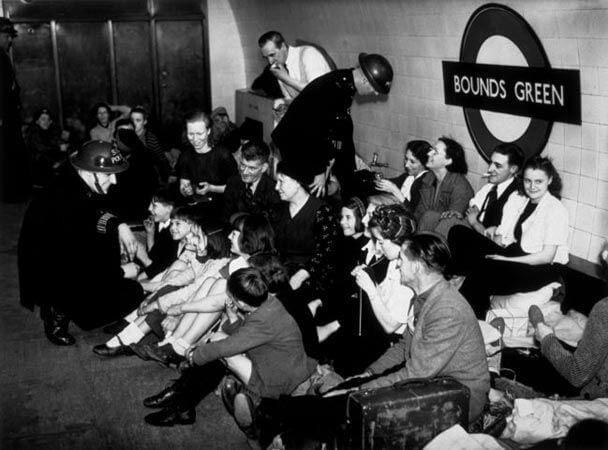
Keeping spirits high during World War II was essential, and music played a huge part. Darrol Barry's excellent arrangement 'Keep Smiling Through' has been pleasing audiences for years and can probably be found in most brass bands libraries across the country. This latest release of popular war time songs including 'Wish Me Luck, As You Wave Me Goodbye', 'We're Going To Hang Out The Washing', 'Kiss Me Goodnight Sgt. Major', 'Good Morning', 'Bless 'Em All' and the highlight of the piece, the slow, hair raising middle movement 'Apple Blossom Time', was originally released to coincide with the 70th Anniversary of the Battle Of Britain. All of these songs were sung as the London population camped out in the underground stations. This arrangement will get the feet tapping as audiences sing along to the lively pieces and then sends shivers down their spines with the gorgeous 'Apple Blossom Time' featuring in the middle of the medley. This is a piece not to be missed and should belong in all bands libraries.
In Stock: Estimated dispatch 1-3 working days
-
£115.60Knask for aspiranter - Suite in Three Movements - Idar Torskangerpoll
Candy for Beginners is a suite of three songs used by the composer with the youngest beginners throughout several years. The method is to sing the melodies before learning it on the instruments. Lyrics about candy has proven to be very popular among the youngsters.... In English it can goes like this: "Candy floss, candy floss, candy floss, candy floss, oh yeah". And: "Soda for me, give me soda for free". And: "Lefse, it is good, lefse, now you should, Lefse, give me one, lefse, sure is fun." The composer urges the band to find their own lyrics to the melodies, making it their own with a local twist. This is a good rhythmic exercise for the young players
Estimated dispatch 5-14 working days
-
£115.60S.O.S. - Björn Ulvaeus - Bjørn Morten Kjærnes
When the publisher asked me to make an arrangement of an ABBA tune, S.O.S. was the first song I thought of. Its introduction and melody are well suited to play for Wind Band. Admittedly, the key had to be shifted to make it sound good for this instrumentation. To me, this is nostalgia, while for others, the Mamma Mia movie/show will be what they associate with this wonderful song. Apart from a few medleys, few of ABBA's songs are available to Wind Band. So, it was very fun to work on this classic.The arrangement is made quite simply to fit many sizes of Bands. Technically, it is also relatively simple both in range and rhythm. As you can see, there are many ways to adjust this arrangement to your own ensemble. Bring out melody lines and the bassline, and a lot is done. If needed, simplify to make it sound nice.Bjorn Morten Kjaernes
Estimated dispatch 5-14 working days
-
£54.99Step Aside - David Well
Excuse me, may I play along? Could you step aside, please? 'Step Aside' is a pleasant competition both between two tempi and among the different parts. After a short, slow introduction it is the drummer who, without asking the questions above, sets the high pace. As soon as this rapid movement has been established, 'part 1' takes the lead, but the other parts obviously don't want to miss a thing and follow in rapid succession. At the end of the composition the various parts 'compete' in order to be able to play solo for a while, but soon others join in again, asking 'Excuse me, may I play along?'
Estimated dispatch 5-14 working days
-
£115.60Vidda - Ole Edvard Antonsen - Ole Edvard Antonsen
I composed the song "Vidda" after I got my ultimate boy's dream fulfilled; To fly one of the Air Force's F-16 fighter jets! We flew out from Norwegian city Bodo on to the Finnmark plateau, where we flew so-called "low level" (at low altitude). It was such a great experience for me that I immediately wrote the song "Vidda" based on my experience of the trip. Here, I try to describe the meeting between the technical perfection of a machine that surpasses most of the various forces in it's escape through the magnificent scenery passing at great speed, and the pilot who is alone with both the adventure and responsibility. The drums which start the song is meant to describes theenergy in the power of the plane, while the lonely and kind of melancholy melody from the trumpet in the beginning describes the feelings of the pilot. As the song develop, we pass both the mountains and big beautiful plateaus with g-forces quivering body. Hopefully you will share some of my experiences through this song. Have a nice flight! Ole Edvard Antonsen
Estimated dispatch 5-14 working days
-
£169.99Destination Moon - Paul Raphael
Destination Moon was first performed by Cory Band at the 2017 European Championships in Ostend, Belgium, and is inspired by the Belgian comic-book hero Tintin. The first part is called 'Science' and describes the development of the theory of space travel. The second part is 'Humanity' which addresses human concerns and philosophies about our place in the universe. The third part is 'The Launch' which ends with a repetition of the words 'Earth to Moon Rocket are you receiving me?' as the rocket vanishes into a tiny speck in the sky.
Estimated dispatch 5-14 working days
-
£91.40
By George! - George Gershwin - Alan Fernie
Medley: Strike Up The Band Fascinating Rhythm Someone To Watch Over Me Rhapsody In Blue Our Love Is Here To Stay Embraceable You I Got Rhythm I Got Plenty O' Nuttin' A Foggy Day
Estimated dispatch 5-14 working days
-
£44.00
Don't Sit Under the Apple Tree - Stept-Brown-Tobias - Bjorn Morten Kjaernes
"Don't Sit Under the Apple Tree (With Anyone Else but Me)" is a popular song that was made famous by Glenn Miller and by the Andrews Sisters during World War II. Its lyrics are the words of two young lovers who pledge their fidelity while one of them is away serving in the war. Originally titled "Anywhere the Bluebird Goes", the melody was written by Sam H. Stept as an updated version of the nineteenth-century English folk song "Long, Long Ago". Lew Brown and Charles Tobias wrote the lyrics and the song debuted in the 1939 Broadway musical Yokel Boy. After the United States entered the war in December 1941, Brown and Tobias modified the lyrics to their current form, with the chorus ending with "...'till I come marching home".In 1942 the song was featured in the film Private Buckaroo as a performance by the Andrews Sisters with the Harry James orchestra and featuring a tap dancing routine by The Jivin' Jacks and Jills. It was featured in the films Twelve O'Clock High (1949), With a Song in My Heart (1952), Kiss Them for Me (1957), A Carol for Another Christmas (1964), In Dreams (1999) and The Master (2012). It also featured in the mini-series The Pacific. You can use the song both on musical concerts, movie concerts or just as a happy jazz tune on your next concert. On the sections (like from bar 25), please work carefully to make a good balance with all parts, and that each chord is balanced. With 4-part harmonies sometimes you need to hold back certain notes to make the accord sound good. If you want to open up for a longer improvisation, you can repeat 65 to 81, but then change the part 2 in bar 80 from Eb to a D on the repeat. The accord will be an F6 instead of F7 (on beat 3 and 4 in bar 80) Have fun and enjoy!
Estimated dispatch 7-14 working days
-
£30.00A Million Love Songs - Gary Barlow
Made famous by the boy band 'Take That', this fantastic new angle on the song from Lucy Pankhurst, creatively features the flugel and tenor horn section with full support from the accompanying band.Take That's Gary Barlow wrote 'A Million Love Songs' when he was 15. He also recorded a rough demo of the track, and was one of the songs he gave to music manager Nigel Martin-Smith on a cassette tape as part of his audition to join a boy-band.In his autobiography A Better Me, Gary revealed that Martin-Smith was so impressed by the tape, that he didn't realise it was Gary singing. As legend has it, the conversation went like this:Martin-Smith: "This tape, who has written the songs?"Barlow: "Me"Martin-Smith: "Who wrote the words, then?"Barlow: "Me. And the music and the backing track."Martin-Smith: "Wow, you'd better come back and see me tomorrow."The ballad became one of the group's most popular songs, and is often voted among the greatest love songs of all time. It peaked at No. 7 in the UK charts, and remains a firm favourite, not just for its sentiment, but for the beautiful melody Barlow created.Lucy's arrangement for brass band brings a whole new dynamic to the music and offers the flugelhorn and tenor horns a golden opportunity to shine.
In Stock: Estimated dispatch 3-5 working days
-
£79.95Neverland - Christopher Bond
"All children, except one, grow up" wrote J.M. Barrie about Peter Pan in 1911; the first line and an expression of beautiful melancholy and fantasy, coming to represent one of the best-loved children's stories of the twentieth century. 'Peter & Wendy', as the book was first released, has subsequently been transformed into adaptations for film and stage, with subsequent books based on this iconic tale. In writing this new work for brass band, the composer has taken three of the main themes from J. M. Barrie's book, and used these themes to create new musical material, forming a work in three contrasting sections. I. Journey to Neverland The opening of the work, mysterious in its style, reflects the opening chapters of the story - a leafy London street, still in the dead of night - with the music transforming quickly as it builds in texture and momentum - a Journey to Neverland through the night sky; Second Star to the Right and straight on 'til morning. "Then Peter knew that there was not a moment to lose. 'Come,' he cried imperiously, and soared out at once into the night, followed by John and Michael and Wendy. Mr & Mrs Darling and Nana rushed into the nursery too late. The birds were flown." II. The Windows that Closed The central section of the work takes its inspiration from the sense of longing throughout the book, mainly by Peter Pan, the Darling Children & The Lost Boys. Distant memories of life before Neverland, memories of the Lost Boys' mothers, and regret at what the children have missed. Peter says "Long ago, I thought like you that my mother would always keep the window open for me; so I stayed away for moons and moons and moons, and then flew back; but the window was barred, for mother had forgotten all about me, and there was another little boy sleeping in my bed." III. Aboard the Pirate Ship The final section of the work takes its inspiration from the Pirate Ship, and Peter Pan's ultimate battle with its infamous Captain Hook. "In person, he was cadaverous and blackavized, and his hair was dressed in long curls, which at a distance looked like black candles, and gave a singularly threatening expression to his handsome countenance. His eyes were the blue of the forget-me-not, and of a profound melancholy, save when he was plunging his hook into you, at which time two red spots appeared in them and lit them up horribly."
Estimated dispatch 10-14 working days