
Results
-
£45.00
Trust in Me - Sherman, R & R - Harper, P
The famous Python's Song from Walt Disney's The Jungle Book, arranged as a slippery-slidy trombone solo.3rd section +Duration 2 mins 30 secs
In Stock: Estimated dispatch 1-3 working days
-
 £89.99
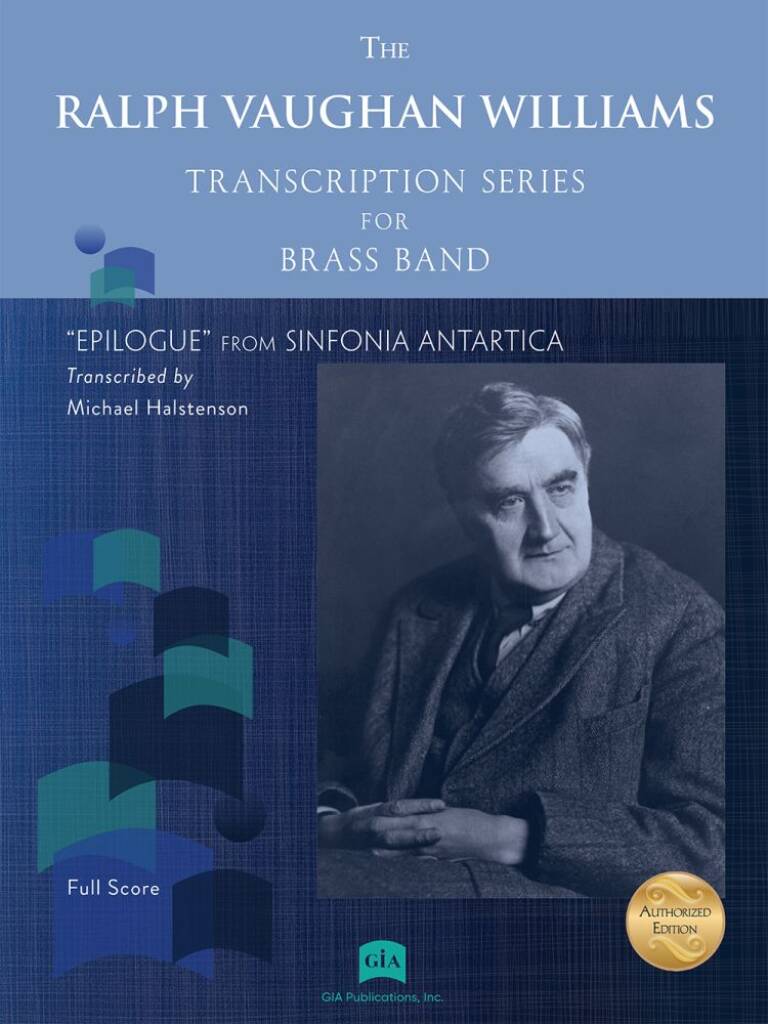
Epilogue from Sinfonia Antartica - Ralph Vaughan Williams - Michael Halstenson
In partnership with Oxford University Press and authorized by the Vaughan Williams Charitable Trust, this major new initiative brings the incredible catalog of Ralph Vaughan Williams to the wind band community, with scholarly transcriptions by leaders in wind band composition. As the name suggests, all titles in the Brass Band Series are scored for brass ensemble and may also include perucssion parts.To view other titles in the series, visit www.giamusic.com/RVW.
Estimated dispatch 5-14 working days
-
 £79.99
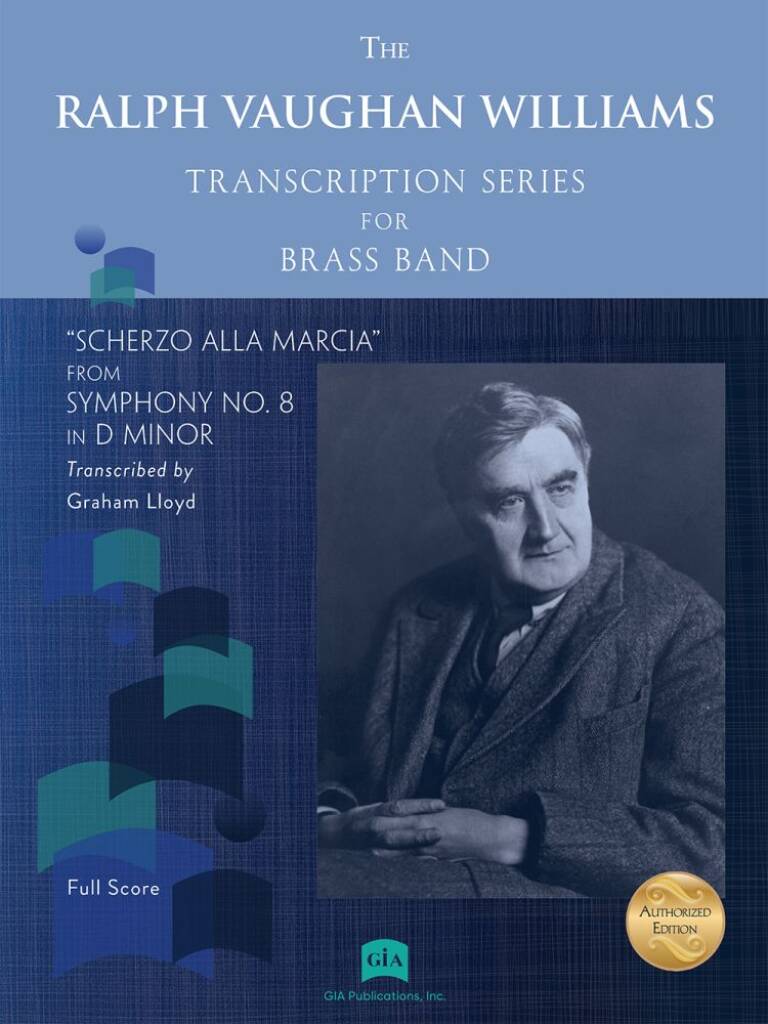
Scherzo alla Marcia - Ralph Vaughan Williams - Graham Lloyd
In partnership with Oxford University Press and authorized by the Vaughan Williams Charitable Trust, this major new initiative brings the incredible catalog of Ralph Vaughan Williams to the wind band community, with scholarly transcriptions by leaders in wind band composition. As the name suggests, all titles in the Brass Band Series are scored for brass ensemble and may also include perucssion parts. This work is Grade 5.To view other titles in the series, visit www.giamusic.com/RVW.
Estimated dispatch 5-14 working days
-
 £76.99
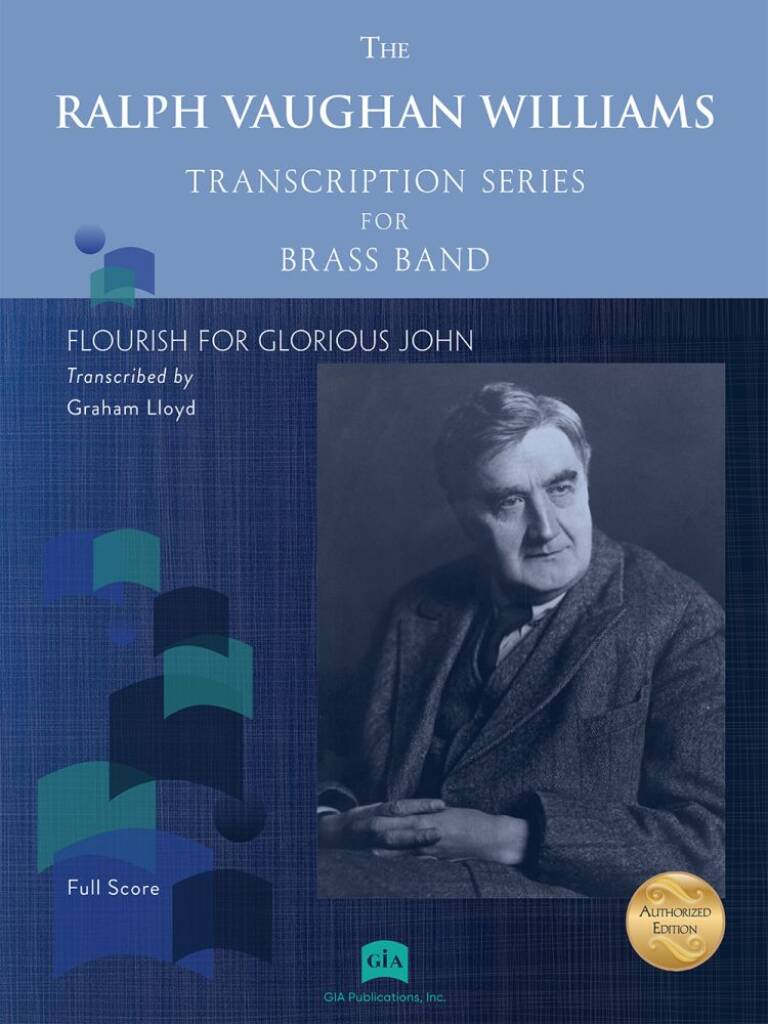
Flourish for Glorious John - Ralph Vaughan Williams - Graham Lloyd
In partnership with Oxford University Press and authorized by the Vaughan Williams Charitable Trust, this major new initiative brings the incredible catalog of Ralph Vaughan Williams to the wind band community, with scholarly transcriptions by leaders in wind band composition. As the name suggests, all titles in the Brass Band Series are scored for brass ensemble and may also include perucssion parts. This work is Grade 4.5.To view other titles in the series, visit www.giamusic.com/RVW.
Estimated dispatch 5-14 working days
-
 £60.99
Hymn of Faith - Louis Bourgeois - John Blanken
The French composer Louis Bourgeois lived from c.1510 to 1560. Bourgeois was cantor in Geneva and, commissioned by John Calvin, he composed melodies for metrical (rhyming) versions of the psalms. After completing about a hundred one-part psalms, he made some four-part arrangements, which were denounced and even resulted in his imprisonment for a day. Later, Bourgeois published a number of psalm collections, and judging from his book Le droict chemin de musique he was also an excellent educator. The melodies Bourgeois composed, are (contrary to Gregorian chants) particularly suitable for community singing. This applies to his hymn tune Saint Michael, which is why this melody hasbeen used for various texts, written for many occasions. John Blanken made this arrangement for a wedding ceremony: an occasion in which faith and trust play a large - if not the largest - role. Hence the title Hymn of Faith. The arrangement contains four verses of the hymn. After a majestic opening the hymn follows twice, the second verse being embellished in the tenor register. After a short interlude verse three follows, played by a quartet. The majestic opening is then repeated as a modulation into the fourth verse, which concludes the work in a brilliant tutti.
Estimated dispatch 5-14 working days
-
 £85.00
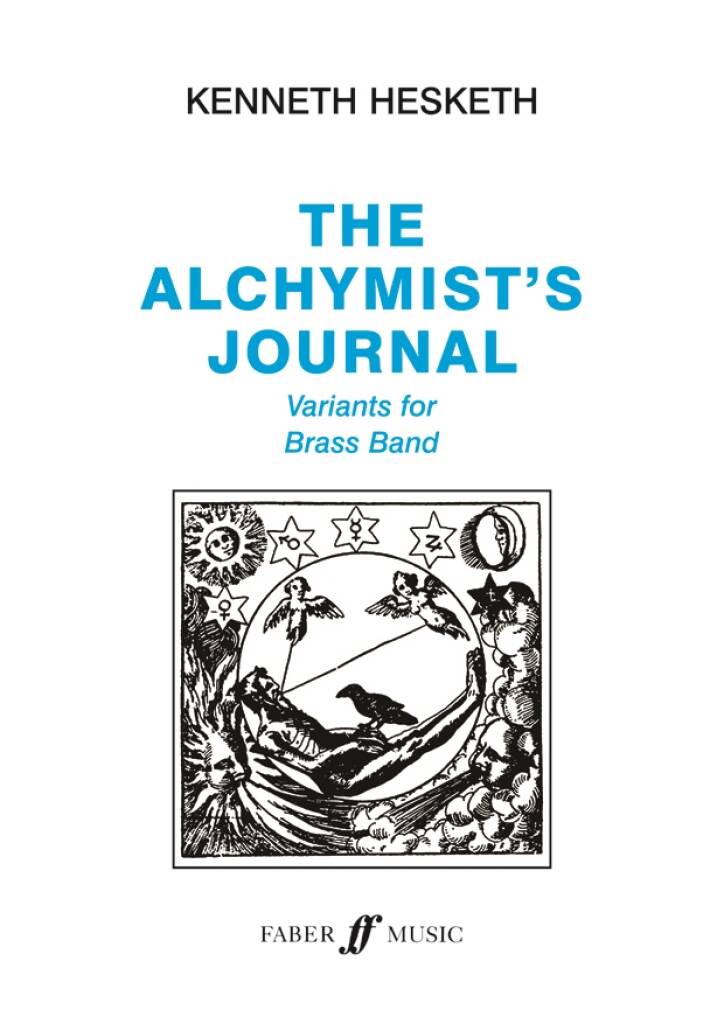
Alchymist's Journal. - Kenneth Hesketh
'The Alchymist's Journal' gets its title from the book of the same name by American author Evan S. Connell. The book fictionalises a number of famous Alchemist's writings, each one developing another's thoughts thuscontinuing one idea but changing it subtly to provide a new view point or way of thinking. This process is, in fact, alchemical as one idea transmutes into another. This idea is parallel to the processes at work within thesevariants. The whole work is constructed from 6 notes (C, A, B flat, E flat, F sharp, E) and is presented in nine different sections, each individual in mood but still based upon the original pitches. This is not a thematic setofvariations, as the themes are developed one at a time from small segments of the six notes. For example, the opening theme is the complete number of pitches, the second theme uses three notes transposed then repeated at theoriginal level, and so on. Harmonically, the six notes can be divided into two triads, A minor and E flat minor - each key beginning and ending the piece respectively. Whilst this is essentially abstract music with noprogramme there is an introduction, menacing scherzo, slow reflective section followed by a recap of the scherzo and final coda. 'The Alchymist's Journal' was commissioned by the Brass Band Heritage Trust at the suggestionof Paul Hindmarsh, to whom the work is dedicated.
Estimated dispatch 5-14 working days
-
 £65.00
Lyonesse. - Simon Dobson
Lyonesse was commissioned by the Brass Band Heritage Trust as the test piece for the Finals of the National Youth Brass Band Championships held in Manchester in April 2005. This atmospheric music, ideal as atest piece for First and Second section bands, takes its inspiration from the lost kingdom of Lyonesse, the mythical spur of land linking Cornwall and the Scilly Isles, and its associated legend of Tristan and Isolde. BrassBand Grade 5: 1st Section Duration: 13 minutes
Estimated dispatch 5-14 working days
-
 £70.00
General Series Band Journal August 2016 Numbers 2158 - 2161
No. 2158 Prelude - My God and King! (Paul Sharman)Based on the hymn tune 'Luckington', this music is a paean of praise to the Lord of all creation.No. 2159 A Christmas overture (Kevin Larsson)An exciting collection of well-known Christmas carols, originally written as a concert opener.No. 2160 March - A voice from above (Eiliv Herikstad)This march refers to a number of Christmas carols. It starts with four bars of 'Hark! the herald angels sing' followed by fragments of 'Joy to the world!' before James R. Murray's 'Den himmelske lovsang' is presented in full. 'Come children, come quickly' requires legato playing from the lower band.No. 2161 In God we trust (Ralph Pearce)Although the title derives from the United States of America's much-neglected motto, the music is a journey through to total trust in God and our Lord Jesus Christ. The tunes featured are 'In thee, O Lord, do I put my trust' leading to 'Trust in God'. Increasingly calm music leads to the more recent song 'In Christ alone, I placed my trust'. The music ends with a brief reference to 'In Thee, O Lord, do I put my trust' now in a mood of calm assurance.
Estimated dispatch 7-14 working days
-
 £24.95
Credo (Brass Band - Score and Parts)
The music is largely based around the 19th Century Hymn 'Tis so sweet to trust in Jesus. The title literally translates as 'to believe/trust' or 'to commit/trust in'. This musical journey of the believer takes its course through doubts and trials, to a reaffirmation of their faith.
Estimated dispatch 7-14 working days
-
 £38.95
Unity Series Band Journal - Numbers 510 - 513, October 2022
510: March - There is a fountain (Zachary Docter)This bright and cheerful march takes two songs as its basis; Jesus loves me! This I know (S.A.S.B. 807) and There is a fountain (S.A.S.B 202).511: Shine, Jesus, shine (Marcus Venables)While this piece was originally written for young people at a summer music camp in Canada, the piece is a light programme item suitable for smaller ensembles of any age.512: My Trust (Alan Williams)This setting is based on the simple chorus In thee, O Lord, do I put my trust (S.A.S.B 594). Ordinarily heard in 3/4 times, this 4/4 version of the tune has the space for reflection written into the notation.513: Power in the blood (Martyn Thomas)This is a blues/rock arrangement of the traditional hymn Would you be free from your burden of sin? (S.A.S.B 451). It can be used as a stand-alone piece or equally well as an accompaniment for congregational singing.
Estimated dispatch 7-14 working days
 View Music