
Results
-
 £105.20
Hjerteknuser - Janove Ottesen - Øystein Sjøvaag Heimdal
This song is taken from the 6th album by Norwegian band Kaizers Orchestra. Together with "Opma till You Die", this one is the bands biggest hit. It was released as single record in 2010. After that, several other Norwegian artists have made their own versions both on stage and record. This arrangement in 12/8 time signature tries to capture the sound and rhythmic drive of the original song. Watch the dynamics and balance between the different elements. The guitar and bass parts are optional.
Estimated dispatch 5-14 working days
-
 £119.99
The Patriots - Jan de Haan
The Dutch patriottentijd (literally 'Time of the Patriots') was a period of political instability in the 1780s. The country was led by regents who were occupied with their own personal interests rather than dedicating themselves to the needs of the people. In this revolutionary period, the devoted republican Patriots were in conflict with the Orangists. A civil war followed, in which the Patriots were beaten and driven away by a Prussian army. This composition is an abstract piece inspired by the Patriots. The thematic material is based on the Dutch war song 'Merck toch hoe sterck'. Its powerful minor melody, which has its origins in the Eighty Years' War, is recognizablethroughout the work, presented in variations of constantly shifting character.
Estimated dispatch 5-14 working days
-
 £87.99
Queen Symphonic Highlights - Philip Sparke
The British rock band Queen, formed in 1970, are one of the most popular bands of all time. The music of Queen already exists in numerous instrumental arrangements at all kinds of levels. However, arranger Philip Sparke has taken a unique approach: he has created an exceptional medley in a challenging, symphonic style from four of their greatest hits: 'Bohemian Rhapsody', 'Bicycle Race', 'Who Wants to Live Forever' and 'We Are the Champions'.
Estimated dispatch 5-14 working days
-
 £228.70
Fanfare and Chorale - Egil Hovland - Ray Farr
This arrangement (or edition) for brass band will give the possibility for more performances of this fine work by Hovland. The composer, before his death, examined my work and made no suggestions for changes, and his approving comments were complimentary and encouraging. The work was originally written for Concert Band in 1966 as Op. 54a to St. Olaf College Band in the US. It was transcribed in 1967 for symphony orchestra as Op. 54b by the composer himself. The challenges in arranging the piece for brass band were mostly concerned with satisfactorily covering the upper register used by piccolo, flutes and clarinets, and while there are wonderful brass players around who have amazing high registers, I have aimed this edition at a level achievable by reasonably good brass band players who are willing to give time and effort into the proper preparation and delivery of the music. Having worked on this new edition with a top-class brass band, I think it sounds wonderful and interestingly different to the original. Besides the obvious differences of tone-colour and absent high notes, I have used in my scoring, the option for using a vibraphone in place of a celeste. Vaughan Williams, in his Variations for brass band writes for celeste, but because the instrument is quite rare, performances have been mostly given using a glockenspiel- but this, of course sounds two octaves higher than it was intended. I think that vibraphone and brass is an excellent combination and recommend it without hesitation in this piece. Every detail of articulation and dynamic has been considered, so in order to keep the integrity of the music, please do not change anything in the name of "interpretation". As Ravel says- "What is there to interpret?" Ray Farr
Estimated dispatch 5-14 working days
-
 £59.99
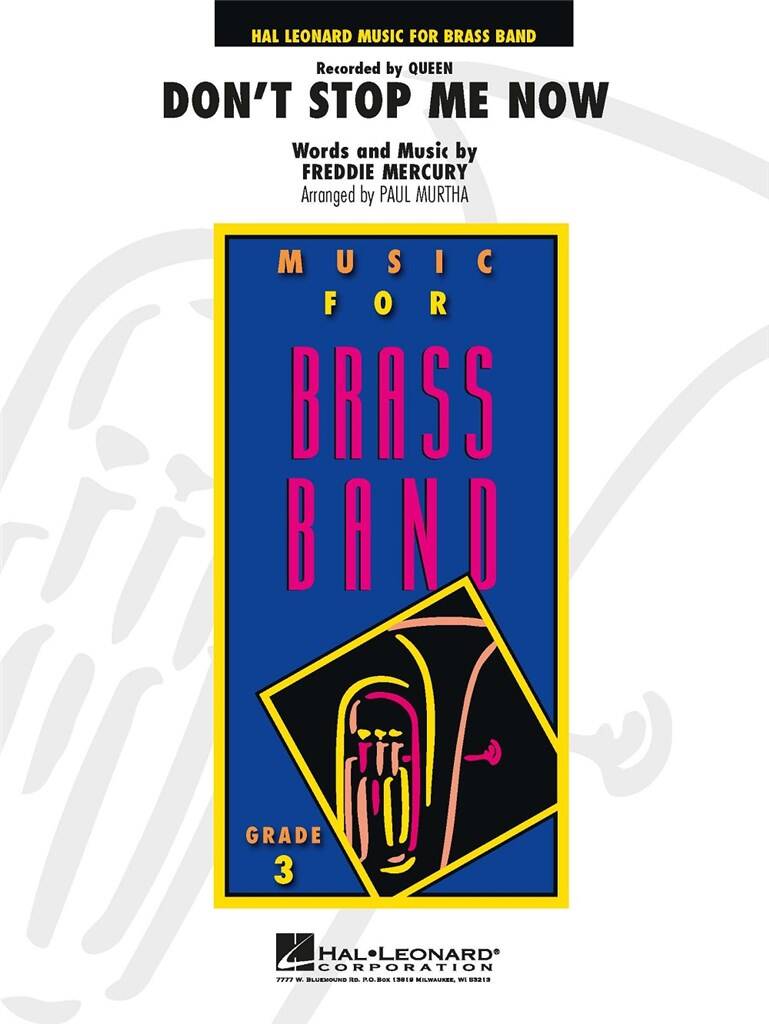
Don't Stop Me Now - Freddie Mercury - Paul Murtha
Although this tune by iconic band Queen met with a rather cool reception when it was first released in 1979, over the years it has become one of the bands most popular songs thanks in part to frequent use in advertising, television and film. Featuring trademark tight harmonies and a dramatic style shift from moderate ballad to double time rock, this arrangement will sound terrific even with young players.
Estimated dispatch 5-14 working days
-
 £115.60
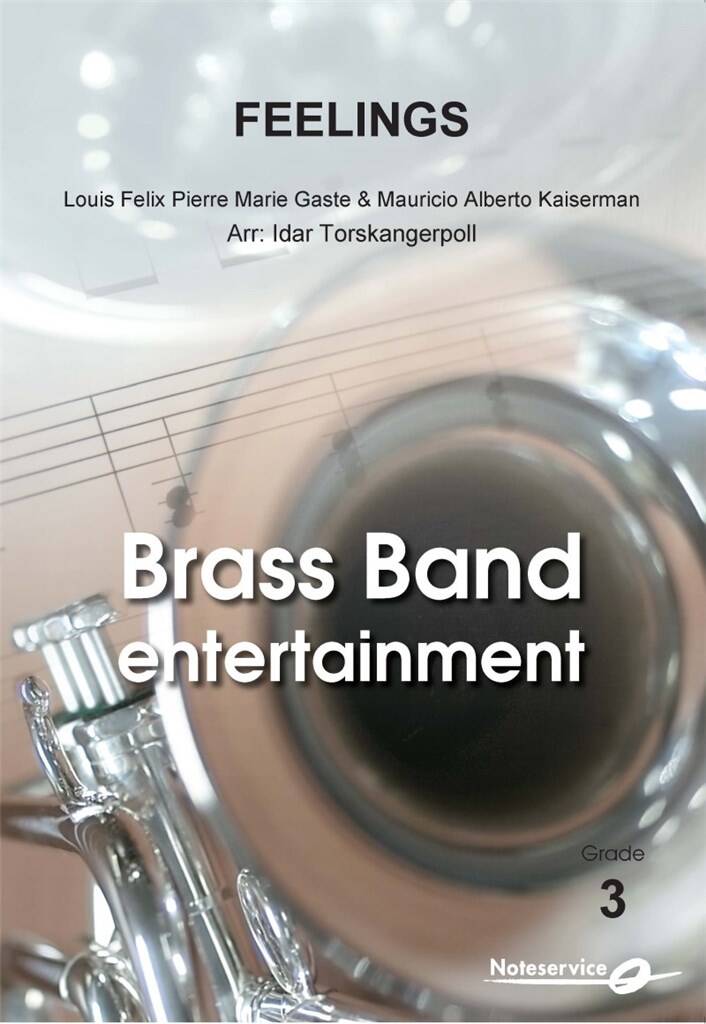
Feelings - Gaste - Idar Torskangerpoll
This song first became a hit by Brazilian singer Morris Albert. "Feelings" must be one of the most known love-songs of all time thanks to numerous recordings from artists like Ella Fitzgerald, Shirley Bassey, Nina Simone, Engelbert Humperdinck and Sarah Vaughan. The arrangement include parts that feature a soloist over a sectional accompaniment. Please watch the balance between soloist and band.
Estimated dispatch 5-14 working days
-
 £105.20
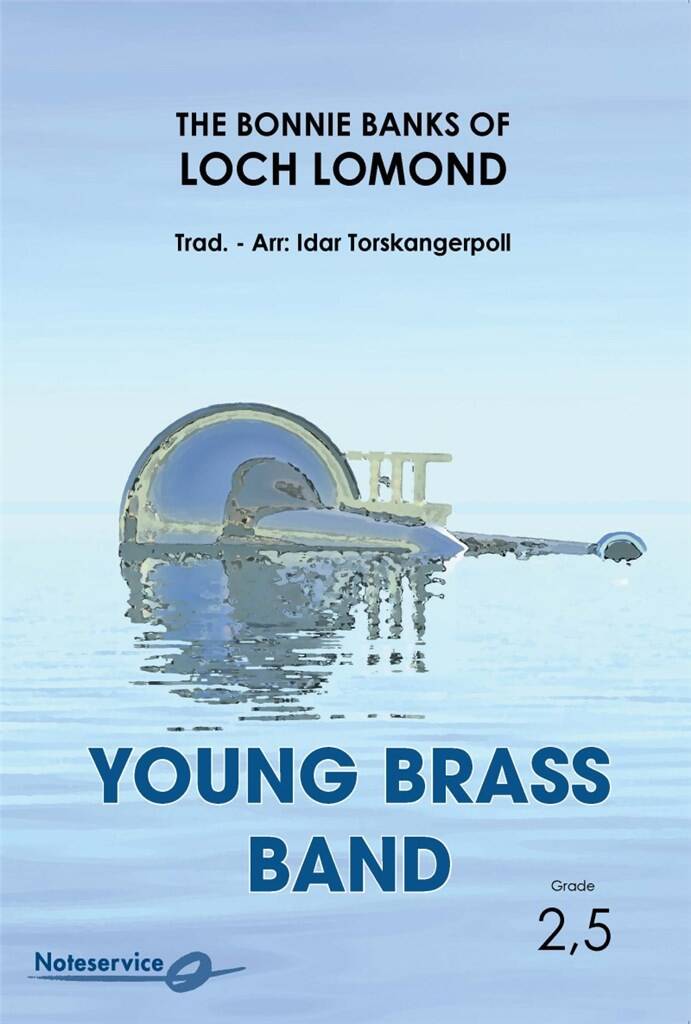
The Bonnie Banks of Loch Lomond - Idar Torskangerpoll
The Bonnie Banks of' Loch Lomond is a traditional scottish tune first time published in 1841. It is often the last tune on a night of partying in nightclubs and dinner parties. The arrangement has the solo lines doubled to suit more bands. Please make sure that good balance is as good as possible between the lines.
Estimated dispatch 5-14 working days
-
 £127.30
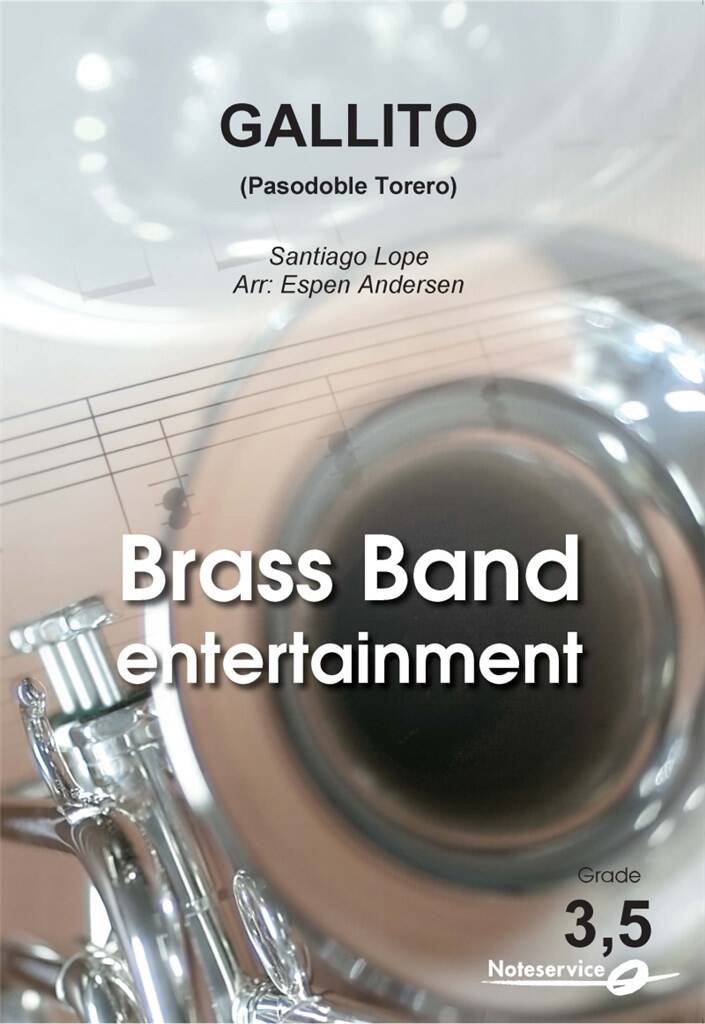
Gallito - Pasodoble Torero - Santiago Lope - Espen Andersen
Santiago Lope was born in Ezcaray (La Rioja, Spain) on May 23. 1871. He studied violin and composition at the Royal Academy of Music in Madrid. When the city of Valencia organized a municipal band in 1902, Lope was a leading figure. The four pasodobles: Dauder, Gallito, Angelillo and Vito are all dedicated to the star matadors of the time. Gallito is the most performed of the four, and is dedicated to Fernando Gomez Ojeda. Santiago Lope died on September 25. 1906.
Estimated dispatch 5-14 working days
-
 £104.99
Sinfonietta No. 4 - Etienne Crausaz
This work was composed for the occasion of the 28. Fete Cantonale des Musiques Vaudoises (28th Music Festival of the Canton Vaud), taking place in the Valley of Joux in June 2018. The music begins with a very simple fanfare consisting of five ascending legato notes which constitute the fundamental framework of the piece. This contrasts with the more cantabile sounding theme we hear after. The following Allegro section uses the sequence in a contrapuntal style reminding us of the Renaissance period, but with more modern day harmonies. Two solo cadenzas played by cornet and euphonium initiate the middle section, in which a theme also based on the sequence builds uptowards the climax of the piece. The sequence in the last section is played in time but gives the feeling of a "one to the bar" beat. Shortly before the festive finale, the music heard in the middle part resumes.
Estimated dispatch 5-14 working days
-
 £115.60
Tuba Tornado - Hans Offerdal
This piece explores the life span of a tornado and which instrument is better suited for that than just the tuba? The piece has three movements: I - Impatient Storm Cell II - Cumulus Clouds III - Multiple Vortex Tornado This piece presents challenges in dynamics and articulation, as well as in the interplay with the soloist. The piece is based on a scale of seven pitches (as 'Tornado' has seven letters) and is notated as a concert Eb major scale with three accidentals. Only these seven notes are played throughout the piece. Playing time appx. 10 minutes.
Estimated dispatch 5-14 working days
 View Music