
Results
-
£69.99
Ol' Man River - Jerome Kern - Mark Freeh
This scintillating arrangement by the American Mark Freeh of the Jerome Kern and Oscar Hammerstein classic, Showboat, is a classic in the brass band repertoire. This 'up tempo' big band arrangement is a perfect opener or closer to any programme and is also a fantastic way to showcase your drummer. Definitely one not to be missed!
Estimated dispatch 5-14 working days
-
 £104.99
Purcellian Fantasia - Jan de Haan
This composition is based on the march from Henry Purcell's Music for the funeral of Queen Mary II, a work written in 1694. In this fantasia, various movements flow from one to the next following the main theme; these movements not onlyelaborate on the theme, but also contrast with it. At times, the thematic material diverges so much, that the work acquires a character of its own; however, the composer often refers back to fragments of the theme. This work was test piece in the 4thdivision of the Dutch National Brass Band Championships (NBK) in 2017.
Estimated dispatch 5-14 working days
-
 £119.99
Bellum et Pax - Stijn Roels
Bellum et Pax is a composition describing the two ancient concepts of 'war' and 'peace.' While this piece appears to be one single movement, it consists of four sections that flow into one another. Mysterious and threatening tones lead the way into an epic battle between the chaos of war and enlightenment of peace. Peace triumphs, but menacing bass notes at the end symbolize the constant presence and threat of war and violence in the world.
Estimated dispatch 5-14 working days
-
 £115.60
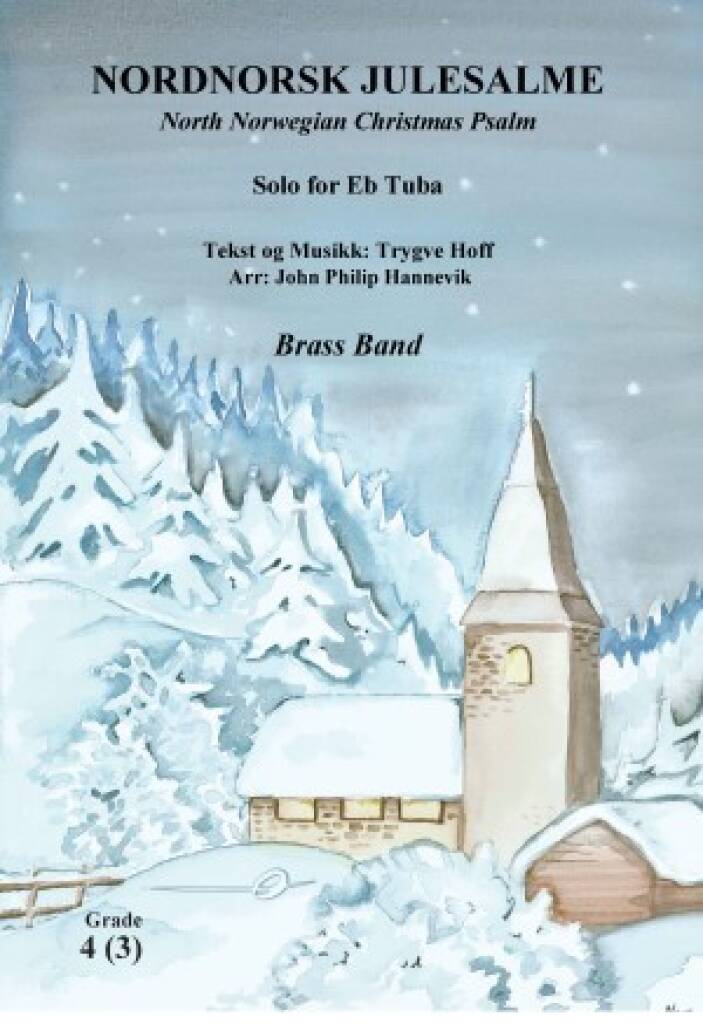
Nordnorsk julesalme - Trygve Hoff - John Philip Hannevik
The singer- songwriter Trygve Hoff (1938-1987) was born in the small village Rognan in the region Nordland in the north of Norway. Many of his lyrics point towards this part of the country, and he became an important figure for North-Norwegian culture.His North Norwegian Christmas Psalm has become one of the most loved and recorded newer Christmas songs in Norway. The lyrics definitely deals with about the folkish down-to-earth religion that this part of the country is known for.Offering the solo part to the tuba has it's challenges, but the instrumentation should make this a welcome and usable addition to the solo repertoire for that instrument.- John Philip Hannevik -
Estimated dispatch 5-14 working days
-
 £43.99
O Holy Night - Adolphe Charles Adam - Stephen Bulla
This terrific melody by the 19th century French composer Adolph Adam is one of the world's most famous Christmas solo melodies. It is unique due to the fact that it was the only Christmas song recorded by the legendary opera singer Enrico Caruso. This arrangement for soprano cornet and brass band will make a fantastic touching addition to any Christmas carol.
Estimated dispatch 5-14 working days
-
£60.99
Toccata - Girolamo Frescobaldi - James Curnow
Girolamo Frescobaldi (1583-1643) was an Italian organist and composer, who became one of the most distinguished organists of the 17th century, serving in the cathedrals of Rome, Florence and in the Netherlands. This Toccata is an arrangement from one of his 68 organ works.
Estimated dispatch 5-14 working days
-
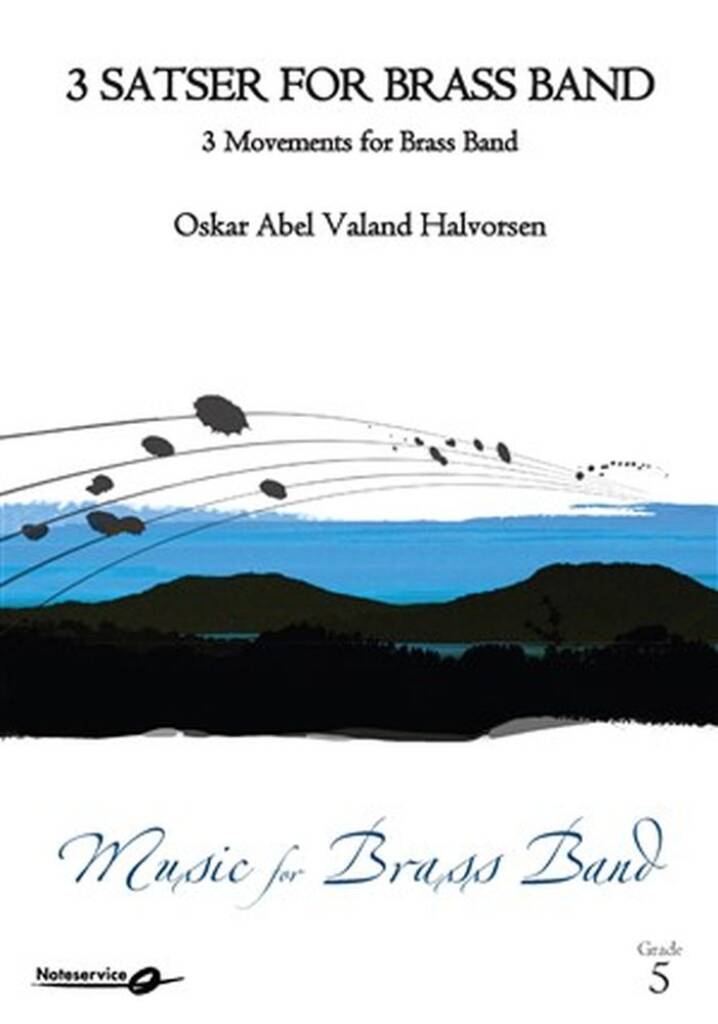 £145.50
3 Movements for Brass Band - Oskar Abel Valand Halvorsen
3 Movements for Brass Band is written with the intent to explore concise, but intention-lled musical forms. Even though each movement is a clearly dened part, there are still many similarities and unifying elements throughout. One of them can be characerized as a focus on musical initiatives that perpetually intensies the interplay between them. Furthermore, nearly all chords and melodic gestures in all the movements are based on the same three-note cell (e.g. Eb-F-Ab) in constant transposing versions. This structure of threes also nds expression in the rhythmical elements (e.g. in the lightly syncopated gures in the opening of the second movement). Lastly, there is also a signal in snare drum and whip, that ends each movement.
Estimated dispatch 5-14 working days
-
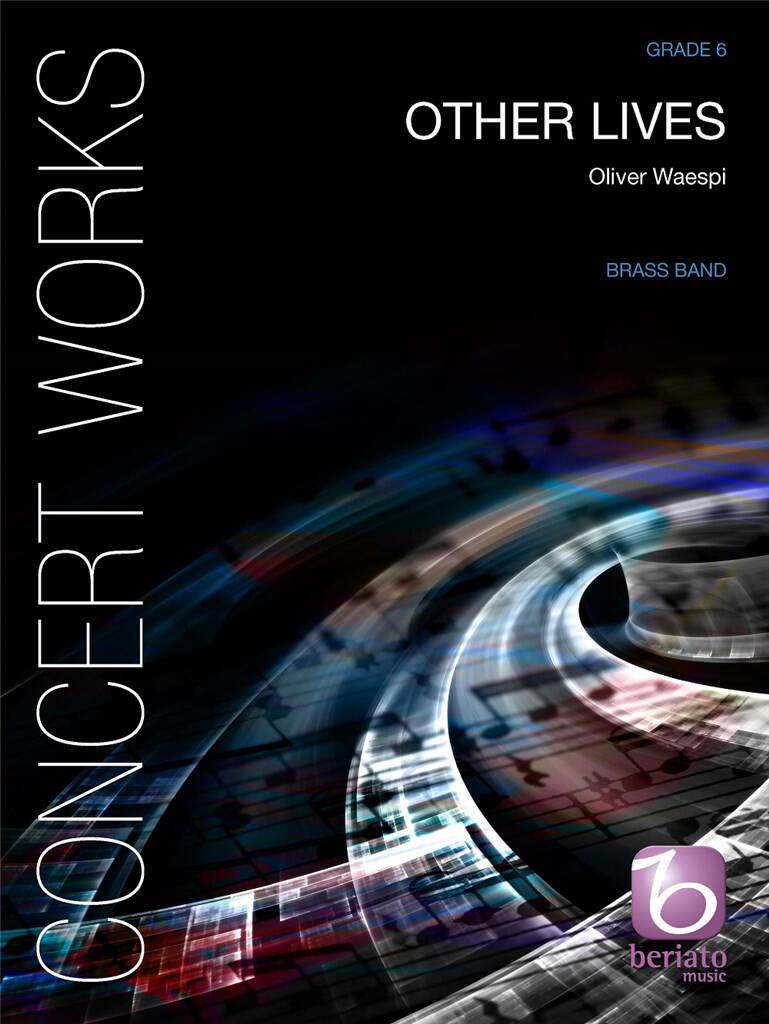 £159.99
Other Lives - Oliver Waespi
Other Lives is works perfectly for a competition but can also be programmed as concert work. The dark chords at the beginning of the piece are derived from "Der Doppelganger", one of Franz Schubert's late songs. After a short development the music begins to accelerate and find its own shape, gradually moving away from the introduction. The entire first part, "Rage", has an intensely agitated character. The ensuing "Reflection" turns back to the initial chord progression, before a series of interspersing solos explore time and space at a slower pace. After another musical surge, the music is brought close to silence and then gives way to the third part, "Redemption".Here, a widely spaced sound field contains a remote allusion to another work by Schubert "Ruckblick". After this farewell, an abstract musical transformation triggers an emotional change, as the initial motifs are now presented in their inversed form in order to create a much brighter harmonic landscape. Moreover, in the last part of the piece, "Renewal", the grim, tense atmosphere of the first part is transformed into a great energy. Other Lives was commissioned by the Valaisia Brass Band.
Estimated dispatch 5-14 working days
-
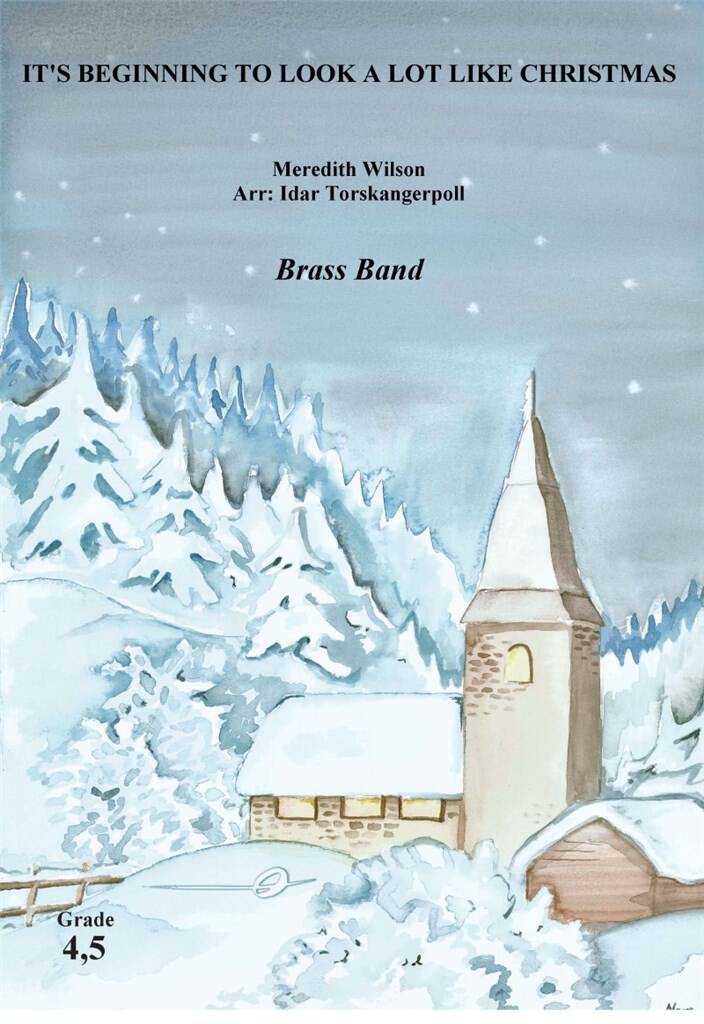 £115.60
It's Beginning to Look a lot like Christmas - Meredith Wilson - Idar Torskangerpoll
It's Beginning to Look a Lot Like Christmas is a song from 1951 composed by by Meredith Willson. The tune is one of the most popular American Christmas song. First recorded by Perry Como and Bing Crosby, later by many others. The song gained even more popularity after being featured in the second "Home Alone" movie in 1992. This arrangement is based on the 2011 version performed by Michael Buble.
Estimated dispatch 5-14 working days
-
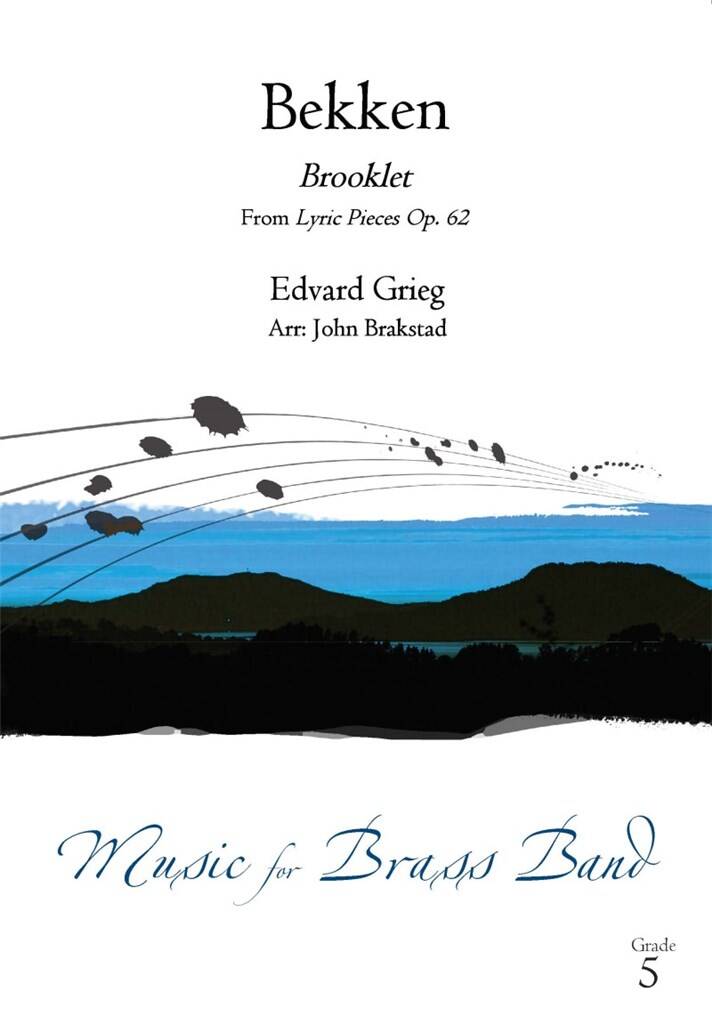 £115.60
Bekken (Fra Lyriske stykker opus 62) - Edvard Grieg - John Brakstad
Brooklet is one of the movements from Grieg's Lyric Pieces for Solo Piano opus 62. Information for the conductor: Brooklet is an technically advanced work for solo piano. In this arrangement, technical passages are simplified by overlapping and doubling some of the parts. To master the technical challenges and make it sound effortless, it is important to pay close attention to balance and precision. Some of the parts also have alternative parts added which can lower the technical challenges a bit.
Estimated dispatch 5-14 working days
 View Music