
Results
-
 £21.50
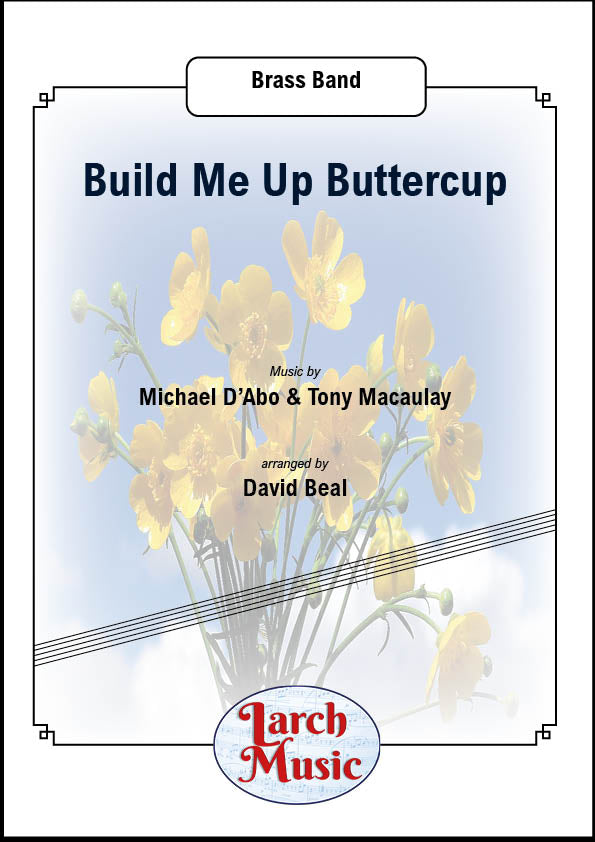
Build Me Up Buttercup (The Foundations) - Brass Band Full Score & Parts Sheet Music - LM721
COMPOSER: Michael D'Abo & Tony MacaulayARRANGER: David BealBrass Band Full Score & Parts Sheet MusicUK SALES ONLYOriginally a hit for The Foundations back in 1968 with Colin Young singing lead vocals.But now available as a brass band arrangement ready for your next concert.A definite crowd pleaser and foot-tapper.LM721 - ISMN : 9790570007219
In Stock: Estimated dispatch 3-5 working days
-
 £30.00
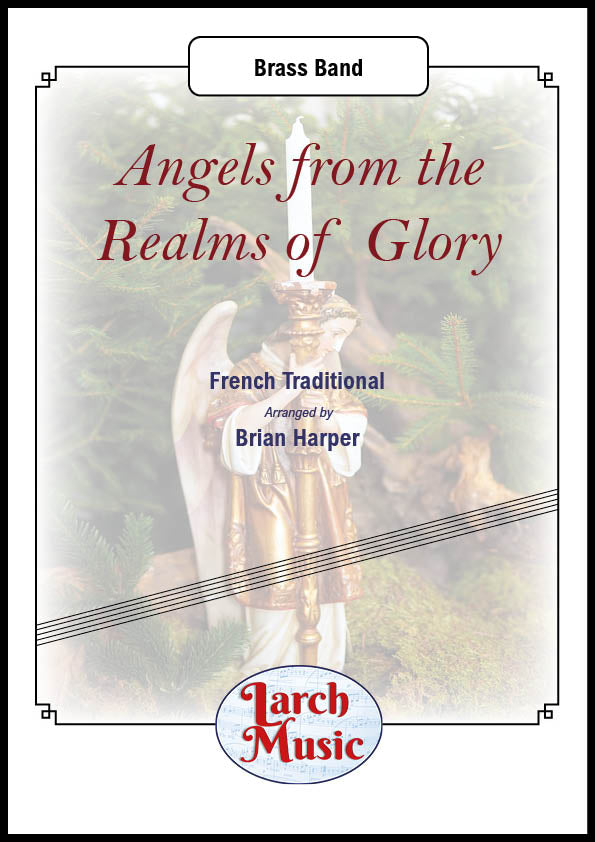
Angels from the Realms of Glory (French Traditional arr. Brian Harper) - Brass Band Full Score & Parts - LM649 - French Traditional - Brian Harper
COMPOSER: French TraditionalARRANGER: Brian HarperA great addition to the brass band repertoire from Brian HarperA concert opener for your next Christmas concert
In Stock: Estimated dispatch 3-5 working days
-
 £21.95
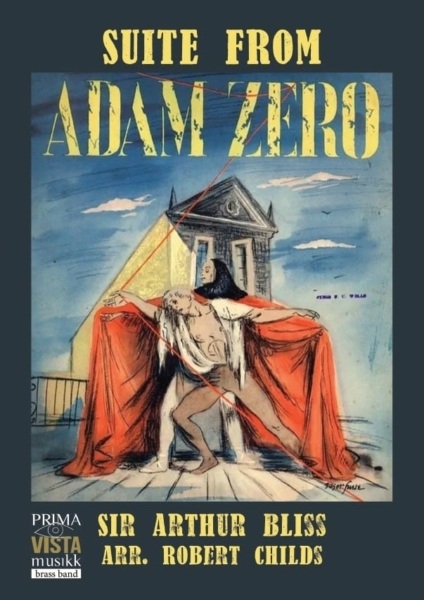
Adam Zero, Suite from (Brass Band - Study Score)
Selected as the Section 2 test piece for the National Brass Band Championships of Great Britain 2025Following his ballet Checkmate, Bliss composed another score for the, by then, Sadler's Wells Ballet, Miracle in the Gorbals, which was choreographed by Robert Helpmann, to a scenario by Michael Benthall. Premired in 1944, the ballet made a considerable impact and was a box-office success. It was followed in turn by a further collaboration with Helpmann and Benthall, Adam Zero. This would serve Helpmann, in the eponymous role, as a vehicle in two respects: demonstrating his gifts as a dancer-actor and as a choreographer. First performed at the Royal Opera House, Covent Garden, on 8 April 1946, Adam Zero was conducted by Constant Lambert, the work's dedicatee. Bliss considered it 'his most varied and exciting ballet score'. Benthall provided a synopsis for the programme:There is a philosophy that life moves in an endless series of timeless cycles. As Nature passes through Spring, Summer, Autumn and Winter, so man is born, makes a success in his own particular sphere, loses his position to a younger generation, sees his world crumble before his eyes and only finds peace in death. This age-old story is told in terms of a Company creating a ballet and calling on the resources of the theatre to do so. Lighting, stage mechanism, dance conventions, musical forms and costumes and scenery of all periods are used to symbolize the world of 'Adam Zero'.Apart from Adam, as the Principal Dancer, other main roles included the Stage Director (representing Omnipotence), and Adam's Fates (Designer, Wardrobe Mistress, and Dresser). 'The Woman in this allegory', wrote Bliss, 'under the symbol of the Choreographer, was both the creator and destroyer of Adam: his first love, his wife, his mistress, and finally the figure of beneficent Death.' When the curtain rose, the 'audience saw the Covent Garden stage right back to the wall, completely empty except for the protagonists, 'the Company poised, still and expectant, as they await the birth of... Adam Zero.'Unfortunately, soon after the premire, Helpmann injured himself and had to withdraw from the remaining performances. Despite generally positive reviews, the ballet did not capture the imagination of audiences and, to Bliss's considerable disappointment, was not revived. Seventy years would elapse before its first major return to the stage, in 2016, performed by the ballet company of Stadttheater Bremerhaven with choreography by Sergei Vanaev.Bliss extracted a concert suite from the ballet, conducting its first performance with the City of Birmingham Symphony Orchestra on 28 October 1948. For his own suite, arranged for brass band in 2023, Dr Robert Childs chose three dances linked to the seasons, book-ending them with the ebullient 'Fanfare Overture' and 'Fanfare Coda'. After Adam has grown to manhood, his Fates clothe him in a costume synonymous with confident youth, appropriate for the virile, ardent 'Dance of Spring'. In the 'Approach of Autumn', Adam, now wearing a sombre costume, has grown older: his Fates have streaked grey in his hair and put lines on his face. But they had earlier raised Adam to the zenith of his power, and the 'Dance of Summer' depicts him in the prime of life, in music of sweeping grandeur. The 'Fanfare Coda' signals that the next cycle of life is about to begin.Duration: 10.30
Estimated dispatch 7-14 working days
-
 £21.95
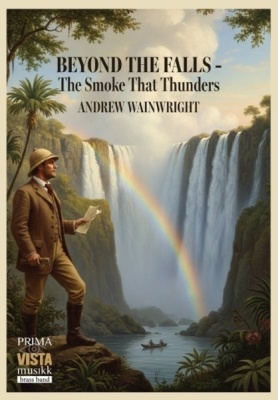
Beyond the Falls - The Smoke That Thunders (Brass Band - Study Score)
David Livingstone was a renowned Scottish missionary and explorer whose legendary expeditions from 1841 until his death in 1873 took him deep into the interior of central and southern Africa. While his initial aim was to spread Christianity and commerce, his legacy became defined by his relentless spirit of discovery.This work captures the harrowing and ultimately triumphant journey that led to his discovery of Victoria Falls. Originally composed for the GUS Band's performance at the 2012 Brass in Concert Championships, the work was expanded in 2026 for the Black Dyke Band's recording, Gothique Fantasy - The Music of Andrew Wainwright.The music opens with an air of trepidation, reflecting the weight of the mission ahead. This tension soon gives way to a more optimistic section featuring the Scottish folk song A Man's a Man for a' That. Livingstone reportedly hummed this Rabbie Burns tune to bolster his spirits while travelling. The score then depicts the immense hardships of the expedition (letters F to L), illustrating skirmishes with suspicious local tribes, wild animal attacks, and bouts of African fever.Following these trials, a more reflective, emotive movement (Letters L to R) explores Livingstone's internal struggle and his doubts about continuing. This emotional core is built upon the hymn Lord, Send Me Anywhere, a melody composed by Livingstone himself. Emerging from this prayer with renewed purpose, the final section (Letter R to the end) follows his path along the Zambezi River. The music builds to a triumphant climax, capturing his elation at seeing the magnificent Victoria Falls - known locally as 'Mosi-oa-Tunya' (The Smoke that Thunders).Duration: 13.30
Estimated dispatch 7-14 working days
-
 £22.00
VITAE AETERNUM (Brass Band Extra Score)
2014 Butlins First Section. Vitae Aeternum represents the first substantial composition conceived by Paul Lovatt-Cooper in his capacity as 'Composer in Residence' to the world famous Black Dyke Band.? Vitae Aeternum (meaning 'Eternal Life') takes its inspiration from songs composed by Ivor Bosanko and Dick Krommenhoek and is in three continuous movements. Vitae Aeternum was commissioned by Gerard Klaucke of GK Graphic Design VOF and received its first performance in the De Lawei Concert Hall, Drachten, Holland on 25th August 2007 played by Black Dyke Band conducted by Dr. Nicholas Childs. Later that year, it formed the finale of Brighouse and Rastrick Band's winning programme at the Brass in Concert Championship and has since been embraced by other leading bands including Cory Band, Leyland Band and The International Staff Band of The Salvation Army.
Estimated dispatch 7-14 working days
-
£49.95
VITAE AETERNUM (Brass Band Set - Score and Parts)
2014 Butlins First Section. Vitae Aeternum represents the first substantial composition conceived by Paul Lovatt-Cooper in his capacity as 'Composer in Residence' to the world famous Black Dyke Band.? Vitae Aeternum (meaning 'Eternal Life') takes its inspiration from songs composed by Ivor Bosanko and Dick Krommenhoek and is in three continuous movements. Vitae Aeternum was commissioned by Gerard Klaucke of GK Graphic Design VOF and received its first performance in the De Lawei Concert Hall, Drachten, Holland on 25th August 2007 played by Black Dyke Band conducted by Dr. Nicholas Childs. Later that year, it formed the finale of Brighouse and Rastrick Band's winning programme at the Brass in Concert Championship and has since been embraced by other leading bands including Cory Band, Leyland Band and The International Staff Band of The Salvation Army.
Estimated dispatch 7-14 working days
-
 £21.65
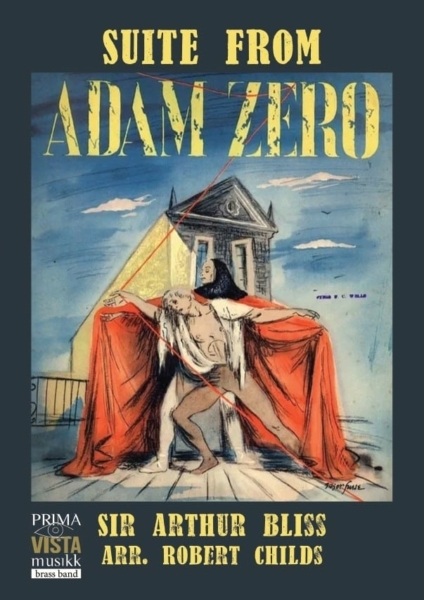
Adam Zero, Suite from (Brass Band - Study Score) - Bliss, Arthur - Childs, Robert
Selected as the Section 2 test piece for the National Brass Band Championships of Great Britain 2025Following his ballet Checkmate, Bliss composed another score for the, by then, Sadler's Wells Ballet, Miracle in the Gorbals, which was choreographed by Robert Helpmann, to a scenario by Michael Benthall. Premired in 1944, the ballet made a considerable impact and was a box-office success. It was followed in turn by a further collaboration with Helpmann and Benthall, Adam Zero. This would serve Helpmann, in the eponymous role, as a vehicle in two respects: demonstrating his gifts as a dancer-actor and as a choreographer. First performed at the Royal Opera House, Covent Garden, on 8 April 1946, Adam Zero was conducted by Constant Lambert, the work's dedicatee. Bliss considered it 'his most varied and exciting ballet score'. Benthall provided a synopsis for the programme:There is a philosophy that life moves in an endless series of timeless cycles. As Nature passes through Spring, Summer, Autumn and Winter, so man is born, makes a success in his own particular sphere, loses his position to a younger generation, sees his world crumble before his eyes and only finds peace in death. This age-old story is told in terms of a Company creating a ballet and calling on the resources of the theatre to do so. Lighting, stage mechanism, dance conventions, musical forms and costumes and scenery of all periods are used to symbolize the world of 'Adam Zero'.Apart from Adam, as the Principal Dancer, other main roles included the Stage Director (representing Omnipotence), and Adam's Fates (Designer, Wardrobe Mistress, and Dresser). 'The Woman in this allegory', wrote Bliss, 'under the symbol of the Choreographer, was both the creator and destroyer of Adam: his first love, his wife, his mistress, and finally the figure of beneficent Death.' When the curtain rose, the 'audience saw the Covent Garden stage right back to the wall, completely empty except for the protagonists, 'the Company poised, still and expectant, as they await the birth of... Adam Zero.'Unfortunately, soon after the premire, Helpmann injured himself and had to withdraw from the remaining performances. Despite generally positive reviews, the ballet did not capture the imagination of audiences and, to Bliss's considerable disappointment, was not revived. Seventy years would elapse before its first major return to the stage, in 2016, performed by the ballet company of Stadttheater Bremerhaven with choreography by Sergei Vanaev.Bliss extracted a concert suite from the ballet, conducting its first performance with the City of Birmingham Symphony Orchestra on 28 October 1948. For his own suite, arranged for brass band in 2023, Dr Robert Childs chose three dances linked to the seasons, book-ending them with the ebullient 'Fanfare Overture' and 'Fanfare Coda'. After Adam has grown to manhood, his Fates clothe him in a costume synonymous with confident youth, appropriate for the virile, ardent 'Dance of Spring'. In the 'Approach of Autumn', Adam, now wearing a sombre costume, has grown older: his Fates have streaked grey in his hair and put lines on his face. But they had earlier raised Adam to the zenith of his power, and the 'Dance of Summer' depicts him in the prime of life, in music of sweeping grandeur. The 'Fanfare Coda' signals that the next cycle of life is about to begin.Duration: 10.30
Estimated dispatch 7-14 working days
-
 £21.95
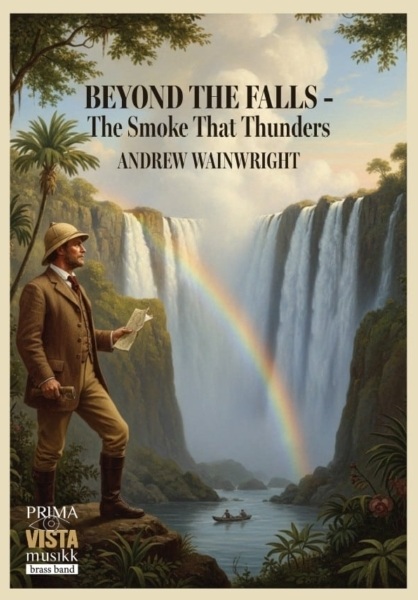
Beyond the Falls - The Smoke That Thunders (Brass Band - Study Score) - Wainwright, Andrew
David Livingstone was a renowned Scottish missionary and explorer whose legendary expeditions from 1841 until his death in 1873 took him deep into the interior of central and southern Africa. While his initial aim was to spread Christianity and commerce, his legacy became defined by his relentless spirit of discovery.This work captures the harrowing and ultimately triumphant journey that led to his discovery of Victoria Falls. Originally composed for the GUS Band's performance at the 2012 Brass in Concert Championships, the work was expanded in 2026 for the Black Dyke Band's recording, Gothique Fantasy - The Music of Andrew Wainwright.The music opens with an air of trepidation, reflecting the weight of the mission ahead. This tension soon gives way to a more optimistic section featuring the Scottish folk song A Man's a Man for a' That. Livingstone reportedly hummed this Rabbie Burns tune to bolster his spirits while travelling. The score then depicts the immense hardships of the expedition (letters F to L), illustrating skirmishes with suspicious local tribes, wild animal attacks, and bouts of African fever.Following these trials, a more reflective, emotive movement (Letters L to R) explores Livingstone's internal struggle and his doubts about continuing. This emotional core is built upon the hymn Lord, Send Me Anywhere, a melody composed by Livingstone himself. Emerging from this prayer with renewed purpose, the final section (Letter R to the end) follows his path along the Zambezi River. The music builds to a triumphant climax, capturing his elation at seeing the magnificent Victoria Falls - known locally as 'Mosi-oa-Tunya' (The Smoke that Thunders).Duration: 13.30
Estimated dispatch 7-14 working days
-
 £40.00
JOCK MCKENZIE MINI CHRISTMAS COLLECTION Concert Band Value Set - McKenzie, Ian
Score and 29 parts (Part 1: 4 x Bb, 1 x Eb, 3 x C (flute), 1 x C (oboe); Part 2: 4 x Bb, 1 x Eb, 1 x F, 1 x C; Part 3: 1 x Eb, 1 x F, 1 x Bb TC (3rd clarinet), 1 x Bb TC, 1 x C BC; Part 4: 1 x Bb TC, 1 x Eb TC (baritone sax) 1 x C BC; Part 5: 1 x Eb, 1 x Bb, 1 x C BC; 1 x Kit Percussion, 1 x Auxillary Percussion). Contains: Let the Rock Roll Out for Christmas; Season's Greetings!; Glory Shone Around; Oh Yes It's Christmas!.
Estimated dispatch 7-14 working days
-
 £60.99
Patsy (Brass Band - Score and Parts) - Stratford, Dizzy
Dizzy Stratford's name has become synonymous with concert band music of the highest quality. Stratford's characteristically simple, accessible harmonies and zesty melodies guarantee exciting musical entertainment. Patsy is no exception and also provides ample opportunity to feature individual sections or soloists.Duration: 3.00
Estimated dispatch 7-14 working days
 View Music