
Results
-
 £48.00
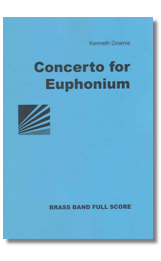
Concerto for Euphonium - Kenneth Downie
An accessible and enjoyable showpiece for soloists of all ages. The concerto's three movements are in a tuneful, melodic style and bravura passages are mixed with others designed to exploit the singing qualities of the instrument. The first movement is a vigorous allegro in which the short, pithy motifs of the opening theme contrast with the broad sweep of the second subject. A short cadenza-like passage yields to a high-spirited episode before a reprise of the opening ends the movement quietly. The second movement opens with a warm, romantic melody which is soon taken up by the soloist. A short animated section gives way to the earlier tutti theme, this time with passionate decoration from the soloist before the music gently unwinds in a tranquil coda. The finale has a bouncy, festive feel. After the first subject runs its course there is a brief journey through a more contrapuntal style, before a spirited presto moves into a compound episode before returning to the opening idea. A jubilant coda brings the work to a conclusion.
Estimated dispatch 7-9 working days
-
 £60.00
Concerto for Euphonium (Parts only) - Kenneth Downie
An accessible and enjoyable showpiece for soloists of all ages. The concerto's three movements are in a tuneful, melodic style and bravura passages are mixed with others designed to exploit the singing qualities of the instrument. The first movement is a vigorous allegro in which the short, pithy motifs of the opening theme contrast with the broad sweep of the second subject. A short cadenza-like passage yields to a high-spirited episode before a reprise of the opening ends the movement quietly. The second movement opens with a warm, romantic melody which is soon taken up by the soloist. A short animated section gives way to the earlier tutti theme, this time with passionate decoration from the soloist before the music gently unwinds in a tranquil coda. The finale has a bouncy, festive feel. After the first subject runs its course there is a brief journey through a more contrapuntal style, before a spirited presto moves into a compound episode before returning to the opening idea. A jubilant coda brings the work to a conclusion.
Estimated dispatch 7-9 working days
-
 £62.00
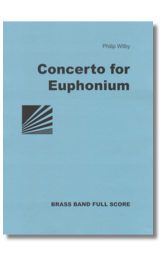
Concerto for Euphonium - Philip Wilby
Completed on New Year's Eve 1995, Philip Wilby's concerto has already established itself as one of, if not the, greatest concerto for the instrument written so far. Its extended length seeks to explore that fine combination of sustained lyricism and explosive virtuosity which typifies the modern euphonium in the most expert hands. There are two parts which divide into four movements. Part One opens with a sonata structure movement which alternates between a melodic style and some rapid passage work. The intention of the music is a firm and cerebral development of the opening fourth-based motifs. At the tranquil conclusion of this music the second movement bursts in - Zeibekikos - a rapid and extrovert Greek Island dance complete with plate smashing! Part Two re-examines some of the opening material surrounded by cadenzas, and centred upon a short and sustained adagio. The final movement opens with a rapid fugal section which moves inexorably towards a climactic return of the music and tonality of the open
Estimated dispatch 7-9 working days
-
 £76.00
Concerto for Euphonium (Parts only) - Philip Wilby
Completed on New Year's Eve 1995, Philip Wilby's concerto has already established itself as one of, if not the, greatest concerto for the instrument written so far. Its extended length seeks to explore that fine combination of sustained lyricism and explosive virtuosity which typifies the modern euphonium in the most expert hands. There are two parts which divide into four movements. Part One opens with a sonata structure movement which alternates between a melodic style and some rapid passage work. The intention of the music is a firm and cerebral development of the opening fourth-based motifs. At the tranquil conclusion of this music the second movement bursts in - Zeibekikos - a rapid and extrovert Greek Island dance complete with plate smashing! Part Two re-examines some of the opening material surrounded by cadenzas, and centred upon a short and sustained adagio. The final movement opens with a rapid fugal section which moves inexorably towards a climactic return of the music and tonality of the open
Estimated dispatch 7-9 working days
-
 £39.95
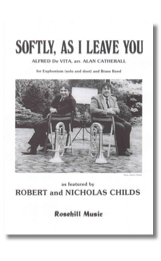
Softly, As I Leave You - Alfred de Vita arr. Alan Catherall
Made popular by many singers over the years, this lovely song was first arranged for the Childs brothers as a solo, and later a duet, by Alan Catherall. It was first performed in the duet version at the Royal Albert Hall, London, in October 1985, conducted by their late father, John Childs. Also available with piano Brass Band Set comprises: Detailed condensed conductor score Solo B-flat Euphonium B-flat Euphonium Duet (2) E-flat Soprano Cornet Solo B-flat Cornet (4) 2nd B-flat Cornet (2) 3rd B-flat Cornet (2) B-flat Flugelhorn* Solo E-flat Horn* 1st E-flat Horn* 2nd E-flat Horn 1st B-flat Baritone 2nd B-flat Baritone 1st B-flat Trombone 2nd B-flat Trombone Bass Trombone B-flat Euphonium (2) E-flat Bass (2) B-flat Bass (2) 1st Percussion 2nd Percussion 3rd Percussion (Drum Kit) * Alternative parts for use as solo or duet provided. There is no Repiano Cornet part.
Estimated dispatch 7-9 working days
-
 £49.95
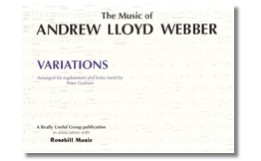
Variations - Andrew Lloyd Webber arr. Peter Graham
There are numerous sets of variations based on Paganinni's famous violin piece, but surely this is the only one written as the result of a wager on a football match! The composer wrote these variations for his cello-playing brother Julian in payment of a bet on a Leyton Orient match and they later formed part of the show Song and Dance. Peter Graham's arrangement of some of the best-loved sections ideally suits the euphonium.
Estimated dispatch 7-9 working days
-
 £60.00
Fantasie Concertante (Score only) - Philip Wilby
This exciting new concerto is a welcome addition to the repertoire of french and tenor horn players alike. Like the 18th-Century Serenade form there are five movements, arranged symmetrically around a slow movement - Soliloquy - which separates movements entitled Burlesque (two) and Valse Caprice (three) respectively. The first and last movements share common material of a more symphonic stature, and the concerto ends with a brisk fugato. The solo horn is (in the band version) accompanied by a quintet of solo players (two cornets, euphonium, trombone, and tuba) who provide the lion's share of the counterpoint and contrast with the main body of musicians who provide musical punctuation in the more sonorous tutti sections. The first movement, Don Quixote's Dream, contains references to Cervantes' famous hero, the Spanish nature of his stories, and the ambling gait of his horseback adventures.
Estimated dispatch 7-9 working days
-
 £74.00
Fantasie Concertante (Parts only) - Philip Wilby
This exciting new concerto is a welcome addition to the repertoire of french and tenor horn players alike. Like the 18th-Century Serenade form there are five movements, arranged symmetrically around a slow movement - Soliloquy - which separates movements entitled Burlesque (two) and Valse Caprice (three) respectively. The first and last movements share common material of a more symphonic stature, and the concerto ends with a brisk fugato. The solo horn is (in the band version) accompanied by a quintet of solo players (two cornets, euphonium, trombone, and tuba) who provide the lion's share of the counterpoint and contrast with the main body of musicians who provide musical punctuation in the more sonorous tutti sections. The first movement, Don Quixote's Dream, contains references to Cervantes' famous hero, the Spanish nature of his stories, and the ambling gait of his horseback adventures.
Estimated dispatch 7-9 working days
-
 £39.95
Dashing away with the smoothing iron - Ray Steadman-Allen
The composer writes... A lighthearted arrangement of an old folk song. The style is generally bright with a short, slower change of pace in the middle. En route there are a couple of quotations which got into the music almost unbidden: a fragment of one of Mozart's horn concerti and 'A-hunting we will go'. '... a splendid concert piece for advanced tuba players.' WINDS Autumn 2008 Duration: c.3:00 Also available with piano or concert band.
Estimated dispatch 7-9 working days
-
 £4.95
£4.95Variations (Euphonium Solo) (Score and Parts) - Andrew Lloyd Webber arr. Peter Graham
There are numerous sets of variations based on Paganinni's famous violin piece, but surely this is the only one written as the result of a wager on a football match! The composer wrote these variations for his cello-playing brother Julian in payment of a bet on a Leyton Orient match and they later formed part of the show Song and Dance. Peter Graham's arrangement of some of the best-loved sections ideally suits the euphonium.
Estimated dispatch 7-9 working days