
Results
-
 £17.50
The Mansions of Glory (Score Only)
"A young, talented and tender-hearted actress was passing along the street of a large city. Seeing a pale, sick girl lying upon a couch just within the half-open door of a beautiful dwelling, she entered, with the thought that by her vivacity and pleasant conversation she might cheer the young invalid. The sick girl was a devoted Christian, and her words, her patience, her submission and heaven-lit countenance so demonstrated the spirit of her religion that the actress was led to give some earnest thought to the claims of Christianity, and was thoroughly converted and became a true follower of Christ. She told her father, the leader of a theatre troupe, of her conversion and of her desire to abandon the stage, stating that she could not live a consistent Christian life and follow the life of an actress. Her father was astonished beyond measure and told his daughter that their living would be lost to them and their business ruined if she persisted in her resolution.Loving her father dearly, she was shaken somewhat in her purpose and partially consented to fill the published engagement to be met in a few days. She was the star of the troupe, and a general favourite. Every preparation was made for the play in which she was to appear. The evening came and the father rejoiced that he had won back his daughter and that their living was not to be lost. The hour arrived; a large audience had assembled. The curtain rose and the young actress stepped forward firmly, amid the applause of the multitude. But an unwonted light beamed from her beautiful face. Amid the breathless silence of the audience, she repeated: 'My Jesus, I love thee, I know thou art mine,For thee all the pleasures of sin I resign;My gracious Redeemer, my Saviour art thou,If ever I loved thee, my Jesus, 'tis now.' This was all. Through Christ she had conquered and, leaving the audience in tears, she retired from the stage, never to appear upon it again. Through her influence her father was converted, and through their united evangelistic labours many were led to God." 1. My Jesus, I love thee, I know thou art mine,For thee all the pleasures of sin I resign;My gracious Redeemer, my Saviour art thou,If ever I loved thee, my Jesus, 'tis now.2. I love thee because thou hast first lovd me,And purchased my pardon on Calvary's tree;I love thee for wearing the thorns on thy brow,If ever I loved thee, my Jesus, 'tis now.3. I will love thee in life, I will love thee in death, And praise thee as long as thou lendest me breath; And say, when the death-dew lies cold on my brow; If ever I loved thee, my Jesus, 'tis now.4. In mansions of Glory and endless delight,I'll ever adore thee and dwell in thy sight; I'll sing with the glittering crown on my brow: If ever I loved thee, my Jesus, 'tis now. William Ralph Featherstone
Estimated dispatch 7-14 working days
-
 £29.95
The Spirit Within (Brass Band - Score and Parts)
The Spirit Within is meant to represent the human spirit and the capabilities of human emotion, which is portrayed by the harmony in the piece. The harmonic language is the focal point that plays on the relationship between major and minor chords, including lots of extended harmony and suspensions that encompass the main melody.The piece has the ability to show off the quality sound from a brass band whilst providing a thought provoking piece for the audience to enjoy.The Spirit Within is featured on the Grimethorpe Colliery Band CD, Grimthorpe Entertain.
Estimated dispatch 7-14 working days
-
 £14.95
The Spirit Within (Score Only)
The Spirit Within is meant to represent the human spirit and the capabilities of human emotion, which is portrayed by the harmony in the piece. The harmonic language is the focal point that plays on the relationship between major and minor chords, including lots of extended harmony and suspensions that encompass the main melody.The piece has the ability to show off the quality sound from a brass band whilst providing a thought provoking piece for the audience to enjoy.The Spirit Within is featured on the Grimethorpe Colliery Band CD, Grimthorpe Entertain.
Estimated dispatch 7-14 working days
-
 £29.95
The Gospel Train (Brass Band - Score and Parts)
This arrangement was originally written in 1972 for the Blood and Fire group and later expanded for brass band. It has been performed with great effect in recent years.The music depicts a moving train, with the Cornets evoking the train's whistle and the Basses and Trombones providing rhythmic momentum. The interplay between the different sections creates a lively, jazz-infused atmosphere, full of energy and drive, capturing the motion and character of a train in motion.
Estimated dispatch 7-14 working days
-
 £29.95
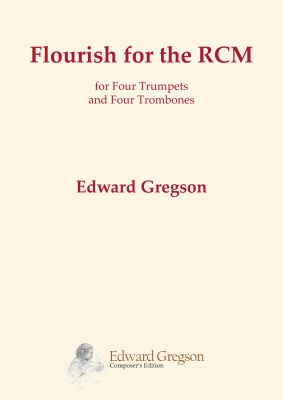
Flourish for the RCM (Brass Octet - Score and Parts)
Instrumentation:1 Trumpet in E flat3 Trumpets in B flat3 Tenor Trombones1 Bass TromboneFlourish for the RCM was specially composed for a concert the composer conducted of his music for brass ensembles at London's Royal College of Music (RCM). It is dedicated to his friend and colleague Professor Colin Lawson, Director of the RCM.It was first performed on 5 July 2023 by brass students of the College, conducted by the composer, at the RCM's Amaryllis Fleming Concert Hall.Duration: 1.00
Estimated dispatch 7-14 working days
-
 £75.00
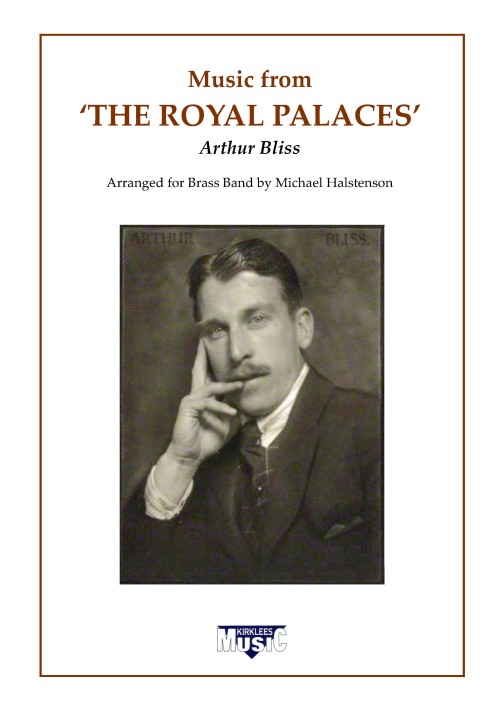
Music from The Royal Palaces (Brass Band - Score and Parts)
Selected as the Section 3 test piece for the National Brass Band Championships of Great Britain 2025Music from 'The Royal Palaces', arranged by Michael Halstenson in 2023, is also cast in five movements: the quietly regal 'Queen Victoria's Call to the Throne'; 'The Ballroom in Buckingham Palace' waltz evoking the gaiety of functions at Buckingham Palace; 'Joust of the Knights in Armour' (George V's reign) depicting knights preparing to joust; 'Melodrama' characterising the murder at Holyrood House (Edinburgh) of Mary, Queen of Scots' Secretary, David Rizzio; and the majestic 'The Royal Palace Theme' march.
Estimated dispatch 7-14 working days
-
£29.95
Music from The Royal Palaces (Brass Band - Score only)
Selected as the Section 3 test piece for the National Brass Band Championships of Great Britain 2025Music from 'The Royal Palaces', arranged by Michael Halstenson in 2023, is also cast in five movements: the quietly regal 'Queen Victoria's Call to the Throne'; 'The Ballroom in Buckingham Palace' waltz evoking the gaiety of functions at Buckingham Palace; 'Joust of the Knights in Armour' (George V's reign) depicting knights preparing to joust; 'Melodrama' characterising the murder at Holyrood House (Edinburgh) of Mary, Queen of Scots' Secretary, David Rizzio; and the majestic 'The Royal Palace Theme' march.
Estimated dispatch 7-14 working days
-
 £49.95
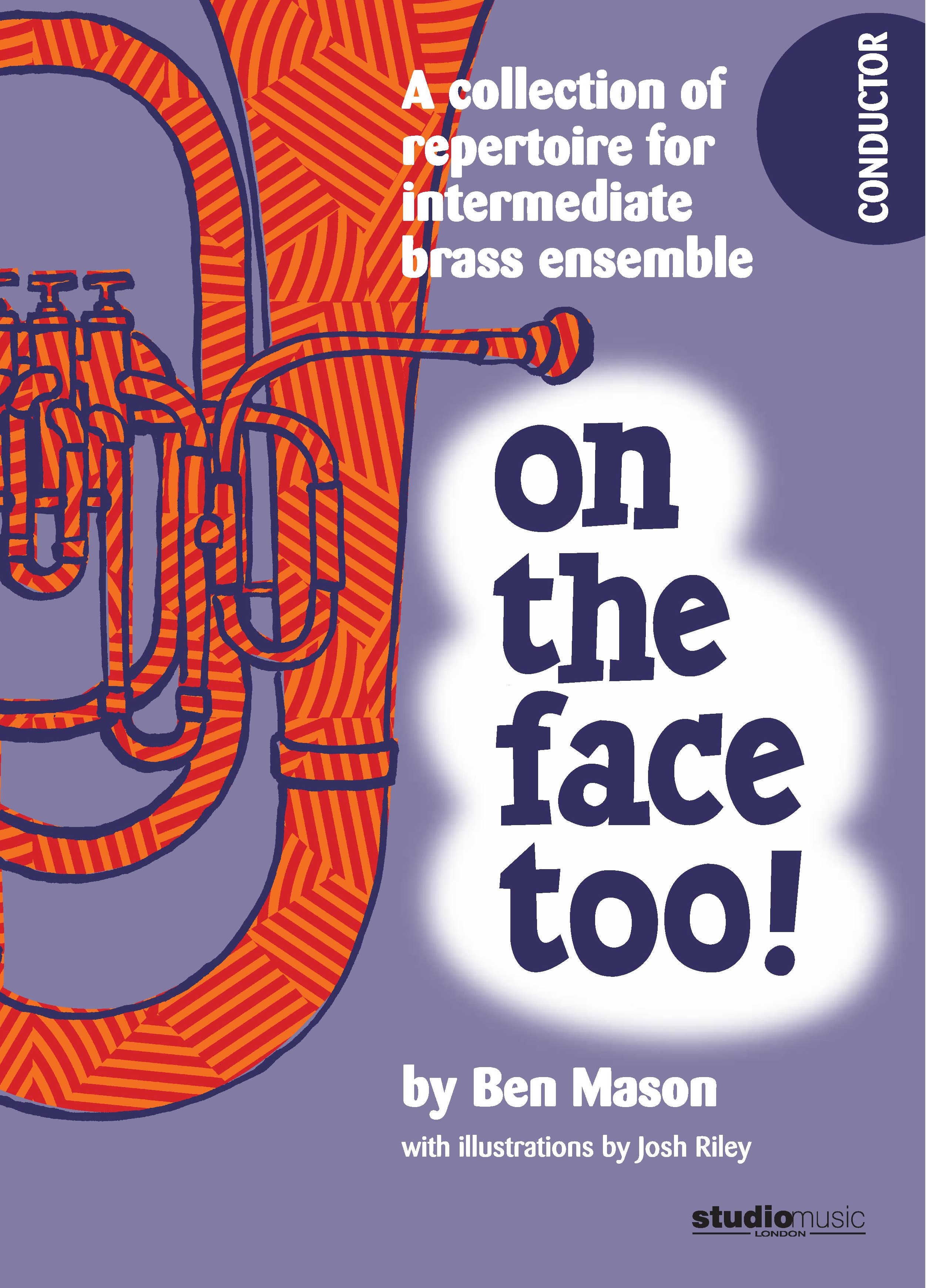
On the Face Too! (Value Set)
Value Set includes: a score and one of each part:Part A: Trumpet 1 in BbPart B: Trumpet 2 in BbPart C: Horn in EbPart C: Horn in FPart C: Trombone/Euphonium TCPart C: Trombone/Euphonium BCPart D: Trombone TCPart D: Trombone BCPart D: Bass in EbPart D: Tuba BDPercussionAdditional score and parts are also available individually.On the Face Too! is to the secondary school brass teacher as On the Face! is to the primary: namely a collection of pieces for intermediate brass ensemble in various jazz and popular styles, aiming to give a ready supply of material for concerts and assemblies, which nevertheless still allows for the developing technique of the young players to whom it is addressed.Generally speaking, the technical difficulty of the material here goes no further than grade 4 or 5 (even the first trumpet part never goes higher than a written G), though some pieces will offer considerable rhythmic challenges.
Estimated dispatch 7-14 working days
-
£24.95
On the Face Too! (Conductor Score)
On the Face Too! is to the secondary school brass teacher as On the Face! is to the primary: namely a collection of pieces for intermediate brass ensemble in various jazz and popular styles, aiming to give a ready supply of material for concerts and assemblies, which nevertheless still allows for the developing technique of the young players to whom it is addressed.Generally speaking, the technical difficulty of the material here goes no further than grade 4 or 5 (even the first trumpet part never goes higher than a written G), though some pieces will offer considerable rhythmic challenges.
Estimated dispatch 7-14 working days
-
 £3.95
£3.95On the Face Too! (Part A: Trumpet 1 in Bb)
On the Face Too! is to the secondary school brass teacher as On the Face! is to the primary: namely a collection of pieces for intermediate brass ensemble in various jazz and popular styles, aiming to give a ready supply of material for concerts and assemblies, which nevertheless still allows for the developing technique of the young players to whom it is addressed.Generally speaking, the technical difficulty of the material here goes no further than grade 4 or 5 (even the first trumpet part never goes higher than a written G), though some pieces will offer considerable rhythmic challenges.
Estimated dispatch 7-14 working days