
Results
-
 £37.35
Simply Carols - 45 Favourite Christmas Carols - Brass Band Set
VIEW SCORE PDF This resource features 45 Favourite Christmas Carols aimed at Intermediate Ensemble and above. All arranged by Kevin Larsson, who has over 20 years' experience working with youth ensembles, they are designed to be flexible and playable by a wide range of different groups, including brass, winds and strings. The arrangements use limited ranges, keys and rhythms and fingerings and slide positions are included for accidentals on the brass parts. PDF parts come in both march card an A4 size. Scored for quartet, the arrangements will work just as well with larger groups. Promotional videos for this product can be viewed at: www.youtube.com/watch?v=dTwB-Zy-c08 (short version) www.youtube.com/watch?v=g4IsIM8x7NU (extended version) Sheet music available at www.brassband.co.uk (UK) or https://satradecentral.org (USA). At Solid Brass Music parts, score and piano reduction can be purchased individually. Included in Brass Band Set: Full Score 1st Part Eb1st Part Bb2nd Part Bb2nd Part Eb 3rd Part Eb 3rd Part Baritone Bb3rd Part Trombone Bb4th Part Eb4th Part Bb 4th Part Bass ClefPercussion (optional) Full Set available at www.brookwrightmusic.com/product-page/simply-carols-45-favourite-christmas-carols-for-intermediate-ensemble and includes Piano Reduction Wind Band Set available at www.brookwrightmusic.com/product-page/simply-carols-45-favourite-christmas-carols-wind-band-set Full Score available at www.brookwrightmusic.com/product-page/simply-carols-45-favourite-christmas-carols-full-score
In Stock: Estimated dispatch 1-3 working days
-
£50.00
Hobson's Brass - Malcolm Arnold
Hobson's Brass is Malcolm Arnold's score to David Lean's 1954 film, Hobson's Choice, was one of three collaborations between the composer and director. It's a story of Henry Hobson, played by Charles Laughtan who runs a successful bootmaker's shop in nineteenth-century Salford. A widower with a weakness for the pub, he tries forcefully to rule the lives of his three unruly daughters.Brass Band Grade 5: 1st Section.Duration 10 minutes.
In Stock: Estimated dispatch 1-3 working days
-
 £86.00
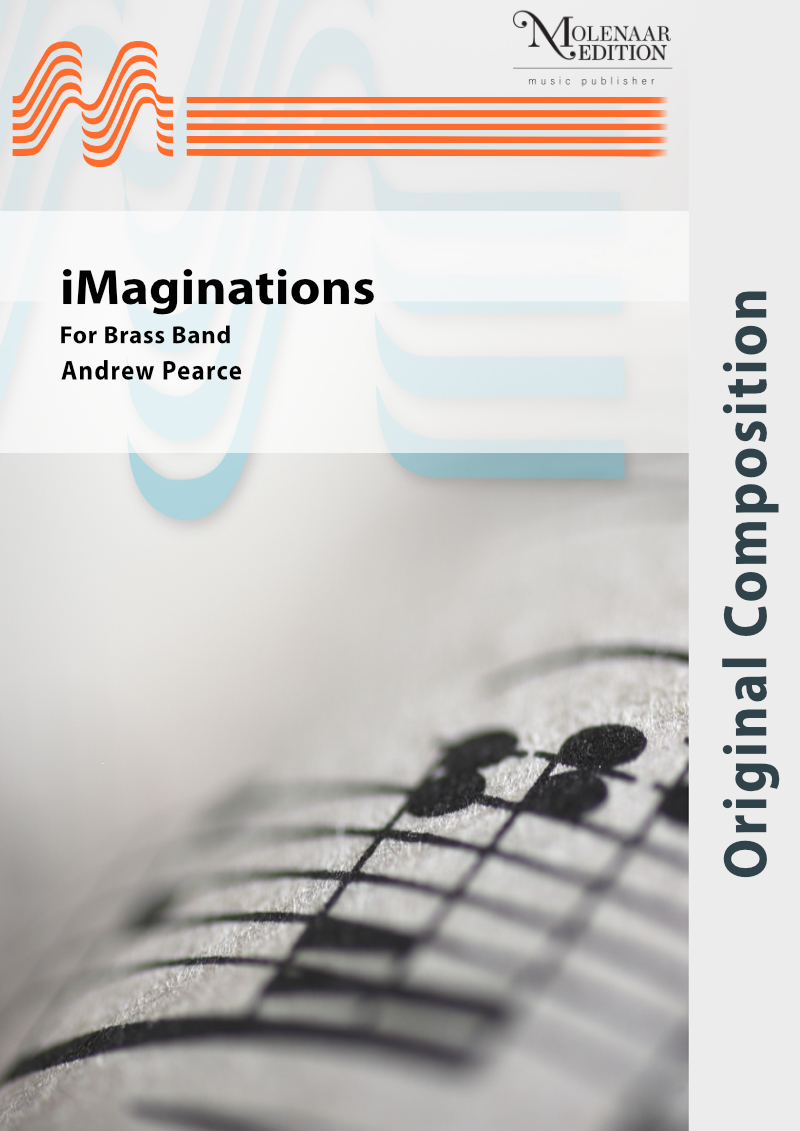
iMaginations - Andrew Pearce
iMaginations is a bright and colourful overture with a strong memorable theme in a fast meter that is shared across the sections of the band. It drives forward relentlessly with great vigour and vitality, culminating in a soaring legato rendition of the main theme, first heard in trombones and trumpets. I have aimed this piece at more advanced bands who will find it an exciting ride. '
Estimated dispatch 10-14 working days
-
£58.00
Vise ved vintersolkverv - Tore Bruvoll & Helge Stangnes - Haakon Esplo
The beautiful song "Song at Winter Solstice" has within short time been highly loved by listeners all around Norway. It's performed by folk-rock band "Hekla Stalstrenga" who released their first album "Hekla Stalstrenga" in 2008. This album was nominated for "Spellemansprisen" (the Norwegian equivalent to Grammy) in the folk music / traditional music category."Song at Winter Solstice" was released as single record in 2013.
Estimated dispatch 7-14 working days
-
£25.00
Fanfare for a Festival - Peter Meechan
Fanfare for a Festival is a short fanfare for brass band.Fanfare for a Festival was commissioned by Mark Bousie for the Sellers International Youth Band who premiered the work at the 2007 National Music for Youth festival in Symphony Hall, Birmingham, UK..
Estimated dispatch 12-14 working days
-
 £34.95
Highland Cathedral - Ulrich Roever & Michael Korb - Simon Kerwin
This lovely melody was composed by two German musicians who tried to emulate the popularity of the famous Scottish tune 'Amazing Grace'. The piece was an instant success and achieved a substantial degree of popularity after it was featured in...
Estimated dispatch 5-7 working days
-
 £34.95
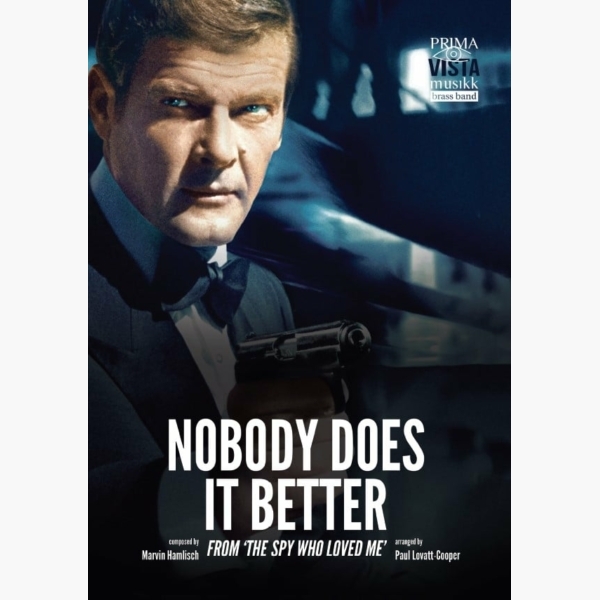
Nobody Does it Better - Marvin Hamlisch - Paul Lovatt-Cooper
Carly Simon first took this song into the charts in 1977, following the release of Ian Fleming's 10thJames Bond blockbuster,The Spy Who Loved Me. Back then, Sir Roger Moore played '007', with a characterisation that was full of debonair charm...
Estimated dispatch 5-7 working days
-
 £29.95
We Three Kings - Rev. John Henry Hopkins Jr - Dean Jones
'We Three Kings of Orient Are' is a Christmas carol (technically an Epiphany carol) written by Rev. John Henry Hopkins, Jr. who wrote both the lyrics and the music as part of a Christmas pageant for the General Theological Seminary...
Estimated dispatch 5-7 working days
-
 £29.95
Ye Banks And Braes - Traditional - Rodney Newton
This melody is purported to have been written in 1788 by a Charles Miller who expressed a desire to compose an authentic Scots air. The words associated with the tune are by Robert Burns and tell the tale of a...
Estimated dispatch 5-7 working days
-
£44.95
FUSION (Brass Band Set) - Martin Cordner
Fusion seeks to capture the sense of celebration that arises when a believer arrives in Heaven and is finally joined in eternal fellowship with God. In depicting this event, the work links the tune, 'Brantwood' (I know thee who thou art') with Chris Rice's contemporary hymn, 'Come to Jesus'.
Estimated dispatch 7-14 working days
 View Music