
Results
-
 £42.00
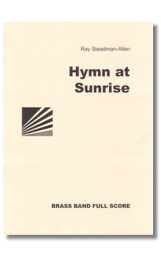
Hymn at Sunrise (Score only) - Ray Steadman-Allen
The idea for this work was prompted by a poem - Hymn Before Sunrise - which describes the majesty of a mountain in darkness, the sounds of a nearby waterfall and so on. Nothing came of the exposure to these pictures except for general thoughts about the dawn of day and a series of movements expressing a personal response to the wonder of creation in an imaginary moment in time. The movement titles, which were added later, are intended to underline a prevailing sense of worship, wonder and exaltation. The music is pure, not pictoral, though listeners may conjure their own images. An actual hymn - Tallis' Cannon - is incorporated. There are five movements: 1. Thanksgiving: A short prelude in two parts. First a brief passage of 'dawn music' before things become more vigorous: fanfare-like music ushers in the trombone section's presentation of the Tallis tune. A broad band version concludes the movement. 2. De Profundis: A slow movement shot through with anxious questionings featuring flugel and trombone. The mood lightens a little in the centre where the soprano cornet is featured and the movement ends serenely. 3. Celebration is characterised by rhythmic drive, this is buoyant with plenty of incident pointed up by the percussion. 4. Invocation: Melodic in nature and sober in mood, the first section is a series of short solos mingled with chorale-like statements. Central to the movement is a chorale-prelude style presentation of the Tallis tune. The third section reintroduces the earlier solo music by the full ensemble. Dissolving, the music enters the last movement without a break. 5. Paean: Marked allegro con spirito there is, quite rightly, a fair amount of fun in the rejoicing. Snatches of Tallis are heard, then comes a gentle passage with a cornet solo leading to fanfare music and recapitulation. Two recitatives are succeeded by a coda which brings the work to a sonorous and exultant conclusion.
Estimated dispatch 7-9 working days
-
 £52.00
Hymn at Sunrise (Parts only) - Ray Steadman-Allen
The idea for this work was prompted by a poem - Hymn Before Sunrise - which describes the majesty of a mountain in darkness, the sounds of a nearby waterfall and so on. Nothing came of the exposure to these pictures except for general thoughts about the dawn of day and a series of movements expressing a personal response to the wonder of creation in an imaginary moment in time. The movement titles, which were added later, are intended to underline a prevailing sense of worship, wonder and exaltation. The music is pure, not pictoral, though listeners may conjure their own images. An actual hymn - Tallis' Cannon - is incorporated. There are five movements: 1. Thanksgiving: A short prelude in two parts. First a brief passage of 'dawn music' before things become more vigorous: fanfare-like music ushers in the trombone section's presentation of the Tallis tune. A broad band version concludes the movement. 2. De Profundis: A slow movement shot through with anxious questionings featuring flugel and trombone. The mood lightens a little in the centre where the soprano cornet is featured and the movement ends serenely. 3. Celebration is characterised by rhythmic drive, this is buoyant with plenty of incident pointed up by the percussion. 4. Invocation: Melodic in nature and sober in mood, the first section is a series of short solos mingled with chorale-like statements. Central to the movement is a chorale-prelude style presentation of the Tallis tune. The third section reintroduces the earlier solo music by the full ensemble. Dissolving, the music enters the last movement without a break. 5. Paean: Marked allegro con spirito there is, quite rightly, a fair amount of fun in the rejoicing. Snatches of Tallis are heard, then comes a gentle passage with a cornet solo leading to fanfare music and recapitulation. Two recitatives are succeeded by a coda which brings the work to a sonorous and exultant conclusion.
Estimated dispatch 7-9 working days
-
 £77.00
General Series Brass Band Journal, Numbers 2238 - 2241, December 2023
2238: Fanfare and allegro on the Doxology (Steve Kellner)The Doxology, set to the tune Old Hundredth (T.B. 31), is used widely around the world by Christian denominations, including Salvationists. This concert opener is based on the short but powerful hymn of praise to the Triune God.2239: To the endless day (Kenneth Downie)This is a meditation on the hymn tune Ruth (T.B. 191), written by Samuel Smith. It is a particular favourite of Don Jenkins, whose late wife was also called Ruth. This music is dedicated to Don, a distinguished trombone soloist and former Band master of Bristol Easton Corps Band.The music is always associated with the hymn by William Walsham How, whose words begin 'Summer suns are flowing over land and sea' (S.A.S.B. 59) with the title coming from the end of the final verse.2240: Euphonium Solo - He giveth more grace (Ray Steadman-Allen)This 1996 arrangement of Blacklands (T.B. 527), the composers own hymn tune written in 1963, is being published posthumously. The hymn tune sets the words 'He giveth more grace as our burdens grow greater' (S.A.S.B. 30) with an emphasis on the generosity of God.2241: The Calvary effect (Ian Clarke)Around AC 30, on a hill often refered to as Mount Calvary, an event took place that was to change the world forever. The Calvary effect is a reflection, in musical form, on that event and what it still means to people today. If features two tunes: first, in a quiet reflective mood, we hear the highly emotive Healing Stream, associated with the words 'Jesus, keep me near the cross; There is a precious fountain' (S.A.S.B. 178). This then makes way for the chorus; 'Lord, make Cavalry real to me' (S.A.S.B. 182), which is at times indistinct and almost lost in its surroundings, reflecting the sentiments of the chorus. A return to the main tune follows, this time in a positive, passionate setting. The music finishes with a triumphant 'Hallelujah!'.
Estimated dispatch 7-14 working days
-
 £55.00
Triumph Series Brass Band Journal, Numbers 1351 - 1354, July 2023
1351: The anointed King (Marcus Venables)This piece was originally written as a massed band item for the Ontario Central-East Divisional Music Day in 2019. The updated version includes two songs, King of kings, majesty (S.A.S.B. 376) and O worship the King (S.A.S.B. 52) to a rhythmic setting of the tune Laudate Dominum (T.B. 481). Both songs present the contrasting characteristics of God; the powerful King and gentle, loving Saviour.1352: A suite of English Christmas carols (Kenneth Downie)This suite is the result of a request for a piece of music featuring exclusively English Christmas carols.The first movement features The holly and the ivy (C.C. 87). In sharp contrast, the second movement calls for a broad, sensitive, song-like approach. Using The cherry tree carol (C.C. 85), a much slower tempo than is normally applied to encourage the listener to see this beautiful tune in a new light. The rumbustious arrival of the finale is based on I saw three ships come sailing in (C.C. 44) with the festive mood prevailing until the end.1353: Nothing but thy blood (Norman Bearcroft)This two-verse setting of Richard Slater's much-loved hymn Nothing but thy blood (S.A.S.B. 769) appears straight-forward in nature, but requires a careful sense of the musical line across all parts.1354: Meditation - Reflections on Advent (Andrew Blyth)Two well-known carols, Away in a manger (C.C. 12) and Silent Night! (C.C. 77) are featured alongside original material. The piece attempts to convey a sense of reflection and meditation on the wonderful and awe-inspiring Advent story.
Estimated dispatch 7-14 working days
-
 £38.95
Unity Series Band Journal - Numbers 518 - 521, June 2023
518: March - A Christmas cavalcade (Morgan Juel Stavik)This march contains several Christmas carols and songs. Some are easy to recognise and are identified in the score, while other references are more subtle.519: Christmas bossa nova (Kevin Larsson)Using Jingle Bells, The First Nowell, It came upon the midnight clear and Ding dong! merrily on high, here is a great bossa nova to liven up your Christmas concert.520 (1): In te Domine speravi (Des Prez trs. Zachary Docter)This piece is a transcription of an early 16th century choral work by the Renaissance composer Josquin des Prez. Josquin was a well-known and highly regarded composer in his day. Like many composer of this period, Josquin wrote linearly, valuing independent free-flowing lines over vertical harmonies. As a result, the interlocking counterpoint in this work can be quite complex and the tied rhythms challenging.520 (2): Excerpt from 'Vespers' (Rachmaninoff trs. Andrew Poirier)Sergei Rachmaninoff's setting of the All-Night Vigil (Vespers) Op.37, of which this excerpt is taken, was composed in January and February 1915. The outbreak of World War I in August 1914 took many people by surprise, and to Rachmaninoff it was a severe shock. This compelled him to write a piece that reminded him of his childhood and the importance of the Russian Orthodox Church within the national identity of Russia. The excerpt transcribed here has a quality and enigmatic charm that never fails to move the souls of those that listen to it.521: March - Walk of faith (Stanley Makau)This march introduces Stanley Makau to the band journals. Stanley is currently the Deputy and Youth Bandmaster at Quarry Road Citadel Corps in Nairobi, Kenya. His inspiration for the march primarily came from Psalm 91: 11-12, and the march is in keeping with the traditional style that has been a staple for Salvation Army music-making.
Estimated dispatch 7-14 working days
-
 £45.00
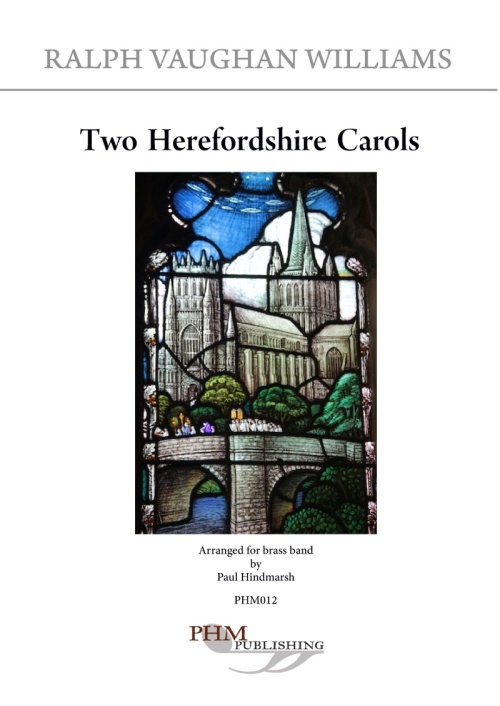
Two Herefordshire Carols (Brass Band - Score and Parts)
The two traditional tunes that comprise this straightforward setting were sung to Ralph Vaughan Williams (1872-1958) by Mrs. Esther Smith of Dilwyn, near Hereford, during one of the great composer's folk song collecting tours of England in the early years of the twentieth century. They were included in Twelve Traditional Carols from Herefordshire, edited by E.M. Leather and Vaughan Williams. The words to which Mrs. Smith sung the first tune were probably drawn from eighteenth century evangelical sources. The editors replaced these with six of the 16 verses of a traditional seventeenth century carol text, Joseph and Mary.The second melody, which appears as the centre piece of this arrangement, was sung to a carol that tells of a farmer who ploughed on Christmas Day. It is in fact a translation of a German traditional carol Gelobet seist du Jesu Christ that was published in Goodly Psalmes and Spiritualle Songes (1546) translated by Miles Coverdale. Vaughan Williams used the title Coverdale's Carol.The brass band settings follow the settings made by Vaughan Williams in 1920 for the Oxford Book of Carols. Since his simple harmonic approach is similar in both settings, three verses of his haunting version of Coverdale's Carol have been folded inside four verses of the slightly more animated treatment of Joseph and Mary. The harmonisations of Vaughan Williams have been given some brass band colour, with some verses taken by soloists from the ensemble. The accompaniment figuration that embellishes the second verse of Joseph and Mary has been used to open and close this arrangement and to bind the verses together.- Paul HindmarshDuration: 5.00
Estimated dispatch 7-14 working days
-
 £50.00
Judd: Beulah Land
Wilfred Heaton began to assemble material for 'Beulah Land' in the early 1990s following a request from the Amsterdam Staff Band for a new work. Despite reminding himself on the manuscript that he should either complete or destroy the work before his death, ultimately he did not manage either. This edition was subsequently realised in 2003 for the tour of the USA Western States by the Amsterdam Staff Band. 'Beulah Land' is Heaton's vision of the joy that awaits the Christian in Heaven and, according to his family, is reminiscent of the kind of music he often improvised at the piano. The three movements are as follows; 1. Better World; a waltz sequence on the tune 'Zealley' to which the words 'There is a better world, they say' are sung.2. Heavenly Home; an elegiac cortege using the tunes 'My home is in Heaven', 'I have a home that is fairer than day' and 'The home over there'.3. Happy Land; Beginning in waltz rhythm this soon gives way to a sequence of free variations on the song 'There is a happy land, Far, far away'.
Estimated dispatch 7-14 working days
-
 £5.99
£5.99Scripture-based Songs Compilation Folio Books
No. of TuneTitleRefernece1Above all powersSpring Harvest Song Book 2003, 12All for theeThe Musical Salvationist, January 19763All Heaven declaresMagnify, 24All the world is waitingThe Musical Salvationist, April 19875As we are gatheredThe Source, 296Be bold, be strongThe Source,387Be still for the presence of the LordMagnify, 78Beauty for brokennessThe Source,379Blessd be the name of the LordThe Source,5310Breathe 11By his handSing to the Lord, Vol.1, Part 112Come, now is the time to worshipThe Source, 66213Come on and celebrate!The Source, 7514Come, thou Fount of every blessing (Nettleton)Salvation Army Song Book, 31315ContentmentHappiness & Harmony, 1416Crown him with many crowns (Diademata)Salvation Army Song Book, 15617Cwm RhonddaSalvation Army Song Book, 57818Do something beautifulSing to the Lord Children's Voices Series, Vol.1219Faithful GodThe Source, 8820Father, we love youHappiness & Harmony, 1621Give thanks with a grateful heartThe Source, 1822Glorious things of thee are spoken (Abbot's Leigh)Salvation Army Song Book, 15723God in youSing to the Lord, Vol.9, Part 224Great is the darkness (Come, Lord Jesus)Magnify, 1425He is ableSing to the Lord Children's Voices Series, Vol.1526He is the Lord (Show your power)Magnify, 1927Healing ChristSing to the Lord, Vol.6, Part 328Here am I, my LordThe Musical Salvationist, July 199129His ProvisionThe Musical Salvationist, July 198530Holy, holy, holy is the LordSongs of Fellowship, 18231HosannaThe Source, 18232How deep the Father's love for usThe Source, 185; Songs of Fellowship II, 78033I am a new creationThe Source, 19134I dare to be differentSing to the Lord, Vol.1, Part 135I love you, LordMagnify, 2436I will run to you (Your eye is on the sparrow)The Source, 109337In Christ aloneThe Source, 131138In his presenceSing to the Lord, Vol.9, Part 339In his time 40In Jesus' nameSing to the Lord, Vol.13, Part 141In this quiet momentSing to the Lord, Vol.13, Part 342It is to youMagnify, 3043Jesus is Lord!The Source, 28444Jesus, name above all namesHappiness & Harmony, 3245Joyful, Joyful (Europe)Salvation Army Song Book, 1046King of Kings, MajestyThe Source, 30947Knowing You (All I once held dear)Magnify, 348Light of the world (Here I am to worship)Sing to the Lord Children's Voices Series, Vol.1049Lord, I lift your name on highMagnify, 3850Lord, you know that we love youThe Musical Salvationist, April 198351Love Divine (Blaenwern)Salvation Army Song Book, 43852MajestyHappiness & Harmony, 4553My Lord and Christ!Sing to the Lord, Vol.2, Part 254My Lord, what love is thisThe Source, 37055My Saviour's love (I stand amazed)Salvation Army Song Book, 17956Nothing but thy bloodSing to the Lord Children's Voices Series, Vol.1357O God of burning, cleansing flame (Send the fire)Salvation Army Song Book, 20358O happy daySalvation Army Song Book, 36559Oh to see the dawn (The power of the cross)Spring Harvest Song Book 2005, 6760Only by graceMagnify, 4861Power of your love (Lord, I come to you)Magnify, 3762Praise, my soulSalvation Army Song Book, 1763Praise to the Lord (Lobe den Herren)Salvation Army Song Book, 1964Regent SquareSalvation Army Song Book, 14765Rejoice!The Source, 43866Shout to the Lord (My Jesus, my Saviour)Magnify, 4367Sing and make musicHappiness & Harmony, 5568Spirit of the living GodSongs of Fellowship, 511; The Source, 46369Storm the forts of darknessSalvation Army Song Book, 69670Teach me to danceThe Source, 46971The light has comeHappiness & Harmony, 6372The Potter's hand (Beautiful Lord, wonderful Saviour)The Source, 64073The servant King (From Heaven you came)The Source, 11474The splendour of the KingSpring Harvest Song Book 2005, 9775There is a redeemerMagnify, 5976To be in your presence (My Desire)Magnify, 6177To God be the gloryThe Musical Salvationist, April 198878Wake up, O sleeperSing to the Lord, Vol.6, Part 279We are marchingThe Source, 53980We have come into this placeHappiness & Harmony, 7381We want to see Jesus lifted highThe Source, 55982When the music fades (The heart of worship)Magnify, 7083Who is on the Lord's side? (Rachie)Salvation Army Song Book, 707
Estimated dispatch 7-14 working days
-
 £29.95
Scripture-based Songs Compilation Full Score
No. of TuneTitleRefernece1Above all powersSpring Harvest Song Book 2003, 12All for theeThe Musical Salvationist, January 19763All Heaven declaresMagnify, 24All the world is waitingThe Musical Salvationist, April 19875As we are gatheredThe Source, 296Be bold, be strongThe Source,387Be still for the presence of the LordMagnify, 78Beauty for brokennessThe Source,379Blessd be the name of the LordThe Source,5310Breathe 11By his handSing to the Lord, Vol.1, Part 112Come, now is the time to worshipThe Source, 66213Come on and celebrate!The Source, 7514Come, thou Fount of every blessing (Nettleton)Salvation Army Song Book, 31315ContentmentHappiness & Harmony, 1416Crown him with many crowns (Diademata)Salvation Army Song Book, 15617Cwm RhonddaSalvation Army Song Book, 57818Do something beautifulSing to the Lord Children's Voices Series, Vol.1219Faithful GodThe Source, 8820Father, we love youHappiness & Harmony, 1621Give thanks with a grateful heartThe Source, 1822Glorious things of thee are spoken (Abbot's Leigh)Salvation Army Song Book, 15723God in youSing to the Lord, Vol.9, Part 224Great is the darkness (Come, Lord Jesus)Magnify, 1425He is ableSing to the Lord Children's Voices Series, Vol.1526He is the Lord (Show your power)Magnify, 1927Healing ChristSing to the Lord, Vol.6, Part 328Here am I, my LordThe Musical Salvationist, July 199129His ProvisionThe Musical Salvationist, July 198530Holy, holy, holy is the LordSongs of Fellowship, 18231HosannaThe Source, 18232How deep the Father's love for usThe Source, 185; Songs of Fellowship II, 78033I am a new creationThe Source, 19134I dare to be differentSing to the Lord, Vol.1, Part 135I love you, LordMagnify, 2436I will run to you (Your eye is on the sparrow)The Source, 109337In Christ aloneThe Source, 131138In his presenceSing to the Lord, Vol.9, Part 339In his time 40In Jesus' nameSing to the Lord, Vol.13, Part 141In this quiet momentSing to the Lord, Vol.13, Part 342It is to youMagnify, 3043Jesus is Lord!The Source, 28444Jesus, name above all namesHappiness & Harmony, 3245Joyful, Joyful (Europe)Salvation Army Song Book, 1046King of Kings, MajestyThe Source, 30947Knowing You (All I once held dear)Magnify, 348Light of the world (Here I am to worship)Sing to the Lord Children's Voices Series, Vol.1049Lord, I lift your name on highMagnify, 3850Lord, you know that we love youThe Musical Salvationist, April 198351Love Divine (Blaenwern)Salvation Army Song Book, 43852MajestyHappiness & Harmony, 4553My Lord and Christ!Sing to the Lord, Vol.2, Part 254My Lord, what love is thisThe Source, 37055My Saviour's love (I stand amazed)Salvation Army Song Book, 17956Nothing but thy bloodSing to the Lord Children's Voices Series, Vol.1357O God of burning, cleansing flame (Send the fire)Salvation Army Song Book, 20358O happy daySalvation Army Song Book, 36559Oh to see the dawn (The power of the cross)Spring Harvest Song Book 2005, 6760Only by graceMagnify, 4861Power of your love (Lord, I come to you)Magnify, 3762Praise, my soulSalvation Army Song Book, 1763Praise to the Lord (Lobe den Herren)Salvation Army Song Book, 1964Regent SquareSalvation Army Song Book, 14765Rejoice!The Source, 43866Shout to the Lord (My Jesus, my Saviour)Magnify, 4367Sing and make musicHappiness & Harmony, 5568Spirit of the living GodSongs of Fellowship, 511; The Source, 46369Storm the forts of darknessSalvation Army Song Book, 69670Teach me to danceThe Source, 46971The light has comeHappiness & Harmony, 6372The Potter's hand (Beautiful Lord, wonderful Saviour)The Source, 64073The servant King (From Heaven you came)The Source, 11474The splendour of the KingSpring Harvest Song Book 2005, 9775There is a redeemerMagnify, 5976To be in your presence (My Desire)Magnify, 6177To God be the gloryThe Musical Salvationist, April 198878Wake up, O sleeperSing to the Lord, Vol.6, Part 279We are marchingThe Source, 53980We have come into this placeHappiness & Harmony, 7381We want to see Jesus lifted highThe Source, 55982When the music fades (The heart of worship)Magnify, 7083Who is on the Lord's side? (Rachie)Salvation Army Song Book, 707
Estimated dispatch 7-14 working days
-
 £14.71
Finale from Symphony No.3 (Organ Symphony) (Brass Band) Additional Parts
Saint-Saens' magnificent Finale from Symphony No.3 (widely known as the 'Organ Symphony') has here been arranged for brass band with optional organ by Kevin Norbury. It was recorded by The International Staff Band on its CD Manuscripts, although this version has been revised in places. Saint-Saens decided to add the organ and piano to his 3rd symphony as a pragmatic orchestration innovation. The composition of this symphony was probably started in 1885 and a first draft was completed in Prague in 1886. Saint-Saens later recalled its eventful genesis: 'The Symphony in C was three-quarters sketched out when I found it impossible to write the finale. I did not know how to resolve this situation, until one night I suddenly woke up and, in a sort of hallucination, I heard the whole finale, which I hastily wrote down in outline, knowing that if I went back to sleep without having put anything on paper, I would have forgotten it all the next day.' The symphony was first performed under the composer's direction at Saint James's Hall in London on May 19, 1886. This arrangement by Kevin Norbury can both function as a stand-alone brass band piece, and be performed with an organ by omitting the notes found in square brackets in the parts and score. To view a rolling score video please visit www.youtube.com/watch?v=OlUd_FppBY8 PDF download includes additional parts as listed below. Full set including score available here. Sheet music available from: UK - www.brassband.co.uk USA - https://satradecentral.org Difficulty Level: 1st Section + Length: 8.30 mins. Alternative Parts included in this download: Solo Horn F 1st Horn F 2nd Horn F 1st Baritone B.C. 2nd Baritone B.C. 1st Trombone B.C. 2nd Trombone B.C. Euphonium B.C. Tuba 1 B.C. (Bass Eb equivalent) Tuba 2 B.C. (Bass Bb equivalent)
In Stock: Estimated dispatch 1-3 working days