
Results
-
 £89.95
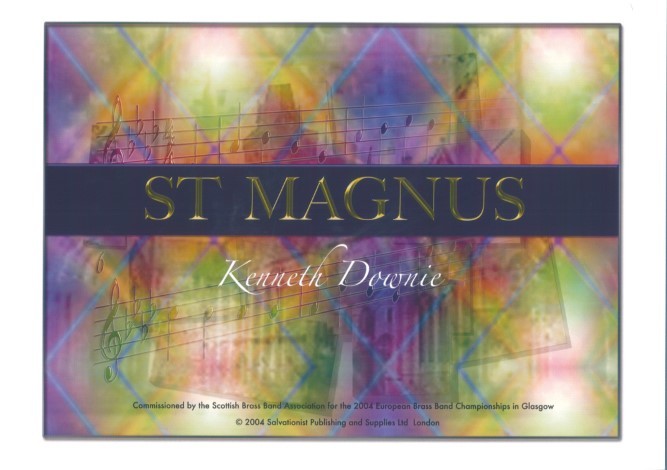
St Magnus (Brass Band - Score and Parts) - Downie, Kenneth
Commissioned by the Scottish Brass Band Association for the 2004 European Brass Band Championships in Glasgow. This music is a set of variations on the tune known as St Magnus, which is attributed to Jeremiah Clarke. Most people will associate it with Thomas Kelly's hymn which begins: "The Head that once was crowned with thorns is crowned with glory now". The tune is very simple, consisting of just two, four-bar phrases. Neither is there much in the way of rhythmic variety, every note being a crotchet with the exception of two quavers, and the last note in each phrase. Within such a simple structure, however, lies considerable strength.
Estimated dispatch 7-14 working days
-
£44.95
St Magnus (Brass Band - Score only) - Downie, Kenneth
Commissioned by the Scottish Brass Band Association for the 2004 European Brass Band Championships in Glasgow. This music is a set of variations on the tune known as St Magnus, which is attributed to Jeremiah Clarke. Most people will associate it with Thomas Kelly's hymn which begins: "The Head that once was crowned with thorns is crowned with glory now". The tune is very simple, consisting of just two, four-bar phrases. Neither is there much in the way of rhythmic variety, every note being a crotchet with the exception of two quavers, and the last note in each phrase. Within such a simple structure, however, lies considerable strength.
Estimated dispatch 7-14 working days
-
 £44.95
Symphonic Rhapsody for Euphonium (Brass Band - Score and Parts) - Gregson, Edward
The Symphonic Rhapsody was published in 1976, although the genesis of the piece dates back to the early '60s when I was a teenager and played the euphonium in a Salvation Army band. The work incorporates an old gospel song - 'So we'll roll the old chariot along' - into a symphonically structured form. Motifs from the gospel song permeate the rest of the musical material so that the work hopefully has a unified whole. The 'variations' are less actual variations on the tune itself, but more a comment on certain melodic aspects.Although the writing is naturally virtuosic in a way which is obvious for such a solo instrument within the brass band, it never the less unfolds many more lyrical aspects of the instrument's capabilities. Towards the end of the piece the tune is heard once again in its full version, leading to a coda where the euphonium takes centre stage in a bravura manner.- Edward GregsonDuration: 10.00
Estimated dispatch 7-14 working days
-
 £44.95
Fantasia on 'Glory to his Name' (Brass Band - Score and Parts) - Bright, Dudley
This Fantasia is a celebration of the work of Ray Steadman-Allen. Through most of his 92 years, his music has had a profound and wide-ranging impact on Salvation Army music. Always innovative, rather than stylistically stereotypical, his music has led the way forward for Salvationist composers. As the title suggests, his light-hearted 1960's vocal solo provides thematic material and highlights his motivation. There are also references to and quotations from several more of his pieces. Yet, although much of his music can be challenging, he has also given us music that speaks directly to the heart. His much-loved songs 'He giveth more grace' ('Blacklands') and 'Remember Me' are heard in humble and sincere tribute to a life dedicated to giving the glory to God through his music.
Estimated dispatch 7-14 working days
-
£22.50
Fantasia on 'Glory to his Name' (Brass Band - Score only) - Bright, Dudley
This Fantasia is a celebration of the work of Ray Steadman-Allen. Through most of his 92 years, his music has had a profound and wide-ranging impact on Salvation Army music. Always innovative, rather than stylistically stereotypical, his music has led the way forward for Salvationist composers. As the title suggests, his light-hearted 1960's vocal solo provides thematic material and highlights his motivation. There are also references to and quotations from several more of his pieces. Yet, although much of his music can be challenging, he has also given us music that speaks directly to the heart. His much-loved songs 'He giveth more grace' ('Blacklands') and 'Remember Me' are heard in humble and sincere tribute to a life dedicated to giving the glory to God through his music.
Estimated dispatch 7-14 working days
-
 £19.95
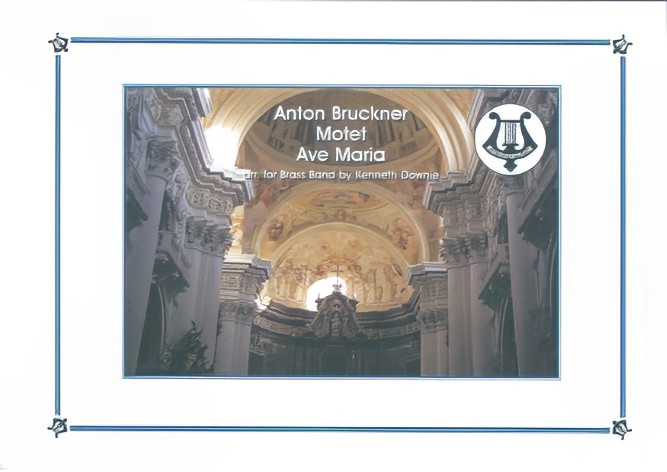
Ave Maria (Brass Band - Score and Parts) - Bruckner, Anton - Downie, Kenneth
The great 19th century Austrian composer, Anton Bruckner is most famous for his nine published symphonies and his sacred music (for organ and for voices). This motet, for unaccompanied voices, was written for Linz Cathedral where Bruckner became organist in 1855. Although this arrangement for brass band is far removed from the original, it is felt that the beauty of the music will come over in a new way.
Estimated dispatch 7-14 working days
-
£9.95
Ave Maria (Brass Band - Score Only) - Bruckner, Anton - Downie, Kenneth
The great 19th century Austrian composer, Anton Bruckner is most famous for his nine published symphonies and his sacred music (for organ and for voices). This motet, for unaccompanied voices, was written for Linz Cathedral where Bruckner became organist in 1855. Although this arrangement for brass band is far removed from the original, it is felt that the beauty of the music will come over in a new way.
Estimated dispatch 7-14 working days
-
 £119.99
Bellum et Pax (Brass Band - Score and Parts) - Roels, Stijn
Bellum et Pax is a composition describing the two ancient concepts of 'war' and 'peace.' While this piece appears to be one single movement, it consists of four sections that flow into one another. Mysterious and threatening tones lead the way into an epic battle between the chaos of war and enlightenment of peace. Peace triumphs, but menacing bass notes at the end symbolise the constant presence and threat of war and violence in the world.Duration: 11:45
Estimated dispatch 7-14 working days
-
 £55.00
A Thames Journey (Brass Band - Score and Parts) - Hess, Nigel - Littlemore, Phillip
Thames Journey is a 10-minute musical journey that follows the river Thames from its origins, as a few drops of water in Wiltshire, to the point where it meets the open sea at Greenwich. Along the way, Hess draws upon many musical links along the Thames, such as an old Wiltshire melody, morris dancing in Oxfordshire, boating songs from Berkshire and street songs in London. With such rich and diverse sources of music across several counties and centuries, this has quite understandably become one of Hess's most popular works to date. Suitable for Advanced Youth/3rd Section Bands and above. Duration: 10.00
Estimated dispatch 7-14 working days
-
£10.00
St Magnus (Brass Band - Study Score) - Downie, Kenneth
This music is a set of variations on the tune known as St Magnus, which is attributed to Jeremiah Clarke. Most people will associate it with Thomas Kelly's hymn which begins: "The Head that once was crowned with thorns is crowned with glory now". The tune is very simple, consisting of just two, four-bar phrases. Neither is there much in the way of rhythmic variety, every note being a crotchet with the exception of two quavers, and the last note in each phrase. Within such a simple structure, however, lies considerable strength.
Estimated dispatch 7-14 working days
 View Music