
Results
-
 £29.50
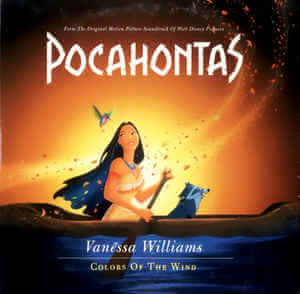
Colours Of The Wind - Alan Menken - Gavin Somerset
This moving title track from the Disney Film "Pocahontas" is, as you would expect from composer Alan Menken, a joy to listen to and can bring a whole cocktail of emotions. The film was Disney's first to be based on a real character and tells of the relationship between Pocahontas and Englishman John Smith. "Colours of the Wind" went on to win an Academy Award, a Golden Globe and a Grammy Award. Selling 2.3 million copies, if that wasn't enough, it also reached No.4 in the US Pop Charts, sung by Vanessa Williams. This heart-warming piece with an emotional climax belongs in every bands library .
In Stock: Estimated dispatch 1-3 working days
-
£29.50
Have Yourself A Merry Little Christmas - Hugh Martin & Ralph lane - Hannah Hawken
Some musical numbers require little introduction and the hit that is 'Have Yourself A Merry Little Christmas' has been entertaining audiences since its first appearance back in 1944. Original sung by Julie Garland in the MGM musical 'Meet Me In St. Louis', the song was later revised and re-recorded. It was this second incarnation that is the popular song that we know today. Christmas solos are a novelty and now, arranged by Hannah Hawkden, this lovely little number fits perfectly into any Christmas concert giving your band and audience something fresh this year.
In Stock: Estimated dispatch 1-3 working days
-
 £29.50
Icelandic Hymn - Thorkell Sigurbjornsson - Neil Brownless
Based on a poem written in 1208 by chieftain Kolbeinn Tumason on his death bed, the title translates as 'Hear, Smith of Heavens'. It has become one of the most popular hymns in Iceland and has recently been used in the TV series Handmaid's Tale. The music also went viral following an impromptu performance by a choir at a German train station, accumulating over 4 million views. This arrangement brings something totally different to your concerts with an atmospheric setting for brass band, featuring the flugel horn in the opening and closing bars over sung chords from the rest of the band.
In Stock: Estimated dispatch 1-3 working days
-
 £29.50
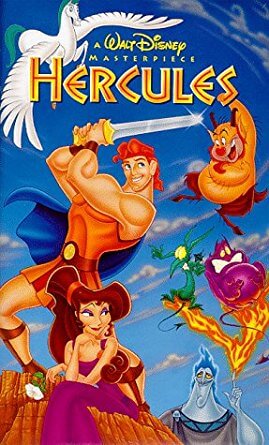
I Wont Say (I'm In Love) - Alan Menken - Richard Rock
A great piece to give the horn players of your band something to get stuck into. Music from the animated Disney film "Hercules" is based upon the Greek mythology (albeit, slightly altered to be suitable for children!) telling the story of Hercules. This piece is sung by Meg as she realizes she is falling in love with him. The music for the film by composer Alan Menken was nominated for an Academy award, however sadly, was released at the same time at "Titanic" where James Horner's score won instead. Now arranged by Richard Rock as a grand feature for your bands horn section, pleasing to play and to listen too.
In Stock: Estimated dispatch 1-3 working days
-
 £29.50
To Set The World Aglow - Andi Cook
The title "To Set The World Aglow" is a line taken from the core inspiration of the piece, the Carol 'Sweet Chiming Christmas Bells', to which the words to While Shepherds Watched are traditionally sung. With that as the inspiration, other bell-related carols are overlaid and interwoven to give a bright and jubilant setting that stands apart from a traditional Carol selection, providing an ideal Christmas concert opener full of surprises and great harmonies. For Christmas 2020, we have made backing tracks of this title for you to download. These can be used either for personal playback use, or to create a virtual performance of the piece with your full band. To download the backing track, please RIGHT CLICK HERE & Save As .
In Stock: Estimated dispatch 1-3 working days
-
 £69.99
Auld Lang Syne - Menno Haantjes
Whereas 'Auld Lang Syne' may be considered the best-known Scottish song ever, yet at the same time it is an obscure one, for there are but few people who know the complete text by heart. After the familiar 'Should auld acquaintance be forgot .....' many people take their refuge to lyrics like 'rum tee dum ta dee ..... lah, lah, lah ........... for auld lang syne'. Even in Scotland only a handful of persons know the entire text and are able to give a correct rendering of it. The current lyrics have been attributed to the Scottish poet Robert Burns. Burns, however, he did not write the whole poem : after he had heard an old man sing the centuries-old Scotchballad, he wrote it down and added a number of stanzas (1788). Historical research teaches us that the ballad served many purposes, both political and religious. Nowadays, 'Auld Lang Syne' is sung as a Christmas Carol and it is also sung on New Year's Eve at the turning of the year. Apart from that, though, the song is also sung on many other occasions sometimes with different lyrics, which usually have Love, Friendship and/or Parting as their themes, as these go well with the fascinating melody. In this arrangement a low-sounding solo instrument is central. The harmonization in the accompaniment fits in perfectly with the sentiments this song will evoke. Should auld acquaintance be forgot And never brought to mind? Should auld acquintance be forgot. And days of auld lang syne? For auld lang syne, my dear, For auld lang syne, We'll take a cup of kindness yet, For auld lang syne.
Estimated dispatch 5-14 working days
-
 £76.99
Variations on Shalom Chaverim - Andreas Ludwig Schulte
Shalom Chaverim is an ancient Hebrew (farewell)song, which was originally sung at the end of a celebration or meeting. It was and is mostly sung as a round. Freely translated the words mean "Goodbye, friends, goodbye and see you again!". The varying moods at a parting have been captured very well by Andreas Schulte in his arrangement 'Variations on Shalom Chaverim'. The composer himself says about the song, 'Although the melody is in a minor key, the overall atmosphere in the song is positive. one wishes each other all the best. Saying goodbye, however, also hurts. When you slow down the pace of the melody and add 'blue notes' in the harmonies, this can be sensed immediately.'Schulte refers here to the first variation. The second variation is very intense with possibly even deeper-felt emotions. 'Variations on Shalom Chaverim' ends on a cheerful and positive note, in fast tempo, and with oriental elements in the melody: 'L'hitra'ot, Shalom' (See you again, and farewell!).
Estimated dispatch 5-14 working days
-
 £60.99
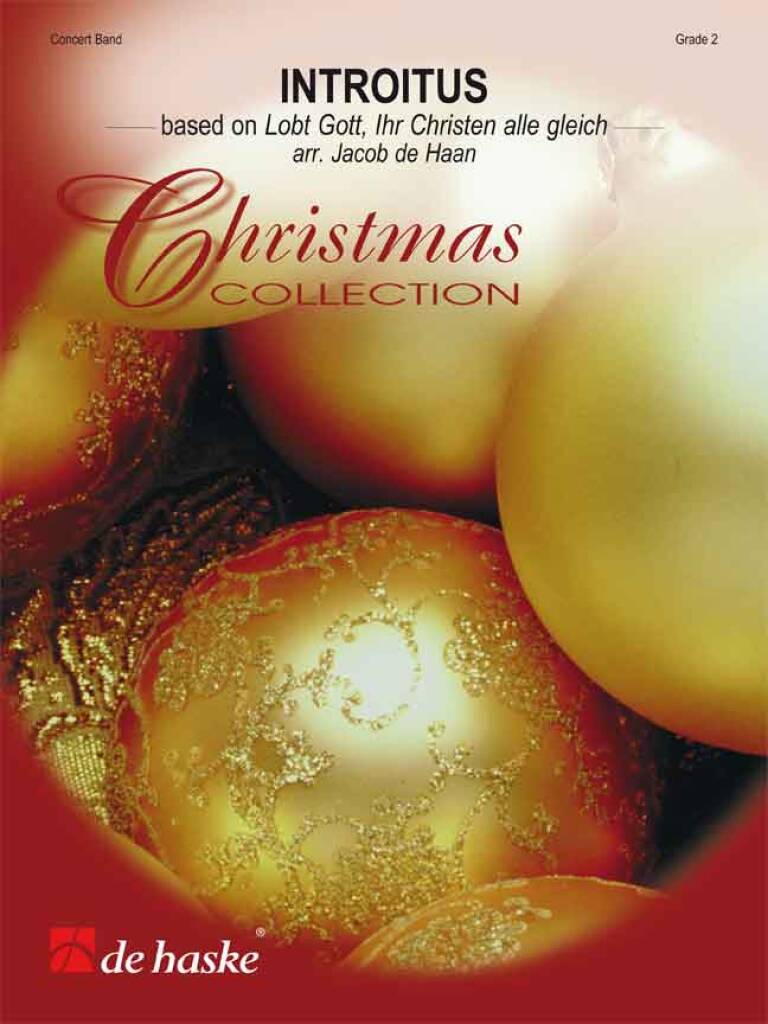
Introitus - Traditional - Jacob de Haan
The Latin word "Introitus" means 'entry'. Originally, this was a psalm sung to accompany the entrance of a bishop, priest or celebrant into the church. Later it was incorporated into the mass with alternating sung and spoken text, reflecting the mood of the liturgy. Jacob de Haan's Introitus, in which he has arranged the hymns Puer natus est nobis and Lobt Gott, Ihr Christen alle gleich, is a wonderful introduction to the Christmas season and can be performed with any instrumental combination with mixed choir and organ ad libitum.
Estimated dispatch 5-14 working days
-
 £58.70
Into the Unknown - From Frozen II - Kristen Anderson-Lopez - Haakon Esplo
Composers Kristen Anderson-Lopez and Robert Lopez have once again written music for Disneys sequel film Frozen II after great success in 2013 with Frozen.Many will probably remember Let it Go which became a big hit from this movie.The new movie continue to follow the main character Elsa, who sings her amazing musical number "Into the Unknown" in Frozen II. The song describes Elsa's inner conflict of choice to leave Arendelle or trace the source of a mysterious voice she continues to hear.The song is originally sung by Idina Menzel and the Norwegian artist Aurora and has elements and motifs inspired by Scandinavian herding calls. As always, the music is both magnificent and captivating and will surely be a hit for many years to come.
Estimated dispatch 5-14 working days
-
 £105.20
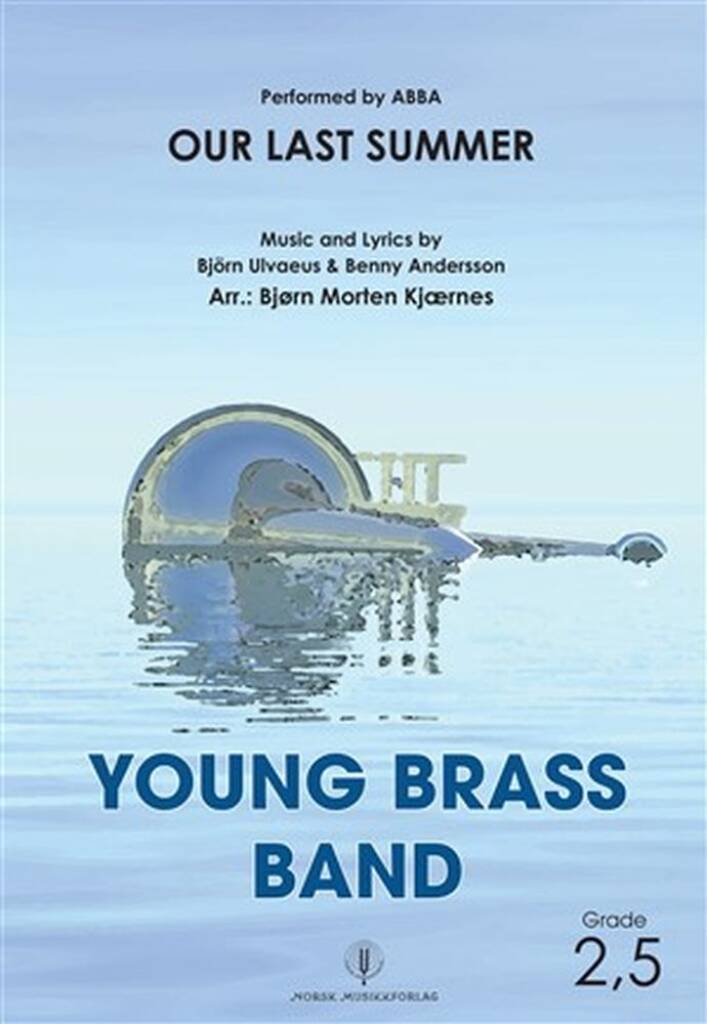
Our Last Summer - Benny Andersson - Bjørn Morten Kjærnes
An exciting arrangement where almost all players have a bit of the melody line. There are many opportunities to give individual musicians soloistic challenges. Any bandmember should find something interesting in this piece. It will be possible to add vocals to the arrangement. A lovely melody with great expressions.Our Last Summer" is a song by the Swedish pop group ABBA from their seventh studio album, "Super Trouper," released in 1980. The song is indeed featured in the musical "Mamma Mia!", a little bit shortened and with small changes in the lyrics. The musical premiered in London's West End in 1999 and is a duet performed by the characters Harry Bright and Donna Sheridan, reflecting on their past romance during a summer spent in Paris.The song is primarily sung by Bjorn Ulvaeus, with backing vocals provided by Agnetha Faltskog and Anni-Frid Lyngstad, the female members of ABBA. Their harmonies contribute to the song's nostalgic and wistful atmosphere. The lyrics vividly describe the memories of the summer spent together, including scenes of walking along the Seine River in Paris and listening to French songs. The song also touches on the passage of time and the realization that the summer romance has ended.While not released as an official single in most countries, "Our Last Summer" still received considerable airplay and became a fan favorite. It charted in some European countries and has remained popular among ABBA fans over the years.
Estimated dispatch 5-14 working days
 View Music