
Results
-
 £60.99
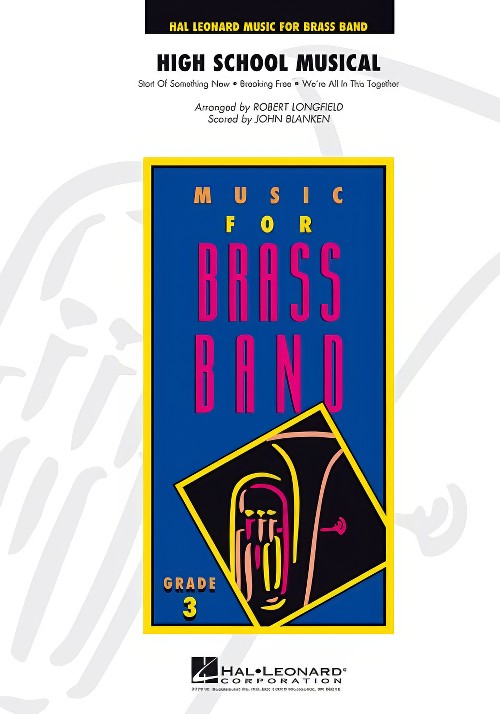
High School Musical (Brass Band - Score and Parts) - Blanken & Longfield
The music is full of energy and emotion and has been an essential part of the films success. This fun-filled medley features three songs from the original film:Start of Something NewBreaking FreeWe're All in This TogetherDuration: 6:15
Estimated dispatch 7-14 working days
-
 £69.99
Christmas Fantasy (Brass Band with Optional Choir - Score and Parts) - De Haan, Jan
Christmas Fantasy is a fantastic medley by Jan de Haan which features some of the best-known songs from the Christmas season.Includes:Es ist ein Ros' entsprungenO Little Town of BethlehemOnce in Royal David's CityHark! The Herald Angel's SingGod Rest Ye Merry GentlemenGood King WenceslasEnglish and Dutch choral parts are also availble for this work.Duration: 9.00
Estimated dispatch 7-14 working days
-
 £44.95
Catnap (from Cats Tales) (Trombone Solo with Brass Band - Score and Parts) - Graham, Peter
Catnap?is part of Cats Tales which pays tribute to four wonderful musicians who shared a love of jazz and New York City. New York born George Gershwin provides the inspiration for?Catnap?which is a jazz "contrafact" treatment of one of his most familiar songs. (Features solo trombone).
Estimated dispatch 7-14 working days
-
 £115.60
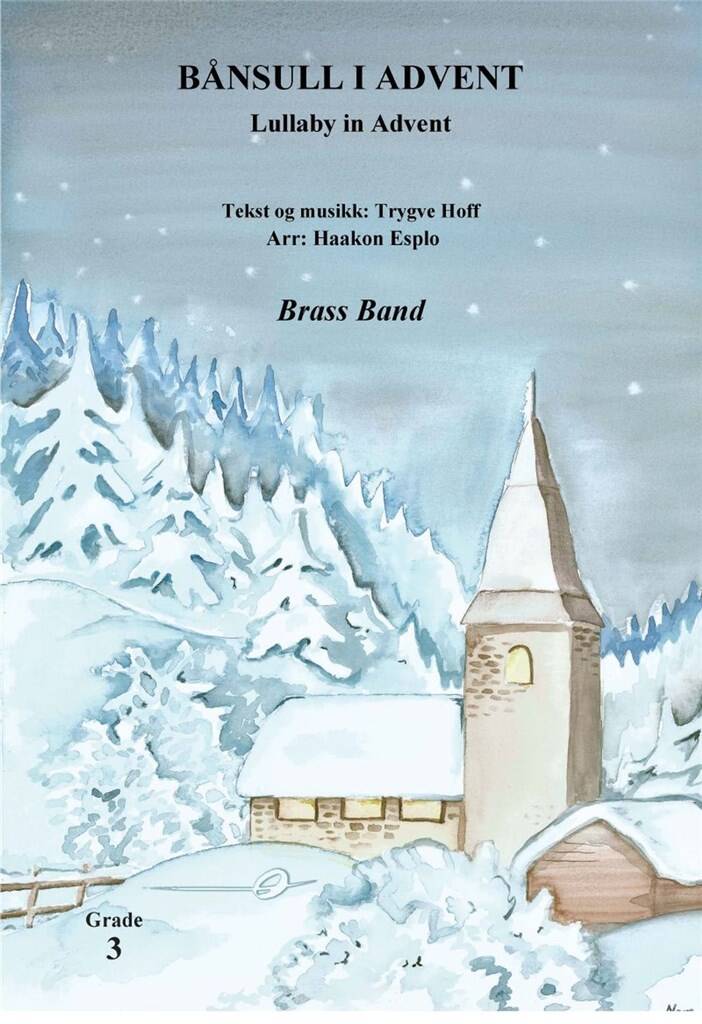
Bansull i advent - Trygve Hoff - Haakon Esplo
The composer and musician Trygve Hoff was born and raised at Rognan in Nordland and gained a lot of inspiration for his texts from the North Norwegian culture. He is a composer and copywriter of many of our most popular songs. "Ei hand a holde i" and "Har en drom" with music by Svein Gundersen and especially his own "North Norwegian Christmas Psalm" are famous songs in Norway. "Lullaby in advent" may not be among his most famous songs, but it's a beautiful and thoughtful melody that will fit well with any Christmas concert. Hoff himself varied with musical styles on this song. This arrangement is written as a jazz-version with swing feel.
Estimated dispatch 5-14 working days
-
 £105.20
A Dream is a Wish Your Heart Makes - David Mack - Haakon Esplo
Music has always been of great importance in Disney's magical world. The instrumental music and songs of the animated feature films provide a unique background and magic to any Disney story. Every Christmas, many families gather to watch the fascinating story of Cinderella who eventually gets her prince. One of the most beautiful songs from this movie is A dream is a wish your heart makes.,br> This Young Band arrangement is written with simple 2nd parts and some 1st parts challenges. It will surely be a hit in your next Christmas concert.
Estimated dispatch 5-14 working days
-
 £109.99
Nordic Moods - Tom Brevik
The composer:1st movement: Reflections by the Fjord.Overlooking one of the mighty fjords of Norway, my mind and thoughts are with an old religious Norwegian folk-tune, with words by the famous parson Peter Dass.The majestic fanfare-likeopening reflects the power of God our Father, the choral itself heard for the first time on flugelhorn. The choral is repeated a few times, separated only by some short variations. The movement ends in thriumph, with fanfares and the choral broughttogether.2nd movement: Reflections in the Old Church.In this movement my associations of a summer day, finding myself alone in an old deserted stone church. From the old walls I hear folk songs, perhaps like the ones sung in the church bypoor fishermen and farmers in days gone by. Suddenly the light from the sun breakes through the small circular window above the altar, and a lovely melody is heard, before the original figures take us to the end of the movement.3rd movement:Festive Reflections.Any festive occasion can be reflected in this movement. from the bonfire at midsummer-night to the children celebrating the return of the sun in the northern part of Norway. from the traditional sleigh-riding at Christmas tothe Celebrations of the National Day on the 17th of May each year.
Estimated dispatch 5-14 working days
-
 £84.99
Let Me Entertain You - Don Campbell
This is a must-play item for any light concert programme. Robbie Williams is currently considered to be the king of pop, with his massive hit Angels being voted the number one song in many charts of all time greatest pop songs. He appeals to an extremely diverse audience ensuring every person at your concert will leave singing the songs from this superb work.
Estimated dispatch 5-14 working days
-
 £69.99
A Flemish Christmas - Jan Hadermann
In A Flemish Christmas, Jan Hadermann tells the Christmas story by means of four Old Flemish Christmas Songs.Mary is chosen to bring Jesus Christ, the son of God, into the world: Het was een maged uitverkoren ('She was a virgin chosen').On the occasion of a census, Mary, who is with child, and Joseph, her husband to be, travel from Nazareth to Bethlehem, where Jesus will be born in a humble stable: Maria die zoude naar Bethlehem gaan (Mary would go to Bethlehem').O kerstnacht, schoner dan de dagen ('Oh Christmas Night, more beautiful than the days') is a stately chorale that sings the praises of Jesus' birth.Three wise men from the East, Caspar,Melchior and Balthazar, follow a bright star in the sky, which leads them to Bethlehem. There, they worship the newborn King, and offer him gold, frankincense and myrrh: Wij komen van Oosten (We've come from the East').This musical Christmas story ends with a festive repeat of the third movement, the stately chorale.
Estimated dispatch 5-14 working days
-
 £159.99
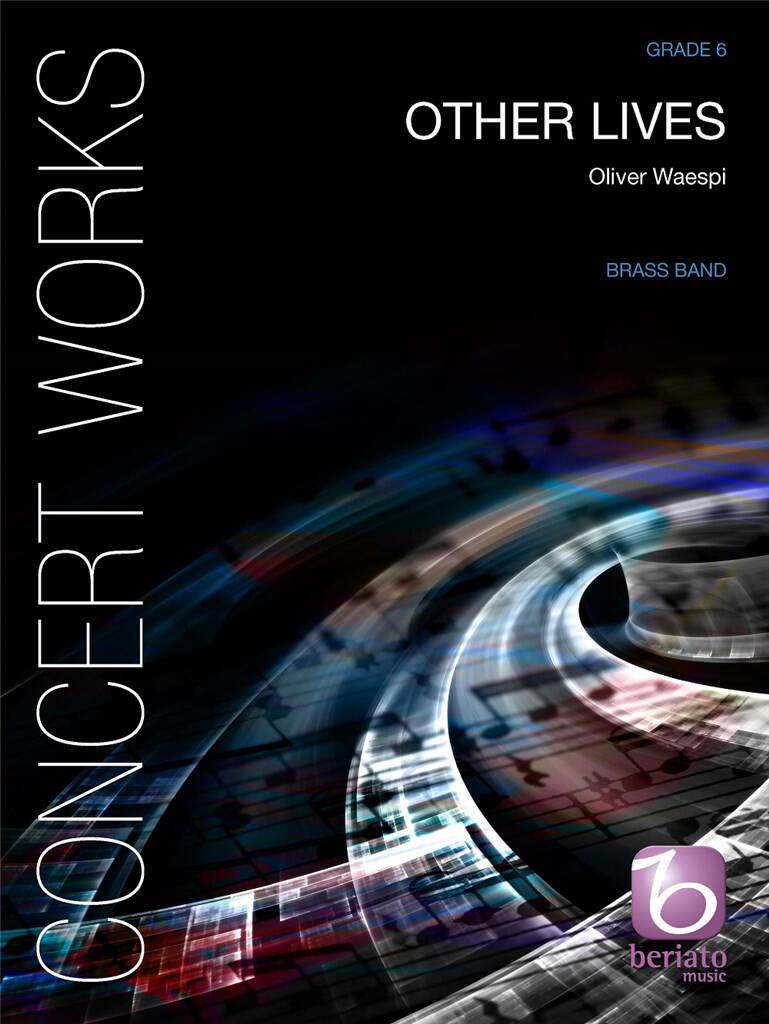
Other Lives - Oliver Waespi
Other Lives is works perfectly for a competition but can also be programmed as concert work. The dark chords at the beginning of the piece are derived from "Der Doppelganger", one of Franz Schubert's late songs. After a short development the music begins to accelerate and find its own shape, gradually moving away from the introduction. The entire first part, "Rage", has an intensely agitated character. The ensuing "Reflection" turns back to the initial chord progression, before a series of interspersing solos explore time and space at a slower pace. After another musical surge, the music is brought close to silence and then gives way to the third part, "Redemption".Here, a widely spaced sound field contains a remote allusion to another work by Schubert "Ruckblick". After this farewell, an abstract musical transformation triggers an emotional change, as the initial motifs are now presented in their inversed form in order to create a much brighter harmonic landscape. Moreover, in the last part of the piece, "Renewal", the grim, tense atmosphere of the first part is transformed into a great energy. Other Lives was commissioned by the Valaisia Brass Band.
Estimated dispatch 5-14 working days
-
 £54.99
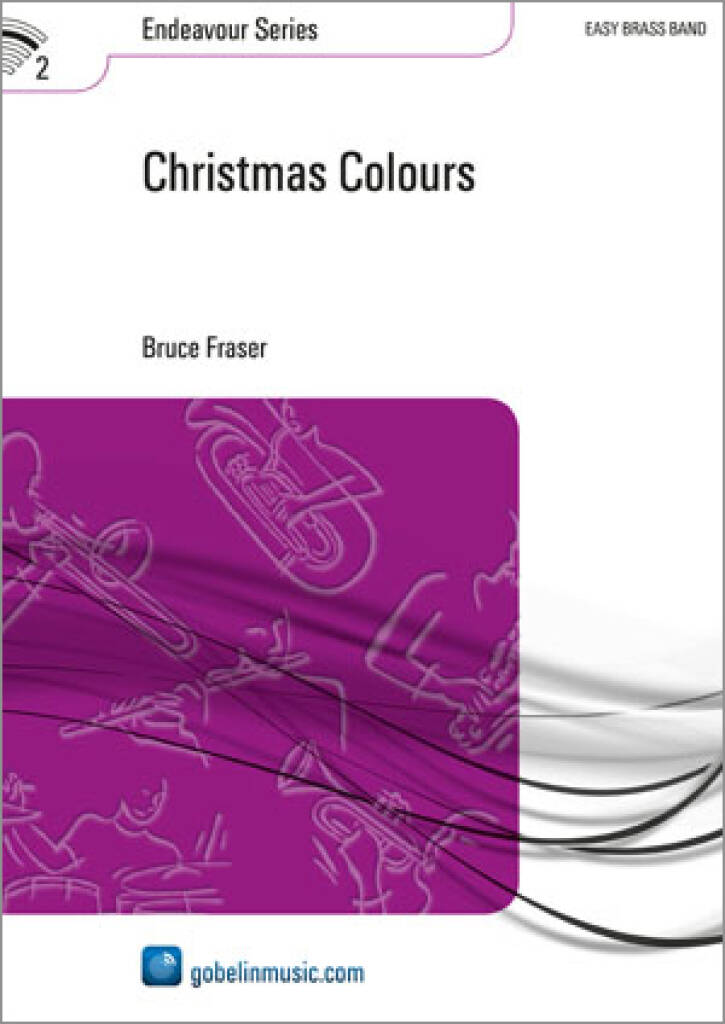
Christmas Colours - Bruce Fraser
'Christmas Colours' is a palette consisting of several Christmas songs. Bruce Fraser has mainly used the colours green (the colour of holly) and white (the colour of snow). This composition begins with the chiming of festive bells - if you listen well, however, you can already hear short fragments from 'The Holly and the Ivy', whose entire melody is finally played, alternated with 'The Sussex Carol'. After this, the pace slows down and the stately 'See amid the Winter Snow' sounds, but parts from 'Jingle Bells' and 'Silent Night' can also be heard. Then, after walking under 'The Holly and the Ivy' once again, the celebration of Christmas may begin!
Estimated dispatch 5-14 working days
 View Music