
Results
-
 £60.99
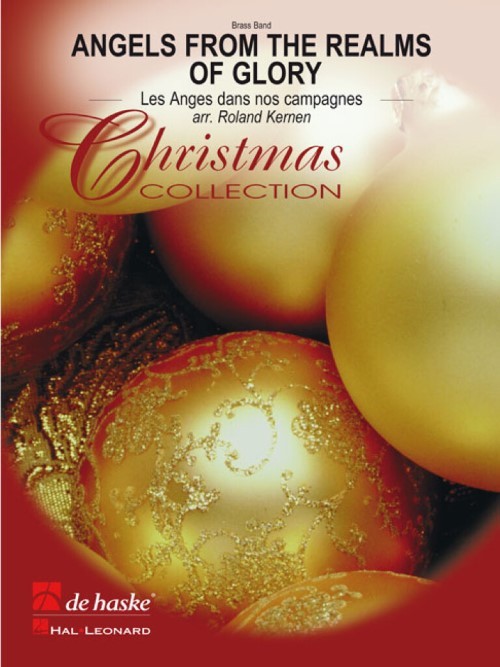
Angels from the Realms of Glory (Brass Band - Score and Parts) - Kernen, Roland
The title of this clever arrangement reveals the Christmas song it is based on. The melody can be traced back to a French folksong from the 18th century which is now known around the world. In France it is called Les anges dans nos campagnes, in Germany it is most widely known as Engel auf den Feldern singen and in England it was originally called Angels From the Realms of Glory but it often known as Angels We Have Heard on High. Everyone will rejoice upon hearing the Gloria in excelsis Deo refrain!Duration: 5:45
Estimated dispatch 7-14 working days
-
 £29.95
A Joy Untold (Euphonium Solo with Brass Band - Score and Parts) - Camsey, Terry
This short, light-hearted solo has been described as The Salvation Army's answer to 'The flight of the bumble bee' and requires facility from the soloist and accurate accompaniment from the band. The solo opens and closes with whimsical references to Erik Leidzen's famous euphonium solo 'The Song of the Brother' and includes the tunes 'A robe of white' and 'I'll serve Thee'.
Estimated dispatch 7-14 working days
-
£14.95
A Joy Untold (Euphonium Solo with Brass Band - Score only) - Camsey, Terry
This short, light-hearted solo has been described as The Salvation Army's answer to 'The flight of the bumble bee' and requires facility from the soloist and accurate accompaniment from the band. The solo opens and closes with whimsical references to Erik Leidzen's famous euphonium solo 'The Song of the Brother' and includes the tunes 'A robe of white' and 'I'll serve Thee'.
Estimated dispatch 7-14 working days
-
£59.99
Over the Rainbow (Eb or Bb Cornet Solo with Brass Band - Score and Parts) - Arlen & Harburg - Morrison, Alan
Recently voted the greatest family film of all time the classic Wizard of Oz is one film that everybody knows. The film theme was re-invigorated with the release in 2004 of a new version by the relatively unknown Australian vocalist, Eva Cassidy. Unfortunately Eva Cassidy is no longer with us but this song will give generations of new music listeners an insight into her amazing vocal abilities and talent. The world-renowned Cornet soloist, Alan Morrison, has taken the Eva Cassidy version and crafted a wonderful Cornet solo in this award-winning arrangement. A wonderful chance to showcase either your Bb or Eb Cornet soloist in a work guaranteed to have your audiences in awe.
Estimated dispatch 7-14 working days
-
 £49.99
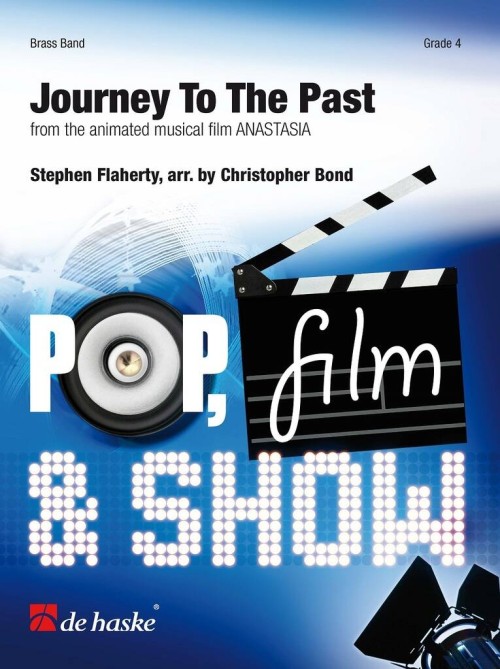
Journey to the Past (from Anastasia) (Brass Band - Score and Parts) - Flaherty, Stephen - Bond, Christopher
Step into an enchanting world of nostalgia with the compelling sounds of Journey To The Past, a wonderful little gem by Stephen Flaherty, magically arranged for brass band by Christopher Bond. This song, originally composed for the popular animated film Anastasia, tells a story of hope, discovery and finding one's true self. The warm brass band sounds add a new dimension, infusing each note with emotion and passion.Duration: 3.15
Estimated dispatch 7-14 working days
-
£44.95
Some Glad, Sweet Day (Euphonium Solo with Brass Band - Score and Parts) - Tovey, Bernard - Tovey, Bramwell
This solo was originally the work of Bramwell Tovey's father Bernard Tovey, himself a fine Euphonium player. Bramwell Tovey has?developed and gathered the original material and presented it for Euphonium Soloist, Derick Kane, to feature with the National?Youth Brass Band of Great Britain in 2015. It employs the old song of the same title and provides a good challenge for the soloist.
Estimated dispatch 7-14 working days
-
£22.50
Some Glad, Sweet Day (Euphonium Solo with Brass Band - Score only) - Tovey, Bernard - Tovey, Bramwell
This solo was originally the work of Bramwell Tovey's father Bernard Tovey, himself a fine Euphonium player. Bramwell Tovey has?developed and gathered the original material and presented it for Euphonium Soloist, Derick Kane, to feature with the National?Youth Brass Band of Great Britain in 2015. It employs the old song of the same title and provides a good challenge for the soloist.
Estimated dispatch 7-14 working days
-
 £54.99
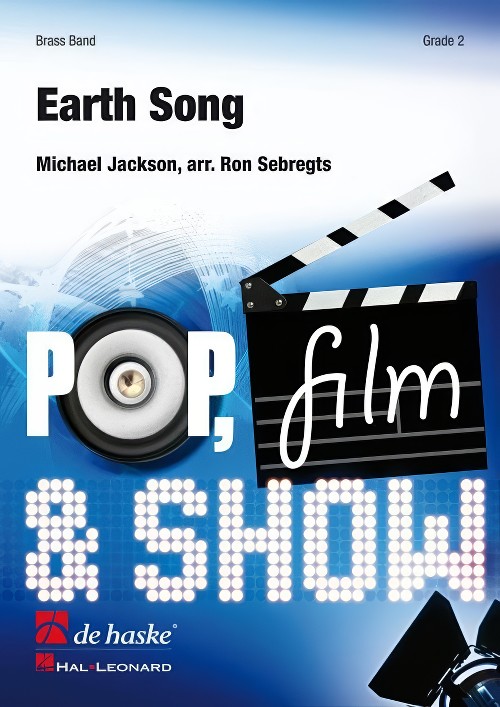
Earth Song (Brass Band - Score and Parts) - Jackson, Michael - Sebregts, Ron
Michael Jackson, the King of Pop, died in Los Angeles on June 25th 2009. He can without any shadow of a doubt be compared with artists such as Elvis Presley, Jimi Hendrix, and John Lennon - all of them musicians who will never die in the hearts of their fans. Why not keep the legend of Michael Jackson alive in your next concert with this hit from Michael Jackson's repertoire arranged for Brass Band.Duration: 3:40
Estimated dispatch 7-14 working days
-
 £47.50
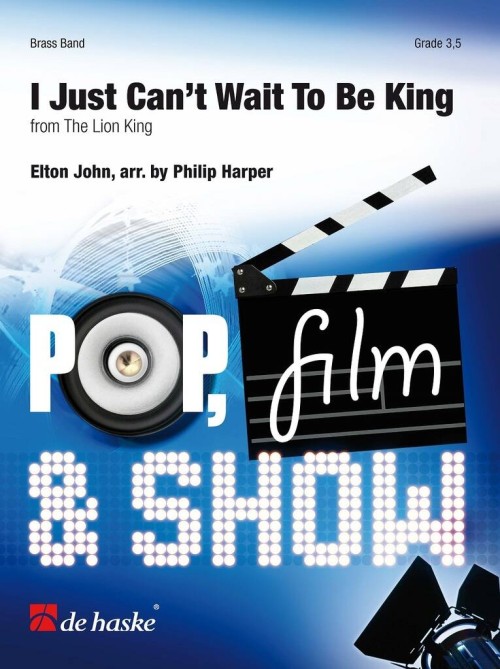
I Just Can't Wait to be King (from The Lion King) (Brass Band - Score and Parts) - John, Elton - Harper, Philip
The showstopper 'I Just Can't Wait To Be King' from The Lion King is still relevant after almost thirty years, especially now that British Prince Charles, following seven decades of waiting, was finally crowned King Charles III in 2023. All in all, this was reason enough for Philip Harper to write a dazzling brass band arrangement of this song that is perfectly suitable as a concert encore.Duration: 2.30
Estimated dispatch 7-14 working days
-
 £15.99
Tis the Last Rose of Summer (Flugel Horn Solo with Brass Band - Score and Parts) - Westwood, Gary
It is often thought that 'Tis the Last Rose of Summer came from the Victorian era, when Irish songs were very popular. However this was first published in 1813 and has been adapted and arranged by many composers and arrangers over the years. This arrangement, as a Flugel Horn solo, by Gary Westwood reveals the tenderness in this wistful love song. Suitable for Advanced Youth/3rd Section Bands and above. Duration: 5.00
Estimated dispatch 7-14 working days
 View Music