
Results
-
 £54.20
AT THE DROP OF A HAT (The Music of Flanders and Swann) (Brass Band) - Flanders & Swann - Smith, Sandy
Includes: The Gasman Cometh; The Slow Train; The Wompom; The Hippopotamus Song (featuring basses). Grade: Medium
Estimated dispatch 7-14 working days
-
 £45.00
I SEE THE LIGHT (from Tangled) (Brass Band) - Barry, Darrol
This beautiful song is taken from Pixar's animated feature?Tangled. The opening section features the solo horn against a light accompaniment. The music builds to a change of key where the melody moves over to the euphoniums and baritones. This is a useful concert item and playable by all levels of bands. Grade: 4th section +. Duration: 3:44
Estimated dispatch 7-14 working days
-
 £60.99
The Tears of a Clown (Brass Band - Score and Parts)
Stevie Wonder wrote The Tears of a Clown in 1966 and gave it to Smokey Robinson as a Christmas gift. Robinson and his band, The Miracles, turned the song into a massive hit. The songs steam-organlike sounds gives it a very unique characteristic and over the years has been recorded by numerous artists. Now you can also record it with your brass band! 02:50
Estimated dispatch 7-14 working days
-
£44.95
For the World (Brass Band - Score and Parts) - Creamer, Sam
Originally written for the Melbourne Staff Band 125th Anniversary, this developed work features many genres of music but keeps as?its central theme the song 'The World for God'. This is bright and abounds in energy throughout. Other tunes featured are 'Christ?for the world we sing', 'He's got the whole world' (in a 'Dixieland' style) and 'Christ for the whole world' (in a 'Swing' style).
Estimated dispatch 7-14 working days
-
£22.50
For the World (Brass Band - Score only) - Creamer, Sam
Originally written for the Melbourne Staff Band 125th Anniversary, this developed work features many genres of music but keeps as?its central theme the song 'The World for God'. This is bright and abounds in energy throughout. Other tunes featured are 'Christ?for the world we sing', 'He's got the whole world' (in a 'Dixieland' style) and 'Christ for the whole world' (in a 'Swing' style).
Estimated dispatch 7-14 working days
-
 £38.00
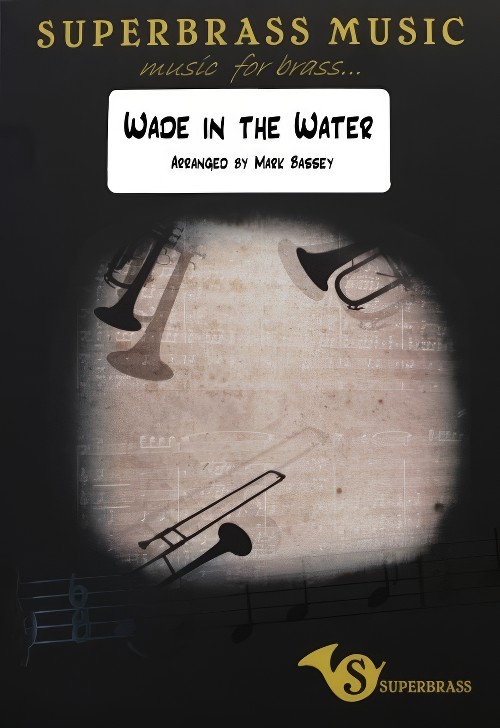
Wade in the Water (Bass Trombone Solo with Brass Band - Score and Parts) - Bassey, Mark
A Bass Trombone feature, "Wade in the Water" is a Negro Spiritual. The song relates to both the old and new testaments and reflects the Israelites escape out of Egypt, There is a popular belief that Wade in the Water contained explicit instructions to fugitive slaves on how to avoid capture. In this arrangement, Mark Bassey has been influenced by Norman Symmons fine arrangement for the Johnny Griffin orchestra and was recorded by Superbrass on their "Brass Taps" CD with Andy Wood as soloist. Duration: 5.00. Suitable for 2nd Section Bands and above.
Estimated dispatch 7-14 working days
-
 £38.00
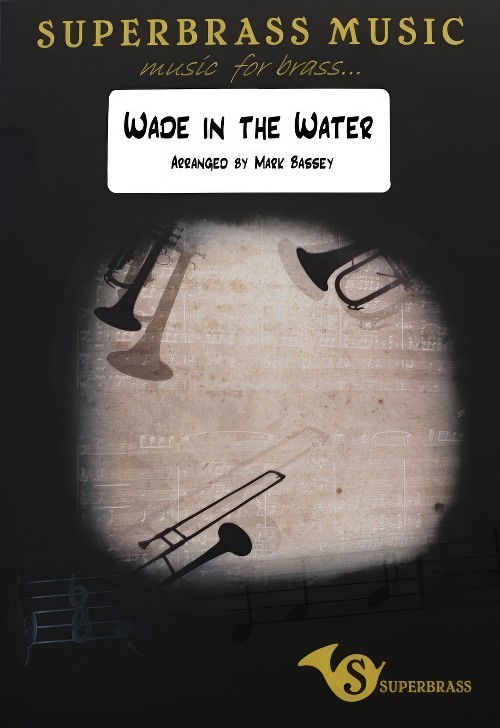
Wade in the Water (Euphonium Solo with Brass Band - Score and Parts) - Bassey, Mark
A Euphonium feature, "Wade in the Water" is a Negro Spiritual. The song relates to both the old and new testaments and reflects the Israelites escape out of Egypt, There is a popular belief that Wade in the Water contained explicit instructions to fugitive slaves on how to avoid capture. In this arrangement, Mark Bassey has been influenced by Norman Symmons fine arrangement for the Johnny Griffin orchestra and was recorded by Superbrass on their "Brass Taps" CD with Andy Wood as soloist. Duration: 5.00. Suitable for 2nd Section Bands and above.
Estimated dispatch 7-14 working days
-
 £60.99
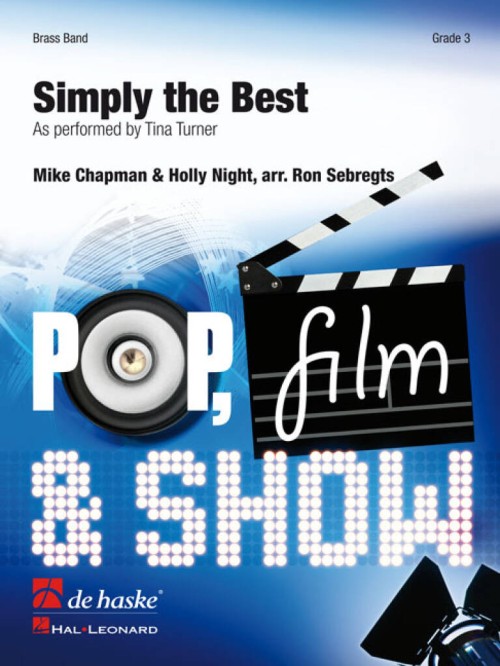
Simply the Best (Brass Band - Score and Parts) - Chapman & Knight - Sebregts, Ron
Simply the Best was first performed by the little known Bonnie Tyler in 1988, but did not gain wide-spread popularity until Tina Turner recorded it barely one year later. The song has become one of Tina Turner's all time greatest hits and is a favourite around the world when something needs celebrating. Ron Sebregts' arrangement really rocks and will make sure your next concert is Simply the Best!Duration: 3.00
Estimated dispatch 7-14 working days
-
£44.95
Canadian Folk Song Suite (Brass Band - Score and Parts) - Calvert, Morley
This suite of three movements (fast, slow, fast) features traditional Canadian folk tunes;1. Marianne s'en va-t-au moulin (Quebec) is full of fanfares and humorous touches.2. She's like the Swallow (Newfoundland) is both elegant and poignant.3. J'entends le moulin (Quebec) is a light-hearted 'moto perpetuo' which gathers pace and energy towards the whirlwind close.
Estimated dispatch 7-14 working days
-
£22.50
Canadian Folk Song Suite (Brass Band - Score only) - Calvert, Morley
This suite of three movements (fast, slow, fast) features traditional Canadian folk tunes;1. Marianne s'en va-t-au moulin (Quebec) is full of fanfares and humorous touches.2. She's like the Swallow (Newfoundland) is both elegant and poignant.3. J'entends le moulin (Quebec) is a light-hearted 'moto perpetuo' which gathers pace and energy towards the whirlwind close.
Estimated dispatch 7-14 working days
 View Music