
Results
-
 £82.95
EUPHONIUM CONCERTO No.1 (Sparke) (Brass Band - Score and Parts) - Sparke, Philip
This concerto has its origins in a concerto for horn and brass band, commissioned by the River City Brass Band (Pittsburgh) in 1992.It was composed at the request of British euphonium virtuoso, Steven Mead, and first performed by him with the Breeze Brass Band in Osaka, Japan, in 1995.In conventional three-movement form, performed without a break, the concerto covers the panoply of the euphonium's range and character. The first movement is marked Moderato e energico and is rhythmically energetic in style with many meter changes and much syncopation. Only in the central section does the soloist relax in cantabile mood.The second movement opens with tuned percussion taking centre stage, laying for the foundations for a long cantilena from the soloist in resigned mood, but with a touch of optimism. After a central climax for the band, this melody returns, with soloists from the band answering in counterpoint. The finale is a 6/8 romp in caccia style (betraying its origins as a piece for horn). Again, the central section is more legato in mood, though the band keeps the eighth-note figures present throughout. The movement ends in a bravura display from the soloist.
Estimated dispatch 7-14 working days
-
£44.95
EUPHONIUM CONCERTO No.1 (Sparke) (Brass Band - Score only) - Sparke, Philip
This concerto has its origins in a concerto for horn and brass band, commissioned by the River City Brass Band (Pittsburgh) in 1992.It was composed at the request of British euphonium virtuoso, Steven Mead, and first performed by him with the Breeze Brass Band in Osaka, Japan, in 1995.In conventional three-movement form, performed without a break, the concerto covers the panoply of the euphonium's range and character. The first movement is marked Moderato e energico and is rhythmically energetic in style with many meter changes and much syncopation. Only in the central section does the soloist relax in cantabile mood.The second movement opens with tuned percussion taking centre stage, laying for the foundations for a long cantilena from the soloist in resigned mood, but with a touch of optimism. After a central climax for the band, this melody returns, with soloists from the band answering in counterpoint. The finale is a 6/8 romp in caccia style (betraying its origins as a piece for horn). Again, the central section is more legato in mood, though the band keeps the eighth-note figures present throughout. The movement ends in a bravura display from the soloist.
Estimated dispatch 7-14 working days
-
£60.99
Horns Enjoying Themselves (Brass Band - Score and Parts) - Moren, Bertrand
This composition highlights the tenor horns. Long understated and unfairly relegated to the accompaniment, the tenor horn has gained prominence in the brass band during recent years.Horns Enjoying Themselves is an entertaining piece that will delight performers and audience alike. The first part is inspired by circus, with playful themes featuring humorous dissonances. The second part is a slow and calm journey through the mellow and luminous sound colours of the tenor horn. The third and last movement opens with a cadenza played by the soloists (alone). Written in triple time, it showcases the technical skills of the soloists.Duration: 4:45
Estimated dispatch 7-14 working days
-
 £84.95
Purcell Variants (Brass Band - Score and Parts) - Meechan, Peter
Purcell Variants is based on Purcell's Queen Mary's Funeral Music, which consists of four canzonas (for brass), two elegies and an anthem.The first movement begins by sounding some of Purcell's original music in the trombones, underpinned by a timpani roll with the cornets articulating the beginnings and endings of the phrases. This leads into a cadenza for cornet and horn before the movement heads in different directions, leading us to its mysterious end, where the original music is sounded this time in the 'stabs' of the muted cornets.Originally composed for the funeral of Queen Mary in 1695, Purcell's original funeral music was used later that same year for Purcell's own funeral - he died aged only 34. The second movement is an elegy, inspired by this story. After an introduction (started by cornets sounding a last post), the main melody of the movement is introduced by the solo euphonium, with other solo roles for an off-stage soprano cornet, and trombone. This is then taken over by the cornets who lead us into the middle section of the movement. This is a quasi-funeral march, inspired by the image of Purcell's coffin being taken to its final resting point. The main melody returns in the euphonium, flugel horn and soprano cornet, this time more elaborated. The movement ends with a snare drum fading away - perhaps a metaphor. The Finale is a fast and furious movement combining thematic material from the two previous movements with new rhythmical ideas. This takes us through to the final passage - the triumphant return of Purcell's original theme.Duration: 13.00
Estimated dispatch 7-14 working days
-
 £15.99
A Road Less Travelled By (Brass Band - Study Score) - Sparke, Philip
A Road Less Travelled By was commissioned by Palangos Orkestras for the Championship Section of the 2020 European Brass Band Championships held in Palanga, Lithuania.The following was written by the composer, Philip Sparke:The title alludes to a poem by American author, Robert Frost, which appeared in his 1916 collection, Mountain Intervals: The Road Not Taken.In common with most of my larger works, this piece in not programmatic, but purely abstract; there is no extrinsic musical story. The choice of title shares my view of how composers can often develop. There can be no 'destination' in a composer's career, but rather a continuing journey to an unknown place. From piece to piece a composer needs to decide his or her next steps, never really knowing where they might lead. As Frost so eloquently describes, these sorts of instinctive decisions guide all our lives.Set in three movements, which play without a break, A Road Less Travelled By opens with a Moto Perpetuo firmly rooted in classical language, form and syntax. A continuous river of semiquavers, veering from melody to accompaniment and back again, adds drive, every and motion. The second movement, Nocturne, is in the form of a free fantasia; solos for vibraphone, flugel horn and euphonium set the stage for a central cornet solo, quietly echoed by the full band. A triumphal climax is reached before the movement dissolves into a Scherzo Finale. Mercurial and quixotic in nature, this third movement starts jovially until trios for trombones and horns darken the atmosphere. A change of mood and meter leads to a reprise of the opening and a return of the cornet melody, this time accompanied by figures derived from the scherzo theme. A brief coda based on earlier material drives the piece to a close.Duration: 15.30
Estimated dispatch 7-14 working days
-
£154.99
A Road Less Travelled By (Brass Band - Score and Parts) - Sparke, Philip
A Road Less Travelled By was commissioned by Palangos Orkestras for the Championship Section of the 2020 European Brass Band Championships held in Palanga, Lithuania.The following was written by the composer, Philip Sparke:The title alludes to a poem by American author, Robert Frost, which appeared in his 1916 collection, Mountain Intervals: The Road Not Taken.In common with most of my larger works, this piece in not programmatic, but purely abstract; there is no extrinsic musical story. The choice of title shares my view of how composers can often develop. There can be no 'destination' in a composer's career, but rather a continuing journey to an unknown place. From piece to piece a composer needs to decide his or her next steps, never really knowing where they might lead. As Frost so eloquently describes, these sorts of instinctive decisions guide all our lives.Set in three movements, which play without a break, A Road Less Travelled By opens with a Moto Perpetuo firmly rooted in classical language, form and syntax. A continuous river of semiquavers, veering from melody to accompaniment and back again, adds drive, every and motion. The second movement, Nocturne, is in the form of a free fantasia; solos for vibraphone, flugel horn and euphonium set the stage for a central cornet solo, quietly echoed by the full band. A triumphal climax is reached before the movement dissolves into a Scherzo Finale. Mercurial and quixotic in nature, this third movement starts jovially until trios for trombones and horns darken the atmosphere. A change of mood and meter leads to a reprise of the opening and a return of the cornet melody, this time accompanied by figures derived from the scherzo theme. A brief coda based on earlier material drives the piece to a close.Duration: 15.30
Estimated dispatch 7-14 working days
-
£36.50
A Road Less Travelled By (Brass Band - Score only) - Sparke, Philip
A Road Less Travelled By was commissioned by Palangos Orkestras for the Championship Section of the 2020 European Brass Band Championships held in Palanga, Lithuania.The following was written by the composer, Philip Sparke:The title alludes to a poem by American author, Robert Frost, which appeared in his 1916 collection, Mountain Intervals: The Road Not Taken.In common with most of my larger works, this piece in not programmatic, but purely abstract; there is no extrinsic musical story. The choice of title shares my view of how composers can often develop. There can be no 'destination' in a composer's career, but rather a continuing journey to an unknown place. From piece to piece a composer needs to decide his or her next steps, never really knowing where they might lead. As Frost so eloquently describes, these sorts of instinctive decisions guide all our lives.Set in three movements, which play without a break, A Road Less Travelled By opens with a Moto Perpetuo firmly rooted in classical language, form and syntax. A continuous river of semiquavers, veering from melody to accompaniment and back again, adds drive, every and motion. The second movement, Nocturne, is in the form of a free fantasia; solos for vibraphone, flugel horn and euphonium set the stage for a central cornet solo, quietly echoed by the full band. A triumphal climax is reached before the movement dissolves into a Scherzo Finale. Mercurial and quixotic in nature, this third movement starts jovially until trios for trombones and horns darken the atmosphere. A change of mood and meter leads to a reprise of the opening and a return of the cornet melody, this time accompanied by figures derived from the scherzo theme. A brief coda based on earlier material drives the piece to a close.Duration: 15.30
Estimated dispatch 7-14 working days
-
 £84.99
Festivus Americas (Brass Band - Score and Parts) - Bulla, Stephen
Dedicated to the North American Brass Band Association, this is music that is full of energy and dynamic extremes. In form it draws from the overture style, although the themes are self-existing and the piece is programmatic. Working well as a festival opener, it sets a mood of excitement. Following the rhythmic fanfares of the opening, the first theme is presented in the cornets followed by a return to the same rhythmic material. A second theme appears in the horn section and is developed, changing into a darker and sinister form of the same motif. Eventually a Maestoso section is reached, full of sustained block chords in the cornets and trombones, as the rest of the band counters with cascading lines that weave straight through the brighter instruments. Duration: 5.00
Estimated dispatch 7-14 working days
-
 £115.00
Sinfonietta No.1 (Brass Band - Score and Parts) - De Meij, Johan
Sinfonietta No.1, written for brass band, was commissioned by the Dutch National Championships 2011 in Groningen. It also served as the test piece for the Swiss National Championships 2011 in Montreux, Switzerland. Unlike most of Johan de Meij's compositions, Sinfonietta No.1 is an abstract, non-programmatic work. It consists of three movements, in which the thematic material of the opening measures, an upward fifth jump, returns in various shapes and forms throughout the piece. The slow middle section features solo passages by cello, English horn and bassoon, all starting with the same fifth jump. The final movement presents an Elgar-like march theme, interspersed with quotes from the second movement, and ending with the opening theme of movement I.Duration: 15.00
Estimated dispatch 7-14 working days
-
 £40.00
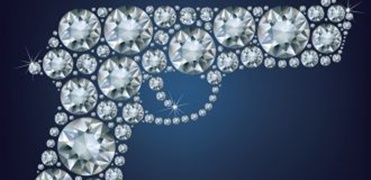
DIAMONDS ARE FOREVER (Brass Band) - Barry, John - Wormald, Christopher
From the 1971 film featuring Sean Connery, this was the second Bond theme recorded by Shirley Bassey (after?Goldfinger). Starting with solos for trombone and horn, this arrangement is designed for all levels of bands and is faithful to the original.. Grade: 4th section +. Duration: 2:40
Estimated dispatch 7-14 working days
 View Music