
Results
-
 £44.95
Chivalry (Brass Band - Score only) - Ellerby, Martin
Symphonic Tone Poem for Brass and PercussionPremiere: All England Brass Band Championships, Cambridge May 2003Recorded on Polyphonic QPRL231D Terra Australis, QPRL218D Master Brass (Volume Fourteen)Duration: 13:00.
Estimated dispatch 7-14 working days
-
 £87.95
Chivalry (Brass Band - Score and Parts) - Ellerby, Martin
Symphonic Tone Poem for Brass and PercussionPremiere: All England Brass Band Championships, Cambridge May 2003Recorded on Polyphonic QPRL231D Terra Australis, QPRL218D Master Brass (Volume Fourteen)Duration: 13:00.
Estimated dispatch 7-14 working days
-
 £44.95
The Call Of The Righteous (Brass Band - Score and Parts) - Condon, Leslie
The classic Leslie Condon 'Tone Poem', originally written for Tottenham (now Enfield) Citadel Band in the mid 1960's. Based on the old gospel tune 'When the roll is called up yonder', this music became a blueprint of style copied by countless others since. Also featured on Celebration by Croydon Citadel Band.
Estimated dispatch 7-14 working days
-
£22.50
The Call Of The Righteous (Brass Band - Score only) - Condon, Leslie
The classic Leslie Condon 'Tone Poem', originally written for Tottenham (now Enfield) Citadel Band in the mid 1960's. Based on the old gospel tune 'When the roll is called up yonder', this music became a blueprint of style copied by countless others since. Also featured on Celebration by Croydon Citadel Band.
Estimated dispatch 7-14 working days
-
 £49.95
Of Men and Mountains (Brass Band - Score only) - Gregson, Edward
Of Men and Mountains was commissioned by the Netherlands Brass Band Championships for their 10th Anniversary Contest, held in Drachten in December 1990.The title of the work and its genesis came about as a result of a train journey the composer took in July 1989 across Canada from Toronto to Vancouver. The awe-inspiring journey through the Rocky Mountains, with its high peaks and shafts of sunlight breaking through the clouds, with its canyons and ferocious rapids, made the composer understand a little more about the majesty of nature and the fragility of humanity. The eternal struggle between man and nature was personified in the building of this incredible railway, hence the title (after Blake).The work is dedicated to the memory of Eric Ball, who died shortly before the writing of the work was commenced.Of Men and Mountains is in one continuous movement and lasts about 17 mins. Its form is difficult to describe because of its motivic and accumulative nature, but it is essentially a symphonic tone poem in search of a theme, which eventually comes in its final and complete state in the majestic ending after an ever-increasing paced scherzo.Duration: 17.00
Estimated dispatch 7-14 working days
-
 £94.95
Of Men and Mountains (Brass Band - Score and Parts) - Gregson, Edward
Of Men and Mountains was commissioned by the Netherlands Brass Band Championships for their 10th Anniversary Contest, held in Drachten in December 1990.The title of the work and its genesis came about as a result of a train journey the composer took in July 1989 across Canada from Toronto to Vancouver. The awe-inspiring journey through the Rocky Mountains, with its high peaks and shafts of sunlight breaking through the clouds, with its canyons and ferocious rapids, made the composer understand a little more about the majesty of nature and the fragility of humanity. The eternal struggle between man and nature was personified in the building of this incredible railway, hence the title (after Blake).The work is dedicated to the memory of Eric Ball, who died shortly before the writing of the work was commenced.Of Men and Mountains is in one continuous movement and lasts about 17 mins. Its form is difficult to describe because of its motivic and accumulative nature, but it is essentially a symphonic tone poem in search of a theme, which eventually comes in its final and complete state in the majestic ending after an ever-increasing paced scherzo.Duration: 17.00
Estimated dispatch 7-14 working days
-
 £60.99
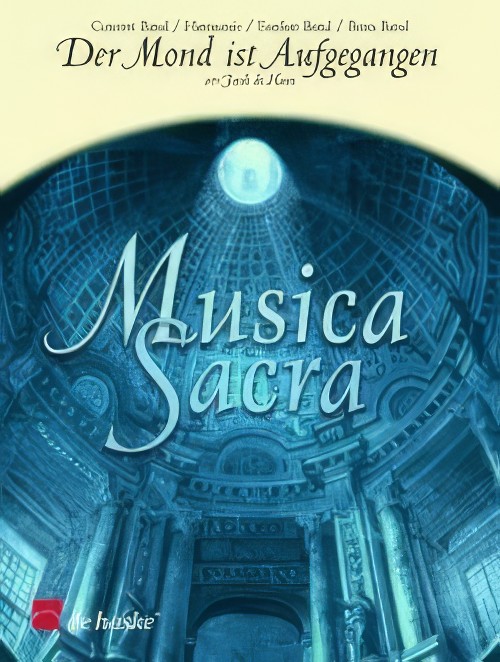
Der Mond ist Aufgegangen (Brass Band with Optional Choir - Score and Parts) - De Haan, Jacob
The lyrics to Der Mond ist aufgegangen (The Moon Is Risen) come from Matthias Claudius, one of Germany's best-known poets. The 1779 poem with the original title Abendlied (Evening song) was set to music by Johann Abraham Peter Schulz and has become perhaps the most famous Abendlied in the German-speaking world. Johann de Haan has created a delightful arrangement of this poignant melody. The wind orchestra can optionally be accompanied by a choir (Dutch and German texts are provided).Duration: 3:30
Estimated dispatch 7-14 working days
-
 £44.95
Ae Fond Kiss (Tenor Horn Solo with Brass Band - Score and Parts) - Burns, Robert - Graham, Peter
Ae Fond Kiss, by the Scottish poet Robert Burns, is widely recognised as being one of the most poignant songs of lost love ever written. A brief affair with a Mrs Agnes Craig McLehose (known to Burns as Nancy) ended with her decision to join her estranged husband in Jamaica. Her parting gift to Burns was a lock of her hair which he had set in a ring. His gift to her included the poem, the first verse of which reflects Burns' feelings of resignation and despair:Ae fond kiss, and then we sever;Ae fareweel, alas, for ever!Deep in heart-wrung tears I'll pledge thee,Warring sighs and groans I'll wage thee!
Estimated dispatch 7-14 working days
-
 £24.95
AND EVERYTHING IS STILLa?? (Tenor Horn solo with Brass Band Parts) - Scott, Andy - Fieldhouse, Jim
Brass Band parts only. And Everything is Still was inspired by a poem by Lemn Sissay from his children's book, The Emperor's Watch Maker. A simple melody unravels alongside a calm and gentle atmosphere. Dur: 3:30
Estimated dispatch 7-14 working days
-
£64.95
CUBAN OVERTURE (Brass Band) - Gershwin, George - Sparke, Philip
A symphonic overture or tone poem for orchestra composed by American composer George Gershwin. It was the result of a two-week holiday in Havan, Cuba in 1932. The overture is dominated by Caribbean rhythms and Cuban native percussion, with a wide spectrum of instrumental colour and technique. It is a rich and exciting work with complexity and sophistication, illustrating the influence of Cuban music and dance. Duration: 10:19 Recorded on Polyphonic QPRL232D Sea Pictures
Estimated dispatch 7-14 working days
 View Music