
Results
-
 £24.50
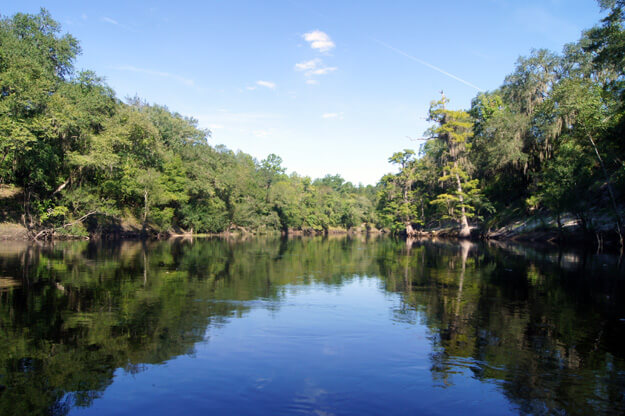
Swanee River - Stephen Foster - Alan Beaumont
The song "Old Folks At Home" over the years has become better known by the lyrics of its first line (Way Down Upon The) Swanee River. The composer Stephen Foster (also known for songs such as "Oh! Suzanna" & "Jeanie With The Light Brown Hair") struggled to find the perfect river to fit his melody, until his brother suggested the "Suwannee" river in Southern Georgia/Northern Florida, although, Foster misspelled the name intentionally to fit the melody line. The song has been the official state song of Florida since 1935. This rousing arrangement by Alan Beaumont will take your audience on a foot tapping, lighthearted journey. With the melody featured in a variety of different styles, the comedy sounds of duck calls, car horns, sirens & other surprises will keep the audience (& players) on their toes. A wonderful addition to any bands library, not to be missed.
In Stock: Estimated dispatch 1-3 working days
-
£24.50
Fakenham Fair - Traditional - A. Cook
The origins of the song Fakenham Fair are somewhat obscure. It was collected by Peter Bellamy, who performed it unaccompanied on his first solo LP, "Mainly Norfolk" in 1968, giving credit to a Peter Bullen of Norwich from whom he had learned it, Bullen in turn giving credit to his grandfather. But beyond that, other than it definitely being a Norfolk folk song, the rest is a mystery.Over the years, Fakenham Fair has become a firm favourite among folk audiences, probably the most famous version being the 2008 recording by folk supergroup 'Bellowhead' which this setting for brass band pays tribute to. A bright, quirky, and bouncy 5:4/10:8 waltz, the band parts dance back and forth from simple time to compound time and back again, giving a constant flow that somehow always feels natural despite the irregular rhythm... but which will also keep your audience guessing where the beat will land next! With solos and features for principal chairs around the band, nobody is left out of the fun. Engaging to listen to and even more so to play, Fakenham Fair is a perfect light concert item for the band that likes to show off their rhythmic and lyrical sides at the same time.
In Stock: Estimated dispatch 1-3 working days
-
£24.50
Sailor's Hymn - Amber Hooton
Sailor's Hymn depicts a scene of sailors preparing to depart from the port of Liverpool, looking out over the docks as the Blue Peter flag flies,beckoning the sailors aboard to begin their long journey. It is a piece about saying goodbye to what was once familiar, moving on and pushing towards new horizons.This piece was written for a cultural exchange between brass and wind bands from St Helens (Valley Brass Band) and Normandy (Harmonie Courselles Sur Mer), culminating in a massed bands concert in Normandy during April 2024. The piece was one of several arrangements and original compositions written especially for the exchange, supported by grants from the Victoria Wood Foundation and Johnson Foundation. The concert celebrated the local cultures of Merseyside and Normandy, as well as the wider national cultures of the United Kingdom and France.
In Stock: Estimated dispatch 1-3 working days
-
 £29.50
Albion Treasures - Gavin Somerset
A stunning hymn-like medley that takes you on a trip around the British Isles. Starting in Scotland with "Highland Cathedral" which continues to make appearances throughout, and then into "Amazing Grace" whilst "Danny Boy" (Londonderry Air)" flows underneath. Whilst "Danny Boy" continues to build, "Swing Low, Sweet Chariot" is heard ringing over the top as the piece builds to its emotional climax. Afterwards, a quiet calm of all the pieces skilfully woven together softly flow whilst the tune to Parry's "Dear Lord & Father Of Mankind (Repton)" leaves us with a delicate, soft finish to the journey. Suitable for any standard of Brass Band.
In Stock: Estimated dispatch 1-3 working days
-
 £29.50
Christmas Scene - Gavin Somerset
This festive number sees an original theme from the pen of Gavin Somerset interspersed with festive favourites that seem to appear in an unfamiliar manner. There is plenty of Christmas spirit to be found in this work and will see your percussion section taking the limelight. Whilst they're not essential, it does add some entertainment value to the piece. As the little drummer boy rises over the hill, your audience will be left with smiling throughout the music in a work that really does add fantastic entertainment value to any Christmas concert.
In Stock: Estimated dispatch 1-3 working days
-
 £24.50
Calon Lan - John Hughes - Rob Westacott
A new take on this this famous Welsh song is the perfect way to introduce your band to the concert stage. With stage directions, the band appears over the familiar 'Bolero' side drum rhythm one section at a time. Calon Lan has as in recent years become associated with the Welsh Rugby Union, being sung before almost every Test match involving the Welsh national team. This arrangement is accessible to Youth bands as well as senior bands and a lovely way to add something different to your concerts.
In Stock: Estimated dispatch 1-3 working days
-
 £24.50
Staff Of Faith - Swiss Traditional - Gavin Somerset
No concert programme is complete these days without a hymn tune being given the treatment that only a brass band sound can deliver. It is therefore refreshing when a lesser known work becomes available for bands to perform. This Swiss traditional melody has grown in popularity over the last decade and is heard in churches across the globe sang to the words 'My Faith It Is An Oaken Staff' by Thomas Lynch. This setting by Gavin Somerset uses the full colours of the brass band spectrum and allows several instrumentalists the chance shine in this warm and entertaining work with a big finish ending.
In Stock: Estimated dispatch 1-3 working days
-
 £24.50
Shenandoah - Trad - Gavin Somerset
A gorgeous arrangement of a simply stunning tune. This American folk tune has become a huge hit over the years as artists such as Bing Crosby, Bryn Terfel and more recently, Hayley Westenra. Its lyrics meanings have long been a topic for discussion, the "rolling river" being either that of the "Missouri River" or, the actual "Shenandoah River". Rivermen, settlers and even slaves have undoubtedly added lyrics to this hair-raising tune. Playable by all levels of bands, this simple, yet very effective arrangement uses all the colours of the brass band to send shivers down the listener's spine.
In Stock: Estimated dispatch 1-3 working days
-
 £29.50
A Quiet Moment - Darrol Barry
There is a place in every concert programme for a piece of music that allows both the band and audience a moment to reflect. This composition by Darrol Barry is suitable for all bands and will make a perfect addition to your repertoire as bands look to commemorate the several anniversaries taking place over the next few years in relation to WWI and WWII. A lovely moving work that makes a great alternative to a hymn tune.
In Stock: Estimated dispatch 1-3 working days
-
£59.95
ELLACOMBE CHRONICLES, The (Brass Band Set) - James Curnow
This piece was commissioned by Brass Band of Columbus for the occasion of the band's 25th anniversary in 2009. It is dedicated to current and former members of the band and its founding Director, Dr Paul Droste. The hymns of Isaac Watts (1674 - 1748) have been a source of inspiration for musical thought and development by composers for over 200 years. His glorious hymn 'I sing the mighty power of God' has been coupled with the hymn tune 'Ellacombe' in many hymnals over these two centuries. This work was created and inspired by Isaac Watts's text and chronicles the three verses of the hymn through a set of diverse variations on the hymn tune 'Ellacombe'. The opening fanfare is intended to capture the joy and exuberance of the first phrase of the first verse, 'I sing the mighty power of God that made the mountains rise'. The developmental material following the fanfare gives a hint of the three large variations that are extracted from the tune.
Estimated dispatch 7-14 working days
 View Music
 Listen to MP3