
Results
-
 £102.99
La Geometria - Bert Appermont
Geometric figures, with their corresponding symbolism and numbers, appeal to the imagination. In La Geometria, the square, the circle, and the triangle are musically explored. On the one hand, the atmosphere and character of each figure formed a source of inspiration; in addition, the matching number in each case influenced the melody, harmony, and time signature. An interesting starting point with an excellent result!
Estimated dispatch 5-14 working days
-
 £129.99
Genetic Code - Thomas Doss
The source of inspiration for this composition was the so-called 'genetic code'. Something which is universal, as almost all organisms on our planet use the same code for their genetic information and therefore speak the same 'language', as it were. The fact that plants, animals, and humans are all subject to the universality of this code fascinates the composer time and time again. Thus, he has chosen a musical motif for this phenomenon, which has been woven through the various musical passages of this work like a genetic thread.Genetic Code was commissioned by the Swiss Brass Band Association to celebrate the 50th anniversary of the Swiss Brass Band Championships, in 2025, and to be the compulsory piece in the Excellence Division that same year.
Estimated dispatch 5-14 working days
-
 £137.99
Sunrise with Sea Monsters - Oliver Waespi
The title of this work is based on the painting of the same name by the English painter William Turner. The ambiguity and suggestive power of this seascape offers great musical possibilities. The first part of the work represents the sunrise, and depicts scenes from Greek mythology in which two sea monsters from Odyssey play their part. In Charybdis, rugged high and low sound fields contrast with a tuneful theme, veined with restlessly pulsing lines. The subsequent fragmentary movement, Sirens, is characterized by mysterious sounds and intertwined arabesques, that are increasingly overshadowed by menacing chords. Concluding the final movement is another famous musical monster: a Tarantella. Sunrise with Sea Monsters was commissioned by the Brassband Burgermusik Luzern and was premiered at the 2023 Swiss Brass Band Championships, conducted by Michael Bach.
Estimated dispatch 5-14 working days
-
 £134.99
Mirage - Jan de Haan
The composition Mirage takes inspiration from the legendary ghost ship "The Flying Dutchman", a story deeply rooted in maritime folklore. Cursed to wander the oceans forever, the ship often looms like a mirage on the horizon - a mysterious apparition in which reality and illusion blend intangibly.In Mirage the music tries to bring this mystical appearance to life. The piece begins with an atmosphere of mystery and wonder, creating the illusion of a mirage. The listener is taken to the vast sea, where the boundaries between the real and the unreal blur and the ghostly silhouette of the ship gradually becomes visible. Suddenly the tone changes. Powerful rhythms and stormy harmonies follow, expressing the ship's battle against the raging forces of nature. After this intense section, in which the musicians are pushed to their limits, the tranquility of the sea returns. The recurring mirages inspired the composer to create a lyrical middle section, in which various soloists tell their stories within this legend. In the final part, the sails are hoisted again, and the three-master continues its endless journey.
Estimated dispatch 5-14 working days
-
 £64.99
Lord of the Lake - Thierry Deleruyelle
Lord of the Lake is a work in three separate movements which tells the legend of the "Sea of Flines". Stephane Coquet, the conductor of the Flines-lez-Raches concert band, wanted to celebrate the 140th anniversary of his band by commissioning this work. The piece can be performed either on its own, or with a narrator who intervenes between each movement, telling this legend where children and their parents thwart the cruelty of a lord holed up in his castle.
Estimated dispatch 5-14 working days
-
 £115.60
Chanson de Matin - Edward Elgar - Svein H. Giske
Chanson de Matin ("Morning Song") (Op. 15, No. 2) was likely written by Edward Elgar around 1889, originally for violin and piano. He later created an orchestral version. The premiere of this version in 1901 was conducted by none other than Henry Wood. Wood conducted the Promenade Concerts in London for almost 50 years and is considered the "father" of The Proms.The English composer Edward Elgar is perhaps best known for his Enigma Variations and Pomp and Circumstance marches.This arrangement was written during the COVID-19 pandemic for Askoy Brass Band's album "Gjensyn", available on Spotify and other streaming services.
Estimated dispatch 5-14 working days
-
 £119.50
La Muerte del Angel - Astor Piazzolla - Svein H. Giske
La muerte del angel was composed by Astor Piazzolla as incidental music for the 1962 play Tango del angel by Alberto Rodriguez Munoz.In the play an angel heals the spirits of the residents of a shabby Buenos Aires neighborhood, but is ultimately killed in a knife fight.This is one of the distinctive pieces with which Piazzolla shook the conservative world of tango. With it's harsh dissonances, mood swings and high energy level, it was in sharp contrast to the traditional tangoes.La muerte del angel was frequently played by Piazzolla in concerts, and he recorded it on at least fourteen different occasions.This arrangement was written to Eikanger-Bjorsvik Musikklag for their performance at Siddis Brass 2007.-Svein H. Giske-
Estimated dispatch 5-14 working days
-
 £53.50
Mr Cool's Swing - Etienne Crausaz
This piece is in line with the tradition of works by Louis Prima and performances by Benny Goodman. It attempts to reproduce a similar "feel", adapted from the music of these two artists, for brass band. The result is a swing with a sustained tempo and modern harmonies, as well as solo passages highlighting the cornet, the trombone and the euphonium with effervescent riffs. Mr Cool's Swing will absolutely find success with your audience! This music forms part of the musical tale La Malediction d'Aragne (Aragne's Curse), commissioned by the Lyre de Courtion (conductor Dominique Morel) on the occasion of its 100th anniversary.
Estimated dispatch 5-14 working days
-
 £53.50
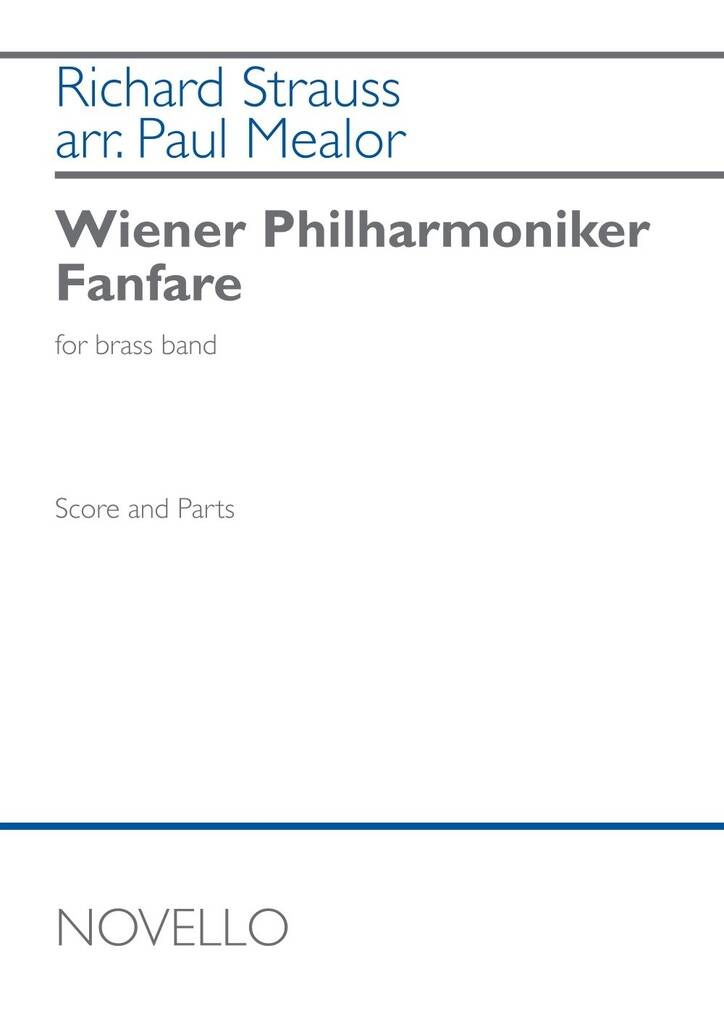
Wiener Philharmoniker Fanfare - Richard Strauss - Paul Mealor
Paul Mealor's arrangement for orchestra of the Wiener Philharmoniker Fanfare (Vienna Philharmonic Fanfare) by Richard Strauss was originally commissioned by His Majesty King Charles III for The Coronation. This version for Brass Band was first performed on Saturday 14th September 2024 at St Asaph Cathedral in Wales as part of the North Wales International Music Festival by Foden's Band, conducted by Michael Fowles.
Estimated dispatch 5-14 working days
-
 £114.99
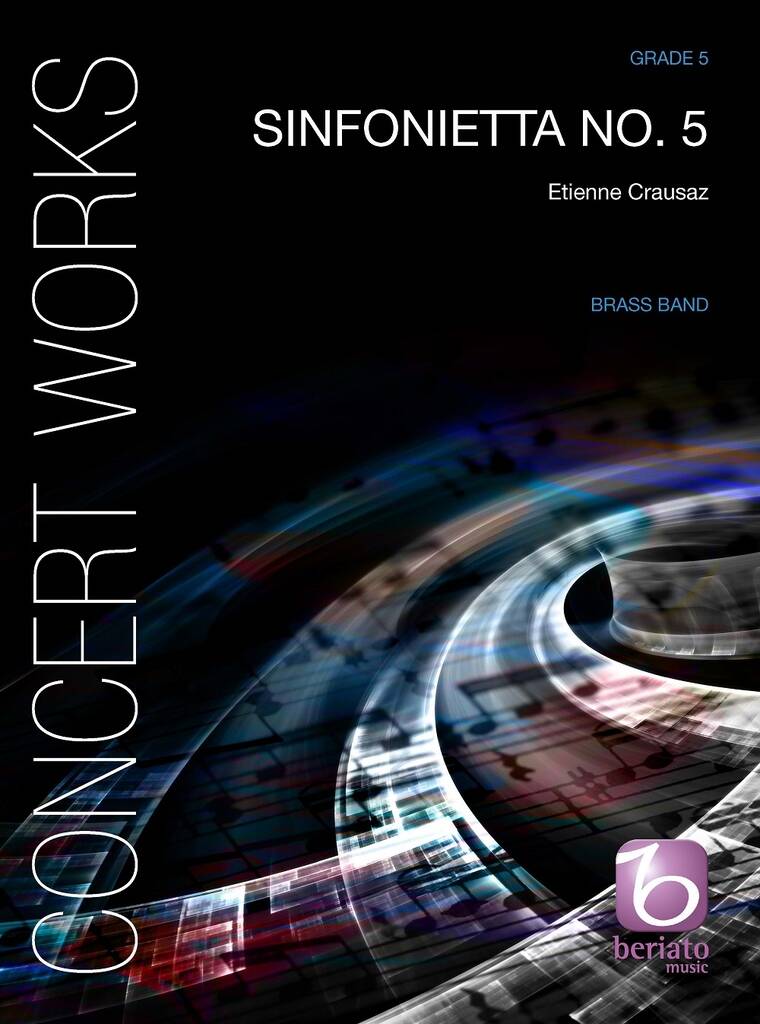
Sinfonietta No. 5 - Etienne Crausaz
This work continues the explorations made in previous numbers, and is particularly close to the Sinfonietta No. 3 in terms of difficulty and form. It is based on various short motifs presented in the first few minutes of the work, which are developed and treated symphonically. The music alternates between moments of great vitality and exuberance, and sombre or dramatic passages. While it is not programmatic, it remains highly descriptive. Sinfonietta No. 5 was commissioned by the Valais, Bern, Jura, Geneva, Solothurn and Innerschweiz cantonal associations for the 2024 cantonal celebrations to serve as the compulsory work in the 1st Brass Band category.
Estimated dispatch 5-14 working days
 View Music