
Results
-
 £42.95
PALLADIO (Brass Band) - Jenkins, Karl - Small, Tony
Palladio is probably the most widely recognised of Karl Jenkin's works. It was used for some time in television commercials for DeBeer's Diamonds, in a world-wide campaign. The work was inspired by the sixteenth century Italian architect Andrea Palladio, whose work embraces the renaissance of harmony and order, a philosophy reflecting Karl Jenkins' attitude to composition.
Estimated dispatch 7-14 working days
-
 £59.99
To a Wild Rose (Brass Band - Score and Parts) - MacDowell, Edward - Sparke, Philip
Edward MacDowell can be regarded as the first great American composer, although he disliked the idea of being classified as any sort of musical nationalist. He composed a large number of orchestral works but it is the charming and unpretentious suite of musical miniatures, Woodland Sketches, that has survived as his best-known work, with To a Wild Rose being the most popular. Philip Sparke has expertly arranged this simple work for brass band.Duration: 3.00
Estimated dispatch 7-14 working days
-
 £47.50
Silent Night (Brass Band - Score and Parts) - Gruber, Franz - Gordon, William
Austrian composer and organist Franz Xaver Gruber composed the original version of this Christmas work in 1818. It is probably one of the most famous of all Christmas carols and should not be missed from any Christmas concert. American composer William Gordon has produced this arrangement for brass band.Duration: 4.45
Estimated dispatch 7-14 working days
-
 £60.99
You're a Lady (Brass Band - Score and Parts) - Skellern, Peter - Stalman, Wim
Songwriter and composer Peter Skellern was a great writer of many truly sensitive love songs, with You're A Lady being the most famous by far. This evergreen was originally performed with brass band backing, making it an obvious choice for a brass band arrangement.Duration: 5:15
Estimated dispatch 7-14 working days
-
 £36.30
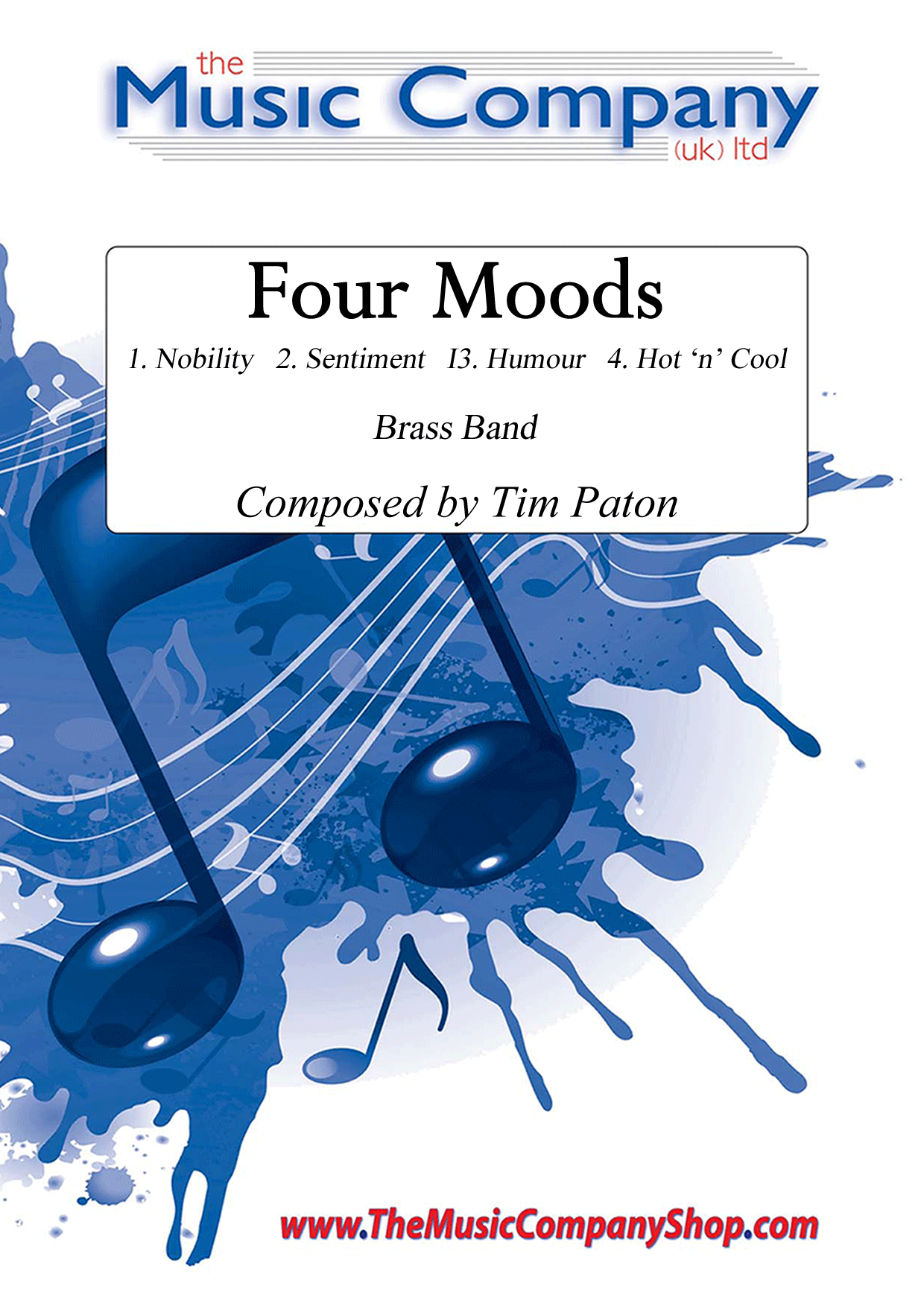
Four Moods - Tim Paton
An original composition by Tim Paton, re-crafted from his quartet into a full brass version. Tim wrote this piece at the RNCM, initially for the college trombone quartet. It was subsequently featured on a radio broadcast and, by popular demand, he later created this full brass band version. It is also available for concert band.Four Moods is just that - made up of 4 sections, each presenting a different style and emotion. The piece opens grandly with Nobility and is shortly followed by Sentiment, a smooth and sweet movement. The third element - Humour - takes the melody just heard in the previous Sentiment, and makes fun of it in an amusing style which utilises 'rude' trombone glissandi. The whole piece is then brought to a memorable closing with the final section - Hot 'n' Cool, featuring a jazz/big band style.Good key players make this piece playable by most bands.
In Stock: Estimated dispatch 3-5 working days
-
 £36.30
Here's That Rainy Day
Trombone Solo.In 1953, a new musical by Johnny Burke and Jimmy Van Heusen was staged, "Carnival in Flanders". Unfortunately, it was not successful. However, one of the songs, "Here's that Rainy Day" became a standard on the cabaret scene.I have arranged this memorable song for solo trombone and brass band. It begins in a Latin style, then moves to the famous Jazz Big Band style. Good key players make the band parts playable by most bands - as long as they like to 'swing'! The trombone part is not easy, on the other hand, neither is it aimed at the 'select few' virtuoso players. Impressive stuff though, with 'written' sections that sound like improvisation.
In Stock: Estimated dispatch 3-5 working days
-
 £36.30
Manhattan Spiritual - Tim Paton
I have arranged this incredibly memorable Big Band piece by Billy Maxted as a feature for the Timps and Kit, inspired by the man who made it famous, that spectacular drummer and showman - ERIC DELANEY -who, at the age of 83, is still performing in the UK and further afield. A book by Eddie Sammons about his astonishing career, including contributions from many famous artists and lots of amusing anecdotes, should be available in 27. The City of Lincoln Band inform me that this was one of their most popular items on their visit to Germany.The Timpani and Drum Kit parts will need good players. To get the best effect, a set of three timps is required, although an optional part for two timps is included. The timps and drums are coordinated, so the parts need to be played as written. For those bands with more than two percussionists, there is a third part, which, although optional, would certainly add to the overall effect. Although the Timp & Drum parts are technically demanding, the remainder of the parts are within the capability of most players."I'm sure this item will be a huge success with popular light music audiences everywhere". Robert Childs
In Stock: Estimated dispatch 3-5 working days
-
 £36.30
Saint Clements - C C Scholefield
The day thou gavest Lord is endedA new setting in 3 verses of the beautiful victorian hymn by C C Scholefield.This arrangement is part of our new 'Within Reach' series meaning tha t the range is kept within limits which make it playable by most bands, and the price is affordable by most bands too!
In Stock: Estimated dispatch 3-5 working days
-
£35.00
One Small Step
Commissioned by The Flowers Band, helping to lead them to their 'Most Entertaining Band' award-winning performance at the 2013 Butlins Mineworkers Brass Band contest, the piece has also just received the 'Best New Composition' award at the 2013 West Lothian Festival of Brass with its performance by The Co-operative Funeralcare Band.Emotive and programmatic in its content, it is an ideal concert feature and, as displayed by its commissioners and award-winning performances, perfect for entertainment contests; opening up opportunities to incorporate multi-media snippets of the associated Presidential speeches and video footage of the historic moment it depicts.
In Stock: Estimated dispatch 3-5 working days
-
 £35.00
In Pitch Black - Lucy Pankhurst
An extremely emotional and poignant work for brass band composed by Lucy Pankhurst, in memory and tribute to those affected by the Pretoria Pit disaster in Lancashire on 21st December 1910. The piece is chilling in its depiction of the tragic story, sensitively conveying the atmosphere and emotions as perceived before, during and after the event. Through its use of playing techniques, effects, sound combinations and even silences, In Pitch Black offers a powerfully reflective piece.Pritoria Pit DisasterLancashire's worst pit disaster and Britain's third largest loss of life from a single mining accident happened at the No. 3 Bank Pit belonging to the Hulton Colliery Company, just 4 days before Christmas 1910. The pit known as the 'Pretoria Pit' was situated on Hulton Parkland on the border of Atherton and Westhoughton. An explosion occurred at 7.50 am on Wednesday, 21 December 1910, resulting in the death of 344 men and boys, including many members of The Wingates Band.The Writing ExperienceDuring Lucy's research for this work, she acknowledges that she found the harsh reality from the shocking images and historical accounts of the event most disturbing, and is not embarrassed to disclose that it was wholly a very emotional experience in creating the composition. Consequently, she chose to create something to illustrate the true emotion of the situation. She wanted to pay tribute to the lives lost and the devastation which remained in their absence, by creating a piece of music which begins in darkness; desolate and claustrophobic, whilst still leaving the audience feeling uplifted and thoughtful in the final bars.The significance and musical appreciation for the creation of In Pitch Black was formally recognised by BASCA in 2011, when Lucy Pankhurst won the internationally acclaimed British Composer Award (the first time a brass band work had received the award, and the first time a female composer had won the category).Full programme notes are included in the product images.Look and Listen (performance courtesy of Manchester University Brass Band):
In Stock: Estimated dispatch 3-5 working days
 View Music