
Results
-
 £59.95
MOORSIDE SUITE (Brass Band Set - Score and Parts) - Holst, Gustav
Score and Parts. 2010 National Championships Area Qualitying Contest - 1st Section. This work was first heard at the Crystal Palace Brass Band Contest in 1928 for which it had been specially written.
Estimated dispatch 7-14 working days
-
 £59.95
ST PAULa????S SUITE, Op.29, No.2 (Brass Band Set) - Holst, Gustav
Estimated dispatch 7-14 working days
-
 £105.20
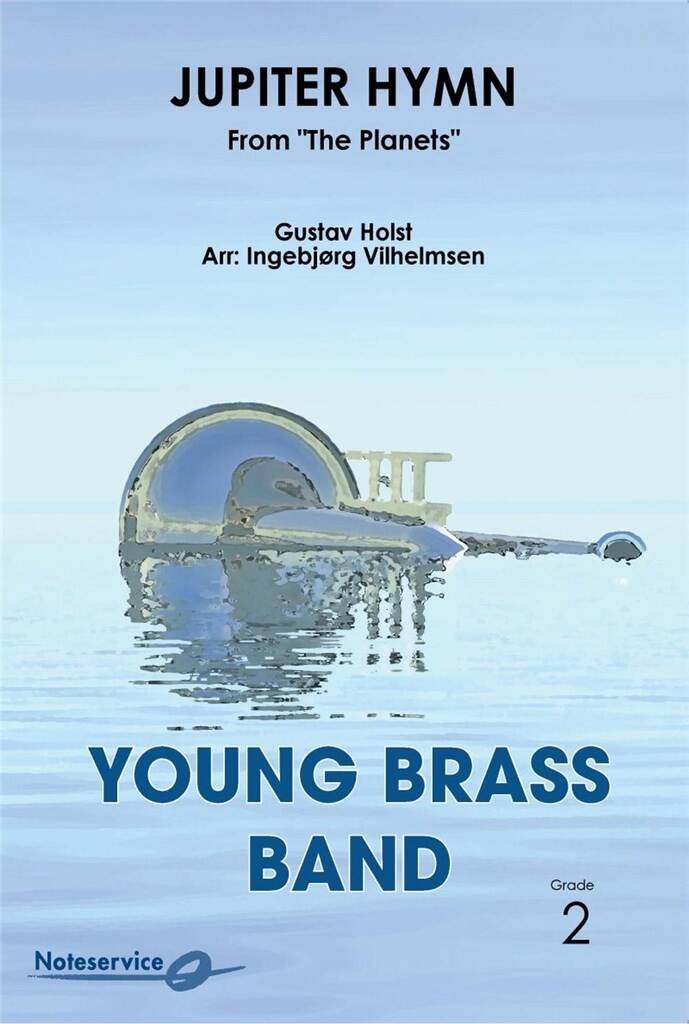
Jupiter Hymn from The Planets - Gustav Holst - Ingebjørg Vilhelmsen
Gustav Holst (1874-1934) was a British composer. His most famous work is the orchestra suite "The Planets". "Jupiter Hymn" is an excerpt from the fourth movement named "Jupiter". This Young Band arrangement is a good choice to showcase the horn-section of the band. The clarinet-parts in the beginning of the piece may be omitted if the band not require doublings of the brass parts.
Estimated dispatch 5-14 working days
-
£24.95
I VOW TO THEE MY COUNTRY (Brass Band Set) - Holst - Ray Steadman-Allen
This noble tune was originally part of the 'Jupiter' movement of 'The Planets' suite and now also appears as a hymn tune called 'Thaxted'.
Estimated dispatch 7-14 working days
-
 £74.95
First Suite in E Flat (Holst) (Brass Band - Score and Parts)
Includes:ChaconneIntermezzoMarch
Estimated dispatch 7-14 working days
-
 £80.00
The Unfortunate Traveller (Brass Band - Score and Parts) - Holst, Imogen - Hindmarsh, Paul
Imogen Holst (1907-1984) submitted The Unfortunate Traveller (1929) as her final work as a student portfolio at the Royal College of Music, where her composition teacher was Gordon Jacob. The title was taken from Thomas Nashe's famous 1594 picaresque novel of the same title. The Suite was first performed on 12 February 1933 at her Majesty's Theatre, Carlisle, by the St. Stephen's Band, with the composer conducting. Te concert was given in memory of Holst's uncle, Dr. H.A. Lediard. Holst had been impressed with the band's performance of his A Moorside Suite at the 1928 National Brass Band Championships (The Crystal Palace, South London) and was keen to work with them. Writing in Imogen Holst, a life in music, Christopher Grogan indicates that it was Gustav Holst's suggestion to include his daughter's work in the programme, quoting Imogen Holst's remarks made in interview to The Daily Mail as follows: "....it is the first time, so far as I know, that a woman has conducted a brass band at a public concert....It has been a delight to rehearse the St. Stephen's Band. It was their performance at the Crystal Palace Festival that inspired me to write this Suite, which I have dedicated to them."Imogen Holst accompanied her father to the Crystal Palace in 1928 to hear the performances of A Moorside Suite, and was so excited by the played and, audibly, by her father's music that she decided to write a brass band piece for her final examination. Te result was The Unfortunate Traveller (1929). However, it was not possible for her to present a brass band work for examination. She arranged it for string orchestra so that it could be played before she left the RCM in July 1930. Following the premiere of the original in 1933, the manuscripts did not resurface until 1969 Imogen found them among her late mother's effects. Although she requested score and parts be destroyed, they ended up in the possession of Manchester composer John Golland, who marked up the score presumably with the intention of creating a new performing edition. The original scoring reveals a lack of experience with what can be a tricky medium.With the agreement of the Holst Foundation, a revised edition, with additional percussion, was prepared in 2011 since when the work has been fortunate to travel round the world as a concert and contest piece. The original includes drums in the March only. The title was taken from Tomas Nashe's famous 1594 picaresque novel of the same title. Several Morris Dance tunes are introduced during the course of the four short movements, including Bonnie Green Garters, Shepherd's Hey, The Rose and The Wind Blaws Cauld. Quirky twists and turns of harmony and spirited rhythms that remind us how much Imogen Holst loved tradition English dance music.In September 2025, I made a performing edition of the composer's arrangement for string orchestra. The manuscript lacks the final movement, which I arranged in a similar style, ie. without extending the upper ranges. Making this edition raised some issues regarding the accuracy of my band version and some of the solutions I used to smooth out the voicing. I have used the composer's second thoughts to refine my performing edition and to correct a textual errors.- Paul HindmarshDuration: 10.00
Estimated dispatch 7-14 working days
-
£40.00
The Unfortunate Traveller (Brass Band - Score only) - Holst, Imogen - Hindmarsh, Paul
Imogen Holst (1907-1984) submitted The Unfortunate Traveller (1929) as her final work as a student portfolio at the Royal College of Music, where her composition teacher was Gordon Jacob. The title was taken from Thomas Nashe's famous 1594 picaresque novel of the same title. The Suite was first performed on 12 February 1933 at her Majesty's Theatre, Carlisle, by the St. Stephen's Band, with the composer conducting. Te concert was given in memory of Holst's uncle, Dr. H.A. Lediard. Holst had been impressed with the band's performance of his A Moorside Suite at the 1928 National Brass Band Championships (The Crystal Palace, South London) and was keen to work with them. Writing in Imogen Holst, a life in music, Christopher Grogan indicates that it was Gustav Holst's suggestion to include his daughter's work in the programme, quoting Imogen Holst's remarks made in interview to The Daily Mail as follows: "....it is the first time, so far as I know, that a woman has conducted a brass band at a public concert....It has been a delight to rehearse the St. Stephen's Band. It was their performance at the Crystal Palace Festival that inspired me to write this Suite, which I have dedicated to them."Imogen Holst accompanied her father to the Crystal Palace in 1928 to hear the performances of A Moorside Suite, and was so excited by the played and, audibly, by her father's music that she decided to write a brass band piece for her final examination. Te result was The Unfortunate Traveller (1929). However, it was not possible for her to present a brass band work for examination. She arranged it for string orchestra so that it could be played before she left the RCM in July 1930. Following the premiere of the original in 1933, the manuscripts did not resurface until 1969 Imogen found them among her late mother's effects. Although she requested score and parts be destroyed, they ended up in the possession of Manchester composer John Golland, who marked up the score presumably with the intention of creating a new performing edition. The original scoring reveals a lack of experience with what can be a tricky medium.With the agreement of the Holst Foundation, a revised edition, with additional percussion, was prepared in 2011 since when the work has been fortunate to travel round the world as a concert and contest piece. The original includes drums in the March only. The title was taken from Tomas Nashe's famous 1594 picaresque novel of the same title. Several Morris Dance tunes are introduced during the course of the four short movements, including Bonnie Green Garters, Shepherd's Hey, The Rose and The Wind Blaws Cauld. Quirky twists and turns of harmony and spirited rhythms that remind us how much Imogen Holst loved tradition English dance music.In September 2025, I made a performing edition of the composer's arrangement for string orchestra. The manuscript lacks the final movement, which I arranged in a similar style, ie. without extending the upper ranges. Making this edition raised some issues regarding the accuracy of my band version and some of the solutions I used to smooth out the voicing. I have used the composer's second thoughts to refine my performing edition and to correct a textual errors.- Paul HindmarshDuration: 10.00
Estimated dispatch 7-14 working days
-
 £45.00
Mars, The Bringer of War (from The Planets) (Brass Band - Score and Parts) - Holst, Gustav - Littlemore, Phillip
Holst's suite The Planets was written between 1914 and 1916 and with the exception of Mercury, which was written last, Holst wrote the music in the sequence we hear them. So, in 1914, came the insistent rhythmic tread of Mars, The Bringer of War. It is widely known that the sketches were completed prior to the outbreak of the First World War, so the music is less a reaction to the declaration of war itself, but more an impending sense of inevitability of a war to unfold. An ideal concert opener, especially in this current year as it is not only the 100th anniversary of the piece itself, but of The Great War. Duration: 7:20
Estimated dispatch 7-14 working days
-
£24.95
I Vow To Thee My Country (Brass Band - Score and Parts) - Holst, Gustav - Steadman-Allen, Ray
This noble tune was originally part of the 'Jupiter' movement of 'The Planets' suite and now also appears as a hymn tune called 'Thaxted'.
Estimated dispatch 7-14 working days
-
£12.50
I Vow To Thee My Country (Brass Band - Score only) - Holst, Gustav - Steadman-Allen, Ray
This noble tune was originally part of the 'Jupiter' movement of 'The Planets' suite and now also appears as a hymn tune called 'Thaxted'.
Estimated dispatch 7-14 working days
 View Music