
Results
-
 £30.00
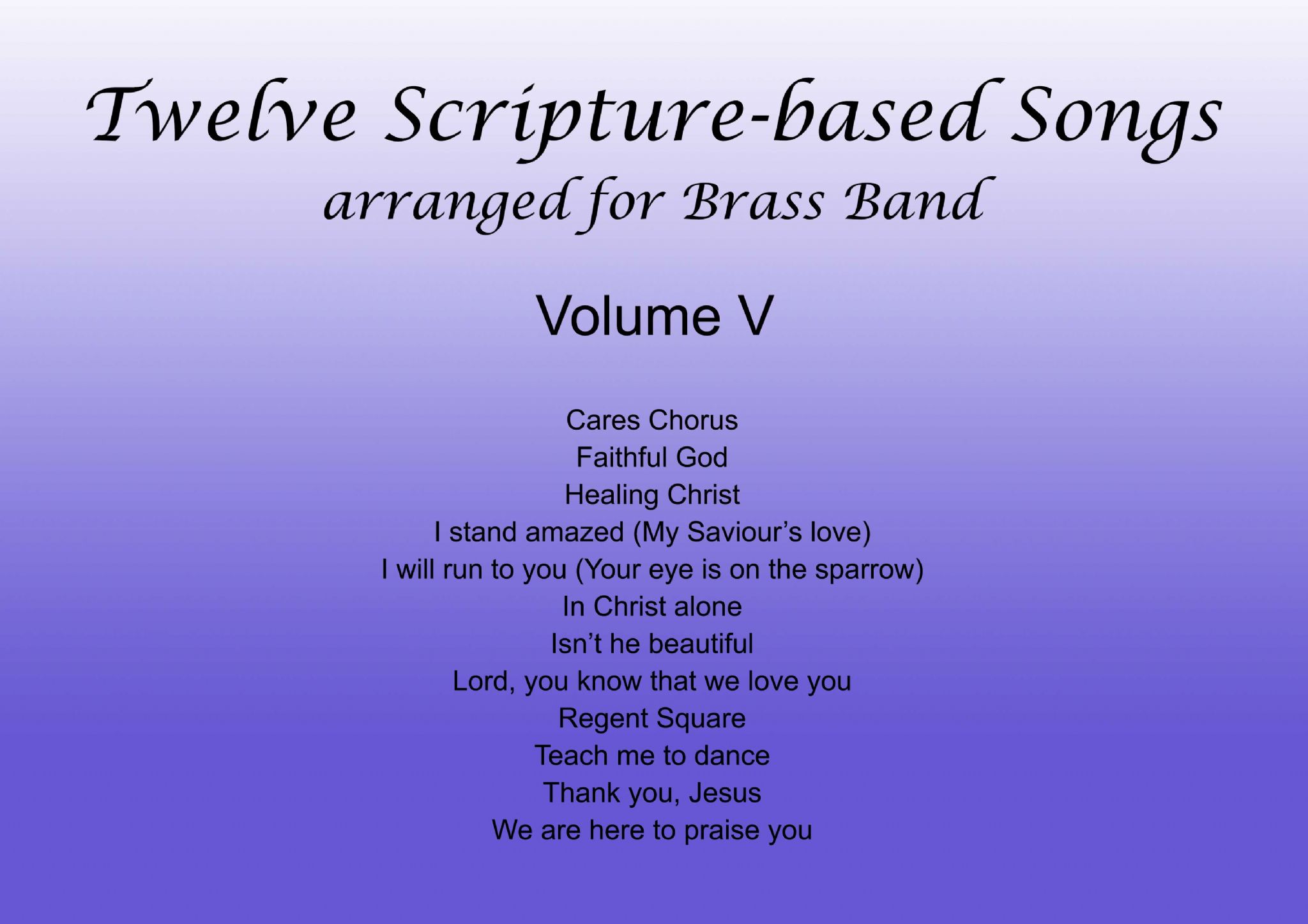
Twelve Scripture-Based Songs Volume V
Twelve scripture-Based Songs arranged for Brass Band (Volume V) are packaged and marketed in complete sets which include a full score and a set of master parts. It is intended that these parts be used as 'masters', for the purpose of photocopying a quantity of parts to accommodate the precise instrumentation needs of the band for which this has been purchased.Cares ChorusFaithful GodHealing ChristI stand amazed (My Saviour's love)I will run to you (Your eye is on the sparrow)In Christ aloneIsn't he beautifulLord, you know that we love youRegent SquareTeach me to danceThank you, JesusWe are here to praise you
Estimated dispatch 7-14 working days
-
 £79.95
Corineus - Christopher Bond
Corineus, in medieval British legend, was a prodigious warrior, a fighter of giants, and the eponymous founder of Cornwall. The first of the legendary rulers of Cornwall, he is described as a character of strength and power. It is on the medieval ruler that this new work, Corineus, is based, presented in three contrasting sections. The work opens with heraldic fanfares and a sense of jubilance before presenting musical material which changes and develops organically, portraying the journey taken by Corineus, Brutus, and the Trojans from modern-day mainland Europe to Britain. The central section of the work is slower, creating a feeling of longing. Brutus' son, Locrinus, had agreed to marry Corineus' daughter, Gwendolen, but instead fell in love with a German princess. In writing this part of the work, the composer portrays the longing of Gwendolen for her husband, knowing he is in love with somebody else. After Corineus died, Locrinus divorced Gwendolen, who responded by raising an army in Cornwall and making war against her ex-husband. Locrinus was killed in battle, and legend suggests that Gwendolen threw Locrinus' lover into the River Severn. This dramatic battle provides the inspiration for the final part of the work. In writing this work, the composer hopes to flare the imagination of young brass players around the country, in an engaging new take on a firm fixture in British folklore.
Estimated dispatch 10-14 working days
-
 £55.00
Triumph Series Brass Band Journal, Numbers 1347 - 1350, March 2023
1347: Intrada on 'St Magnus' (Ruben Schmidt)This is an energetic intrada based on the tune St. Magnus with the composer keeping the words The head that once was crowned with thorns (S.A.S.B. 22) in mind.1348: March - In every corner sing (Alan Williams)This is a bright march requiring plenty of vigour and imagination. Featuring and taking its title from Let all the world in every corner sing: My God and King! (S.A.S.B. 41), this bright melody is contrasted with the tune Lydia associating the words There is a name I love to hear, I love to sing its worth (S.A.S.B. 94).1349: I need thee (Craig Woodland)An expressive arrangement of the traditional hymn I need thee every hour (S.A.S.B. 707)1350: March - The great commission (Paul Sharman)This march was written for the Norwegian Christian brass band, Egersund Missionary Band, and is derived from the tune Onward, Christian soldiers (T.B. 188) as well as a brief fragment of the Norwegian National Anthem and the melody Die Sach is dein (The work is thine).
Estimated dispatch 7-14 working days
-
 £38.95
Unity Series Band Journal - Numbers 490 - 493, February 2021
490: March - Resounding Praise (David Rowsell)This march features the chorus God is so good and the song Praise him! Praise him! Jesus our blessd Redeemer (S.A.S.B. 231)491: I want to live right (arr. Simon Gash)A fun setting of this popular song, the chorus I want to live right originally derives from a West Indian melody.492: Remember God is love (Ruben Schmidt)An uplifting arrangement of the Sunday School chorus When you see a rainbow, remember God is love, based on the English folk song Early One Morning.493: March - Temple 1 (Wycliffe Kortin)Featuring the songs They'll sing a welcome home (S.A.S.B. 534) and Christ the Lord is risen today (S.A.S.B. 218), this march was written for the Nairobi Central Corps' inauguration as a Temple, making it the first Salvation Army Temple in East Africa.
Estimated dispatch 7-14 working days
-
 £27.95
Three Fanfares (Brass Ensemble - Score and Parts)
This set includes three fanfares by Edward Gregson for symphonic brass and percussion ensemble:Fanfare for a New EraFanfare for the NorthFanfare for EuropeFanfare for a New Era: This fanfare was commissioned by Lady Sheila Stoller to celebrate the opening of the Stoller Hall at Chetham's School of Music in Manchester (UK). It is dedicated to Sir Norman Stoller, who generously donated the funding for the new concert hall. It was first performed by students of Chetham's School of Music, conducted by Stephen Threlfall, at the Royal Opening of the Stoller Hall on 24 April 2017. Ideally, the fanfare should be performed using as much spatial arrangement as possible, so that the antiphonal effects are heard to their best advantage. Whatever the chosen lay-out, the 1st Trumpet should be positioned off-stage in a suitable position. This could be a rear balcony if the venue is not too large, or in a side balcony in a larger concert hall. Duration: 3.00Fanfare for the North: This fanfare was commissioned by the Gateshead Garden Festival of 1990 and was first performed by London Brass Virtuosi, directed by David Honeyball, at the Royal Opening by HM The Queen. Its four-note motif (G, A, E, D), which is heard throughout the fanfare, is derived from the letters of 'Gateshead'. Duration: 1.15Fanfare for Europe: This fanfare was specially commissioned for two concerts celebrating the UK's entry into Europe (or the European Economic Community as it was then known) in 1973. The first performances were given at York Minister and the Royal Albert Hall, London, in January 1973. The fanfare was also featured as the opening music for the first episode of a series of short documentary programmes made for BBC Radio 4 in 2018 by Mark Mardell entitled Brexit: A Love Story? Duration: 1.15Duration: 5.30
Estimated dispatch 7-14 working days
-
 £14.94
Jingle Boogie-Woogie Bells (Brass Band - Ukraine Charity Release) Ovcharenko
This piece was arranged by Halyna Ovcharenko, a Ukrainian composer who was born in Lugansk, a Ukrainian city that is currently under occupation by the Russian Federation. All the proceeds from this sale will go towards the 'A family for every orphan' appeal, which is providing emergency relief services to thousands of children and families in Ukraine. For more information about the charity please visit https://afamilyforeveryorphan.org/ukraine/ Halyna Ovcharenko has been composing music since she was 11. Many of her compositions of various genres have received international awards, but she discovered the world of brass band music with its specific timbre and huge range of musical colors only recently, in 2022, while composing her Vyshyvanka for Grimethorpe Colliery Band. Halyna comments: "I enjoyed my experience. Since then I have had an appetite to write more for brass bands, and here we are - an arrangement of a traditional English Christmas song which I have done especially to raise money for Ukrainian orphans. Their heroic parents stood for my Lugansk, for our Ukraine and for the whole World. I hope that the World will make these children feel that they are not left alone, giving them love, care and joy." The picture on the front cover was drawn by Victoria Lebed, a Ukrainian girl. This PDF download includes parts and score. Sheet music available from www.brassband.co.uk Instrumentation: Soprano Cornet Eb Solo Cornet Bb Repiano Cornet Bb 2nd Cornet Bb 3rd Cornet Bb Flugel Horn Bb Solo Horn Eb 1st Horn Eb 2nd Horn Eb 1st Baritone Bb 2nd Baritone Bb 1st Trombone Bb 2nd Trombone Bb Bass Trombone Euphonium Bb Bass Eb Bass Bb Percussion 1-2
In Stock: Estimated dispatch 1-3 working days
-
 £74.95
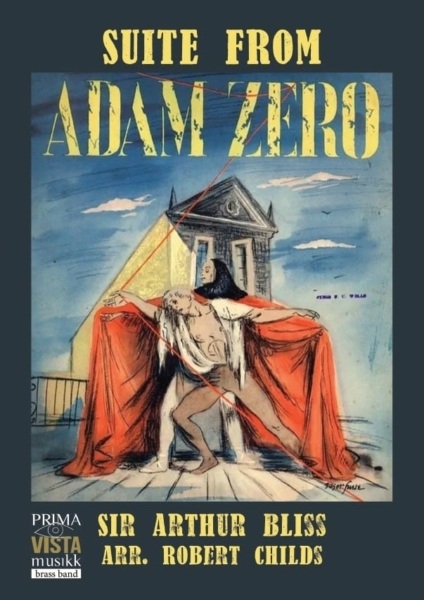
Adam Zero, Suite from (Brass Band - Score and Parts)
Selected as the Section 2 test piece for the National Brass Band Championships of Great Britain 2025Following his ballet Checkmate, Bliss composed another score for the, by then, Sadler's Wells Ballet, Miracle in the Gorbals, which was choreographed by Robert Helpmann, to a scenario by Michael Benthall. Premired in 1944, the ballet made a considerable impact and was a box-office success. It was followed in turn by a further collaboration with Helpmann and Benthall, Adam Zero. This would serve Helpmann, in the eponymous role, as a vehicle in two respects: demonstrating his gifts as a dancer-actor and as a choreographer. First performed at the Royal Opera House, Covent Garden, on 8 April 1946, Adam Zero was conducted by Constant Lambert, the work's dedicatee. Bliss considered it 'his most varied and exciting ballet score'. Benthall provided a synopsis for the programme:There is a philosophy that life moves in an endless series of timeless cycles. As Nature passes through Spring, Summer, Autumn and Winter, so man is born, makes a success in his own particular sphere, loses his position to a younger generation, sees his world crumble before his eyes and only finds peace in death. This age-old story is told in terms of a Company creating a ballet and calling on the resources of the theatre to do so. Lighting, stage mechanism, dance conventions, musical forms and costumes and scenery of all periods are used to symbolize the world of 'Adam Zero'.Apart from Adam, as the Principal Dancer, other main roles included the Stage Director (representing Omnipotence), and Adam's Fates (Designer, Wardrobe Mistress, and Dresser). 'The Woman in this allegory', wrote Bliss, 'under the symbol of the Choreographer, was both the creator and destroyer of Adam: his first love, his wife, his mistress, and finally the figure of beneficent Death.' When the curtain rose, the 'audience saw the Covent Garden stage right back to the wall, completely empty except for the protagonists, 'the Company poised, still and expectant, as they await the birth of... Adam Zero.'Unfortunately, soon after the premire, Helpmann injured himself and had to withdraw from the remaining performances. Despite generally positive reviews, the ballet did not capture the imagination of audiences and, to Bliss's considerable disappointment, was not revived. Seventy years would elapse before its first major return to the stage, in 2016, performed by the ballet company of Stadttheater Bremerhaven with choreography by Sergei Vanaev.Bliss extracted a concert suite from the ballet, conducting its first performance with the City of Birmingham Symphony Orchestra on 28 October 1948. For his own suite, arranged for brass band in 2023, Dr Robert Childs chose three dances linked to the seasons, book-ending them with the ebullient 'Fanfare Overture' and 'Fanfare Coda'. After Adam has grown to manhood, his Fates clothe him in a costume synonymous with confident youth, appropriate for the virile, ardent 'Dance of Spring'. In the 'Approach of Autumn', Adam, now wearing a sombre costume, has grown older: his Fates have streaked grey in his hair and put lines on his face. But they had earlier raised Adam to the zenith of his power, and the 'Dance of Summer' depicts him in the prime of life, in music of sweeping grandeur. The 'Fanfare Coda' signals that the next cycle of life is about to begin.Duration: 10.30
Estimated dispatch 7-14 working days
-
£31.95
Adam Zero, Suite from (Brass Band - Score only)
Selected as the Section 2 test piece for the National Brass Band Championships of Great Britain 2025Following his ballet Checkmate, Bliss composed another score for the, by then, Sadler's Wells Ballet, Miracle in the Gorbals, which was choreographed by Robert Helpmann, to a scenario by Michael Benthall. Premired in 1944, the ballet made a considerable impact and was a box-office success. It was followed in turn by a further collaboration with Helpmann and Benthall, Adam Zero. This would serve Helpmann, in the eponymous role, as a vehicle in two respects: demonstrating his gifts as a dancer-actor and as a choreographer. First performed at the Royal Opera House, Covent Garden, on 8 April 1946, Adam Zero was conducted by Constant Lambert, the work's dedicatee. Bliss considered it 'his most varied and exciting ballet score'. Benthall provided a synopsis for the programme:There is a philosophy that life moves in an endless series of timeless cycles. As Nature passes through Spring, Summer, Autumn and Winter, so man is born, makes a success in his own particular sphere, loses his position to a younger generation, sees his world crumble before his eyes and only finds peace in death. This age-old story is told in terms of a Company creating a ballet and calling on the resources of the theatre to do so. Lighting, stage mechanism, dance conventions, musical forms and costumes and scenery of all periods are used to symbolize the world of 'Adam Zero'.Apart from Adam, as the Principal Dancer, other main roles included the Stage Director (representing Omnipotence), and Adam's Fates (Designer, Wardrobe Mistress, and Dresser). 'The Woman in this allegory', wrote Bliss, 'under the symbol of the Choreographer, was both the creator and destroyer of Adam: his first love, his wife, his mistress, and finally the figure of beneficent Death.' When the curtain rose, the 'audience saw the Covent Garden stage right back to the wall, completely empty except for the protagonists, 'the Company poised, still and expectant, as they await the birth of... Adam Zero.'Unfortunately, soon after the premire, Helpmann injured himself and had to withdraw from the remaining performances. Despite generally positive reviews, the ballet did not capture the imagination of audiences and, to Bliss's considerable disappointment, was not revived. Seventy years would elapse before its first major return to the stage, in 2016, performed by the ballet company of Stadttheater Bremerhaven with choreography by Sergei Vanaev.Bliss extracted a concert suite from the ballet, conducting its first performance with the City of Birmingham Symphony Orchestra on 28 October 1948. For his own suite, arranged for brass band in 2023, Dr Robert Childs chose three dances linked to the seasons, book-ending them with the ebullient 'Fanfare Overture' and 'Fanfare Coda'. After Adam has grown to manhood, his Fates clothe him in a costume synonymous with confident youth, appropriate for the virile, ardent 'Dance of Spring'. In the 'Approach of Autumn', Adam, now wearing a sombre costume, has grown older: his Fates have streaked grey in his hair and put lines on his face. But they had earlier raised Adam to the zenith of his power, and the 'Dance of Summer' depicts him in the prime of life, in music of sweeping grandeur. The 'Fanfare Coda' signals that the next cycle of life is about to begin.Duration: 10.30
Estimated dispatch 7-14 working days
-
£21.95
Adam Zero, Suite from (Brass Band - Study Score)
Selected as the Section 2 test piece for the National Brass Band Championships of Great Britain 2025Following his ballet Checkmate, Bliss composed another score for the, by then, Sadler's Wells Ballet, Miracle in the Gorbals, which was choreographed by Robert Helpmann, to a scenario by Michael Benthall. Premired in 1944, the ballet made a considerable impact and was a box-office success. It was followed in turn by a further collaboration with Helpmann and Benthall, Adam Zero. This would serve Helpmann, in the eponymous role, as a vehicle in two respects: demonstrating his gifts as a dancer-actor and as a choreographer. First performed at the Royal Opera House, Covent Garden, on 8 April 1946, Adam Zero was conducted by Constant Lambert, the work's dedicatee. Bliss considered it 'his most varied and exciting ballet score'. Benthall provided a synopsis for the programme:There is a philosophy that life moves in an endless series of timeless cycles. As Nature passes through Spring, Summer, Autumn and Winter, so man is born, makes a success in his own particular sphere, loses his position to a younger generation, sees his world crumble before his eyes and only finds peace in death. This age-old story is told in terms of a Company creating a ballet and calling on the resources of the theatre to do so. Lighting, stage mechanism, dance conventions, musical forms and costumes and scenery of all periods are used to symbolize the world of 'Adam Zero'.Apart from Adam, as the Principal Dancer, other main roles included the Stage Director (representing Omnipotence), and Adam's Fates (Designer, Wardrobe Mistress, and Dresser). 'The Woman in this allegory', wrote Bliss, 'under the symbol of the Choreographer, was both the creator and destroyer of Adam: his first love, his wife, his mistress, and finally the figure of beneficent Death.' When the curtain rose, the 'audience saw the Covent Garden stage right back to the wall, completely empty except for the protagonists, 'the Company poised, still and expectant, as they await the birth of... Adam Zero.'Unfortunately, soon after the premire, Helpmann injured himself and had to withdraw from the remaining performances. Despite generally positive reviews, the ballet did not capture the imagination of audiences and, to Bliss's considerable disappointment, was not revived. Seventy years would elapse before its first major return to the stage, in 2016, performed by the ballet company of Stadttheater Bremerhaven with choreography by Sergei Vanaev.Bliss extracted a concert suite from the ballet, conducting its first performance with the City of Birmingham Symphony Orchestra on 28 October 1948. For his own suite, arranged for brass band in 2023, Dr Robert Childs chose three dances linked to the seasons, book-ending them with the ebullient 'Fanfare Overture' and 'Fanfare Coda'. After Adam has grown to manhood, his Fates clothe him in a costume synonymous with confident youth, appropriate for the virile, ardent 'Dance of Spring'. In the 'Approach of Autumn', Adam, now wearing a sombre costume, has grown older: his Fates have streaked grey in his hair and put lines on his face. But they had earlier raised Adam to the zenith of his power, and the 'Dance of Summer' depicts him in the prime of life, in music of sweeping grandeur. The 'Fanfare Coda' signals that the next cycle of life is about to begin.Duration: 10.30
Estimated dispatch 7-14 working days
-
 £77.00
General Series Brass Band Journal, Numbers 2234 - 2237, August 2023
2234: Festival March - Above all names (Geoff McCorriston)This Festival March was originally written for the Camberwell Citadel Band, Melbourne, Australia. This composition marks the composers debut within our band journals. Geoff McCorriston served as Deputy Bandmaster at Preston Corps (Australia) for many years before joining the Camberwell Citadel Band. He has also been a member of the Melbourne Red Shield Band. Above all names is distinct from a standard street march in that it is more developed, both rhythmically and thematically. It is an original march that references We plough the fields and scatter (S.A.S.B. 70) and Camberwell (T.B. 182).2235: Flugel Horn Solo - Father, Creator (Simon Gash)Emma Pears has a gift for contemporary song-writing, with several of her songs featuring in the Sing to the Lord publication. The style and relaxed nature of the melody of Father, Creator (first published in the Children's Voices Series in 2011, and later in the Mixed Voices in 2014) seemed a perfect fit for the Flugel Horn. Throughout the piece, juxtaposed with Father, Creator, we hear snippets of the tune St Theodulph (T.B. 231), which outline the first lines of Albert Chesham's words, 'O Father and Creator, Thou God of perfect love' (S.A.S.B. 46).2236: A winter's carol (trs. Neil Smith)The history of the carol O come, Immanuel (C.C. 62) is, like the carol itself, a little mysterious! The melody was conceived as a monastic chant during the 8th century. It was not until 1851 that the priest and hymn writer John Mason Neale translated the verses into English, exposing the carol to a wider audience. There is an aura and enigmatic feel to this melody which is captivating to so many who hear it. This setting was originally conceived for wind band by American composer Mark Williams. The brass band transcription introduces a new name to our journals, Bandmaster Neil Smith, who is the Territorial Music Director for the USA Western Territory.2237: Mighty to keep (Eiliv Herikstad)Mighty to keep marks the composer's first publication since his Promotion to Glory in April 2023. Bandmaster Eiliv Herikstad served faithfully in his native Norway throughout his life, and since the early 1970s, has provided The Salvation Army with a wealth of original compositions and skilful arrangements. Eiliv explored many styles of big-band and jazz writing which, in the 70s, were not commonplace amongst brass bands, particularly in The Salvation Army. Music Editorial are grateful to Eiliv for using his gifts to support Salvation Army music ministry.The subject of this piece is Herbert Booth's song Mighty to keep, which was first published by The Salvation Army in 1889. The chorus of the song is more well-known that the verse and was included in the chorus section of the 1986 Salvation Army Song Book.
Estimated dispatch 7-14 working days