
Results
-
 £76.99
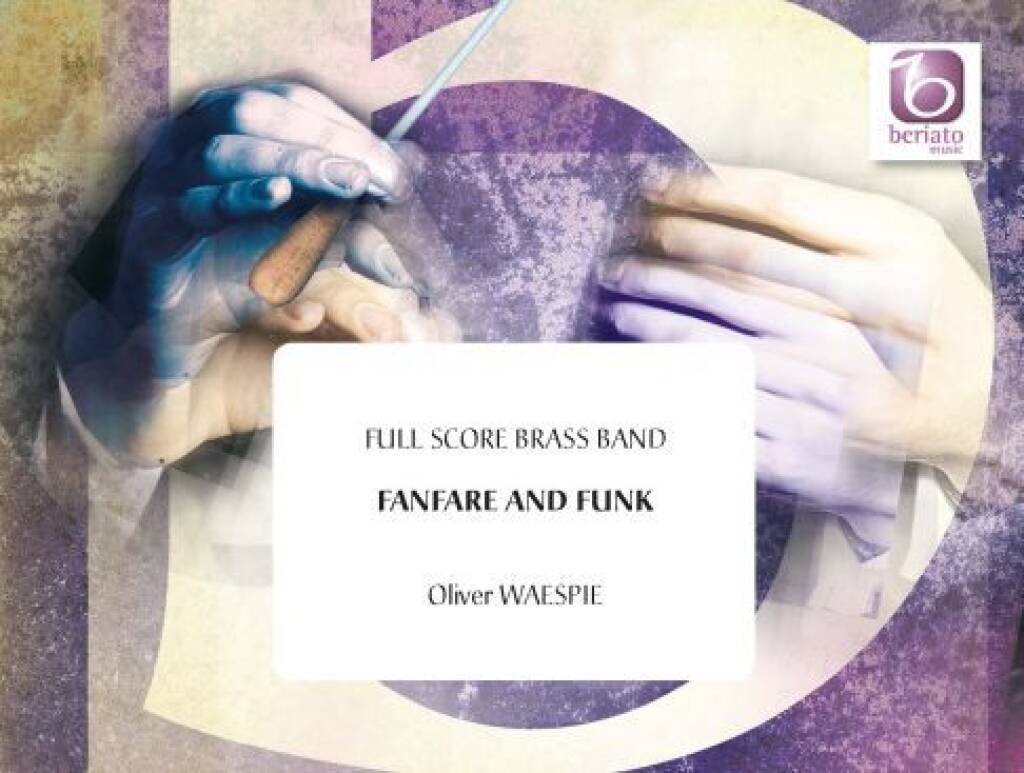
Fanfare And Funk - Oliver Waespi
This work by Swiss composer Oliver Waespi was one of the highlights at the 2006 Eidgenossische Musikfest in Lucerne. The piece opens with a festive fanfare featuring the brass section. The mood changes to a funk passage which develops and grows into a James Brown-like groove. It also includes an ad libitum drum solo. A slow blues lends a calmer feel and the piece culminates with striking interwoven fanfare and funk styles. This work is highly recommended for concert programmes but it can also make a spectacular, unconventional choice for a competition.
Estimated dispatch 5-14 working days
-
 £44.00
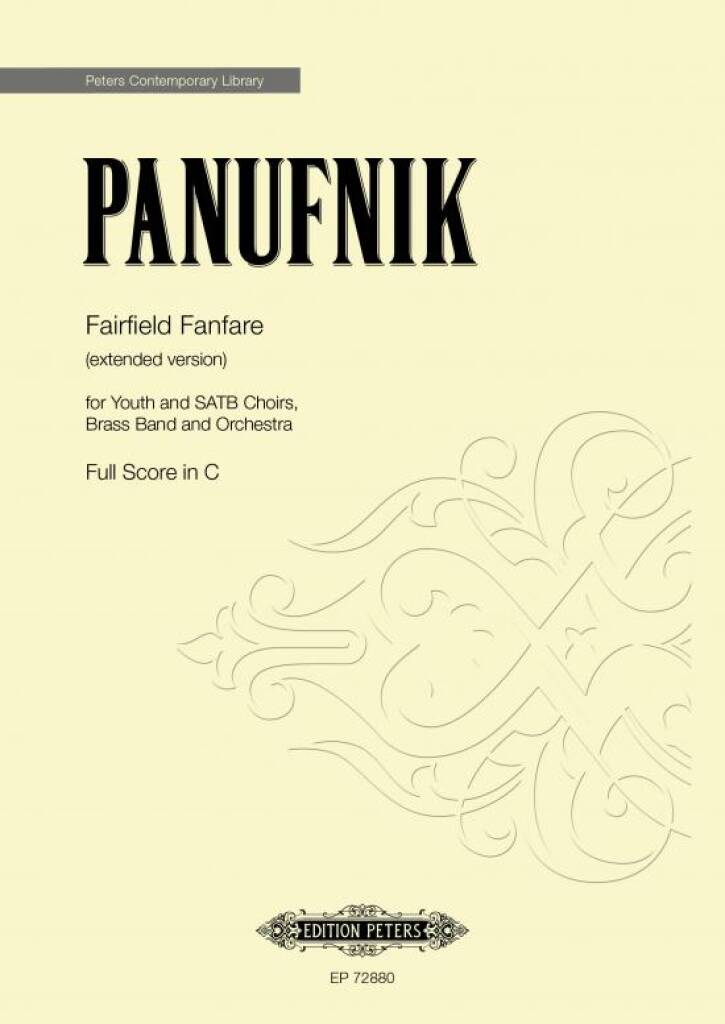
Fairfield Fanfare (expanded version) - Roxanna Panufnik
Fairfield Fanfare (expanded version) by Roxanna Panufnik is a 4-minute work for youth and mixed choirs, brass band and orchestra. Originally commissioned to celebrate the 50th anniversary of the Fairfield Halls, Croydon in 2012, the opening chords are based on all the alphabetic note names from FA-ir-F(#)-i-E-l-D, heralding a flourishing section of hustle and bustle that is the city of Croydon today.This expanded version includes brass band and choirs, with a setting of the text from Psalm 127. The expanded version was commissioned by the London Mozart Players, who premiered the piece on 30 June 2016 at Fairfield Halls, Croydon.This edition is the full score in C (EP 72880). It is available for sale as part of the Peters Contemporary Library. The performance material can be hired as well as a transposed full score, if preferred.
Estimated dispatch 5-14 working days
-
 £27.00
Clarion Alarum - Simon Dobson
Clarion Alarum: Fanfare No.1 for Brass Band is a short fanfare for brass band, contrasting the brilliance of the sound of cornets and trombones with the warmer tones of horns, euphoniums and tubas. BrassBand Grade 5: 1st Section Duration: 2.5 minutes
Estimated dispatch 5-14 working days
-
 £60.99
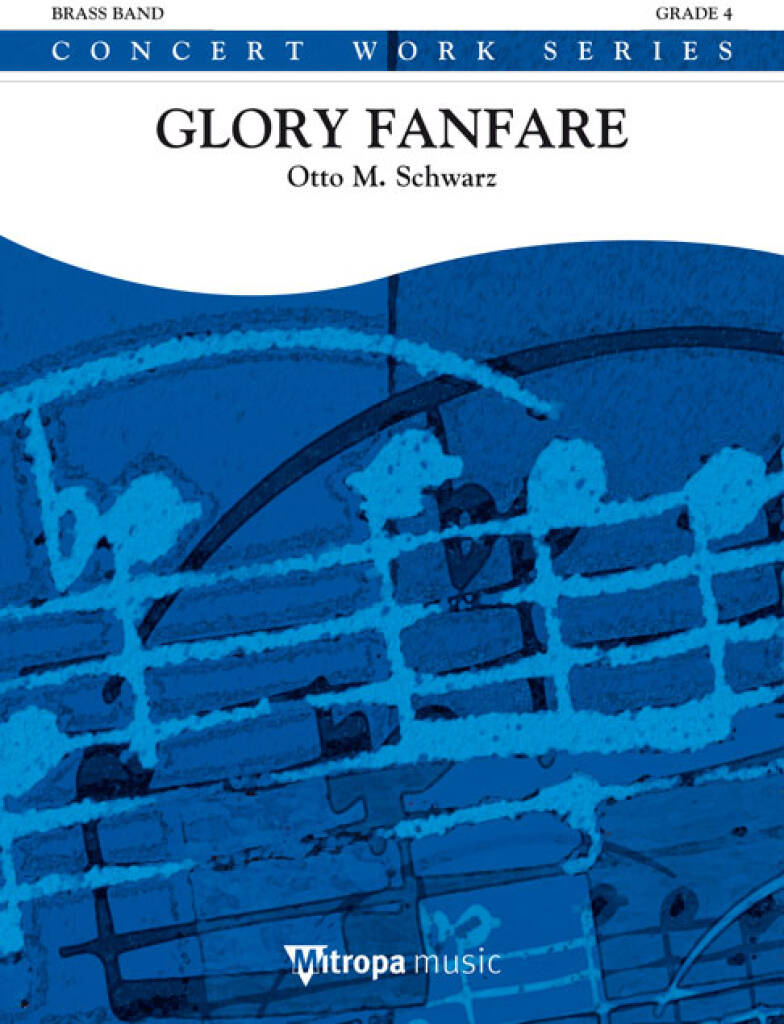
Glory Fanfare - Otto M. Schwarz
Glory Fanfare was commissioned by the Brass Band of Upper-Austria for the 2010 European Brass Band Championships in Linz, and was performed as the fi rst piece in the gala concert. The double chorus of cornets is particularly ingenious and itsvirtuosic character adds to all the excitement. Modern elements, such as funky bass lines played along with the drum kit, help drive the festive atmosphere and create a piece that will captivate your audience from the word go!
Estimated dispatch 5-14 working days
-
 £39.95
Suite for Saturday - Don Bateman
This work was originally written for a Junior Brass Band with the title Suite for Saturday and was road-tested at a Band Day organized by West Sussex Music Service. It became a piece for 2 clarinets with a version for clarinet and piano. Its title then was Suite for Chloe. As you can see, the original title has been restored as being more appropriate for a full junior brass band and, inevitably, with regard to an Educational project, there is a strong didactic thread running through the sections of the Suite.For Openersrequires a decisive attack, fanfare style. Metro Gnomesdemands articulative skill and metronomic precision.Smooth Operatorsencourages an efficient legato style.Best Foot Forwardstresses rhythmic drive (alla militare).
Estimated dispatch 5-14 working days
-
 £99.99
Sparkling Brass - Philip Sparke
Sparkling Brass was commissioned by Osaka Concert Brass, one of Japan's top brass bands, and premiered by them on 27th December 2018 during a concert which celebrated their 10th Anniversary. The work opens in lively mood with fanfare-style figures from the lower band which are answered by the cornets. This interplay intensifies until the mood calms suddenly to introduce a chorale which leads to a duet-cadenza for cornet and euphonium. The rhythmic mood of the opening soon returns and leads to the main theme of the work, a modal caccia which features various section of the band. A short bridge passage leads to a change of key and a new cantabile theme which isintroduced by euphoniums and baritone. This is taken up by the full band after another change of key and leads back to the caccia theme. A transformed version of the opening fanfare returns to close the work.
Estimated dispatch 5-14 working days
-
 £82.95
Occasion (Brass Band - Score and Parts) - Gregson, Edward
Occasion was published especially for the National Youth Brass Band Championship of Great Britain, held at the Royal Albert Hall, London, on 4th October, 1986.Occasion for Brass Band is in four movements: Fanfare, Festivities, Elegy and Dance. The opening Fanfare was originally written as a Wedding Fanfare for Paul and Hazel Patterson in 1981, while the Elegy and Dance were commissioned as a test-piece for the first Westsound/Ayrshire Invitation Contest in 1982 for the leading bands in Scotland. Festivities was therefore written last, to complete the work and give it its essentially 'festive' character. Except for the Elegy, which is contemplative, the music throughout is extrovert and joyful. The opening Fanfare may be performed separately - of the Fanfare may be left out entirely, making the work a three movement Suite.Duration: 11 minutes
Estimated dispatch 7-14 working days
-
£37.95
Occasion (Brass Band - Score only) - Gregson, Edward
Occasion was published especially for the National Youth Brass Band Championship of Great Britain, held at the Royal Albert Hall, London, on 4th October, 1986.Occasion for Brass Band is in four movements: Fanfare, Festivities, Elegy and Dance. The opening Fanfare was originally written as a Wedding Fanfare for Paul and Hazel Patterson in 1981, while the Elegy and Dance were commissioned as a test-piece for the first Westsound/Ayrshire Invitation Contest in 1982 for the leading bands in Scotland. Festivities was therefore written last, to complete the work and give it its essentially 'festive' character. Except for the Elegy, which is contemplative, the music throughout is extrovert and joyful. The opening Fanfare may be performed separately - of the Fanfare may be left out entirely, making the work a three movement Suite.Duration: 11 minutes
Estimated dispatch 7-14 working days
-
 £29.95
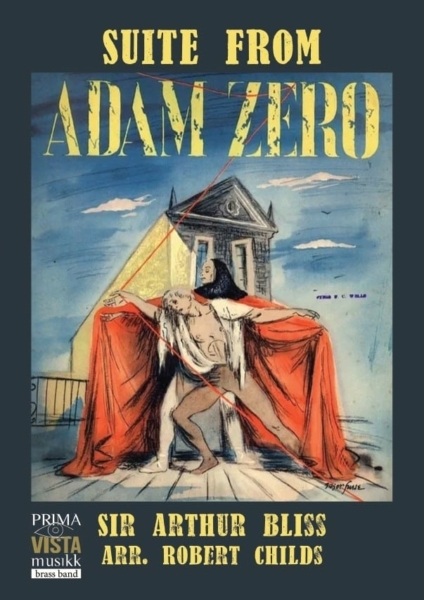
Adam Zero, Suite from (Brass Band - Score only) - Bliss, Arthur - Childs, Robert
Selected as the Section 2 test piece for the National Brass Band Championships of Great Britain 2025Following his ballet Checkmate, Bliss composed another score for the, by then, Sadler's Wells Ballet, Miracle in the Gorbals, which was choreographed by Robert Helpmann, to a scenario by Michael Benthall. Premired in 1944, the ballet made a considerable impact and was a box-office success. It was followed in turn by a further collaboration with Helpmann and Benthall, Adam Zero. This would serve Helpmann, in the eponymous role, as a vehicle in two respects: demonstrating his gifts as a dancer-actor and as a choreographer. First performed at the Royal Opera House, Covent Garden, on 8 April 1946, Adam Zero was conducted by Constant Lambert, the work's dedicatee. Bliss considered it 'his most varied and exciting ballet score'. Benthall provided a synopsis for the programme:There is a philosophy that life moves in an endless series of timeless cycles. As Nature passes through Spring, Summer, Autumn and Winter, so man is born, makes a success in his own particular sphere, loses his position to a younger generation, sees his world crumble before his eyes and only finds peace in death. This age-old story is told in terms of a Company creating a ballet and calling on the resources of the theatre to do so. Lighting, stage mechanism, dance conventions, musical forms and costumes and scenery of all periods are used to symbolize the world of 'Adam Zero'.Apart from Adam, as the Principal Dancer, other main roles included the Stage Director (representing Omnipotence), and Adam's Fates (Designer, Wardrobe Mistress, and Dresser). 'The Woman in this allegory', wrote Bliss, 'under the symbol of the Choreographer, was both the creator and destroyer of Adam: his first love, his wife, his mistress, and finally the figure of beneficent Death.' When the curtain rose, the 'audience saw the Covent Garden stage right back to the wall, completely empty except for the protagonists, 'the Company poised, still and expectant, as they await the birth of... Adam Zero.'Unfortunately, soon after the premire, Helpmann injured himself and had to withdraw from the remaining performances. Despite generally positive reviews, the ballet did not capture the imagination of audiences and, to Bliss's considerable disappointment, was not revived. Seventy years would elapse before its first major return to the stage, in 2016, performed by the ballet company of Stadttheater Bremerhaven with choreography by Sergei Vanaev.Bliss extracted a concert suite from the ballet, conducting its first performance with the City of Birmingham Symphony Orchestra on 28 October 1948. For his own suite, arranged for brass band in 2023, Dr Robert Childs chose three dances linked to the seasons, book-ending them with the ebullient 'Fanfare Overture' and 'Fanfare Coda'. After Adam has grown to manhood, his Fates clothe him in a costume synonymous with confident youth, appropriate for the virile, ardent 'Dance of Spring'. In the 'Approach of Autumn', Adam, now wearing a sombre costume, has grown older: his Fates have streaked grey in his hair and put lines on his face. But they had earlier raised Adam to the zenith of his power, and the 'Dance of Summer' depicts him in the prime of life, in music of sweeping grandeur. The 'Fanfare Coda' signals that the next cycle of life is about to begin.Duration: 10.30
Estimated dispatch 7-14 working days
-
£19.65
Adam Zero, Suite from (Brass Band - Study Score) - Bliss, Arthur - Childs, Robert
Selected as the Section 2 test piece for the National Brass Band Championships of Great Britain 2025Following his ballet Checkmate, Bliss composed another score for the, by then, Sadler's Wells Ballet, Miracle in the Gorbals, which was choreographed by Robert Helpmann, to a scenario by Michael Benthall. Premired in 1944, the ballet made a considerable impact and was a box-office success. It was followed in turn by a further collaboration with Helpmann and Benthall, Adam Zero. This would serve Helpmann, in the eponymous role, as a vehicle in two respects: demonstrating his gifts as a dancer-actor and as a choreographer. First performed at the Royal Opera House, Covent Garden, on 8 April 1946, Adam Zero was conducted by Constant Lambert, the work's dedicatee. Bliss considered it 'his most varied and exciting ballet score'. Benthall provided a synopsis for the programme:There is a philosophy that life moves in an endless series of timeless cycles. As Nature passes through Spring, Summer, Autumn and Winter, so man is born, makes a success in his own particular sphere, loses his position to a younger generation, sees his world crumble before his eyes and only finds peace in death. This age-old story is told in terms of a Company creating a ballet and calling on the resources of the theatre to do so. Lighting, stage mechanism, dance conventions, musical forms and costumes and scenery of all periods are used to symbolize the world of 'Adam Zero'.Apart from Adam, as the Principal Dancer, other main roles included the Stage Director (representing Omnipotence), and Adam's Fates (Designer, Wardrobe Mistress, and Dresser). 'The Woman in this allegory', wrote Bliss, 'under the symbol of the Choreographer, was both the creator and destroyer of Adam: his first love, his wife, his mistress, and finally the figure of beneficent Death.' When the curtain rose, the 'audience saw the Covent Garden stage right back to the wall, completely empty except for the protagonists, 'the Company poised, still and expectant, as they await the birth of... Adam Zero.'Unfortunately, soon after the premire, Helpmann injured himself and had to withdraw from the remaining performances. Despite generally positive reviews, the ballet did not capture the imagination of audiences and, to Bliss's considerable disappointment, was not revived. Seventy years would elapse before its first major return to the stage, in 2016, performed by the ballet company of Stadttheater Bremerhaven with choreography by Sergei Vanaev.Bliss extracted a concert suite from the ballet, conducting its first performance with the City of Birmingham Symphony Orchestra on 28 October 1948. For his own suite, arranged for brass band in 2023, Dr Robert Childs chose three dances linked to the seasons, book-ending them with the ebullient 'Fanfare Overture' and 'Fanfare Coda'. After Adam has grown to manhood, his Fates clothe him in a costume synonymous with confident youth, appropriate for the virile, ardent 'Dance of Spring'. In the 'Approach of Autumn', Adam, now wearing a sombre costume, has grown older: his Fates have streaked grey in his hair and put lines on his face. But they had earlier raised Adam to the zenith of his power, and the 'Dance of Summer' depicts him in the prime of life, in music of sweeping grandeur. The 'Fanfare Coda' signals that the next cycle of life is about to begin.Duration: 10.30
Estimated dispatch 7-14 working days
 View Music