
Results
-
 £76.99
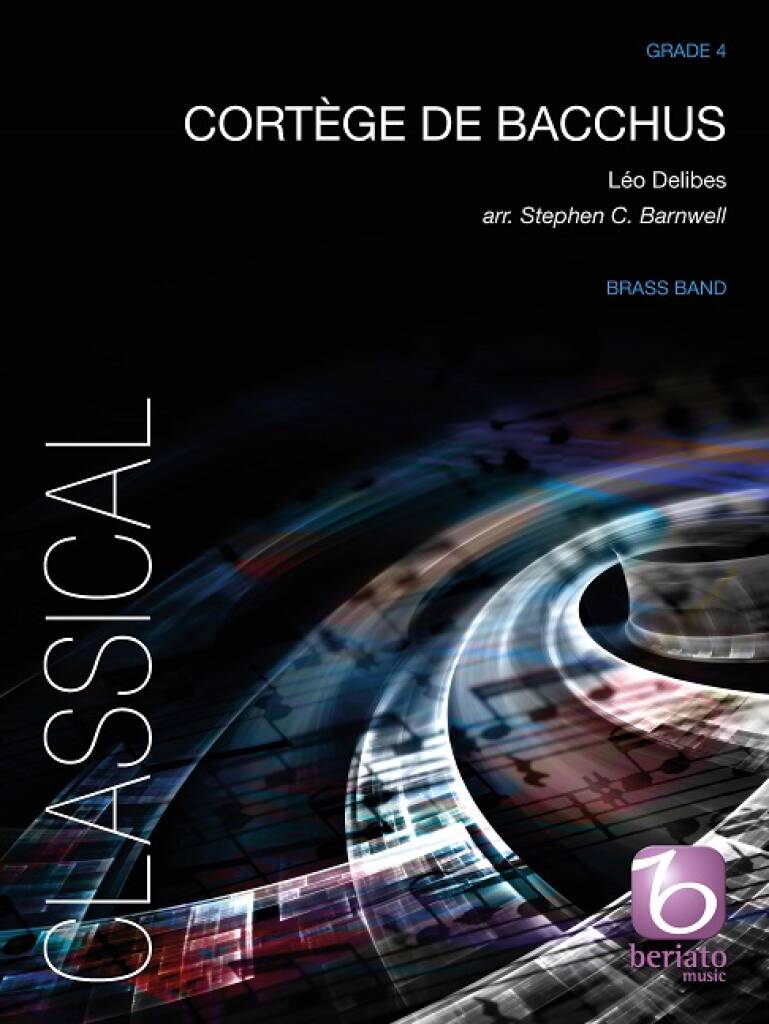
Cortege de Bacchus - Léo Delibes - Stephen C. Barnwell
This majestic processional march entitled Cortge de Bacchus (Procession of Bacchus) is an extract taken from one of the most popular scenes in the ballet Sylvia by the celebrated 19th Century French composer Lo Delibes.In this arrangement for brass band by Stephen C. Barnwell, it can be used an ideal concert opener or for any festive occasion.
Estimated dispatch 5-14 working days
-
£60.99
Toccata - Girolamo Frescobaldi - James Curnow
Girolamo Frescobaldi (1583-1643) was an Italian organist and composer, who became one of the most distinguished organists of the 17th century, serving in the cathedrals of Rome, Florence and in the Netherlands. This Toccata is an arrangement from one of his 68 organ works.
Estimated dispatch 5-14 working days
-
£76.99
Euphonium Fantasia - Stephen Bulla
This challenging composition by Stephen Bulla, based on 17th century chorale 'Westminster Abbey' by Henry Purcell, puts high demands on both soloist and accompanying band.
Estimated dispatch 5-14 working days
-
 £104.99
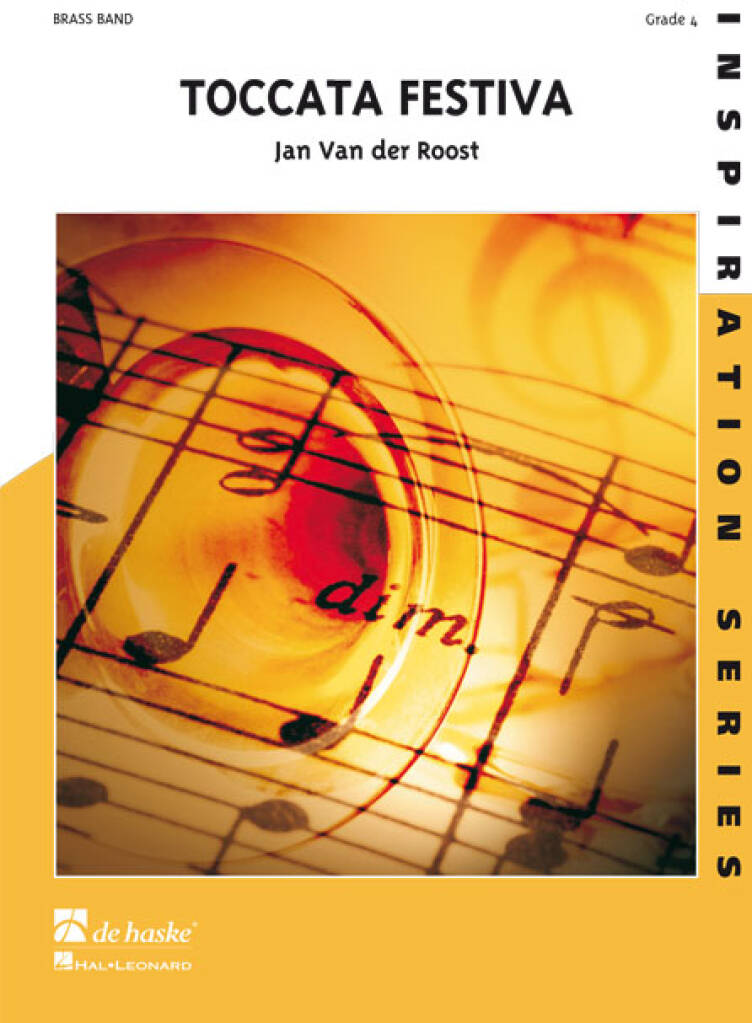
Toccata Festiva - Jan Van der Roost
'Toccata Festiva' was commissioned in 1994 by the Dutch Brass Band Championships. The wind band version was made a year later by the composer himself. Historically speaking, the toccata is considered to be one of the first independent instrumental forms for keyboard instruments. Originally the toccata was typically more or less improvised, later this musical form was given a more regulated structure. Both elements are used in the 'Toccata Festiva': on the one hand the different themes are developed freely, on the other, the piece has an orderly structure. It is in a three part form (quick-slow-quick) and includes both strong rhythmical figures and broad melodic lines. Partof the composition is written in a more or less archaic tone idiom, referring to the period from which the toccata form originates (16th century).
Estimated dispatch 5-14 working days
-
£60.99
Es ist ein Ros Entsprungen - Michael Praetorius - Otto M. Schwarz
The many sided and productive Michael Praetorius (1571-1621) is knwon as a composer of dance music, sacred music and music for the advent and Christmas time. He worked as Kapelmeister to the court at Wolffenbuttel, but he was also asked to serve in other places, includin Dresden. Praetorius was valued for the new impulses he gave to music by means of his use of instrumental accompaniment. His main contribution is his theoretical work "Syntagma Musicum", one of the most important musical refernce books, in connection with instruments and instrumentation in the early 17th Century. "Es ist ein ros entsprungen" is a well known ancient melody which has inspired numerous composers andarrangers througout the Centuries. Otto M. Schwarz has made a choral arrangement.
Estimated dispatch 5-14 working days
-
 £60.99
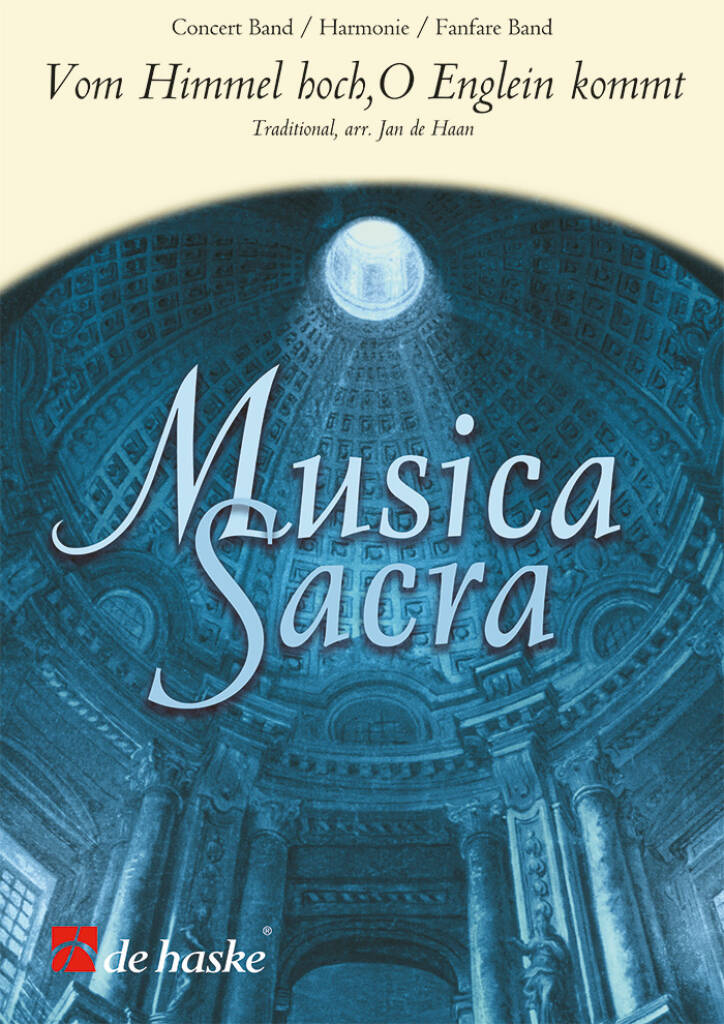
Vom Himmel hoch, O Englein kommt - Traditional - Jan de Haan
The German Christmas song Von Himmel hoch, O Englein kommt is one of the oldest known German carols, with the earliest versions, also known as Susani, going back to the 14th century. This exceptional arrangement by Jan de Haan works extremely well for brass band and will make an ideal work for any Christmas concert.
Estimated dispatch 5-14 working days
-
 £60.99
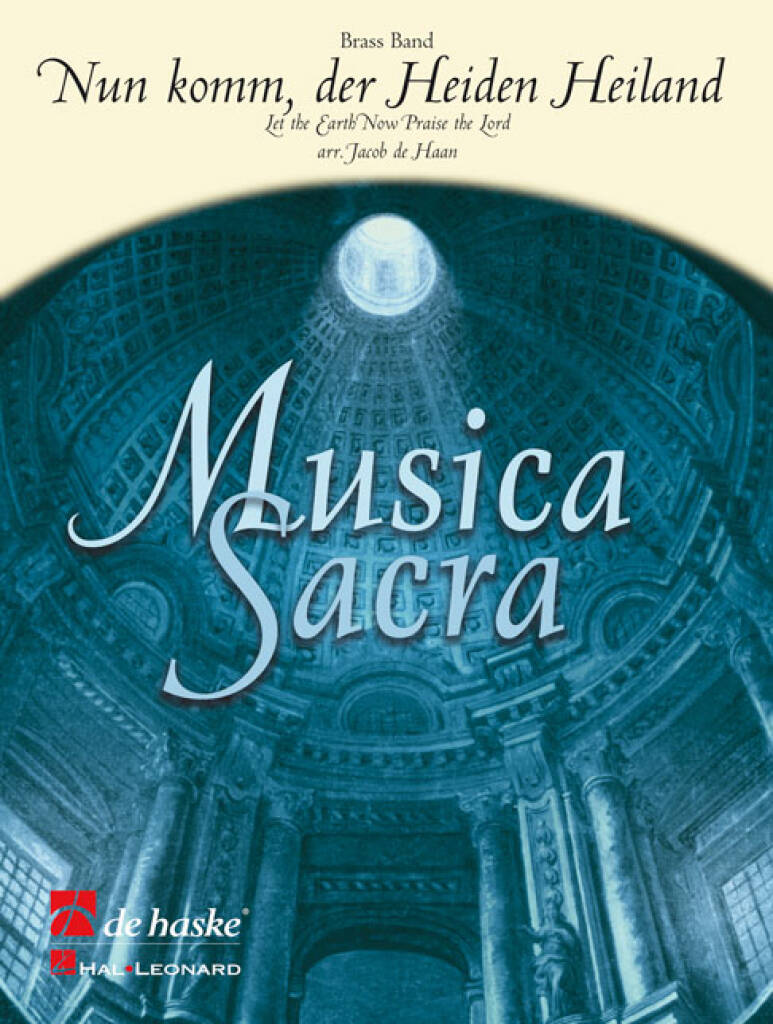
Nun komm, der Heiden Heiland - Traditional - Jacob de Haan
The well-known chorale Nun komm, der Heiden Heiland (Let the Earth Now Praise the Lord) was written by Martin Luther in 1524 and derives from a translation of a hymn from the 4th century before Christ. The melody was composed by JohannWalter, however Johann Sebastian Bach used it as a basis for many cantatas. This arrangement by Jacob de Haan gives your band the chance to perform an attractive version of this beautiful chorale.
Estimated dispatch 5-14 working days
-
 £54.99
A Spanish Christmas Carol - Patrick Millstone
Rondeau of the Shepherds," so ran the official title of the famous Dutch Christmas carol 'Midden in de winternacht'. In 1948 wrote Dutch poet and writer Harry Prenen this text. The melody is known by the 17th/18th- century organ composers of suites Daquin, Balbastre and Dandrieu. "Rondeau of the Shepherds" was subtitled "Catalan Christmas Carol". The song itself is because its origins in a Spanish (Catalan probably) Christmas song from the late Middle Ages, "El Desembre congelat. The motives of this song (shepherds, flutes, drums) demonstrate knowledge of the Bible and give a picture of the late medieval Christmas experience. . Perfect as an uptempo intermezzoin a church service.
Estimated dispatch 5-14 working days
-
 £69.99
Czardas (Xylophone solo) - Monti - Gert Bomhof
Vittorio Monti was born on January 6, 1868 in Naples (Italy). His musical education (Violin and composition), he enjoyed at the conservatory there. Around his 30's Monti went to Paris. He earned a living as a conductor and wrote several ballets and operettas. In his last years, before his death in 1922, Monti devoted himself to teaching and composing. His famous 'Czardas' has made his name known even today.Initially the Czardas was a Hungarian folk dance, but after the mid-nineteenth century it was even a dance for the upper-class. Czardas begins with a slow introduction, the Lassan (slow and sad), and then the fast part,Friska, follows. Czardas is not, as so many people think, typical gypsy music.
Estimated dispatch 5-14 working days
-
 £69.99
Fanitullen - O. Olsen - Tom Brevik
Fanitullen is a lively, beautiful 'Sl?tt', i.e. an old Norwegian melody which is played on a traditional 'Hardingfele' (Hardanger fiddle).Because of its violent rhythm and exciting character, playing a Fanitullen for a long time was considered improper. It was believed that a person playing this melody would come under the influence of the devil. Therefore, Fanitullen could be regarded as a kind of Rock'n Roll from the 18th century.Tom Brevik's adaptation is based on a composition for piano by Ole Olsen (1850-1927) Fanitullen is een levendige, mooie 'Sl?tt', een oude Noorse melodie die gespeeld word op een traditionele 'Hardingfele' (Hardanger viool).Door de heftigeritmiek en het opzwepende karakter, werd het spelen van een Fanitullen gedurende lange tijd als niet kies beschouwd. Er zouden invloeden van de duivel in schuilen. Fanitullen zou daarom misschien wel als een soort Rock'n Roll van de 18e eeuw gezien kunnen worden.De bewerking van Tom Brevik is gebaseerd op een compositie voor piano van Ole Olsen (1850-1927)
Estimated dispatch 5-14 working days
 View Music