
Results
-
 £125.00
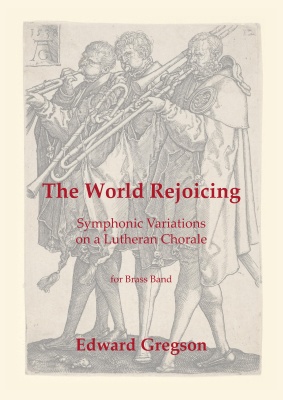
The World Rejoicing (Brass Band - Score and Parts)
The World Rejoicing was commissioned by the National Brass Band Associations of Belgium, Netherlands, Norway, Switzerland, and the British Open, as the test piece for their competitions in 2020/21. Although the work was completed in 2019, the pandemic of 2020 meant that these competitions were postponed until 2021/22. The premiere took place in September 2021 at Symphony Hall, Birmingham, UK.In searching for a common link between the brass band traditions of the various European countries that commissioned this work, I considered the fact that hymns have always played an important role in the relationship that brass bands have with their particular communities; and thus I turned to a well- known Lutheran chorale, Nun danket alle Gott (Now thank we all our God), written around 1636 by Martin Rinkart, with the melody attributed to Johann Cruger. A number of composers have incorporated this chorale into their music, most famously J.S. Bach in his Cantatas no. 79 and 192, and Mendelssohn in the Lobsegang movement of his 2nd Symphony (the harmonisation of which is usually used when this hymn is sung).It seemed fitting therefore for me to return to a compositional form I have used many times before (Variations) and to write a work based on this hymn. I have used it in a similar way to that which I employed in my Variations on Laudate Dominum of 1976 - that is, rather than writing a set of variations using elaborations of the complete tune, I have taken various phrases from the chorale and used them within the context of other musical material, applying an overall symphonic process of continuous variation and development. The structure, or sub-divisions of the work, which is through composed and plays without a break, is as follows:Prelude, Capriccio, La Danza 1, Processional, La Danza 2, Arias and Duets, Fuga Burlesca, Chorale, and Postlude.The work, which is around 16 minutes in length, is also partly autobiographical - in the manner say of Strauss's Ein Heldenleben - in that I have incorporated into the score brief quotations from many of my other major works for brass band. In that respect, The World Rejoicing sums up a particular facet of my life as a composer, and reflects the admiration I have always had for what is surely one of the great amateur music-making traditions in the world.Duration: 16.00
Estimated dispatch 7-14 working days
-
£40.00
The World Rejoicing (Brass Band - Score only)
The World Rejoicing was commissioned by the National Brass Band Associations of Belgium, Netherlands, Norway, Switzerland, and the British Open, as the test piece for their competitions in 2020/21. Although the work was completed in 2019, the pandemic of 2020 meant that these competitions were postponed until 2021/22. The premiere took place in September 2021 at Symphony Hall, Birmingham, UK.In searching for a common link between the brass band traditions of the various European countries that commissioned this work, I considered the fact that hymns have always played an important role in the relationship that brass bands have with their particular communities; and thus I turned to a well- known Lutheran chorale, Nun danket alle Gott (Now thank we all our God), written around 1636 by Martin Rinkart, with the melody attributed to Johann Cruger. A number of composers have incorporated this chorale into their music, most famously J.S. Bach in his Cantatas no. 79 and 192, and Mendelssohn in the Lobsegang movement of his 2nd Symphony (the harmonisation of which is usually used when this hymn is sung).It seemed fitting therefore for me to return to a compositional form I have used many times before (Variations) and to write a work based on this hymn. I have used it in a similar way to that which I employed in my Variations on Laudate Dominum of 1976 - that is, rather than writing a set of variations using elaborations of the complete tune, I have taken various phrases from the chorale and used them within the context of other musical material, applying an overall symphonic process of continuous variation and development. The structure, or sub-divisions of the work, which is through composed and plays without a break, is as follows:Prelude, Capriccio, La Danza 1, Processional, La Danza 2, Arias and Duets, Fuga Burlesca, Chorale, and Postlude.The work, which is around 16 minutes in length, is also partly autobiographical - in the manner say of Strauss's Ein Heldenleben - in that I have incorporated into the score brief quotations from many of my other major works for brass band. In that respect, The World Rejoicing sums up a particular facet of my life as a composer, and reflects the admiration I have always had for what is surely one of the great amateur music-making traditions in the world.Duration: 16.00
Estimated dispatch 7-14 working days
-
 £15.00
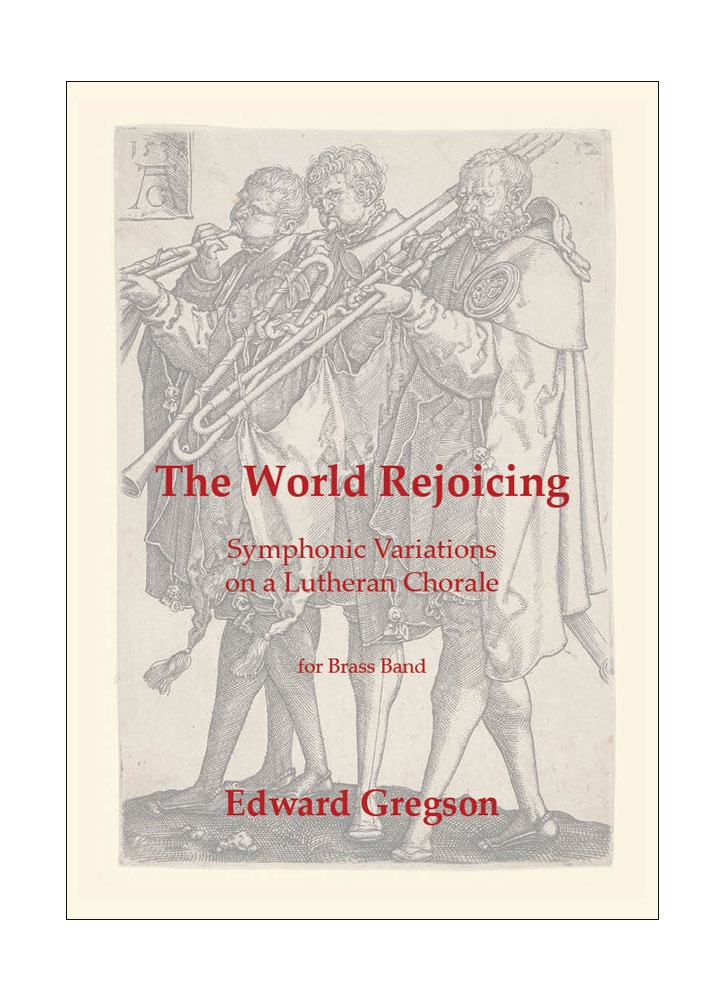
The World Rejoicing (Brass Band - Study Score)
In searching for a common link between the brass band traditions of the various European countries that commissioned this work, I considered the fact that hymns have always played an important role in the relationship that brass bands have with their particular communities; and thus I turned to a well-known Lutheran chorale, Nun danket alle Gott (Now thank we all our God), written around 1636 by Martin Rinkart, with the melody attributed to Johann Crger. A number of composers have incorporated this chorale into their music, most famously J.S.Bach in his Cantatas no. 79 and 192, and Mendelssohn in the Lobsegang movement of his 2nd Symphony (the harmonization of which is usually used when this hymn is sung).It seemed fitting therefore for me to return to a compositional form I have used many times before (Variations) and to write a work based on this hymn. I have used it in a similar way to that which I employed in my Variations on Laudate Dominum of 1976 - that is, rather than writing a set of variations using elaborations of the complete tune, I have taken various phrases from the chorale and used them within the context of other musical material, applying an overall symphonic process of continuous variation and development. The structure, or sub-divisions of the work, which is through composed and plays without a break, is as follows: Prelude, Capriccio, La Danza 1, Processional, La Danza 2, Arias and Duets, Fuga Burlesca, Chorale, and Postlude.The work is also partly autobiographical - in the manner say of Strauss's Ein Heldenleben - in that I have incorporated into the score brief quotations from many of my other major works for brass band. In that respect, The World Rejoicing sums up a particular facet of my life as a composer, and reflects the admiration I have always had for what is surely one of the great amateur music-making traditions in the world.The World Rejoicing is dedicated 'in loving memory of my brother', Bramwell Logan Gregson, who sadly passed away in the Autumn of 2018.Edward Gregson
Estimated dispatch 7-14 working days
-
 £24.95
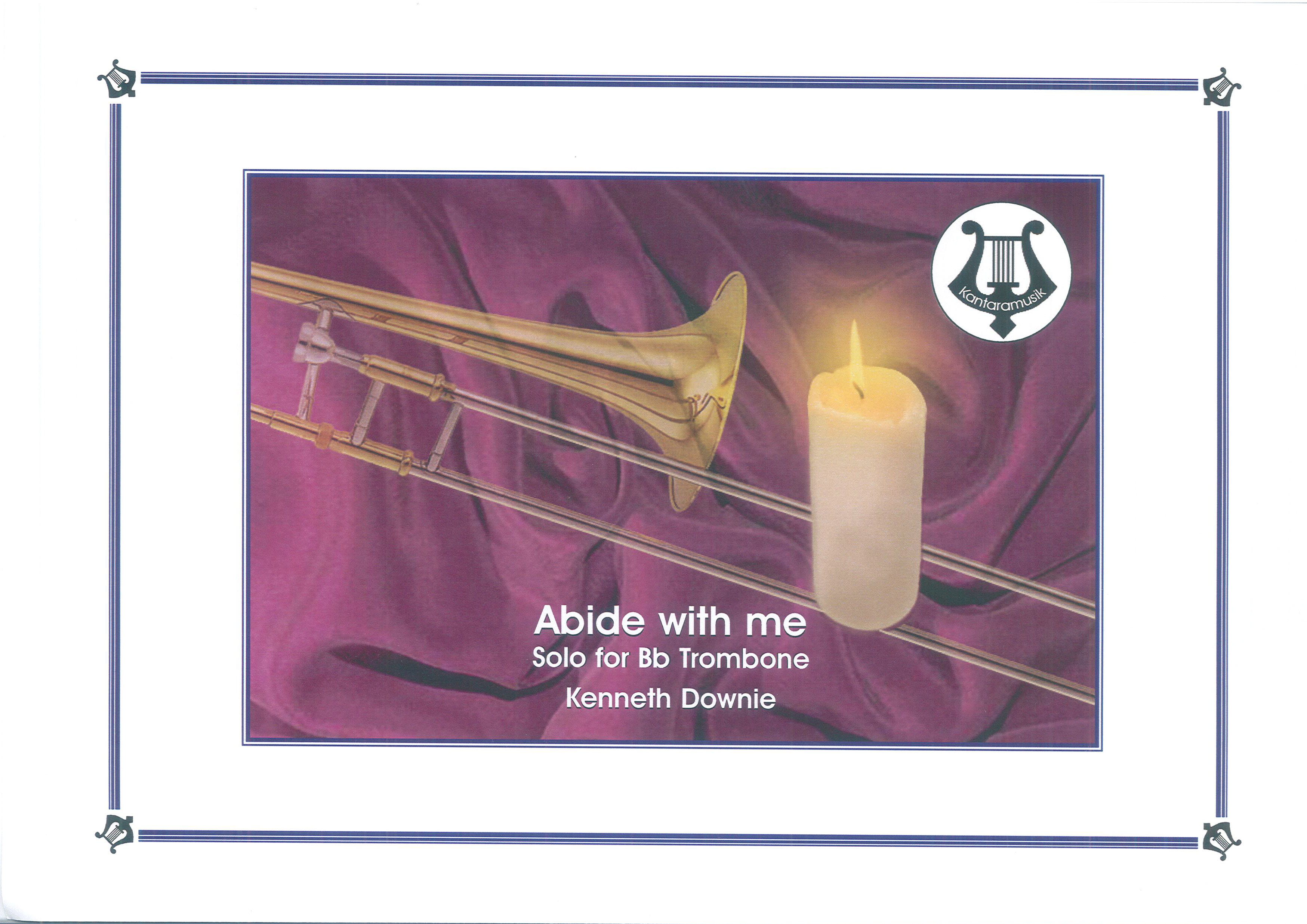
Abide With Me (Trombone Solo with Brass Band - Score and Parts)
The very evocative tune to this hymn is called 'Eventide' and was written by William Henry Monk. He was an important figure in 19th century English church music and became organist and choirmaster at a variety of London churches in the course of his lifetime. In 1857, he was appointed the first editor of Hymns, Ancient and Modern, a publication that would eventually sell sixty million copies! It was for this hymnbook that he wrote the tune 'Eventide' to the words, 'Abide with Me' by Henry Francis Lyte. This version, for trombone solo and brass band, was commissioned by Brett Baker.
Estimated dispatch 7-14 working days
-
 £82.19
All Tuned Up - 120 Famous Tunes for All Occasions (Brass Band Set - A5) PDFs
This unique new resource from BrookWright Music will be an essential part of every band's library! All Tuned Up is designed to cater for ensembles for occasions throughout the year. Tunes are drawn from genres including Classical, Hymns, Folk and Patriotic amongst many others to form a comprehensive book that will cover a wide variety of events such as Weddings, Funerals, Graduation Ceremonies, Parties, Proms, Remembrance, Street Playing and Thanksgiving. Playable by as few as five players but also designed to work for full brass band or wind band, it features flexible parts in a wide variety of transpositions. These excellent arrangements have been expertly created by Andrew Wainwright, David E. Jones, Dean H. Jones and Steven Ponsford. The general harmonic format of All Tuned Up is in five parts, although additional notes have been included to thicken the harmony where more players are available. Therefore, the book will work equally well with larger groups, including full brass bands and wind bands. To view a promotional video please visit www.youtube.com/watch?v=nmodRrXQRRs At the end of the Part 1 Bb book are four a capela tunes for Remembrance/Memorial occasions. This PDF download is for International sizes: Full Score - A4 Size - 297mm x 210mm Band Parts - A5 Size - 210mm x 148mm Physical copies of the books available from: UK - Individual Books Full Set Brass Band Set USA - www.solidbrassmusic.com/product/all-tuned-up-ensemble-books The Brass Band set includes: Full Score Part 1 Eb (optional) - Soprano Cornet Eb Part 1 Bb - Cornet Bb, Flugel Part 2 Bb - Cornet Bb, Flugel Part 2 Eb - Tenor Horn Part 3 Bb - Baritone, Trombone, Euphonium Part 3 Eb - Tenor Horn Part 4 Bb - Euphonium, Baritone Part 5 C (Bass Clef) - Bass Trombone Part 5 Eb - Bass Eb Part 5 Bb - Bass Bb Percussion (optional) - Various
In Stock: Estimated dispatch 1-3 working days
-
£82.19
All Tuned Up - 120 Famous Tunes for All Occasions (Brass Band Set-US Sizes) PDFs
This unique new resource from BrookWright Music will be an essential part of every band's library! All Tuned Up is designed to cater for ensembles for occasions throughout the year. Tunes are drawn from genres including Classical, Hymns, Folk and Patriotic amongst many others to form a comprehensive book that will cover a wide variety of events such as Weddings, Funerals, Graduation Ceremonies, Parties, Proms, Remembrance, Street Playing and Thanksgiving. Playable by as few as five players but also designed to work for full brass band or wind band, it features flexible parts in a wide variety of transpositions. These excellent arrangements have been expertly created by Andrew Wainwright, David E. Jones, Dean H. Jones and Steven Ponsford. The general harmonic format of All Tuned Up is in five parts, although additional notes have been included to thicken the harmony where more players are available. Therefore, the book will work equally well with larger groups, including full brass bands and wind bands. To view a promotional video please visit www.youtube.com/watch?v=nmodRrXQRRs At the end of the Part 1 Bb book are four a capela tunes for Remembrance/Memorial occasions. This PDF download is for US sizes: Full Score - Letter Size - 11" x 8.5" Band Parts - 7" x 5" Physical copies of the books available from: UK - Individual Books Full Set Brass Band Set USA - www.solidbrassmusic.com/product/all-tuned-up-ensemble-books The Brass Band set includes: Full Score Part 1 Eb (optional) - Soprano Cornet Eb Part 1 Bb - Cornet Bb, Flugel Part 2 Bb - Cornet Bb, Flugel Part 2 Eb - Tenor Horn Part 3 Bb - Baritone, Trombone, Euphonium Part 3 Eb - Tenor Horn Part 4 Bb - Euphonium, Baritone Part 5 C (Bass Clef) - Bass Trombone Part 5 Eb - Bass Eb Part 5 Bb - Bass Bb Percussion (optional) - Various
In Stock: Estimated dispatch 1-3 working days
-
 £33.62
Fanfare Prelude - Now thank we all our God (Brass Band & Organ) arr. Downie
This rousing fanfare prelude for Brass Band and optional Organ by Kenneth Downie is based on the monumental hymn Now thank we all our God, which dates from 17th century Germany. The arrangement is featured on the CD Classic Hymns for Orchestra - The Symphonic Music of Kenneth Downie (available here) as a symphonic brass setting. The arranger writes: 'The depth of the words is underpinned by the grandeur of the music, so I have tried to reflect the same regal approach in my setting for brass band.' This arrangement will be an ideal opener or prelude for concerts or church services. To view a rolling score video of the work please visit www.youtube.com/watch?v=olrdFskDfac PDF download includes score and parts. Additional parts for Horns in F, and Baritone, Trombone, Euphonium and Tuba in bass clef are available here. Sheet music available from: UK - www.brassband.co.uk USA - https://satradecentral.org Difficulty Level: 2nd Section + Length: 3.15 minutes Instrumentation: Soprano Cornet Eb Solo Cornet Bb 1st Cornet Bb 2nd Cornet Bb Flugel Horn Bb Solo Horn Eb 1st Horn Eb 2nd Horn Eb 1st Baritone Bb 2nd Baritone Bb 1st Trombone Bb 2nd Trombone Bb Bass Trombone Euphonium Bb Bass Eb Bass Bb Timpani Percussion 1-3 Organ (optional)
In Stock: Estimated dispatch 1-3 working days
-
£59.95
ELLACOMBE CHRONICLES, The (Brass Band Set) - James Curnow
This piece was commissioned by Brass Band of Columbus for the occasion of the band's 25th anniversary in 2009. It is dedicated to current and former members of the band and its founding Director, Dr Paul Droste. The hymns of Isaac Watts (1674 - 1748) have been a source of inspiration for musical thought and development by composers for over 200 years. His glorious hymn 'I sing the mighty power of God' has been coupled with the hymn tune 'Ellacombe' in many hymnals over these two centuries. This work was created and inspired by Isaac Watts's text and chronicles the three verses of the hymn through a set of diverse variations on the hymn tune 'Ellacombe'. The opening fanfare is intended to capture the joy and exuberance of the first phrase of the first verse, 'I sing the mighty power of God that made the mountains rise'. The developmental material following the fanfare gives a hint of the three large variations that are extracted from the tune.
Estimated dispatch 7-14 working days
-
 £77.00
General Series Brass Band Journal, Numbers 2261 - 2264, December 2025
2261: March - Win the world (Paul Sharman)This march was written at the request of Staff Bandmaster Ken Waterworth for the Melbourne Staff Band's visit to South Africa in 2018. It features the tunes We shall win (T.B. 455) and Storm the forts of darkness (T.B. 844) - the latter chosen for its similarity to the Australian national anthem in its opening two bars.2262: Festival March - Alleluia! (Kevin Larsson)Both hymns used in this march, This is my Father's world (S.A.S.B. 66) and All creatures of our God and King (S.A.S.B. 2), bought the composer comfort as he began to grapple with the ramifications of the global pandemic in 2020. Both songs talk about God's sovereignty over nature, revealing himself to us through the beauty and majesty of our world.2263: Prayer gently lifts me (Ty Watson)This is a simple arrangement of the chorus Prayer gently lifts me (S.A.S.B. 783). The piece was written to precede the opening prayer in a band programme.2264: What a Saviour! (Steven Ponsford)This devotional music explores the events of Good Friday, dramatically reminding us of words associated with familiar Easter hymns tunes.
Estimated dispatch 7-14 working days
-
 £55.00
Triumph Series Brass Band Journal, Numbers 1367 - 1370, November 2024
1367: March - Risen, conquering Son (Noel Jones)Two uplifting Easter songs are featured in this march; Low in the grave he lay (S.A.S.B. 228) with words and music written by Robert Lowry, and Thine is the glory (S.A.S.B. 276) with words by Edmond L. Budry and music by George F. Handel. Both serve as a powerful reminder of the resurrection of Jesus.1368: Horn Solo - O how much he cared for me (Keith Wilkinson)This solo was originally penned for Bandsman Frank Taylor, who plays Solo Horn at Stapleford Citadel Corps. As its basis, it uses the popular hymn No one ever cared for me like Jesus by Charles F. Weigle, a Baptist evangelist who wrote more than a thousand hymns.1369: My Redeemer lives (Olaf Ritman)This arrangement of Reuben Morgan's well-known worship song (S.A.S.B. 223) was first written as an accompaniment for congregational singing and can still be used in that way. It was inspired by the American R&B group Tower of Power and is meant to sound soulful and funky.1370: Selection - With life anew (Mervyn Clarke)This selection features music associated with two hymns; Blessd Saviour, now behold me (S.A.S.B. 575) by William Baugh and Breathe on me, breath of God (S.A.S.B. 294) by Edwin Hatch. Although Edwin Hatch's hymn-writing output was very small, this hymn has seen numerous settings and melodies associated with the words from which the piece takes its title; two of these melodies are featured here in Trentham and Carlisle.
Estimated dispatch 7-14 working days