
Results
-
 £3.95
£3.95On the Face! (Trombone/Euphonium BC)
On the Face is a complete repertoire (warm-ups and 23 pieces) for beginner brass ensemble. Perfect material for school assemblies and music centres, it includes folk songs, famous classical themes, and exciting new jazz and pop numbers. Each piece is score for a basic trio of two trumpets/cornets and one trombone/euphonium (TC or BC). However, optional independent parts can also be added for horn in E flat or F; high trombone or euphonium (tenor part); tuba; and drum kit. The pieces work equally well either with one player to a part, or in larger group settings. With its appealing variety of musical styles and textures, On the Face is sure to make the young brass player's first experience of group playing both rewarding and fun.
Estimated dispatch 7-14 working days
-
 £3.95
£3.95On the Face! (Trombone/Euphonium TC)
On the Face is a complete repertoire (warm-ups and 23 pieces) for beginner brass ensemble. Perfect material for school assemblies and music centres, it includes folk songs, famous classical themes, and exciting new jazz and pop numbers. Each piece is score for a basic trio of two trumpets/cornets and one trombone/euphonium (TC or BC). However, optional independent parts can also be added for horn in E flat or F; high trombone or euphonium (tenor part); tuba; and drum kit. The pieces work equally well either with one player to a part, or in larger group settings. With its appealing variety of musical styles and textures, On the Face is sure to make the young brass player's first experience of group playing both rewarding and fun.
Estimated dispatch 7-14 working days
-
 £3.95
£3.95On the Face! (Tuba BC)
On the Face is a complete repertoire (warm-ups and 23 pieces) for beginner brass ensemble. Perfect material for school assemblies and music centres, it includes folk songs, famous classical themes, and exciting new jazz and pop numbers. Each piece is score for a basic trio of two trumpets/cornets and one trombone/euphonium (TC or BC). However, optional independent parts can also be added for horn in E flat or F; high trombone or euphonium (tenor part); tuba; and drum kit. The pieces work equally well either with one player to a part, or in larger group settings. With its appealing variety of musical styles and textures, On the Face is sure to make the young brass player's first experience of group playing both rewarding and fun.
Estimated dispatch 7-14 working days
-
 £39.95
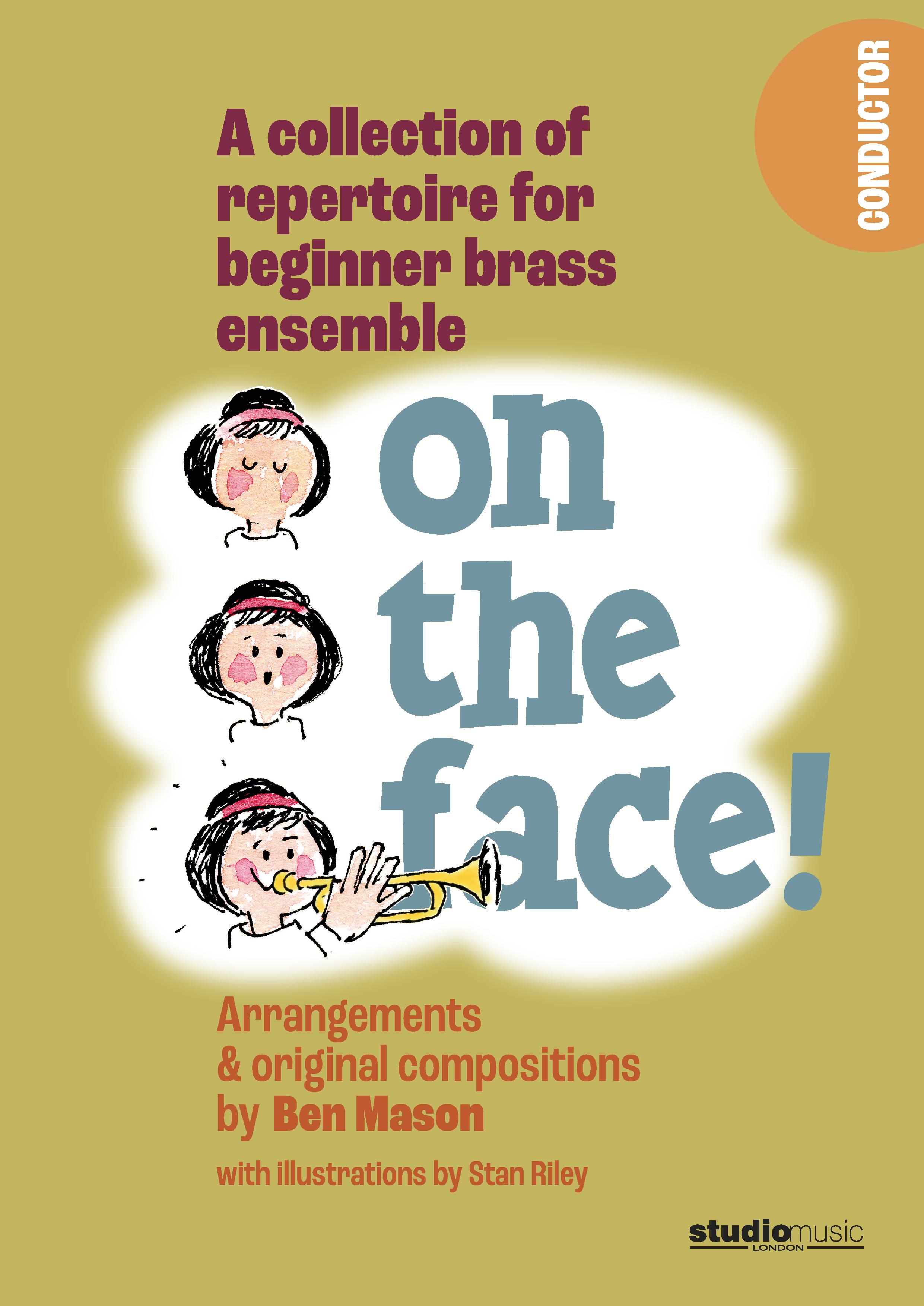
On the Face! (Value Set)
The Value Set contains the score and one of each part:1st B flat Trumpet/Cornet2nd B flat Trumpet/CornetTrombone/Euphonium/Baritone BCTrombone/Euphonium/Baritone TCHorn in E flatHorn in FHigh Trombone/Euphonium/Baritone TC*High Trombone/Euphonium/Baritone BC*E flat Bass/Tuba TCE flat Bass/Tuba TCPercussion and occasional Aux. Percussion(* for use only when there is a Tuba in the ensemble)Additional scores and parts are available individually.On the Face is a complete repertoire (warm-ups and 23 pieces) for beginner brass ensemble. Perfect material for school assemblies and music centres, it includes folk songs, famous classical themes, and exciting new jazz and pop numbers. Each piece is score for a basic trio of two trumpets/cornets and one trombone/euphonium (TC or BC). However, optional independent parts can also be added for horn in E flat or F; high trombone or euphonium (tenor part); tuba; and drum kit. The pieces work equally well either with one player to a part, or in larger group settings. With its appealing variety of musical styles and textures, On the Face is sure to make the young brass player's first experience of group playing both rewarding and fun.
Estimated dispatch 7-14 working days
-
 £64.00
Fantasie Originale (Euphonium Solo with Brass Band - Score and Parts)
Simone Mantia (1873 - 1951) was born in Italy and moved with his family to USA in 1881. He developed an early interest in playing the euphonium and from 1898 to 1904 was the euphonium soloist of the Sousa Band. This solo was written by him to demonstrate both the operatic qualities of his instrument as well as its outstanding technical possibilities. The solo is based on themes by the Italian composer Ermano Picchi (1811 - 1856), Mantia weaving his virtuosic variations around the thematic material provided by Picchi.This arrangement was prepared at the request of Aaron VanderWeele, euphonium soloist of the New York Staff Band, for his UK tour in 2008.
Estimated dispatch 7-14 working days
-
 £120.00
New London Pictures (Brass Band - Score and Parts)
New London Pictures represents elements of London in the 21st Century. The Millennium Bridge describes the pedestrians journey across this wonderful new landmark bridge over the Thames, starting at the imposing Tate Modern, crossing the busy river, and onwards to St. Pauls Cathedral with its bells ringing out over the great city. London Eye is an incredibly large ferris wheel situated on the South Bank of the River Thames. This movement depicts a flight on this riverside wheel, at the top of which the panoramic view of London is breath-taking and the expanse of the music is a suitable depiction of the view. As with all modern cities, London is over-crowded with motor vehicles. London is the first major city in Europe to adopt a Congestion Charge, and this piece (with its stop and go traffic lights) is both racy and comical. Here are Londoners attempting to go about their business in the face of overwhelming odds..... Suitable for Premier Youth/2nd Section Bands and above. Duration: 15.00
Estimated dispatch 7-14 working days
-
 £44.99
Whirlegigg (Brass Band - Score and Parts)
Whirlegigg is the middle English word for a contraption that continuously spins. A great fascination with many inventors of the medieval period was to develop a perpetual motion machine constantly turning and giving off energy. This idea is particularly apt for this piece. A simple ternary structure gives ample opportunity for both boisterous and reflective material with gyrating accompaniment figures never far away. The machine almost stops near the end, but finally musters one last burst of excitement and energy to bring the work to its close. Suitable for 1st Section Bands and above. Duration: 5.00
Estimated dispatch 7-14 working days
-
 £33.00
A Hebridean Lullaby (Score and Parts)
Composed for World Solo Champion Katrina Marzella and the Cornwall Youth Brass Band, A Hebridean Lullaby is a beautiful and haunting melody from the pen of Philip Harper, taking its inspiration from the music and folksong of the Hebrides; a cluster of islands off the west coast of Scotland. Commissioned through a BBC Fame Academy Bursary, this piece is one which is enjoyed and admired by both performers and audiences the world over. The atmosphere created by the score is simply stunning. It's an outstanding addition to the baritone horn's concert repertoire.
Estimated dispatch 7-14 working days
-
 £20.00
A Hebridean Lullaby (Score Only)
Composed for World Solo Champion Katrina Marzella and the Cornwall Youth Brass Band, A Hebridean Lullaby is a beautiful and haunting melody from the pen of Philip Harper, taking its inspiration from the music and folksong of the Hebrides; a cluster of islands off the west coast of Scotland. Commissioned through a BBC Fame Academy Bursary, this piece is one which is enjoyed and admired by both performers and audiences the world over. The atmosphere created by the score is simply stunning. It's an outstanding addition to the baritone horn's concert repertoire.
Estimated dispatch 7-14 working days
-
£38.50
Gospel Brass Machine
A funky upbeat piece that will go down a storm with both band and audience alike.Mark Taylor wrote the trumpet feature Scream Machine for a vinyl album of the same name released in 1985 by the Army Blues Jazz Ensemble. Featuring four 'screamer' trumpet parts, it was later published in a slightly simpler version called Brass Machine. This arrangement for brass band includes a middle gospel section.
Estimated dispatch 7-14 working days